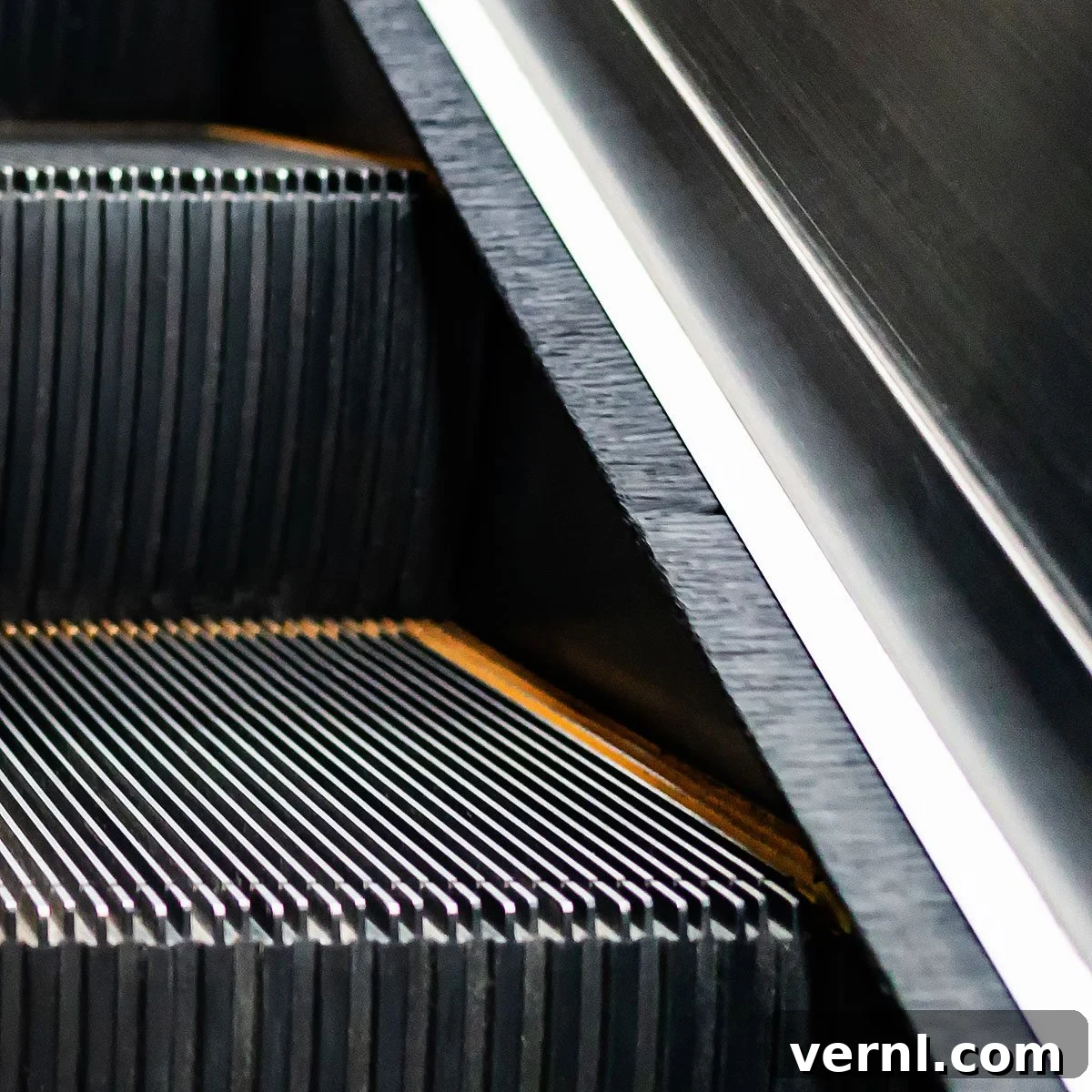
Every day, millions of people glide effortlessly between floors on escalators in malls, airports, and towering office buildings. As you step onto one of these moving staircases, you might have unconsciously noticed the bristles lining the edges, quietly performing their duty. Often overlooked, these brushes are frequently misinterpreted. Are they there to polish your shoes, or perhaps to sweep the steps clean? Given their position, one might even assume they’re a playful distraction for children. However, their true purpose is far more critical and deeply rooted in public safety. These seemingly simple devices are, in fact, unsung heroes, meticulously designed to protect passengers from potential hazards inherent in vertical transportation.
The Unsung Heroes of Escalator Safety: Unveiling the True Purpose of Skirt Brushes
The brushes you see adorning the sides of escalators and moving walkways are officially known as “skirt deflector brushes” or simply “skirt brushes.” While their presence might seem minor, their role is paramount in preventing accidents and ensuring passenger well-being. Far from being decorative or ancillary, these brushes are an integral part of an escalator’s safety system, acting as a crucial barrier against potential entrapment hazards.
What Do Escalator Skirt Brushes Truly Do?
Contrary to popular belief, these brushes are not installed for aesthetic appeal, cleaning purposes, or even to offer a convenient shoe-shine service. Their primary and most vital function is safety. Experts in the field, such as the team at Precision Brush, a leading provider of these components, unequivocally state that escalator brushes are positioned along the skirt panels to create a gentle yet effective deterrent. Their goal is to keep passengers, and particularly their belongings, safely away from the narrow gap between the moving steps and the stationary side panels.
This subtle but firm physical reminder prompts individuals to maintain a safe distance from the edges of the escalator. By gently nudging shoes, clothing, or other items away from the skirt clearance, these brushes significantly mitigate the risk of items getting caught or trapped within the intricate machinery. They serve as a constant, passive warning, ensuring that passengers remain in the central, safest part of the moving stairs or walkway.
Why Are These Brushes Absolutely Necessary for Passenger Safety?

While most adults are proficient in navigating escalators, understanding the implicit rules of standing clear and avoiding the edges, the reality is that numerous factors can lead to accidents. The seemingly innocuous gap between the moving step and the fixed side panel, known as the “skirt clearance,” can become a serious hazard. Loose articles of clothing, such as wide-leg trousers, flowing skirts, or dangling shoelaces, are particularly susceptible to being snagged by the moving parts.
Beyond clothing, soft-soled shoes, especially sneakers or sandals with flexible rubber components, can easily get caught and pulled into the mechanism. Even small children’s fingers or toes, often moved by curiosity or instability, are at significant risk. The brushes act as a crucial, proactive measure, creating a physical “buffer zone” that gently guides these items away from the potential pinch points, thereby preventing painful injuries and costly incidents. Without these brushes, the chances of entrapment, leading to severe injuries to feet, hands, or even limbs, would drastically increase, especially for vulnerable populations such as children and the elderly.
The necessity of these brushes is further underscored by the stringent safety standards governing escalator design and operation. Industry regulations, such as ASME A17.1 / CSA B44 in North America and EN 115 in Europe, mandate specific requirements for preventing entrapment in the skirt area. While not always explicitly requiring brushes, these standards necessitate a robust barrier or warning system. Skirt deflector brushes have proven to be the most effective, economical, and widely adopted solution for meeting these critical safety compliance guidelines, transforming a potential danger zone into a safely managed space.
Where Will You Encounter These Essential Safety Features?
Escalator skirt brushes are ubiquitous in any multi-story public or commercial environment where escalators are present. You will find them safeguarding passengers in high-traffic locations such as bustling airports, major shopping malls, expansive convention centers, busy train stations, and corporate office buildings. While regulations typically require *some form* of barrier or deflector system to address the skirt gap hazard, brushes have emerged as the industry’s preferred and most common method due due to their effectiveness and practicality.
Companies like Precision Brush emphasize that the universal presence of these brushes reflects a collective commitment to public safety. Keeping pedestrians safely distanced from the potential entrapment zone between the moving track and the sidewall is paramount. This proactive measure not only prevents countless injuries but also ensures that building operators and escalator manufacturers maintain strict compliance with both state and federal safety regulations, thereby upholding a high standard of safety for all who utilize these vital transportation systems.
The Subtle Mechanics and Undeniable Effectiveness of Skirt Brushes
The design of escalator skirt brushes is a testament to simple yet highly effective engineering. Typically made from durable, stiff nylon or polypropylene bristles, these brushes are mounted vertically along the entire length of the escalator’s skirt panels. The bristles are dense enough to provide a clear physical barrier and exert a gentle pushing force on anything that comes into contact with them. This subtle pressure is just enough to nudge a loose shoelace or the edge of a shoe away from the dangerous gap, without being so aggressive as to cause discomfort or impede movement.
Their effectiveness lies in this gentle redirection. Passengers often feel the brushes against their shoes or clothing, providing an immediate, tactile reminder to adjust their position and step slightly inward. This sensory feedback is a crucial element of passive safety, especially for individuals who might be distracted, carrying luggage, or unfamiliar with escalator etiquette. Moreover, the distinctive visual line created by the brushes further reinforces the boundary of the safe standing area, serving as a constant visual cue to maintain a secure distance from the edges.
Who Benefits Most from Escalator Skirt Brushes?
While all escalator users benefit from the enhanced safety provided by skirt brushes, certain groups are particularly safeguarded by their presence:
- Children: Young children, often naturally curious and less aware of potential dangers, are at a higher risk of getting fingers, toes, or loose clothing caught. The brushes act as a critical first line of defense, gently pushing them away from hazards.
- Individuals with Mobility Challenges: Elderly passengers or those with disabilities may have reduced balance or reaction times, making them more vulnerable to accidental contact with the skirt panel. The brushes offer a forgiving buffer.
- Passengers with Luggage or Strollers: The wheels or edges of bags, shopping carts, or strollers can easily snag in the skirt gap. The brushes help guide these items safely up or down.
- Fashion-Conscious Individuals: Loose-fitting clothing, long scarves, or open-toed shoes, while stylish, can pose a risk. The brushes provide a constant reminder to keep such items clear.
In essence, skirt brushes enhance the safety profile for the entire spectrum of escalator users, ensuring a smoother, more secure journey for everyone.
Beyond Safety: Minor, Incidental Benefits
While their primary role is undeniably safety, escalator skirt brushes do offer a couple of incidental, secondary benefits, though these are not their intended design purpose. Occasionally, the bristles can help to sweep away minor debris, like dust or small scraps, preventing them from accumulating in the skirt gap where they could potentially interfere with the escalator’s mechanics. However, it is crucial to reiterate that these brushes are not cleaning devices; their design and placement are optimized solely for deflecting objects and people from the skirt clearance, not for maintaining escalator cleanliness.
Common Misconceptions Dispelled
It’s worth re-emphasizing some of the widespread misconceptions surrounding escalator brushes. They are unequivocally not designed for:
- Shining Shoes: Despite their perfect height for an incidental brush against footwear, the bristles are too stiff and not intended for polishing.
- Cleaning the Escalator Steps: Their placement along the sides means they don’t sweep the main walking surface, rendering them ineffective as cleaning tools for the treads themselves.
- Decoration: While they contribute to the overall finished look, their existence is purely functional, driven by safety requirements rather than aesthetics.
Understanding these distinctions is key to appreciating the true value and critical function of these understated safety devices.
Source
Escalator Brushes, Precision Brush.
Related Articles of Interest
- If You See a Blue Stop Sign, Here’s What It Means
- If You Spot This Yellow Device on Your Windshield, You’ve Been Barnacled
- What Do Shoes on Power Lines Mean?