
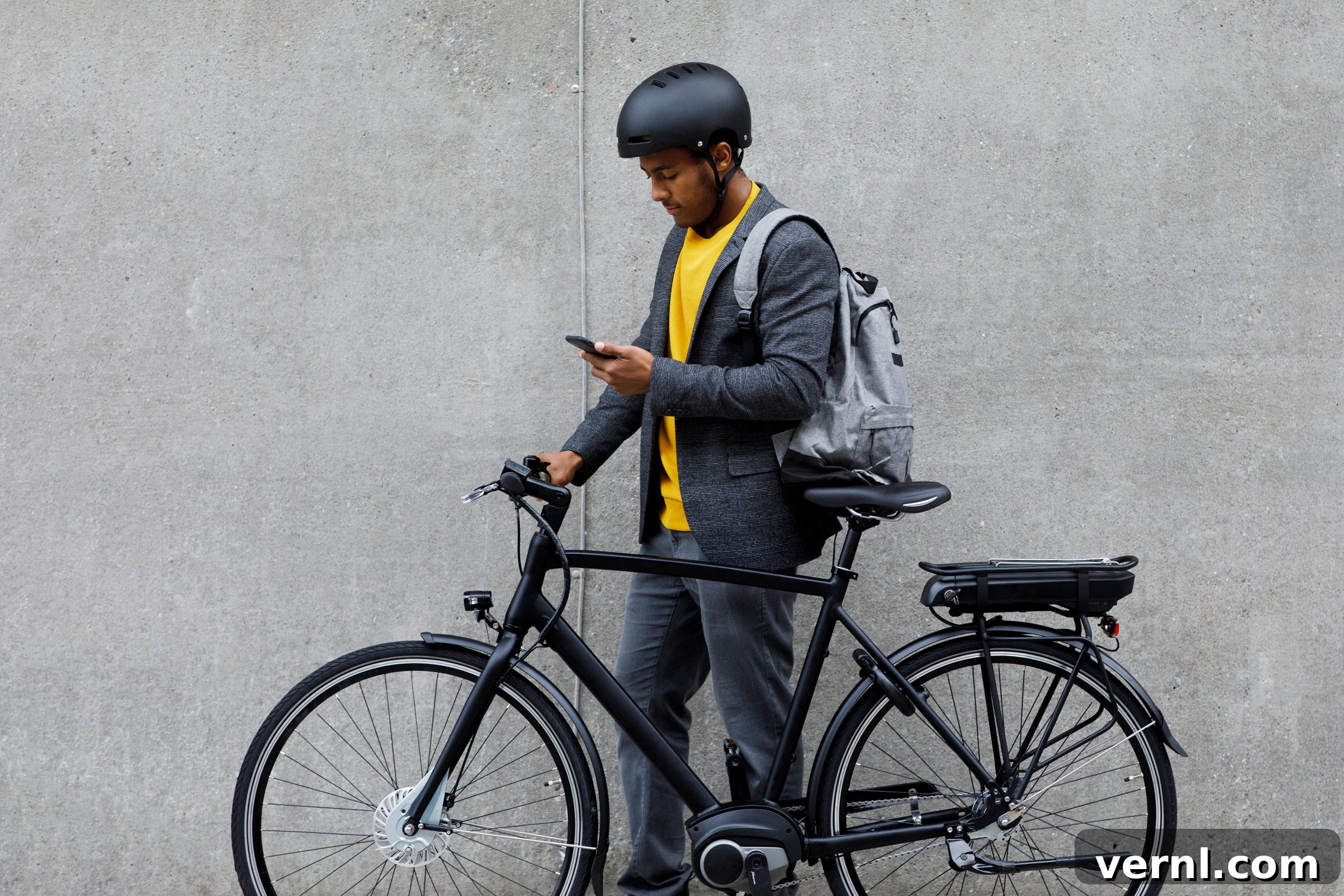
My first true encounter with an electric bicycle, commonly known as an e-bike, was an eye-opening experience that transformed my perspective on cycling. It happened during a challenging 20-mile ride with my father. He had rented an e-bike, while I was valiantly pedaling my traditional, self-powered mountain bike. As I finally reached our agreed destination, my face flushed and my legs weary, I found him comfortably settled on the patio furniture, cocktail in hand, looking remarkably refreshed and wondering what had taken me so long. That day, the stark contrast in our experiences planted a seed of curiosity that has since blossomed into a genuine appreciation for e-bikes.
While I still cherish my regular bike for certain rides, I’m now undeniably hooked on the versatility and convenience of electric bikes. They are revolutionizing commutes, making errands feel effortless, and opening up possibilities for longer, more enjoyable recreational jaunts. Their growing appeal is evident in various communities; for instance, California’s prominent bicycle coalition, CalBike, recently gathered compelling stories from riders who have embraced e-bikes. These narratives highlight a broad spectrum of uses, from enabling rides in scorching climates to empowering handymen to haul heavy lumber and tools with ease. Perhaps most significantly, many individuals are choosing to replace their cars with e-bikes, making a conscious effort to reduce their carbon footprints and embrace a more sustainable lifestyle.
For newcomers, navigating the world of e-bikes can initially seem daunting, given the sheer variety and technological aspects. If you’re “e-bike curious” and contemplating making the switch, this comprehensive guide is designed to equip you with all the essential information and considerations before you take the plunge.
What Exactly Is an E-Bike? Unpacking the Basics
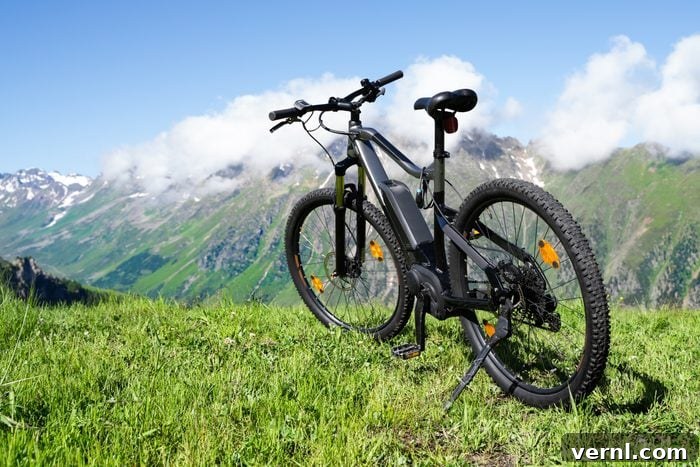
At its core, an e-bike is a standard bicycle augmented with a small electric motor and a battery. Its primary purpose is to provide assistance, enabling you to travel further and tackle challenging terrains with significantly less effort than on a traditional bicycle. Unlike motorcycles or mopeds, which are entirely self-propelled, e-bikes still require you to pedal. The magic lies in the motor’s ability to seamlessly add power to your own pedaling efforts.
This added boost is particularly noticeable and beneficial when you encounter obstacles like steep hills, strong headwinds, or when carrying heavy loads. Some e-bike models also feature a throttle, offering the option to propel the bike forward without any pedaling, perfect for getting a quick start or resting your legs. As Ash Lovell, the electric bicycle policy and campaign director for the nonprofit People For Bikes, aptly puts it, “Electric bikes pedal and handle just like a regular bicycle. By and large, an electric bike will use the same parts, too.” This familiar feel ensures a smooth transition for anyone accustomed to traditional cycling, making the e-bike experience both intuitive and exhilarating.
The Rise of E-Bikes: A Brief History and Modern Popularity Surge
While e-bikes might seem like a recent innovation, their conceptual roots trace back over a century, with small-scale versions appearing as early as the 1890s. However, their true global popularity and widespread availability began to skyrocket in the early 2000s, largely thanks to advancements in battery technology and the entry of major manufacturers like Yamaha and Panasonic into worldwide mass production. This period marked a significant turning point, transforming e-bikes from niche curiosities into accessible and practical modes of transport.
The growth trajectory has been phenomenal. In 2021 alone, over 500,000 e-bikes were sold in the U.S., a testament to their rapidly expanding market. Looking ahead, industry projections anticipate the global e-bike market to more than double by 2030, signaling a sustained and accelerating adoption rate. This surge in popularity is driven by a confluence of factors, prominently including a heightened collective consciousness around health, environmental sustainability, and personal well-being. E-bikes offer a unique solution that addresses all these concerns.
Beyond personal fitness, e-bikes represent a significant stride towards a greener future. Ted Li of Velotric Bike emphasizes this environmental benefit, stating, “E-bikes do not generate any polluting exhaust when you ride them, so they are more sustainable and environmentally friendly.” This makes them an attractive option for individuals looking to reduce their carbon footprint and contribute to cleaner air in urban environments. Furthermore, the inherent act of pedaling, even with assistance, provides valuable physical activity, contributing to improved cardiovascular health and overall fitness. E-bikes bridge the gap between active transportation and convenience, making sustainable choices more appealing and accessible to a wider demographic.
Demystifying E-Bike Mechanics: How They Work Their Magic
The core functionality of an e-bike revolves around its intelligent integration of human power with electric assistance. All modern e-bikes come equipped with a pedal-assist system (PAS), which provides an extra boost as you pedal. Many models also offer a throttle option for moments when you prefer not to pedal at all, such as starting from a stop or traversing a particularly challenging stretch. A versatile feature of most e-bikes is the ability to turn off the motor entirely, allowing you to ride it as you would a classic bicycle, perfect for getting some unassisted exercise or conserving battery life.
Brett Thurber, founder of The New Wheel, an e-bike store in San Francisco, beautifully describes the experience: “A good e-bike rides like the best bicycle you’ve ever ridden and makes you feel like you have superpowers.” This “superpower” comes from a sophisticated system. When you ride, you select a power level on the controller. The system then employs a series of advanced sensors to detect your pedaling effort, speed, and cadence. Based on this input, the motor seamlessly adds proportional power, amplifying your activity without making you feel disconnected from the bike. This natural and intuitive assistance is what defines a quality e-bike experience.
The vast majority of e-bikes are powered by efficient lithium-ion batteries. These batteries can be conveniently recharged using a standard 110-volt wall outlet, similar to charging any other electronic device. A significant advantage of many e-bikes is their removable batteries, allowing you to charge them off the bike, either at home or at your workplace. Kevin Claxton, interim executive director at CalBike, highlights the economic benefit: “The cost of electricity to charge an electric bike is minimal, just pennies per mile.” This makes e-bikes not only an eco-friendly choice but also a highly economical one for daily transportation.
Navigating the E-Bike Landscape: Understanding Types and Classes
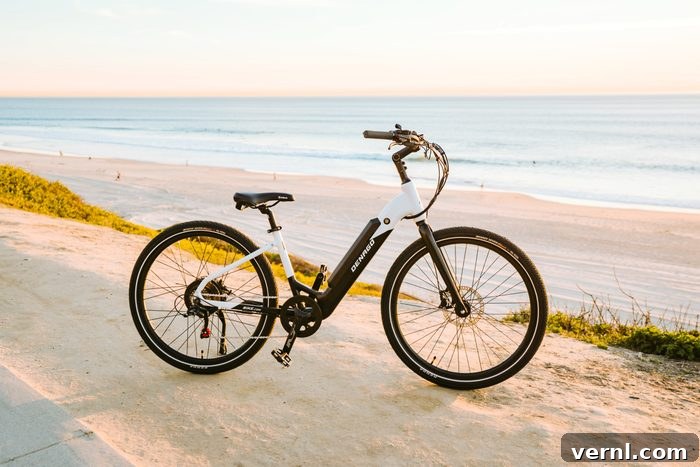
Just as there’s a bicycle for every need, the e-bike market offers an equally diverse array of options. As Ash Lovell from People For Bikes notes, “There are just about as many types of electric bicycles as there are traditional bicycles.” This includes practical cargo bikes designed for heavy loads, sleek and speedy commuting bikes for urban riders, compact folding bikes perfect for multi-modal transport, relaxed beach cruisers, and robust fat-tire mountain bikes capable of tackling challenging off-road trails. Understanding your primary use case will be crucial in narrowing down the ideal e-bike type for you.
Beyond style, e-bikes are legally categorized into three distinct classes, primarily based on their maximum assisted speed and the presence of a throttle. These classifications are vital as they often dictate where and how you can legally ride your e-bike, especially on shared paths and trails:
Class 1 E-Bikes: The Pedal-Assist Purist
Class 1 e-bikes offer pedal-assist functionality only, meaning the motor provides power only when you are actively pedaling. The motor assistance cuts off once you reach a maximum speed of 20 mph. While the bike can certainly go faster if you pedal harder or descend a hill, the motor will no longer contribute power beyond this threshold. Under the law, Class 1 e-bikes are generally treated as equivalent to traditional bicycles, allowing them access to most bike paths and trails, with only a few exceptions on specific off-road routes.
Class 2 E-Bikes: The Throttle-Enabled Convenience
Class 2 e-bikes introduce the convenience of a throttle, which can propel the bike up to 20 mph without the need for any pedaling. These bikes also typically include pedal-assist. The presence of a throttle means that depending on your local regulations, there might be more restrictions on where and how you can operate Class 2 e-bikes compared to Class 1. Kevin Claxton of CalBike highlights their appeal: “Some people like the throttle option because they can keep going if they’re too tired to pedal,” offering a welcomed respite on longer journeys or when facing unexpected fatigue.
Class 3 E-Bikes: The Speed and Commute Champion
Class 3 e-bikes are designed for greater speed, offering pedal-assist up to a maximum of 28 mph. Due to their higher speeds, these e-bikes are typically restricted to on-street bike lanes or designated routes and are generally not permitted on multi-use paths. Some Class 3 models may also include a throttle, which usually assists up to 20 mph. Claxton suggests that “A Class 3 bike might be useful if you need to mix with traffic on streets with no bike lanes because you can ride closer to the speed of traffic,” making them ideal for urban commuters who need to cover longer distances more quickly and efficiently.
It’s important to note that regardless of their class, e-bike motors sold in the U.S. are federally limited to a maximum power output of 750 watts. However, local laws concerning traffic, age restrictions, and specific usage vary significantly. Always check your local regulations to ensure compliance.
Brett Thurber provides valuable advice for prospective buyers: “If your typical ride is five miles or less, consider a standard Class 1 e-bike. If you’re planning to cover further distances on a regular basis, consider a Class 3 to get there quicker and easier.” He further emphasizes the critical importance of a good fit: “Years of experience have taught us that the most important thing is finding the right e-bike for each rider: One that you feel comfortable, safe, and strong riding. The right bike will mean that you will use it more often,” ultimately maximizing your investment and enjoyment.
Essential E-Bike Features to Consider Before Your Purchase
Acquiring an e-bike is a significant investment that warrants thorough research. If you’re fortunate enough to have a dedicated e-bike dealer nearby, taking various models for a test ride can be invaluable in simplifying your decision-making process. As Kevin Claxton advises, “When you’re buying an e-bike, try to have a clear sense of how you intend to use it, which will tell you whether you should get a standard bike, folding bike, cargo bike, etc.” Fundamentally, e-bikes are still bikes, and many of the considerations for purchasing a traditional bicycle apply here too, but with added layers of technology. Here are some of the most critical features to evaluate:
Pedal Assist System (PAS) and Controller
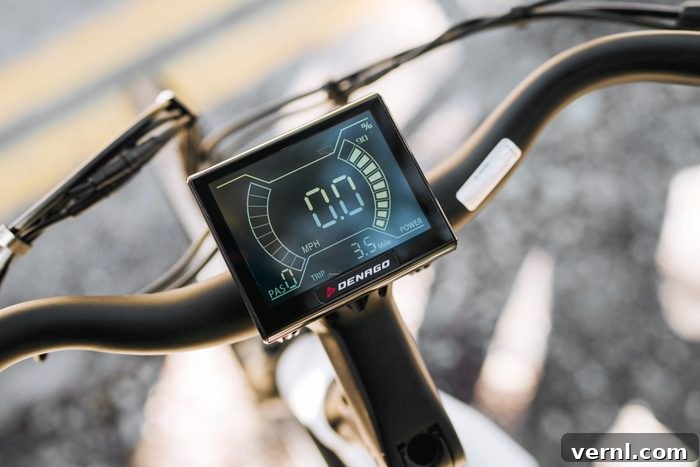
The controller is your interface with the e-bike’s electric assistance. Typically mounted on the handlebar, it allows you to select different power levels, often ranging from one to four or more, with higher levels amplifying your pedal power significantly. There are two primary types of pedal assist: cadence-activated and torque-activated. Cadence sensors simply detect if your pedals are turning and apply assistance, which can sometimes feel less natural or “jerky.” In contrast, Brett Thurber explains, “A good pedal-assist system measures how hard you are pressing on the pedals, your speed, and the cadence of your pedaling to deliver smooth pedal assistance.” This more sophisticated torque-sensing system provides a highly intuitive and responsive boost, making the ride feel seamlessly integrated with your own effort, especially crucial for navigating challenging environments like steep hills or shared-use infrastructure.
Motor Placement: Hub vs. Mid-Drive
E-bike motors typically come in two main configurations, each offering distinct advantages. Hub motors are integrated directly into the front or rear wheel, providing quick, direct acceleration. They are generally simpler and more cost-effective. However, they can lead to an unbalanced feel and are less efficient on hills as they don’t utilize the bike’s gears. Mid-motors, on the other hand, are centrally located within the bike’s crankset (where the pedals attach). This placement offers a better weight-to-performance ratio, excellent balance, and allows the motor to leverage the bike’s existing gears, making them incredibly efficient for climbing hills. Joe Werwie, head of product for Bike.com, notes, “Hub bikes and Class 2 bikes with throttles can get you to work or school sweat-free, and most people like them for instant power. But they tend to use more of the battery. Some riders like mid-motors more, as it’s a gradual assist and feels more like riding a normal bike.” Mid-motors typically come with a higher price tag but often deliver a more refined and natural riding experience.
Motor Power (Wattage)
E-bike motors are rated in watts, indicating their power output. You’ll find motors ranging from 200 watts up to 1,000 watts or even more in some specialized models. However, it’s crucial to remember that the legal limit for continuous motor power in the U.S. is 750 watts. Most mid-motors are typically rated around 250 to 500 watts, providing ample power while maximizing efficiency. Hub motors often have higher wattage ratings to compensate for their direct drive system. Higher wattage generally translates to stronger acceleration and better hill-climbing capabilities, but it can also impact battery consumption.
Battery: The Heart of the E-Bike
The battery is arguably the most critical component of an e-bike. Lithium-ion batteries are the industry standard due to their energy density and relatively low maintenance. When considering a battery, look for quality indicators such as a solid two-year warranty and increasingly, UL certification, which signifies rigorous safety testing. Since you’ll often be bringing the battery indoors for charging, its quality and safety are paramount. Some manufacturers offer spare batteries, which can be invaluable for extending your range on longer trips. A well-maintained e-bike battery should last longer than two years and, when it eventually reaches the end of its life, can be recycled at an electronics recycling site, promoting environmental responsibility.
Runtime, Power, and Range
Manufacturers typically provide an expected range for each e-bike model, often stating 40 miles or more on a single charge. However, the actual range you experience can vary significantly based on numerous factors. These include the motor type, the battery’s capacity (measured in Watt-hours, Wh), the rider’s weight, the terrain (hills consume more power), the level of assist you’re using (higher assist drains the battery faster), tire pressure, and even ambient temperature. Claxton advises, “Check the range before you buy and make sure you can get where you need to go each day on a single charge. Also, different motors have different assist levels, so make sure you get one that has the power [on the low or high end] that you need.” Always factor in a buffer for your daily needs and riding habits.
Quality of Components
Investing in an e-bike with reputable, name-brand components—such as Shimano for drivetrain parts or Bosch for motors and batteries—is a wise decision. High-quality components lead to greater durability, more reliable performance, and a safer riding experience. As Thurber cautions, “There are a lot of low-quality options out there that best-case scenario don’t work well and can be frustrating to service, and worst-case scenario are unsafe.” Better components often mean smoother shifting, more effective braking (hydraulic disc brakes are a common and highly recommended feature on e-bikes), and a longer lifespan for your bicycle.
Warranty and Customer Support
Unlike traditional bicycles, the electronic components of e-bikes introduce a new layer of complexity. It’s crucial to inquire about the warranty provided, not just for the frame but specifically for the motor, battery, and controller. A two-year warranty for these electronic parts is generally a good sign of manufacturer confidence. Furthermore, research the brand’s reputation for customer support and the availability of replacement parts. If purchasing online, understand their service and support options. If buying from a local store, ensure they offer comprehensive after-sales service and maintenance.
Weight Considerations
E-bikes are inherently heavier than traditional bicycles, often weighing upwards of 50 to 70 pounds, due to the motor, battery, and reinforced frames. Consider this weight carefully if you anticipate needing to carry your bike up stairs, lift it onto a car rack, or hoist it onto a bus or a garage bike storage system. Lighter models exist, often at a premium, but can significantly improve portability and ease of handling in certain situations.
Price and Value
The price of e-bikes can vary widely, starting from around $1,000 for entry-level models and extending to many thousands for high-performance or specialized bikes. A “decent” entry-level e-bike typically falls on the lower end of this spectrum, offering a great balance of features and affordability. To make e-bikes more accessible, many cities and states are increasingly offering rebates, tax credits, and other financial incentives. Resources like the guide from CalBike provide valuable information on available incentives across various states and municipalities, potentially making your dream e-bike more financially attainable.
One increasingly popular and cost-effective method to experience the benefits of electric cycling is through an e-bike conversion kit. These kits allow you to electrify your existing standard bicycle at a fraction of the cost of a new e-bike. Available in various styles, conversion kits can either be professionally installed or, for the mechanically inclined, can be a rewarding DIY project.
Comfort and Fit
Just like any bike, comfort is paramount for an enjoyable riding experience. Pay close attention to the saddle (seat), handlebar design, grips, and tire type. It’s essential to find an e-bike that fits your body geometry and complements your intended riding style. As Joe Werwie points out, “For example, a mountain bike has a more aggressive riding position than a city bike, so may not be as comfortable if you’re just riding on paved roads and some crushed gravel trails.” A proper fit will not only enhance your comfort but also contribute significantly to your safety and control over the bike, encouraging you to ride more frequently and further.
Is An E-Bike Right for Me? A Comprehensive Checklist for Potential Riders
Deciding if an e-bike is the right choice for you involves more than just understanding its features; it also requires reflecting on your personal needs, local environment, and riding habits. As Ash Lovell advises, “When deciding whether you’d like to purchase an electric bicycle, you should consider how comfortable you are riding a traditional bike.” Beyond that, ask yourself the following critical questions to ensure a well-informed decision:
- Understanding Local Regulations: What are the specific e-bike laws, restrictions, and registration requirements in your area? Some states or municipalities may classify e-bikes similarly to mopeds or scooters, which can entail specific licensing, insurance, or helmet requirements (e.g., mandatory helmets for riders under a certain age). Always verify these local rules to ensure legal compliance.
- Infrastructure and Accessibility: Do you have accessible and safe bike lanes or dedicated paths in your area that permit e-bikes? The availability of suitable riding infrastructure significantly impacts the safety and enjoyment of your e-bike experience. Ensure your intended routes are compatible with e-bike usage, especially considering the different e-bike classes.
- Range and Commute Efficiency: Will a single charge of an e-bike battery reliably get you to work, the store, or your other frequent destinations and back? Evaluate your typical daily mileage against the stated and realistic range of the e-bike models you are considering. It’s always wise to factor in a buffer for varying terrain or headwind conditions.
- Security and Theft Prevention: How prevalent is bike theft in your area, and do you have a secure place to park and store your e-bike? E-bikes are valuable assets, making them targets for theft. Joe Werwie strongly recommends keeping your e-bike inside your home or garage whenever possible. If outdoor storage is unavoidable, invest in a high-quality bicycle lock, such as the robust OnGuard Bulldog DT U-Lock. Crucially, always secure the frame of the bike to a fixed object and ensure the cable or secondary lock passes through both wheels to prevent component theft. Consider additional deterrents like alarms or GPS trackers.
Beyond these practical considerations, safety should always be a top priority. Always purchase and wear a good quality helmet, and ensure you wear proper safety gear, such as closed-toed shoes and a high-visibility vest, especially when riding in traffic. If you’re new to cycling or returning after a long break, take the time to learn safe riding practices and observe cycling etiquette to ensure a harmonious experience for everyone on the road or path.
Ultimately, the right electric bike has the potential to transform your daily routine and replace more car trips than you might imagine. As Brett Thurber aptly summarizes, “If your errand is less than five miles one way, you will likely arrive in the same time it would take you to drive and park.” E-bikes offer an efficient, enjoyable, and eco-conscious alternative that can significantly enhance your quality of life while contributing to a healthier planet.