
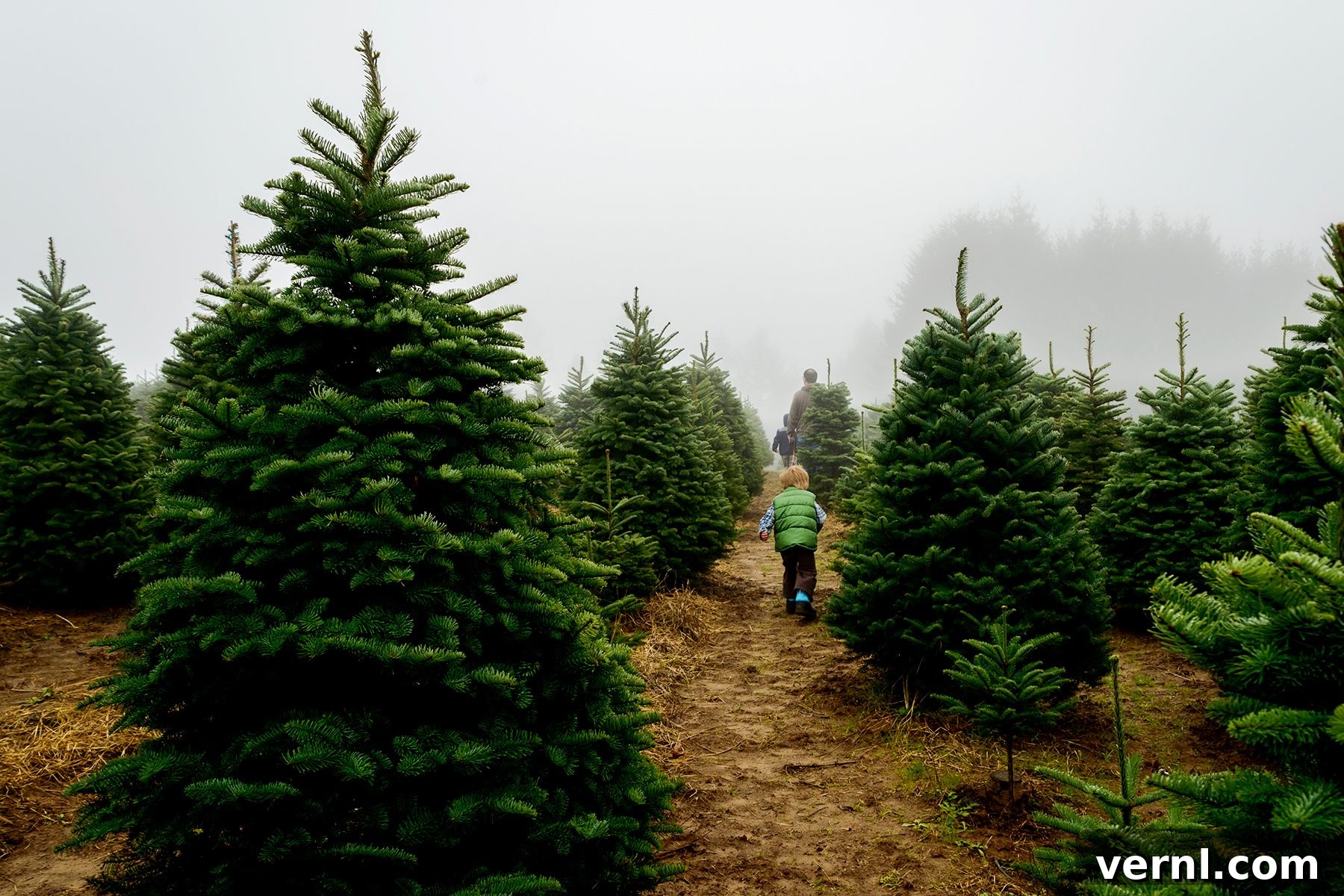
The allure of a Christmas tree farm often stems from more than just financial gain; it’s frequently a journey sparked by a deep-seated passion and a connection to the land. For some, like Tom Ward, owner of Ward Ranch in Bonny Doon, California, the motivation was simple yet profound: an enduring love for working with trees. This passion project, which began in 1995, illustrates the long-term commitment required, with trees taking a decade to mature sufficiently for sale and the business only recently turning a profit. This journey from sapling to sale highlights the patience and dedication inherent in Christmas tree farming.
On a different, yet equally illustrative, path are John and Karen Noltner of Noltner Tree Farm in Mondovi, Wisconsin. While more commercially oriented, their experience echoes Ward’s regarding the initial investment of time and capital. John Noltner candidly states that “you gotta put money into it for 10 years” before one can anticipate a positive return on investment. This sentiment underscores a universal truth in agricultural ventures: profitability is a marathon, not a sprint. Beyond the balance sheet, both the Noltners and Ward share motivations that transcend mere profit. John Noltner envisions his expansive 50-acre farm as a dynamic, three-dimensional art project, actively contributing to land restoration by transitioning it away from the monoculture of corn and soybean production. Ward, whose considerably smaller farm was transformed from a horse grazing pasture, finds immense satisfaction and fulfillment in the daily labor and connection to nature.
A common misconception among the uninitiated is the rapid growth cycle of Christmas trees. As Ward often encounters, people mistakenly believe that a seedling planted in January will be ready for harvest the following Christmas. The reality is far more protracted. Even with optimal weather conditions and healthy 16-inch seedlings, aspiring farmers should anticipate waiting at least five to seven years before the first harvest. This extended growth period demands careful planning, sustained effort, and significant initial investment without immediate returns, making it crucial for newcomers to understand the agricultural timeline.
The choice of tree species is another critical decision influenced heavily by geographic location and personal preference. Ward Ranch, benefiting from California’s temperate growing environment, embraces experimentation, cultivating over 15 distinct species. This diverse approach caters to a broader market and allows for resilience against specific pests or diseases affecting a single species. In contrast, the Noltners, operating in a more Northern climate conducive to high-production farming, strategically limit their selection to three or four robust species. This specialization allows them to optimize growing conditions and streamline management practices for maximum yield and quality for their chosen varieties.
How To Start a Christmas Tree Farm: A Comprehensive Guide
Embarking on the journey of Christmas tree farming requires meticulous planning and a phased approach. The foundational element, and perhaps the most obvious, is land. A minimum of 10 to 20 acres is typically recommended, though larger parcels generally correlate with a higher potential for a profitable operation. The economies of scale in tree farming are significant; more land allows for greater volume, which in turn can justify the investment in specialized equipment and potentially hiring additional labor. As Tom Ward aptly points out, “If you have enough land, enough volume and enough sales, you can hire other people to do the work. If you’re small, you’re going to have to do all the work yourself. And if you don’t love what you’re doing, you’re like, ‘Why am I working for less than minimum wage?'” This underscores the importance of scaling your operation to match your personal energy and financial goals.
Beyond land acquisition, establishing the business infrastructure is paramount. This involves giving your enterprise a distinctive name, registering it with the appropriate state authorities, and securing all necessary business and tax licenses. Establishing separate bank accounts for your farm is crucial for financial management and tracking. Furthermore, obtaining adequate insurance coverage is non-negotiable, protecting against unforeseen circumstances such as natural disasters, equipment damage, or liability issues. Finally, a thorough understanding of and compliance with local agricultural and environmental regulations is essential, often requiring specific licenses and permits related to land use, water management, and pest control. Engaging with local agricultural extension offices or relevant professional associations early in the process can provide invaluable guidance and resources.
For aspiring tree farmers, leveraging the expertise of established industry organizations can significantly smooth the startup process. The Noltners, for instance, collaborated closely with the Wisconsin chapter of the Christmas Tree Growers Association. Such associations offer a wealth of information on legal requirements, logistical challenges, best practices for cultivation, and market trends. They also provide networking opportunities, allowing new farmers to learn from seasoned professionals and access mentorship. This proactive engagement can help new businesses navigate complex regulatory landscapes and avoid common pitfalls, ensuring a more stable and compliant start.
What To Consider Before Growing Christmas Trees: Strategic Planning
Once the foundational business elements are in place, the strategic decisions regarding tree cultivation take center stage. The initial, and perhaps most impactful, choice is determining which tree species to plant. This decision is multifaceted, heavily influenced by local growing conditions, your U.S. Department of Agriculture Plant Hardiness Zone, and your desired timeline for bringing trees to market. Different species thrive in different climates, and their growth rates vary significantly, directly impacting when you can expect your first harvest.
The Noltners, situated in a Northern climate, strategically concentrated on three fir species known for their hardiness and relatively fast growth rate: Balsam, Fraser, and Canaan firs. These choices are well-suited to their USDA Plant Hardiness Zone, ensuring robust growth and disease resistance. In contrast, Tom Ward, benefiting from California’s more moderate climate, indulged in greater experimentation. His selection included five varieties of fir, three types of cypress, and three cedar varieties, alongside Colorado blue spruce, Monterey pine, and even more ambitious choices like Giant sequoia and Coastal redwood. This diverse planting strategy caters to a broader aesthetic preference among his clientele and mitigates risks associated with a single species failing to thrive.
While faster-growing trees might seem appealing for a quicker return on investment, Ward offers a crucial caveat: “The faster the tree, the more labor it takes.” Rapid growth often translates to more frequent shearing and maintenance to achieve the desired Christmas tree shape and density. This highlights a critical trade-off between growth speed and labor intensity that every farmer must consider. A comprehensive business plan should include a detailed analysis of the labor required for different species, factoring in growth rates, maintenance needs, and harvesting complexities.
Another pivotal decision involves labor management: will you undertake all the work yourself, or will you hire external help? The Noltners opted for the latter, partnering with a specialized company that manages the extensive upkeep, harvesting, and replanting processes. This outsourcing model allows them to focus on the strategic aspects of the business while delegating the labor-intensive field operations. The company then purchases the trees at wholesale prices, providing a predictable revenue stream. This approach reduces the direct labor burden on the owners but also impacts profit margins due to wholesale pricing.
Tom Ward, on the other hand, prefers a hands-on approach. Despite also working as a teacher, he dedicates himself to performing most of the farm work himself. This personal investment in labor, even if it means working for less than minimum wage on paper, aligns with his passion for the work and allows him to retain a larger share of the retail value. He operates a choose-and-cut model, selling all his trees at a flat retail rate of $90 each directly to customers. This direct-to-consumer strategy maximizes per-tree revenue but necessitates significant time investment in customer service, marketing, and managing the on-site experience.
Main Duties of a Christmas Tree Farmer: The Year-Round Commitment
Christmas tree farming is a year-round, labor-intensive agricultural operation. It demands the same meticulous care and attention as any other crop, often with additional specialized tasks unique to evergreens. A successful farmer must be prepared for a diverse range of duties, each crucial for the health, appearance, and marketability of the trees. The commitment extends far beyond the festive season, encompassing everything from initial planting to ongoing maintenance and eventual harvest.
- Irrigation: Water management is paramount, particularly for young trees establishing their root systems. A newly planted tree requires approximately a quart of water per day. As trees mature and approach harvest size, their water demand significantly increases, requiring about three quarts daily. On a large-scale operation like the Noltners’ 50-acre farm, which boasts a density of 1,000 trees per acre, this translates to an astounding daily water requirement of between 12,500 and 37,500 gallons. Implementing an efficient irrigation system, such as drip irrigation or overhead sprinklers, and monitoring soil moisture levels are critical tasks to ensure tree health and prevent stress, especially during dry periods.
- Pest Control: Christmas trees are susceptible to a wide array of threats, including various insects (like aphids, mites, and borers), microbial infections (such as needle cast and root rot), and underground marauders like gophers, deer, and other wildlife. An integrated pest management (IPM) strategy is essential, combining cultural practices, biological controls, and judicious chemical applications when necessary. Regular scouting for pests and diseases, understanding their life cycles, and implementing timely interventions are vital. Additionally, managing weeds is a continuous battle; competition for water and nutrients from weeds can severely hinder tree growth. Periodic de-weeding, often accomplished through mowing, tilling, or targeted herbicide application, is a fundamental farm task.
- Fertilizing: To maintain their vibrant color, dense foliage, and healthy growth, growing Christmas trees typically require an application of fertilizer each spring. Depending on soil analysis and specific tree needs, a secondary application in the fall might also be beneficial. Soil testing is crucial to determine nutrient deficiencies and guide fertilizer selection, ensuring trees receive the precise balance of nitrogen, phosphorus, potassium, and micronutrients they need. Proper fertilization directly impacts a tree’s vigor and overall sellability.
- Shearing: The iconic conical shape of a Christmas tree is not naturally occurring; it is the result of meticulous and periodic shearing. This process involves pruning and shaping the trees to encourage dense growth and achieve the desired symmetrical form. Fast-growing species, in particular, demand the most intensive shearing, sometimes requiring shaping four times a year, according to Ward. Shearing not only enhances the tree’s aesthetic appeal but also contributes to its overall health by removing weak or diseased branches.
- Replanting: After trees are harvested, growers must decide on their replanting strategy. Some choose to leave the stumps, allowing them to sprout new growth, a practice known as stump culture. However, Ward opts against this method, primarily because he dislikes the appearance of stumps in his fields. Instead, he grinds the stumps and plants new seedlings in their place, ensuring a clean field and fresh starts. The Noltners follow a similar approach, prioritizing new plantings to maintain consistent quality and field aesthetics. This continuous cycle of planting, growing, and harvesting ensures the long-term viability of the farm.
- Soil Testing and Preparation: Before any planting, comprehensive soil testing is vital to understand nutrient levels, pH, and soil composition. Proper soil preparation, including adjustments for acidity or alkalinity and ensuring good drainage, sets the stage for healthy tree development.
- Equipment Maintenance: Tree farming relies on various machinery, from tractors and mowers to irrigation pumps and shearing tools. Regular maintenance and repairs are essential to ensure equipment longevity and avoid costly downtime during critical periods.
- Marketing and Sales: Especially for choose-and-cut operations, marketing, customer service, and managing sales logistics during the busy holiday season become significant duties. This includes advertising, setting up retail areas, and assisting customers.
Is Christmas Tree Farming Profitable? A Realistic Outlook
The question of profitability in Christmas tree farming is complex, with no single definitive answer. “Can be,” says Tom Ward, emphasizing that success “depends on your size and your volume.” This highlights that profitability is not inherent to the industry but rather a direct outcome of scale, efficiency, and business model choices. It requires careful financial planning, a clear understanding of costs, and realistic revenue projections.
Ward’s own operation provides insight into a direct-to-consumer, owner-operated model. He sells approximately 500 trees per season at a flat rate of $90 each, having found that “selling by the foot or species is too complicated.” This simplified pricing strategy streamlines sales and customer interactions. Because he performs most of the labor himself, this translates to a gross revenue of $45,000 annually. From this, he deducts the cost of new seedlings, fertilizer, pest control supplies, and other necessary farm inputs. While his personal labor is unpaid in this calculation, his model allows him to capture the full retail value of each tree, maximizing gross profit.
The Noltners’ outsourced model presents a different financial picture. Relying on an outside company for upkeep, harvesting, and replanting means any profit they receive is a net profit, after the contractor’s fees have been paid. While they don’t specify their exact figures, their profitability is directly tied to the wholesale price they receive per tree from their service provider. This model reduces their operational involvement and labor costs but inherently limits their per-tree profit margin compared to a retail operation.
To put profitability into perspective, data from Michigan State University offers valuable benchmarks for the industry. If, for instance, a farm sells each tree for $20 at wholesale, they are likely just breaking even, covering their costs but earning minimal or no net profit. However, if they can achieve a wholesale price of $50 per tree, resulting in a net profit of $30 per tree (after all costs including labor and services), the financial outlook becomes significantly more attractive. For the Noltners, with their stated annual turnover of 2,500 to 5,000 trees, this scenario could yield a net profit ranging between $75,000 and $150,000 per year. This demonstrates the critical impact of per-tree selling price and volume on overall farm profitability.
Ultimately, successful Christmas tree farming demands a blend of passion, patience, and shrewd business acumen. The long initial investment period, the intensive labor requirements, and the fluctuating market conditions necessitate a robust business plan, consistent management, and a deep understanding of agricultural economics. For those willing to embrace the challenges and commit to the long-term vision, Christmas tree farming can indeed be a rewarding venture, offering both financial returns and the profound satisfaction of nurturing nature’s festive bounty.