
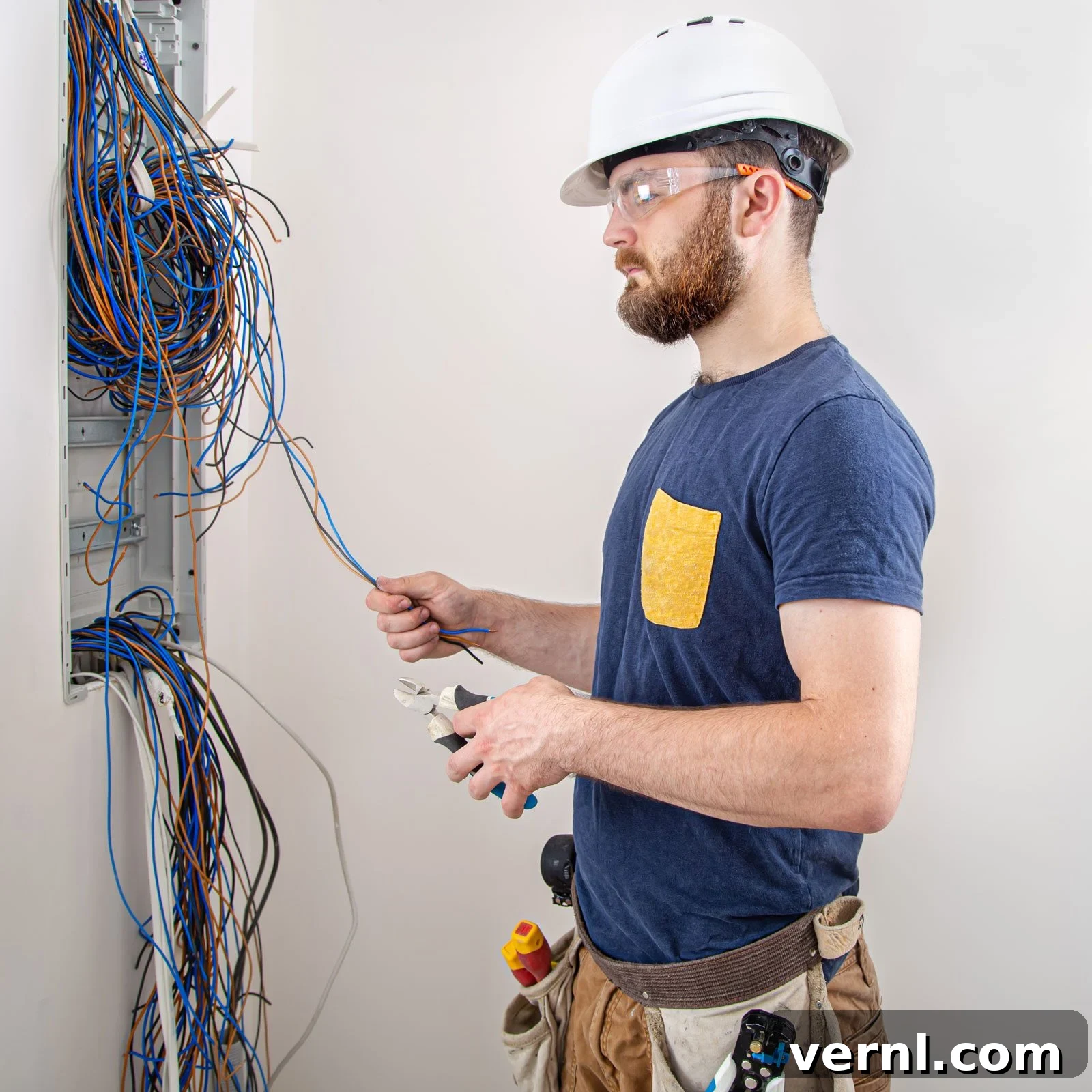
Hiring an Electrical Contractor vs. DIY: Weighing the Costs, Risks, and Benefits for Your Home Electrical Projects
Benjamin Franklin’s timeless adage, “Time is money,” resonates deeply when you’re faced with the decision of undertaking electrical work yourself or entrusting it to a qualified professional. While the allure of saving money through do-it-yourself projects is strong, the complexities, safety implications, and potential long-term costs associated with electrical work often tilt the balance in favor of professional expertise. This comprehensive guide will help you navigate the landscape of home electrical projects, understand how electrical contractors operate, and empower you to make an informed decision that priorititses both your budget and your family’s safety.
From simple fixture replacements to extensive garage wiring installations or a complete service panel upgrade, electrical work demands precision, adherence to stringent safety codes, and a thorough understanding of electrical systems. What might appear as a straightforward task can quickly become a hazardous and costly endeavor without the proper knowledge and tools. Professional electrical contractors are not just skilled laborers; they are licensed experts who invest heavily in training, safety protocols, and industry-standard equipment to ensure every job is completed to the highest standards.
For homeowners, time is undoubtedly a valuable commodity. If you possess ample leisure time, coupled with verifiable electrical knowledge and the practical skills to execute certain projects safely and compliantly, then a DIY approach could indeed lead to significant savings on labor costs. However, for many busy individuals juggling work, family commitments, and other responsibilities, delegating complex electrical tasks to a professional offers invaluable peace of mind and efficiency. Imagine returning home to find your electrical upgrades flawlessly completed, without the stress, research, and potential hazards of doing it yourself.
In the following sections, we will delve into the various methods electrical contractors use to price their services, explore the typical costs associated with common home electrical projects, and highlight the distinct advantages of hiring a professional. Ultimately, we’ll equip you with the insights needed to determine whether to have them done by a pro or embark on the DIY route.
How Do Electrical Contractors Structure Their Charges for Services?
Understanding the different ways electrical contractors bill for their services is crucial for effective budgeting and project planning. Contractors employ various pricing models depending on the scope, complexity, and predictability of the electrical work required.
Time and Material Projects: Transparency for Smaller Jobs
For minor electrical tasks, many contractors opt for a straightforward “time and materials” billing method. This approach involves charging the customer for the actual hours worked by the electrician(s) and the exact cost of the materials used, often with an agreed-upon markup. While the definition of a “small project” can vary among businesses, it typically encompasses jobs estimated to cost under a certain threshold, often around $500. This method is particularly suitable when the exact scope of work or the time required is difficult to ascertain upfront, such as during troubleshooting existing issues or performing quick replacements. It offers transparency, as homeowners see the direct costs of labor and components, though it requires trust in the contractor’s efficiency.
Bid Projects: Securing Competitive Pricing for Larger Undertakings
When it comes to larger, more complex electrical installations or renovations, the bidding process becomes the standard. This involves the contractor submitting a fixed-price proposal for the entire project, encompassing all labor, materials, and associated costs. Consumer protection advocates universally recommend obtaining bids from multiple contractors to ensure competitive pricing and to compare service offerings effectively. While the bidding process itself demands a bit more time from the homeowner to coordinate and review proposals, it is an invaluable method for selecting a qualified contractor at the most advantageous price point.
Crucially, bid documents should be meticulously detailed. They must clearly outline all project specifications, every service included in the quoted cost, and any exclusions. Vague or incomplete bids can lead to misunderstandings, unexpected charges, and potential disputes down the line. Always insist on a comprehensive written bid that leaves no room for ambiguity regarding the scope of work.
Service Calls and Hourly Rates: Understanding Labor Costs
Electrical contractors typically charge an hourly rate for service calls, which can fluctuate significantly based on geographic location, the contractor’s reputation, and the specific expertise required. On average, you can expect to pay around $125 per hour for a licensed journeyworker electrician, who possesses extensive training and certification. In many cases, to optimize efficiency and reduce overall labor costs for the customer, a licensed journeyworker may supervise one or two unlicensed apprentice electricians on a job site. Apprentices, who are gaining valuable on-the-job experience towards their own licensing, are typically billed at a lower hourly rate, often around $95. This tiered approach not only helps manage project costs but also supports the development of future skilled electricians within the industry.
It’s important to inquire about minimum service call charges, which cover the contractor’s travel time and initial diagnostic work, even if the actual repair takes less than an hour. These rates contribute to maintaining a well-equipped and responsive electrical service business.
Material Markup and Overhead: The Value Beyond Raw Costs
A common practice in the contracting industry is to apply a markup to the cost of materials. This isn’t merely about profit; it’s an essential component of the contractor’s business model, covering a wide array of operational costs known as overhead. Overhead can include administrative expenses, office rent, utility bills, vehicle maintenance, specialized tools, insurance premiums, ongoing training, and licensing fees. While material markups can range from 20% to as much as 40%, and overhead might account for an additional 10%, these figures are justifiable when considering the comprehensive value a professional electrical contractor provides.
A significant portion of this markup contributes to the contractor’s ability to offer warranties on their workmanship—often for several years—and on the materials they supply. A warranty is a written assurance that the contractor will address any specific issues related to their installation or faulty materials at no extra charge within the warranty period. Before selecting a contractor, always clarify their warranty policies. A seemingly low bid that lacks comprehensive warranty coverage could prove to be a false economy if problems arise later, leaving you responsible for additional repair costs.
Most Common Electrical Projects and Their Estimated Costs
The following estimated costs provide a general guideline for common electrical projects, but it’s crucial to remember that these figures can fluctuate considerably based on your geographical location, the specific conditions of your home, the complexity of the installation, and the quality of materials chosen. These estimates typically do not include local permit and inspection fees, which are mandatory for most electrical work and ensure compliance with safety codes. Project timelines can also vary significantly based on site accessibility, unforeseen challenges, and the contractor’s schedule. Mike Phiffner from South Side Electric in Bloomington, Minn. generously provided insights into his most frequent homeowner projects, offering a practical perspective on real-world costs.
Troubleshooting Existing Branch Circuits (Dead Wiring, Short Circuits, Overloaded Circuits, etc.)
- Estimated Cost: $250 – $500
- What’s Involved: This service addresses common household electrical nuisances like outlets that suddenly stop working, lights that flicker intermittently, or breakers that trip frequently. Professional troubleshooting requires specialized diagnostic tools and a systematic approach to identify the root cause, which could range from a loose connection, a faulty component, or an overloaded circuit. These types of problems often require an experienced eye and can usually be resolved efficiently within a couple of hours, provided the issue isn’t deeply embedded or widespread.
Replacing Old Light Fixtures with New Light Fixtures
- Estimated Cost: Minimum service call of $125 – $250 per fixture
- What’s Involved: Upgrading dated light fixtures can dramatically improve a room’s aesthetics and energy efficiency. While seemingly simple, proper installation involves safely disconnecting old wiring, securely mounting the new fixture, and correctly connecting the new wiring according to code. The cost per fixture can decrease if multiple fixtures are replaced during the same service call, but intricate designs, heavy fixtures, or installations requiring new wiring runs will increase the total cost.
Installing Receptacle Outlets, Ground-Fault Protection (GFCI), Arc-Fault Protection (AFCI), etc.
- Estimated Cost: $150 – $400 per outlet (depending on type and location)
- What’s Involved: Installing new outlets or upgrading existing ones to include modern safety features like GFCIs (essential in wet areas like kitchens and bathrooms) and AFCIs (crucial for bedroom circuits to prevent electrical fires) is more complex than simple fixture replacement. It often requires running new wiring from the electrical panel, cutting into walls, ensuring proper grounding, and adhering strictly to current electrical codes. This additional complexity and the time required contribute to the higher cost per unit compared to basic light fixture replacement.
Installing Wiring for Major Appliances like a Range, Clothes Dryer, or Wall Oven
- Estimated Cost: $750 – $1,500 or more
- What’s Involved: Major appliances demand dedicated high-amperage branch circuits (e.g., 30-, 40-, or 50-ampere circuits) due to their significant power draw. This project involves installing heavy-gauge wiring from the main electrical panel directly to the appliance’s location, which often requires opening walls, drilling through studs, and ensuring the panel has adequate capacity. The cost is driven by the more expensive, thicker gauge wire, specialized circuit breakers, the labor-intensive nature of the installation, and the critical importance of safety to prevent overloading and potential fires.
Installing Wiring for a Bathroom Remodel Project
- Estimated Cost: $1,200 – $3,000 or more
- What’s Involved: Bathroom remodels are multifaceted, involving a significant overhaul of the electrical system. This can include installing new lighting schemes (recessed, vanity, shower lights), exhaust fan wiring, numerous GFCI-protected receptacles, and potentially luxurious additions like in-floor electric heating systems. Each new component requires dedicated wiring runs and adherence to specific damp-location codes, all contributing to a higher overall cost and requiring meticulous planning and execution.
Installing Wiring for a Kitchen Makeover Project
- Estimated Cost: $10,000 – $20,000 or more (depending on scope)
- What’s Involved: A kitchen makeover is often one of the most electrically intensive and expensive upgrades in any home. It typically entails rerouting and adding numerous dedicated circuits for new appliances (refrigerator, dishwasher, microwave, disposal, oven, cooktop), installing extensive task and ambient lighting, adding multiple GFCI outlets for countertops, and often upgrading the service panel to accommodate the increased load. The sheer volume of new wiring, fixtures, and code requirements makes this a substantial project.
Converting an Unfinished Basement into a Habitable Space
- Estimated Cost: $5,000 – $15,000 or more
- What’s Involved: Transforming an unfinished basement into a living area requires building out an entire new electrical infrastructure. This includes installing general lighting, dedicated circuits for new rooms (bedrooms, bathrooms, living areas), ample receptacle outlets, smoke detectors, and potentially specialized wiring for entertainment systems or a home office. The cost can vary widely based on the size of the basement, the intended usage of the new spaces, and existing conditions like the age of the home’s original wiring and service panel capacity.
Replacing the Outdated Service Panel with a New One
- Estimated Cost: $1,500 – $3,000 or more
- What’s Involved: An electrical service panel replacement is a critical upgrade, especially in older homes with outdated fuse boxes or undersized breaker panels. This project involves replacing the entire main electrical distribution hub. The cost can be on the lower end if the new panel fits neatly within the existing footprint and no extensive rewiring of branch circuits is needed. However, if the new panel is larger or requires significant modifications to the incoming service lines, the cost will increase. Understanding the cost to replace an electrical panel is vital for home efficiency and safety.
Upgrading the Old 60- or 100-Ampere Service to 200- or 400-Ampere Service
- Estimated Cost: $2,750 – $6,000 or more
- What’s Involved: This is a more extensive upgrade than just replacing the panel, as it involves increasing the total electrical capacity supplied to your home. It typically requires replacing the meter socket, the service entrance conductors (the main power lines coming into your home), and potentially coordinating with the electric utility company for a service disconnect and reconnection. The need for bigger, more robust equipment and significantly more labor-intensive work drives up the cost of this essential project, particularly common for homes undergoing major renovations or adding high-demand appliances.
Installing Wiring for an Electric Vehicle (EV) Charging Station
- Estimated Cost: $1,000 – $2,500 or more
- What’s Involved: Installing a dedicated circuit for an EV charging station typically requires a 240-volt, 40- to 60-ampere circuit. The cost hinges heavily on the distance from your main electrical panel to the charging location, the type of charging unit, and, most importantly, whether your existing service panel has adequate spare capacity to handle the additional load. If a service panel upgrade is needed to accommodate the EV charger, the overall cost will increase substantially.
Troubleshooting Homeowner Wiring Projects Deemed Non-Compliant by the Electrical Inspector
- Estimated Cost: Minimum service call of $125 – $500+
- What’s Involved: This scenario underscores one of the most significant risks of DIY electrical work. If an electrical inspector finds deficiencies or code violations in homeowner-installed wiring, the project will not pass inspection, and you will be required to hire a licensed contractor to correct the issues. These situations vary widely in complexity and cost, from minor adjustments to complete rewiring of non-compliant sections. While the initial goal was to save money, rectifying DIY mistakes by a professional can often end up being more expensive than hiring a pro from the outset, highlighting the value of code compliance and expert installation.
What Are Some Distinct Advantages of Hiring an Electrical Contractor?
Beyond simply getting the job done, hiring a professional electrical contractor brings a multitude of benefits that extend to safety, legal compliance, and long-term peace of mind. These advantages often far outweigh the perceived upfront savings of a DIY approach.
-
Ensured Quality Workmanship by Licensed Professionals: Electrical contractors employ licensed electricians who have undergone rigorous training, apprenticeships, and examinations to demonstrate their expertise. This ensures that all work is performed to the highest industry standards, reducing the risk of shoddy installations that can lead to hazardous situations or costly future repairs.
-
Comprehensive Licensing, Bonding, and Insurance: Reputable electrical contractors are licensed by state or local regulatory authorities, ensuring they meet minimum professional standards. They are also typically bonded, which provides financial protection to homeowners if the contractor fails to complete the job or meet contractual obligations. Crucially, they carry comprehensive liability insurance, protecting you from financial responsibility in the event of accidents, damage to your property, or injury during the project.
-
Statutory Warranties and Workmanship Guarantees: Many jurisdictions mandate that contractors provide statutory warranties on their work, obligating them to rectify any defects or issues that arise within a specified period at no additional cost. Beyond legal requirements, many contractors also offer explicit workmanship guarantees, standing behind the quality and durability of their installations. This provides invaluable peace of mind, knowing your investment is protected.
-
Expertise in Permits and Inspections: Almost all significant electrical work requires permits and subsequent inspections by local authorities to ensure code compliance and safety. Contractors are intimately familiar with this bureaucratic process, handling all necessary paperwork, scheduling inspections, and ensuring the project meets all local building codes. This saves homeowners significant time, effort, and potential headaches associated with navigating regulatory requirements.
-
Proficiency in Written Estimates, Quotes, and Contracts: Professional contractors provide detailed written estimates, transparent quotes, and legally binding contracts. These documents clearly outline the scope of work, materials to be used, project timeline, and total cost, minimizing misunderstandings and protecting both parties. This level of professionalism and clear communication is vital for successful project execution.
-
Up-to-Date Knowledge of Electrical Code Changes: Electrical codes, such as the National Electrical Code (NEC), are regularly updated to incorporate new technologies and enhanced safety measures. Licensed electricians stay current with these changes through ongoing education and training, ensuring that all installations are not only safe but also fully compliant with the latest regulations, preventing potential issues during inspections or future property sales.
-
Seamless Coordination with Electric Utilities: For projects involving service panel upgrades or new service installations, close coordination with the local electric utility company is often necessary. Contractors handle this liaison, managing power disconnections, new meter installations, and reconnections, streamlining a potentially complex process for the homeowner.
-
Access to Specialized Skills, Knowledge, Tools, and Materials: Electrical contractors possess a unique combination of specialized skills, in-depth knowledge of electrical theory and practical application, and access to commercial-grade tools and equipment that are often beyond the reach of the average DIYer. They also have established relationships with suppliers, ensuring access to quality materials at competitive prices. This comprehensive capability allows them to execute jobs efficiently, safely, and to a professional standard.
-
Long-Term Relationship and Peace of Mind: Establishing a good working relationship with a trusted electrical contractor is an invaluable asset for any homeowner. Just like having a reliable plumber or mechanic, having a professional electrician on speed dial provides peace of mind, knowing you have an expert to call upon for future needs, emergencies, or advice. This ongoing relationship ensures consistency and reliability for all your home’s electrical requirements.