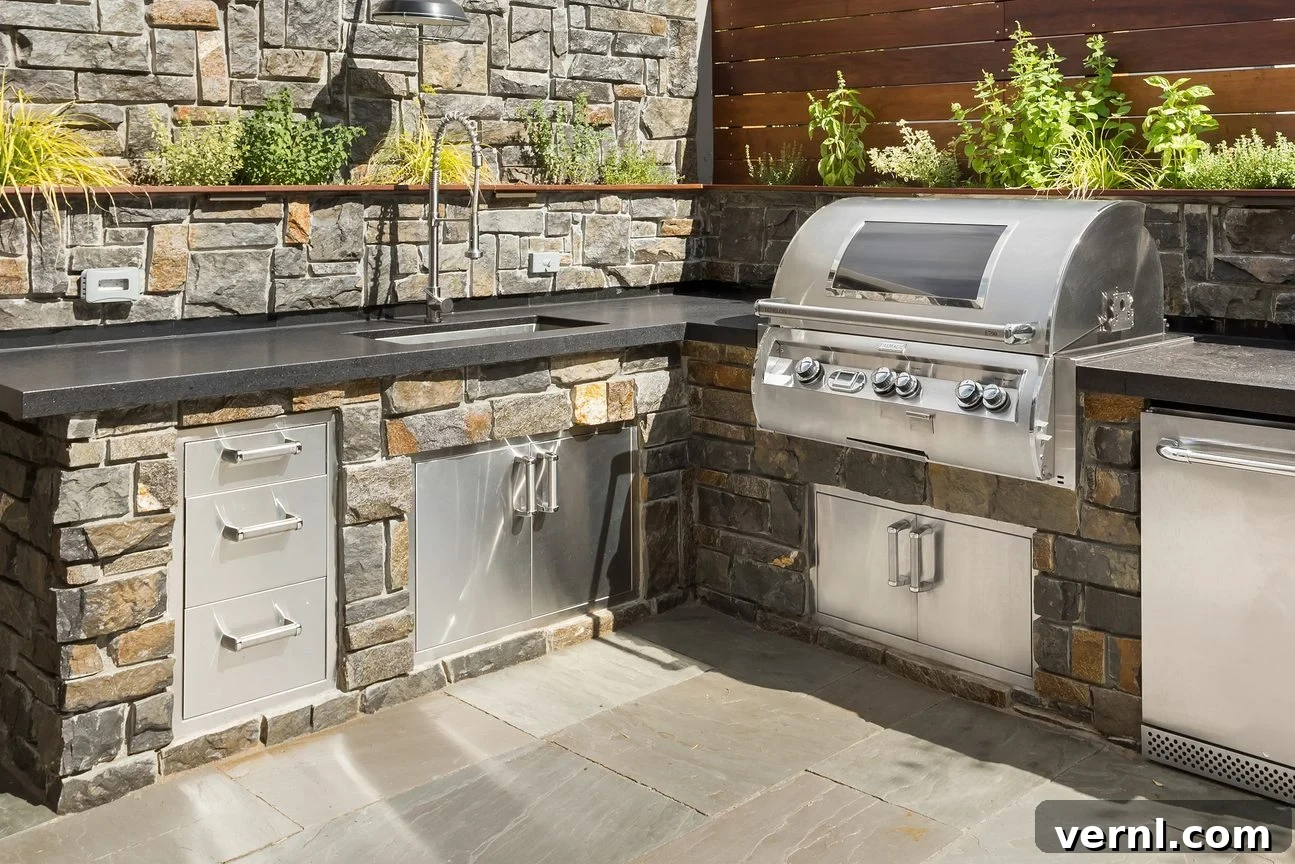
An outdoor kitchen is more than just a place to grill; it’s a vibrant extension of your home’s living space, a hub for entertaining, relaxation, and culinary exploration. At the heart of a truly functional outdoor kitchen lies its unsung hero: the sink. Far from being a mere utility item, an outdoor kitchen sink is subjected to a unique set of demands that indoor sinks never face. It must bravely endure the elements, from the relentless freeze/thaw cycles of colder climates to the intense UV radiation and prolonged moisture exposure in sunnier regions. Beyond its robust construction, it needs to visually complement the aesthetic of your entire outdoor living area, seamlessly blending with the design while standing up to frequent and varied use. This versatile workstation isn’t just for cooking and cleaning; it might also serve as a practical spot for gardening tasks or even the occasional dog bath, underscoring the need for exceptional durability and ease of maintenance.
While a simple polyethylene utility sink might suffice for a rudimentary setup, anyone envisioning a full-service outdoor kitchen complete with a dedicated cooking area, a stylish refrigerator, and comfortable seating will undoubtedly seek an outdoor kitchen sink that offers both superior functionality and a refined aesthetic. Such a sink becomes a focal point, effortlessly transitioning between food preparation, washing dishes, and serving as a convenient clean-up station for all kinds of outdoor activities. Therefore, selecting the right outdoor sink involves careful consideration of its material, design, and how it will integrate into your personalized outdoor oasis.
Choosing Your Outdoor Kitchen Sink: Key Considerations
Selecting the perfect outdoor kitchen sink requires a thoughtful balance between practicality and personal style. While your local climate and desired outdoor kitchen style are paramount, several other factors play a crucial role in ensuring you make the best decision for your home and lifestyle. Keep the following points in mind as you embark on your selection journey:
Climate and Environmental Resilience
The geographical location of your outdoor kitchen dictates many of the material requirements for your sink. In regions characterized by harsh winters, extreme temperature fluctuations, and freeze/thaw cycles, the chosen sink material must exhibit exceptional resilience. Metals, stone, or advanced composites that can expand and contract without cracking or sustaining damage are ideal. Stainless steel (particularly marine-grade), certain composite granites, and natural stone sinks are often excellent choices here. Conversely, if you reside in an area with consistently high temperatures and abundant sunshine, material properties that disperse sun’s glare and resist fading or heat absorption become critical. Options like brushed stainless steel, composite granite, or beautifully hand-tooled copper can perform wonderfully, providing both durability and a comfortable user experience by minimizing blinding reflections.
Overall Kitchen Design and Aesthetics
The integration of your sink into the overarching design of your outdoor kitchen is essential for both visual harmony and practical utility. Consider whether your outdoor kitchen will feature a protective roof or pergola. If not, direct exposure to wind, rain, and intense sunlight means that factors like glare from the sink’s surface, its ability to withstand constant moisture, and resistance to UV degradation become even more important. A covered kitchen offers greater flexibility in material and finish choices, allowing you to prioritize aesthetics alongside durability. Furthermore, the sink must perfectly complement the look and size of your chosen countertop material, whether it’s natural stone, concrete, tile, or a high-performance composite. For those opting for a modular outdoor kitchen system, specific sink dimensions and mounting types designed to integrate seamlessly with pre-fabricated units will be a primary concern, ensuring a cohesive and functional setup.
Intended Function and Practicality
The purpose and frequency of your outdoor sink’s use should heavily influence your choice of size, depth, and configuration. If your outdoor kitchen frequently hosts large gatherings, necessitating extensive food preparation and dishwashing, a generously sized and deep basin will be invaluable. Many homeowners find that their outdoor sink often doubles as a versatile utility workstation. In such cases, a larger, deeper sink is paramount for accommodating oversized pots, grilling grates, gardening tools, or even pet washing. For those who anticipate washing dishes outdoors or require a dedicated space for gardening activities, a double-basin sink offers enhanced functionality, allowing for simultaneous soaking, washing, or separating clean and dirty items. Consider accessories like cutting boards, colanders, or drying racks that can transform your sink into an even more efficient prep and cleanup station.
Popular Outdoor Kitchen Sink Materials
The material of your outdoor kitchen sink is perhaps the most critical decision, impacting its durability, aesthetics, and long-term maintenance. While stainless steel and composite granite remain the most prevalent choices, a variety of other materials like copper, concrete, porcelain, and quartz also offer excellent performance and visual appeal in outdoor settings. Each material presents a unique set of advantages and characteristics suited for different needs and styles.
- Stainless Steel: Widely regarded as the gold standard for outdoor kitchen sinks, stainless steel is prized for its exceptional durability, lightweight nature, and virtual imperviousness to rust and corrosion. For outdoor applications, 304-grade stainless steel is common, but 316-grade (often called “marine grade”) offers superior corrosion resistance, especially in coastal or high-salt environments. Stainless steel sinks are incredibly versatile, available in an extensive range of shapes and types, including practical single-basin, efficient double-basin, classic top-mount, sleek undermount, and the ever-popular apron-front (farmhouse) style. The gauge of the steel indicates its thickness and robustness; typically ranging from 22-gauge (lighter and more prone to denting or noise) to 12-gauge (heavy, solid, and exceptionally durable). A brushed or satin finish is often preferred outdoors to minimize glare and show less scratching.
- Composite Granite: These sinks are engineered marvels, crafted from a blend of natural granite dust and high-performance acrylic resins. The result is an extremely durable, non-porous material that is highly resistant to scratches, chips, and heat. Composite granite sinks are significantly heavy, which means the underlying cabinetry may require reinforcement to support their weight. They typically come in a sophisticated palette of black, gray, off-white, and white, offering a modern and refined look. Available in both top-mount and undermount configurations, composite materials are remarkably easy to clean, highly resilient in extreme weather conditions, and visually stunning when paired with natural stone or tile countertops. Their ability to withstand UV rays without significant fading makes them an excellent long-term choice for sunny locations.
- Quartz: Similar in composition to composite granite, quartz sinks are an amalgam of crushed natural stone (often a combination of granite, marble, silica, and sometimes actual quartz crystals) and synthetic polymer resins. This manufacturing process yields an extremely dense and durable material that shares many of the advantages of composite granite. Quartz sinks are exceptionally hard-wearing, resistant to scratches, stains, and heat, and boast impressive resilience against impact. They offer a comparable range of sophisticated color choices, including various shades of black, gray, off-white, and white, making them a sleek and contemporary option for any outdoor kitchen design. Their non-porous surface also means superior hygiene and ease of cleaning.
- Copper: For a sink that truly makes a statement, copper is an exquisite choice. Beyond its undeniable aesthetic appeal, copper is naturally rust-resistant and inherently antimicrobial, making it an excellent hygienic option. One of copper’s most celebrated characteristics is its ability to develop a unique, soft patina over time when exposed to the elements. This living finish evolves from a shiny new copper to rich browns, and eventually, to a subtle verdigris green. While some homeowners cherish this evolving character, others prefer to maintain the original luster, which requires periodic cleaning and waxing to prevent the deeper green coloration. Copper sinks are known for their longevity and can be a stunning focal point in a rustic or luxurious outdoor kitchen.
- Concrete: Offering a robust, industrial aesthetic, molded concrete sinks are both durable and highly functional. Their customizability is a major draw, as they can be poured into virtually any shape or size and tinted with various pigments to match specific design schemes. However, concrete is inherently porous and exceptionally heavy, necessitating regular sealing to prevent staining and ensure hygiene. It generally requires more diligent cleaning than non-porous materials. A key consideration for outdoor concrete sinks is their susceptibility to cracking in extreme temperature fluctuations, particularly severe freeze/thaw cycles, if not properly formulated, installed, and sealed. Despite these maintenance requirements, a well-crafted concrete sink can provide a unique and long-lasting centerpiece.
- Porcelain: Renowned for its incredibly smooth, non-porous surface, porcelain is arguably the easiest sink material to keep clean and maintain its pristine appearance. It resists stains and bacteria remarkably well. However, porcelain, particularly traditional enameled cast iron or fireclay versions, is more susceptible to chipping and breaking from heavy impact compared to metal or composite options. This fragility makes it a less ideal choice for an outdoor kitchen that is expected to double as a high-traffic utility area or endure rigorous use. For a more decorative or less intensely used outdoor kitchen, a porcelain sink can offer timeless elegance and effortless cleaning.
Coordinating Your Outdoor Kitchen Faucet
The faucet is not merely a functional component; it’s a design element that ties your sink and countertop together. Most homeowners typically choose their faucet based on the style and finish of their chosen sink and countertop. However, if you already have a particular faucet in mind or wish to repurpose one, you might reverse the process, selecting a sink that complements your preferred fixture. Crucially, like the sink itself, your outdoor faucet must be engineered for superior weather resistance. Stainless steel is often the best choice for faucet material due to its inherent durability and resistance to corrosion, though marine-grade brass or specialized outdoor finishes can also perform well.
When it comes to installation, top-mount sinks often come pre-drilled with one or three faucet holes positioned at the back deck of the sink. While many standard kitchen faucets traditionally require three holes, contemporary pull-out or pull-down spray faucets often utilize only one central hole, simplifying the aesthetic. If you opt for an undermount sink, the faucet will need to be mounted directly onto the surrounding countertop. This requires precise drilling of the necessary holes into the countertop as an integral part of your larger outdoor kitchen project. Always remember to consider the need for easily accessible shut-off valves, which are crucial for winterizing your outdoor plumbing system in colder climates to prevent freezing and damage.
Cost Considerations for Your Outdoor Sink
The investment required for an outdoor kitchen sink can vary significantly, primarily influenced by its style, material, and installation complexity. Sink costs generally follow a hierarchy based on mounting type: top-mounts are typically the most economical, undermounts fall into the mid-range, and the distinctive apron-front (farmhouse) sinks are usually the costliest due to their design and manufacturing complexity. The overall size of the sink also plays a direct role in its price. Furthermore, installation costs, especially if you opt for professional help rather than a DIY approach, can be considerably higher for undermount and apron sinks compared to the relatively straightforward installation of a top-mount unit, often requiring specialized cutting and support for the countertop.
Breaking down costs by material provides a clearer picture:
- Stainless steel remains one of the most economical and popular choices, with prices generally ranging between $400 and $1,000 for a quality outdoor-grade sink.
- Composite sinks, including both composite granite and quartz, typically command a higher price point, ranging from $800 to $1,500 due to their advanced manufacturing processes and superior durability.
- Porcelain sinks, particularly those designed for outdoor use, usually fall within the $900 to $1,500 bracket, reflecting their classic appeal and specialized construction.
- Copper sinks represent a more luxurious splurge, with their unique aesthetic and inherent properties often placing them in the $1,500 to $2,500 range, especially for hand-crafted or larger models.
- For those drawn to the distinctive look of concrete, you can find pre-molded concrete sinks for as little as $500 to $600, while custom-designed or larger concrete sinks can be considerably more.
When budgeting, remember to factor in not just the purchase price but also potential installation fees, the cost of a suitable faucet, and any necessary cabinetry modifications or reinforcements, especially for heavier materials like concrete or composite granite. Choosing the right outdoor kitchen sink is an investment in the functionality and beauty of your outdoor living space, promising years of enjoyment and convenience.