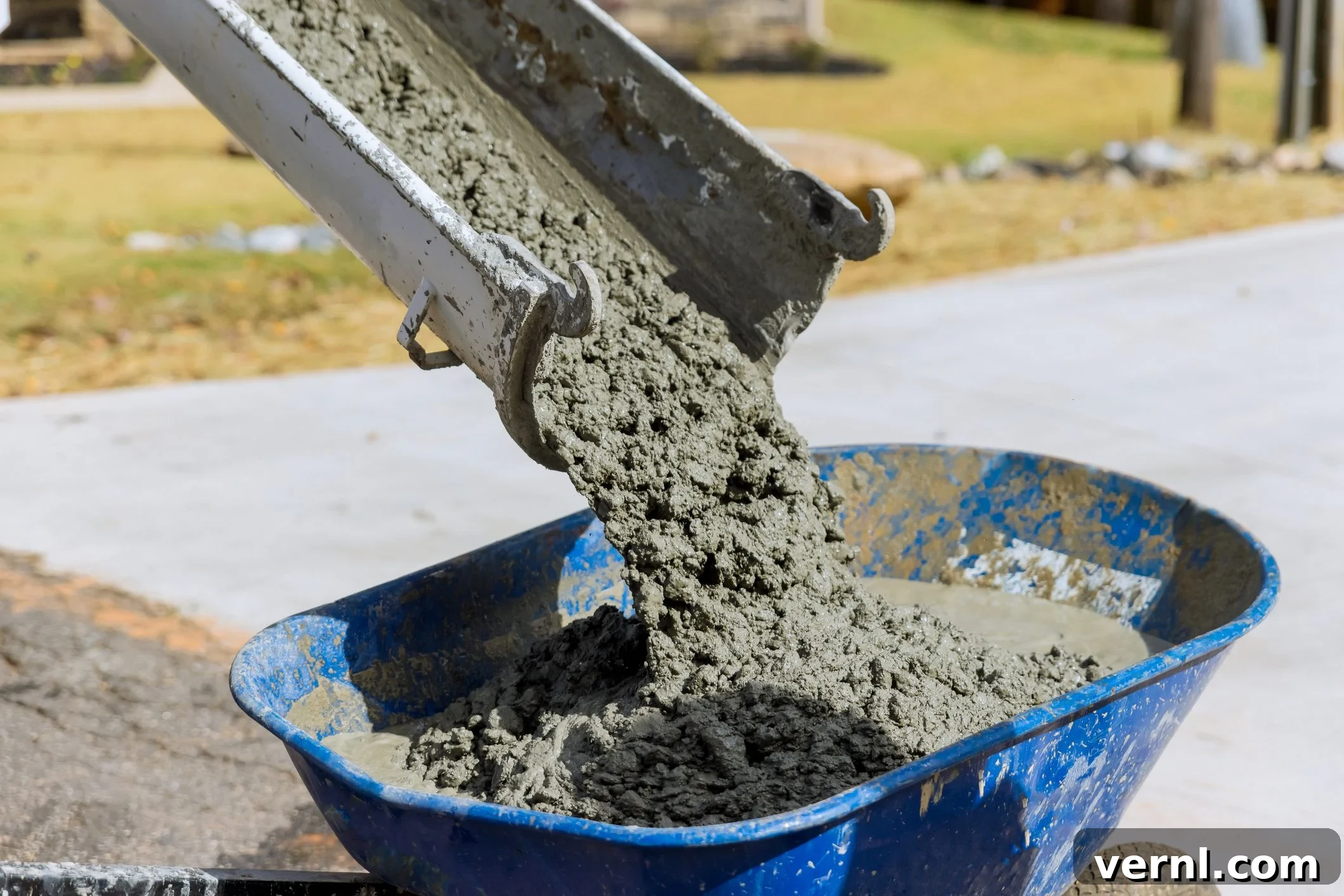
Concrete, a cornerstone of modern infrastructure, has profoundly shaped our built environment. Its unparalleled strength, remarkable durability, and cost-effectiveness have made it the go-to material for everything from towering skyscrapers and intricate bridges to vast road networks and foundational structures. For centuries, humanity has relied on this robust composite to construct the very fabric of civilization. However, as global awareness of climate change intensifies, the true environmental cost associated with concrete’s widespread use is coming under increased scrutiny. This critical examination has prompted industry leaders, environmental agencies, and governments worldwide to question its long-term sustainability and to actively seek more responsible alternatives.
The paradox of concrete lies in its dual nature: an indispensable building block for progress, yet a significant contributor to global carbon emissions. This growing concern is driving an urgent search for materials that can replicate concrete’s benefits without its considerable ecological footprint, or at the very least, for innovative methods to produce concrete with drastically reduced environmental impact. This comprehensive guide will explore the challenges posed by conventional concrete production and delve into the most promising sustainable alternatives and greener manufacturing processes that are poised to redefine the future of construction.
Concrete’s Environmental Footprint: A Deep Dive into the Challenge
While concrete has been an integral part of human development for millennia, its demand has never been higher than today. The sheer volume of concrete consumed globally annually is staggering, underpinning virtually every aspect of urban and rural development. However, this omnipresence comes at a steep environmental price, primarily due to the energy-intensive processes involved in its production.
Estimates reveal that the production of cement, the key binding agent in concrete, is responsible for approximately eight percent of the world’s total carbon emissions. To put this into perspective, if the cement industry were a country, it would be the third-largest emitter of carbon dioxide (CO2) globally, trailing only China and the United States. This substantial contribution of CO2, a potent greenhouse gas, is a primary driver of global warming and climate change, making concrete production a critical factor in environmental pollution.
Beyond emissions, the sheer physical scale of concrete’s presence on Earth is equally concerning. Some scientific studies suggest that the total mass of concrete on the planet now surpasses the combined biomass of all trees, bushes, and shrubs. This phenomenon, often referred to as “technomass” or “anthropogenic mass,” highlights the profound impact human construction has had on the planet’s geological and ecological systems. As new structures rise and older ones inevitably degrade, this mass continues to grow, placing immense pressure on natural landscapes and resource availability.
Understanding the Production Process and its Environmental Impact
Concrete is fundamentally a mixture of aggregates—typically sand and gravel—bound together by cement and water. The core environmental issue stems almost entirely from the cement manufacturing process. Portland cement, the most common type, is produced by grinding clinker, a material made by heating limestone and clay to extremely high temperatures, often exceeding 1450°C, in massive rotating kilns.
During this intense heating process, a chemical reaction known as calcination occurs. Limestone (calcium carbonate, CaCO3) decomposes into calcium oxide (CaO) and carbon dioxide (CO2). While the calcium oxide is essential for forming the cement clinker, the carbon dioxide is released directly into the atmosphere. This chemical release, coupled with the immense amount of energy required to heat the kilns (which traditionally rely on fossil fuels like coal), constitutes the dual source of cement’s significant carbon footprint. The resulting CO2 intensifies the greenhouse effect, trapping heat in the atmosphere and contributing to global temperature rise.
Is Concrete a Renewable Resource? Exploring Sustainability Claims
In the strictest sense, concrete is not a renewable resource. Its primary components—limestone, clay, sand, and gravel—are finite geological resources that take millions of years to form naturally. Once extracted and processed, they are not replenished on a human timescale.
However, the industry does engage in practices that aim to improve its sustainability profile. One key approach is recycling. Concrete from demolished buildings and infrastructure can be crushed and ground into aggregate, which then serves as a fill material for new roads, bases, landscaping, or drainage systems. This process helps reduce the amount of construction and demolition waste sent to landfills and decreases the demand for virgin aggregates. Yet, the recycling process itself is not without environmental cost. It requires heavy machinery for demolition, collection, transportation, and crushing, all of which are typically fossil fuel-intensive operations, adding to carbon emissions and energy consumption.
Despite its non-renewable status, many proponents of concrete argue for its sustainability based on several factors:
- Abundant Materials: The raw materials for concrete are among the most abundant on Earth, ensuring a vast supply for construction needs.
- Exceptional Lifespan: Concrete structures boast an incredibly long lifespan, often lasting for many decades or even centuries with proper maintenance. This durability reduces the need for frequent replacement, conserving resources over time.
- Thermal Mass: Concrete possesses excellent thermal mass properties, meaning it can absorb and store heat energy. This capability can significantly improve a building’s energy efficiency by moderating internal temperatures, reducing the need for extensive heating and cooling systems.
- Carbon Reabsorption: Over its lifetime, exposed concrete can slowly reabsorb some atmospheric carbon dioxide through a process called carbonation. While this process is relatively minor compared to initial emissions, it does offer a degree of carbon sequestration.
- Technological Advancements: Ongoing research and development are pushing the boundaries of concrete technology. Innovations like self-healing concrete, which can automatically repair cracks, promise to further extend the lifespan of structures and reduce maintenance, enhancing its long-term sustainability.
These arguments highlight a complex interplay between concrete’s fundamental characteristics and efforts to mitigate its environmental impact, underscoring the ongoing debate about true sustainability in construction.
The Imperative for Change: Why Sustainable Alternatives are Crucial
The escalating environmental concerns surrounding traditional concrete production are driving an urgent global imperative for change. Governments worldwide are setting ambitious carbon reduction targets, and the construction sector, as a major contributor to global emissions, faces increasing pressure to decarbonize. Beyond regulatory compliance, there’s a growing awareness among consumers, architects, and developers about the social and environmental responsibility associated with building practices.
This shift is not just about environmental stewardship; it’s also becoming an economic necessity. As carbon pricing mechanisms become more widespread and investor scrutiny of environmental, social, and governance (ESG) factors intensifies, the financial risks associated with high-carbon building materials are becoming clearer. Embracing sustainable construction materials and methods offers numerous benefits, including reduced operational costs through improved energy efficiency, enhanced brand reputation, access to green financing, and the potential to unlock new market opportunities in the burgeoning green economy. The search for viable, eco-friendly concrete alternatives and greener production methods is therefore not just a desirable goal but a critical pathway towards a truly sustainable future for the built environment.
Leading Concrete Alternatives in Sustainable Building
As the construction industry seeks to limit or even cease traditional cement production, there is an accelerating demand for innovative concrete alternatives. These materials, many leveraging waste products or natural resources with minimal processing, are poised to claim a significant share of the market as technological advancements, research, and environmental awareness continue to grow.
Ferrock: A Carbon-Negative Innovation
Ferrock is a remarkable material created from industrial waste products, specifically steel dust and silica, which are byproducts of steel and glass production, respectively. What sets Ferrock apart is its exceptional environmental profile: it is stronger and significantly more flexible than traditional concrete. Crucially, Ferrock actively binds carbon dioxide from the atmosphere as it cures, effectively reusing potentially harmful greenhouse gases and locking them into the material. This unique characteristic positions Ferrock as a potentially carbon-negative alternative, meaning its production and use could remove more CO2 from the atmosphere than it emits. Its application holds immense promise for foundations, structural elements, and precast components where strength and environmental benefits are paramount.
Rammed Earth: An Ancient, Sustainable Technique Reimagined
Rammed earth is an ancient building technique experiencing a modern resurgence due to its inherent sustainability. The process involves compacting damp subsoil—typically a mixture of sand, gravel, and a small amount of clay—into temporary formwork under immense pressure. Once cured, the result is a monolithic wall that is incredibly strong, sturdy, and visually striking. Rammed earth structures boast an impressive thermal mass, allowing them to absorb heat during the day and release it slowly at night, thereby stabilizing internal temperatures and significantly reducing the need for artificial heating and cooling. While it can be labor-intensive, particularly for large-scale projects, the finished product features beautiful, natural layers of material that offer a unique aesthetic appeal and deliver many of the same structural and thermal benefits as concrete, with a fraction of the environmental impact. Modern techniques can incorporate stabilizers like cement or lime for increased durability, though efforts are made to minimize these additions.
Timbercrete: Blending Wood Waste with Cement
Timbercrete offers an innovative solution by integrating wood waste into a cementitious matrix. This material is produced by mixing sawdust, a readily available byproduct of lumber production, with cement, but at significantly lower volumes than in traditional concrete. The inclusion of sawdust makes Timbercrete considerably lighter than conventional concrete, which reduces transportation costs and makes handling easier on construction sites. Despite its lighter weight, Timbercrete maintains impressive strength and weather resistance, making it suitable for a variety of applications, including blocks, panels, and flooring. Its composition also provides improved insulation properties compared to solid concrete, contributing to the energy efficiency of buildings.
Hempcrete: A Breathable, Carbon-Sequestering Bio-Composite
Hempcrete is a pioneering bio-composite material made from hemp shives, the woody inner core of the hemp plant, which is a byproduct of hemp fiber production. When these shives are mixed with a lime-based binder, sand, and pozzolans (like fly ash or blast furnace slag), they form a lightweight, concrete-like material. Hempcrete exhibits excellent compressive strength and durability, making it suitable for non-load-bearing walls, insulation, and infill applications. One of its most compelling advantages is its ability to absorb carbon dioxide as the hemp grows (biosequestration) and as the lime binder cures, potentially making it a carbon-negative building material. Furthermore, Hempcrete offers superior thermal insulation, breathability, natural resistance to mold and pests, and fire resistance, contributing to healthier and more energy-efficient indoor environments. While currently more expensive and less widely available than traditional concrete, its ecological benefits are driving increased interest and adoption.
Greencrete: A Category of Recycled Material Solutions
Greencrete serves as a broad, catch-all category for various blocks and cementitious materials engineered from recyclable and waste materials. This approach embodies the principles of the circular economy, diverting waste from landfills and repurposing it into valuable building products. Materials commonly incorporated into Greencrete formulations include recycled plastic, polystyrene, fly ash (a byproduct of coal combustion), blast furnace slag (from steel production), glass aggregates, and even tire rubber. By substituting traditional virgin aggregates and binders with these recycled components, Greencrete significantly reduces the environmental impact associated with new material extraction and waste disposal. These materials can be found in a range of products, from paving blocks and permeable pavements to insulated concrete forms and masonry units, offering diverse applications for more sustainable construction projects.
Alternative Concrete Production Methods: Decarbonizing the Core
Beyond finding entirely new materials, the construction industry is also vigorously pursuing more environmentally friendly methods for producing conventional concrete. These innovations primarily focus on reducing the massive energy consumption and direct CO2 emissions from cement kilns. Ongoing research is exploring the viability of using electricity, ideally generated from renewable sources, instead of fossil fuels to heat the limestone and clay during clinker production. This electrification could dramatically lower the carbon intensity of cement manufacturing.
Other promising options revolve around carbon capture, utilization, and storage (CCUS) technologies. This includes methods to trap the carbon dioxide released during cement production and either incorporate it directly into the concrete mixture (carbon utilization), or capture it for permanent storage (carbon storage), perhaps by burying it deep underground or at sea. Innovative approaches also include mineral carbonation, where CO2 is chemically reacted with industrial byproducts or mineral feedstocks to form stable carbonates. Furthermore, the development of geopolymers, which use industrial waste products like fly ash or blast furnace slag activated by alkaline solutions instead of Portland cement, represents another significant stride toward creating concrete with a substantially lower carbon footprint.
Are Concrete Alternatives Viable for the Future?
Absolutely, concrete alternatives are not only viable but are already making significant inroads into the construction industry. In numerous projects worldwide, these innovative materials have successfully been used to construct durable, aesthetically pleasing, and highly sustainable structures. From rammed earth homes to commercial buildings incorporating Ferrock and Hempcrete, the proof of concept is well-established.
However, the widespread adoption of these alternatives is not yet commonplace. The primary reason for this is often economic: traditional concrete remains highly economical due to its well-established supply chains, standardized production processes, known performance characteristics, and relatively lower upfront costs compared to many emerging alternatives. The industry’s familiarity with concrete, coupled with often rigid building codes and a lack of widespread incentives for greener materials, creates significant inertia.
Nevertheless, the tide is turning rapidly. With a growing global push for the use of greener, more renewable building materials and practices in construction, the availability and affordability of these alternatives are steadily improving. Government policies, such as carbon taxes and green building mandates, alongside increased investment in research and development, are creating a more level playing field. As awareness increases, supply chains mature, and economies of scale are achieved, these environmentally friendly materials are likely not far off from becoming everyday staples in the construction industry, paving the way for a truly sustainable built environment for generations to come.