
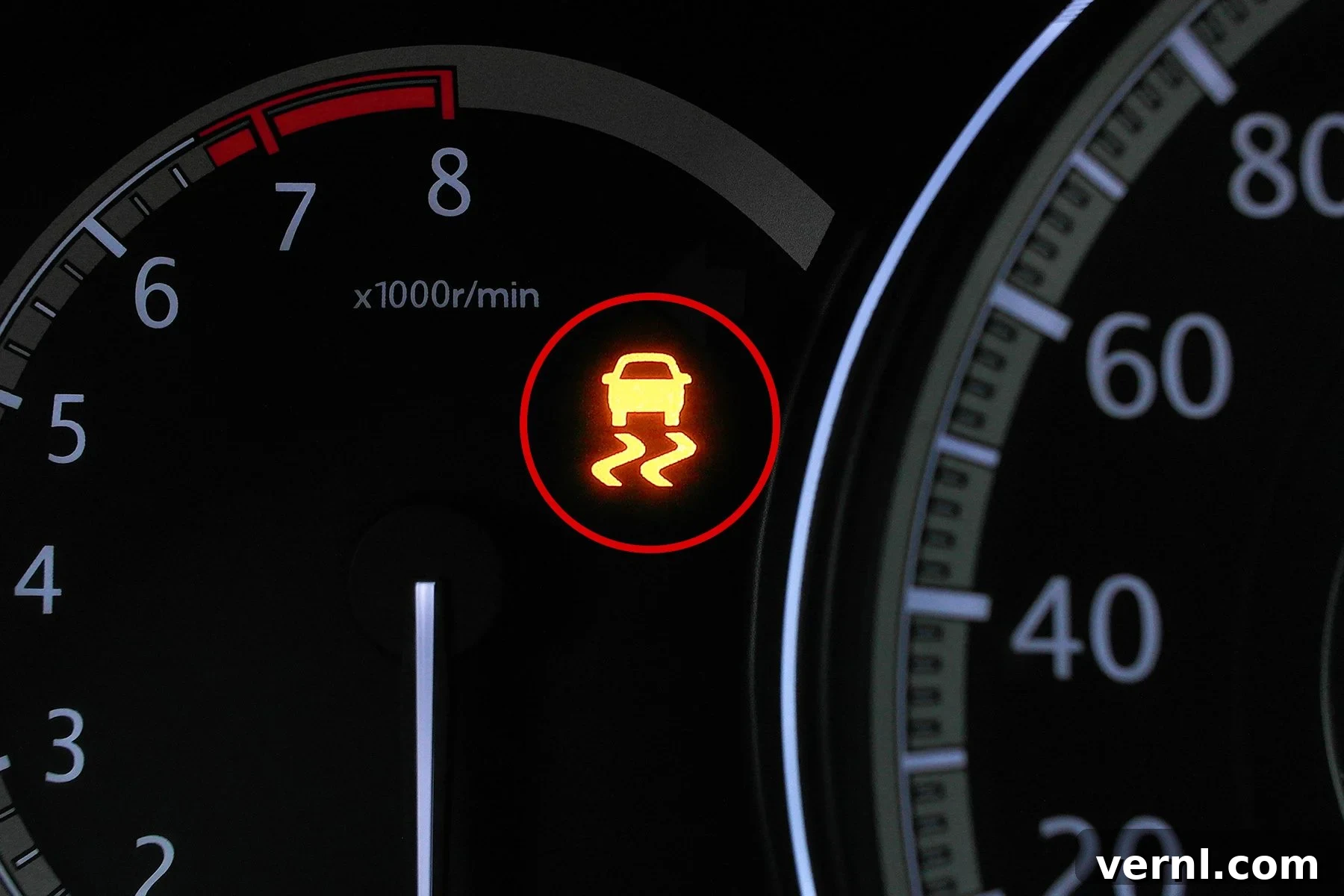
Understanding Your Car’s VSC System: A Comprehensive Guide to Vehicle Stability Control
Driving can be full of surprises, and encountering an unfamiliar symbol on your car’s dashboard can quickly shift your mood from calm to concerned. Among the array of warning lights, one that often sparks questions is the “VSC” indicator. Seeing this light flash or stay illuminated doesn’t have to be a cause for immediate panic. More often than not, it’s your vehicle communicating about a sophisticated safety system designed to keep you firmly on the road and out of harm’s way. This detailed guide will demystify the Vehicle Stability Control (VSC) system, explaining its critical role in your car’s performance, how it operates, and what to do if its warning light appears.
What Is a VSC System? Decoding Vehicle Stability Control
The VSC system, or Vehicle Stability Control, represents a pinnacle of modern automotive safety engineering. While many vehicles today are equipped with a generic Electronic Stability Control (ESC) system – a technology mandated by law in the United States for all cars manufactured after 2012 – VSC is a specific nomenclature primarily used by Toyota and Lexus vehicles. Its fundamental purpose is to act as your car’s electronic guardian, proactively working to prevent loss of control during challenging driving conditions.
In essence, VSC is a computer-controlled system that enhances a vehicle’s stability by detecting and reducing traction loss (skidding). When your car encounters situations that could lead to a skid, such as taking a corner too fast, hitting a patch of ice, or making a sudden evasive maneuver, the VSC system steps in to help. It’s designed to minimize the risk of both oversteer (where the rear wheels lose traction and the back of the car slides out) and understeer (where the front wheels lose traction and the car plows straight ahead despite steering input).
The Evolution of Stability Control Technology
Vehicle stability control systems didn’t emerge overnight. They evolved from earlier safety innovations like the Anti-lock Braking System (ABS) and Traction Control (TRAC). ABS prevents wheels from locking up during hard braking, allowing the driver to maintain steering control. TRAC, on the other hand, prevents wheelspin during acceleration, particularly on slippery surfaces, by reducing engine power or applying brakes to individual wheels. VSC integrates and builds upon these foundational technologies, adding an extra layer of dynamic stability by monitoring the vehicle’s direction and orientation relative to the driver’s intended path.
How a VSC System Works: Precision Engineering in Action
The magic of the VSC system lies in its ability to constantly monitor several crucial parameters of your vehicle’s motion and respond with lightning speed. This intricate dance of sensors, computers, and actuators ensures that your car remains stable, even when faced with challenging road conditions or abrupt driving inputs.
At the heart of the VSC system are an array of sophisticated sensors strategically placed throughout the vehicle. These include:
- Wheel Speed Sensors: Located at each wheel, these sensors continuously measure the rotational speed of individual wheels. Discrepancies in wheel speed can indicate a loss of traction.
- Steering Angle Sensor: This sensor monitors the position of the steering wheel, informing the system of the driver’s intended direction.
- Yaw Rate Sensor: Measuring the rotational speed of the vehicle around its vertical axis, the yaw rate sensor determines if the car is rotating (skidding) more or less than the driver intends.
- Lateral Acceleration Sensor: This sensor detects the sideways force acting on the vehicle, helping the system understand how much grip the tires have and if the car is leaning excessively in a turn.
All the data collected by these sensors is continuously fed to a central processing unit, often referred to as the Engine Control Unit (ECU) or a dedicated stability control module. This powerful computer analyzes the data in real-time, comparing the driver’s intended path (from steering input) with the actual path of the vehicle (from yaw rate and lateral acceleration). If the system detects a significant difference – indicating a potential skid or loss of control – it intervenes immediately.
The VSC system’s intervention is highly precise and multi-faceted. It can:
- Apply Brakes to Individual Wheels: This is a primary method. By selectively braking one or more wheels, the system can create a counter-force to correct a skid, helping to steer the vehicle back onto its intended path. For instance, if the car is understeering, it might lightly brake the inside rear wheel to help pivot the vehicle.
- Reduce Engine Power: The system can momentarily cut engine power by adjusting the throttle opening or ignition timing. This reduces the force applied to the drive wheels, helping them regain traction.
- Adjust Transmission Settings: In some cases, the VSC system can work with the transmission to optimize gear selection, further influencing power delivery and traction.
This rapid and subtle intervention often occurs so smoothly that drivers might barely notice it, apart from the VSC light flashing briefly on the dashboard. This flashing is confirmation that the system is actively working to ensure your safety.
Why Is My VSC Light On? Understanding the Indicators
The VSC light serves as your car’s direct communication channel regarding the stability control system. Understanding its different states is crucial for interpreting what your vehicle is trying to tell you.
VSC Light Flashing: Normal Operation
Most of the time, if your VSC light flashes on your dashboard, it’s an indicator that the stability control system has detected a momentary loss of traction and has engaged to help you maintain control. This is entirely normal and signifies that the system is working exactly as it should. You might observe this flashing during:
- Hard cornering or sharp turns
- Accelerating on slippery surfaces like ice, snow, or wet roads
- Driving over uneven terrain or gravel
- Sudden evasive maneuvers to avoid an obstacle
When the VSC light flashes and then turns off, it simply means the system successfully intervened and traction has been regained. This should not be a cause for concern; rather, it’s a testament to the system’s effectiveness.
VSC Light Stays On: Indicating a Potential Problem
If your VSC light illuminates and stays on, without flashing, this is typically a signal that there’s a fault or malfunction within the VSC system itself or a related component. Unlike a brief flash, a steady VSC light warrants attention. In many cases, a steady VSC light will be accompanied by another warning light, most commonly the Check Engine light, but sometimes also the ABS or TRAC warning lights. This combination of lights suggests an interconnected issue.
Common Causes for a Persistent VSC Light
Diagnosing a steady VSC light can be complex, as many components contribute to its function. Here are some of the most common reasons it might stay on:
- Faulty Wheel Speed Sensor: These sensors are vital for VSC, ABS, and TRAC. A dirty, damaged, or malfunctioning sensor can provide incorrect data, causing the VSC system to disengage.
- Steering Angle Sensor Malfunction: If the VSC system can’t accurately read your steering input, it won’t know your intended direction, leading to a fault.
- Yaw Rate Sensor or Lateral Acceleration Sensor Issues: Problems with these critical sensors can prevent the VSC system from correctly assessing the vehicle’s actual movement.
- ABS/TRAC System Problems: Since VSC relies heavily on the Anti-lock Braking System and Traction Control, any fault within these systems will often trigger the VSC light as well. This could be due to a faulty ABS module, pump, or even low brake fluid.
- Throttle Body Issues: The VSC system can reduce engine power via the throttle. If there’s a problem with the electronic throttle control system, it can affect VSC operation.
- Brake Light Switch Malfunction: A faulty brake light switch can sometimes confuse the VSC system, as it relies on accurate brake pedal input.
- Engine Control Unit (ECU) Problems: As the central brain, any internal fault within the ECU itself could lead to VSC system errors.
- Alignment Issues: While less common, severe wheel alignment problems can sometimes trick stability control systems into thinking the vehicle is constantly skidding, especially if the steering wheel isn’t centered.
- Aftermarket Modifications: Incorrectly installed aftermarket parts (e.g., suspension components, tire sizes) can sometimes interfere with sensor readings and trigger VSC warnings.
What to Do When Your VSC Light Stays On
If your VSC light remains illuminated, it’s important not to ignore it. While your car might still be drivable, its active safety capabilities are compromised. Here’s a recommended course of action:
- Drive Cautiously: Reduce your speed and avoid sudden acceleration, braking, or sharp turns, especially in adverse weather conditions. Remember, your vehicle’s full stability assistance is unavailable.
- Check Other Warning Lights: Note if other lights (like Check Engine, ABS, or TRAC) are on alongside the VSC light, as this can provide clues about the underlying issue.
- Consult Your Owner’s Manual: Your vehicle’s specific manual may offer troubleshooting steps or additional information regarding the VSC light.
- Use a Diagnostic Tool: The most effective way to pinpoint the problem is to use an OBD-II (On-Board Diagnostics II) code reader. This tool plugs into your car’s diagnostic port and can read “fault codes” stored in the vehicle’s computer module. These codes (e.g., P0XXX, C0XXX) provide specific information about which system or component is malfunctioning, guiding you or your mechanic toward a solution.
- Seek Professional Help: If you don’t have a diagnostic tool or are unsure about interpreting the codes, it’s always best to have a qualified mechanic inspect your vehicle. They have specialized diagnostic equipment and expertise to accurately identify and resolve the issue.
Driving with VSC: Enhancing Safety and Understanding Limitations
The VSC system significantly enhances driving safety by providing an electronic “safety net” that helps prevent accidents stemming from loss of vehicle control. It’s an invaluable feature that offers peace of mind, particularly when driving in challenging conditions or in emergency situations.
When VSC Might Be Temporarily Disabled (and Why)
While VSC is a crucial safety system, there are specific scenarios where a driver might choose to temporarily disable it, or where the system might automatically adjust its sensitivity. Many Toyota and Lexus models feature a “VSC OFF” button, usually near the dashboard.
Reasons for temporarily disabling VSC might include:
- Driving in Deep Snow or Mud: In some situations, a little wheel spin can actually be beneficial for gaining traction to get unstuck. With VSC active, it might cut power, making it harder to free the vehicle.
- Using Tire Chains: Tire chains can interfere with wheel speed sensor readings, causing the VSC system to incorrectly detect a skid and intervene unnecessarily. Disabling it can prevent false activations.
- Off-Road Driving: Certain off-road maneuvers, like climbing steep, loose inclines, might require continuous wheelspin which VSC would attempt to suppress.
It’s crucial to remember that disabling VSC removes a vital safety layer. It should only be done temporarily and with extreme caution, and always re-enabled as soon as normal driving conditions resume. The VSC OFF light will usually illuminate on your dash to remind you that the system is disengaged.
Maintenance and Prevention: Keeping Your VSC System Optimal
To ensure your VSC system functions optimally and to minimize the chances of a warning light appearing, regular vehicle maintenance is key. Many components that affect VSC are part of other critical systems.
- Regular Vehicle Servicing: Adhering to your car’s recommended maintenance schedule helps keep all systems, including VSC, in good working order.
- Brake System Checks: Since VSC heavily relies on the braking system, ensure your brakes are in excellent condition, including brake fluid levels, pads, rotors, and calipers.
- Tire Condition and Pressure: Worn or unevenly inflated tires can compromise traction and make the VSC system work harder, or even trigger false warnings. Ensure tires are properly inflated and have adequate tread depth.
- Wheel Alignment: Proper wheel alignment ensures accurate steering angle readings and consistent tire contact with the road, which is crucial for VSC.
- Sensor Cleanliness: While not typically user-serviceable, ensuring that areas around wheel speed sensors are free from excessive dirt or debris can help prevent issues.