
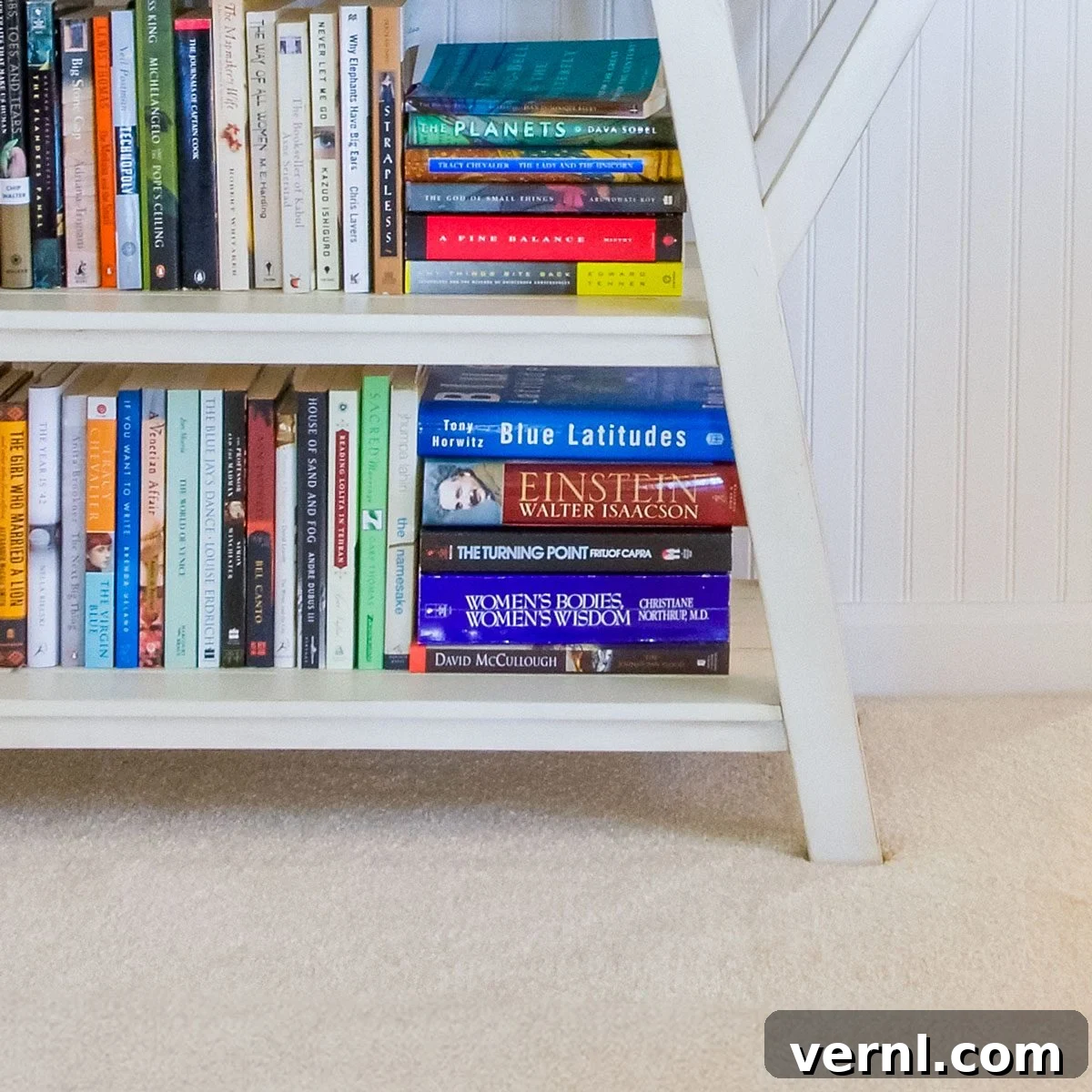
How to Secure and Level a Bookcase on Carpet: A Comprehensive Guide
A well-stocked bookcase is more than just a storage unit; it’s a focal point, a repository of knowledge, and an integral part of your home decor. However, placing a freestanding bookcase on carpeted floors often introduces an unwelcome challenge: instability. Many homeowners experience their bookcases wobbling, leaning, or even worse, posing a significant tipping hazard. This common issue isn’t merely an aesthetic nuisance; it’s a serious safety concern, particularly in households with children or pets. This in-depth guide will explore the root causes of bookcase instability on carpet and provide practical, step-by-step solutions to ensure your unit stands firm, perfectly level, and most importantly, safe for everyone in your home.
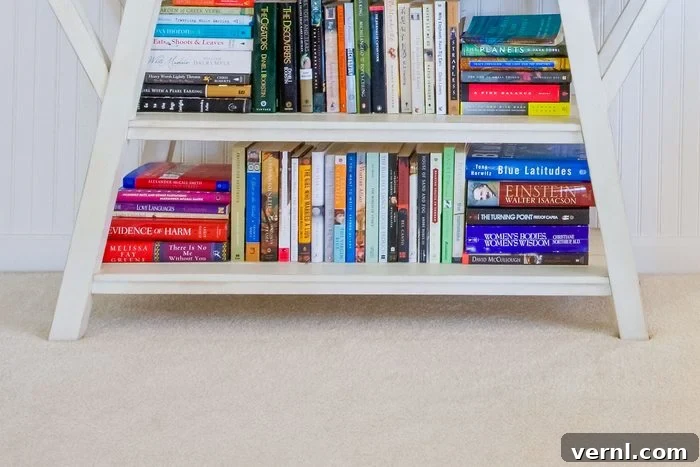
Understanding Bookcase Instability on Carpeted Floors
The primary reason a freestanding bookcase struggles to achieve perfect stability on carpet often lies beneath the surface: the carpet’s tack strips. These essential strips, lined with sharp, upward-facing tacks, are strategically installed along the perimeter of a room to hold wall-to-wall carpeting taut and prevent it from shifting. While crucial for maintaining carpet integrity, they create an uneven foundation when furniture, especially a heavy, flat-bottomed item like a bookcase, is placed partially over them.
When the front legs or base of your bookcase rest on these slightly elevated tack strips while the back rests on softer, compressible carpet padding, an immediate imbalance is created. This discrepancy in height and firmness causes the bookcase to tilt forward or wobble significantly. Furthermore, even if your bookcase avoids the tack strips entirely, the inherent compressibility and uneven density of carpet padding can still lead to minor settling and instability over time. As you load the bookcase with books and items, the shifting weight can exacerbate any existing imbalance, turning a minor wobble into a potential tipping hazard.
Recognizing these underlying causes is the first step toward implementing effective and lasting solutions. The goal is to create a consistently level and firm surface for all contact points of your bookcase, negating the effects of uneven flooring and soft padding.
Proven Methods for Leveling Your Bookcase on Carpet
Fortunately, there are several reliable strategies to address bookcase instability on carpet. Each method offers a unique balance of effort, visibility, and permanence, allowing you to select the best fit for your specific needs, DIY skill level, and aesthetic preferences.
1. Carpet Shims: A Seamless and Permanent Leveling Solution
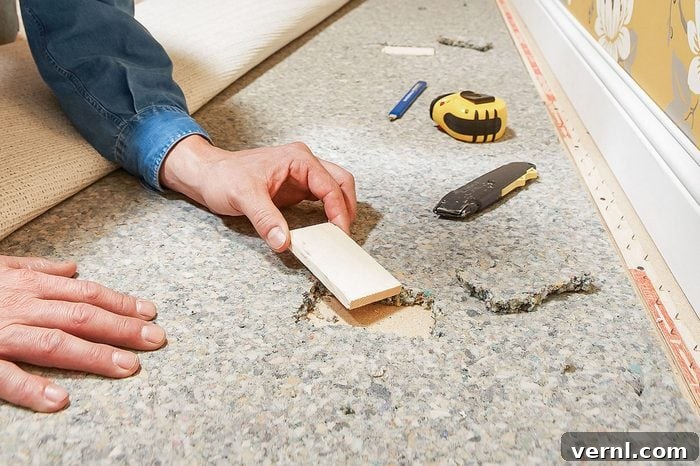
For homeowners desiring a completely integrated and invisible solution, installing carpet shims is an excellent choice. This method involves a minor modification to your carpet and padding beneath the bookcase, creating a perfectly level and firm foundation that will last for years. While it requires a bit more effort and some basic DIY skills, the result is a bookcase that sits as if it were on a perfectly flat, hard floor.
Step-by-Step Guide to Installing Carpet Shims:
- Preparation is Key: Begin by completely emptying your bookcase of all its contents. With assistance, carefully move the empty bookcase away from its intended position to provide full, unobstructed access to the carpeted area.
- Identify Unevenness: Temporarily place the empty bookcase back into its desired spot. Use a spirit level on top of the bookcase to identify precisely which corners or edges are higher or lower, indicating where the tack strips or compressed padding are causing issues. Mark these specific areas on the carpet with painter’s tape or a washable pencil.
- Carefully Free the Carpet: Using a pair of needle-nose pliers or a carpet tucking tool, gently and slowly pull the carpet free from the tack strips in the marked sections. Take your time to avoid snagging or tearing the carpet fibers. You typically only need to lift a small section along the wall where the bookcase’s front feet or base will rest.
- Remove Carpet Padding: Once the carpet is lifted, you’ll expose the carpet padding underneath. With a sharp utility knife, meticulously cut out a strip of padding from the exact areas where the bookcase’s problematic feet or base will sit. The goal is to create a void in the padding that, when filled, will perfectly counteract the height of the tack strip or the compression of the surrounding padding.
- Insert Wood Shims: Replace the removed carpet padding with a strip of sturdy wood. The wood shim’s thickness should closely match that of the tack strip, typically ranging from 1/4 inch to 3/8 inch. Plywood, particle board, or thin strips of solid lumber work well. Cut the wood shims to fit precisely into the void you created. You can secure these shims to the subfloor with a small amount of construction adhesive or a few short brad nails to prevent any future shifting.
- Re-secure the Carpet: Carefully pull the carpet back over the newly installed wood shims. Using a carpet knee kicker or a carpet tucker, stretch the carpet firmly and re-engage it with the tack strips. Ensure the carpet lies flat, taut, and free of wrinkles over the shims and padding.
- Reposition Your Bookcase: Once the carpet is fully re-secured, carefully slide your bookcase back into its permanent position. It should now rest on a consistently firm and level foundation, eliminating any wobble and providing superior stability.
The primary benefit of carpet shims is their completely hidden nature and the robust, long-term stability they provide. This method is particularly suitable for heavy bookcases and situations where you desire an uninterrupted aesthetic without visible hardware.
2. Adjustable Feet (Gliders): A Convenient, Non-Invasive Approach
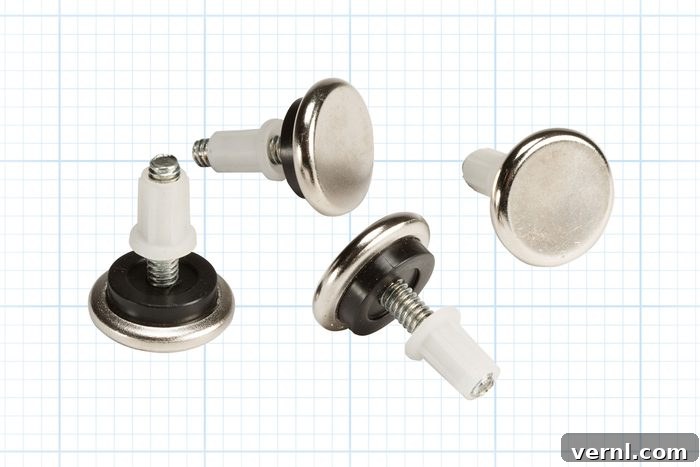
For those seeking an easier and less invasive solution that doesn’t involve altering your flooring, installing adjustable feet – often called gliders or leveling feet – is an excellent alternative. These widely available hardware store items allow you to precisely fine-tune the height of each corner of your bookcase, effectively compensating for any unevenness caused by tack strips or carpet compression. They are simple to install and offer immediate results.
How to Install Adjustable Feet on Your Bookcase:
- Choose the Right Feet: Adjustable feet come in various designs, including screw-in glides, threaded inserts with bolt-on adjusters, and surface-mount options. For most wooden bookcases, screw-in or threaded insert types are durable and effective. Ensure the feet you choose are robust enough to support the weight of a fully loaded bookcase.
- Prepare the Bookcase: Empty the bookcase completely. Carefully tilt it back or lay it down (with help, if necessary) to gain easy access to the bottom corners or base frame where the feet will be installed.
- Mark and Drill Pilot Holes: For screw-in or threaded insert feet, precisely mark the center point on each bottom corner where the foot will go. Using a drill bit that is slightly smaller than the screw’s core or the threaded insert’s diameter, drill pilot holes to the appropriate depth. Be careful not to drill entirely through the bookcase material.
- Install the Adjustable Feet: Screw or firmly insert the adjustable feet into the pilot holes. For threaded inserts, you might need an Allen key or a screwdriver to properly seat them. Ensure all feet are securely fastened to the bookcase base.
- Position and Level: Carefully return the bookcase to its upright position in its desired spot. Start by screwing each adjustable foot fully into its housing (retracted position). Then, one by one, gradually extend each foot, starting with the lowest corner, until the bookcase achieves perfect stability and levelness. Use a spirit level placed on the top and sides of the bookcase to confirm accuracy. Adjust as needed until all wobbling is eliminated.
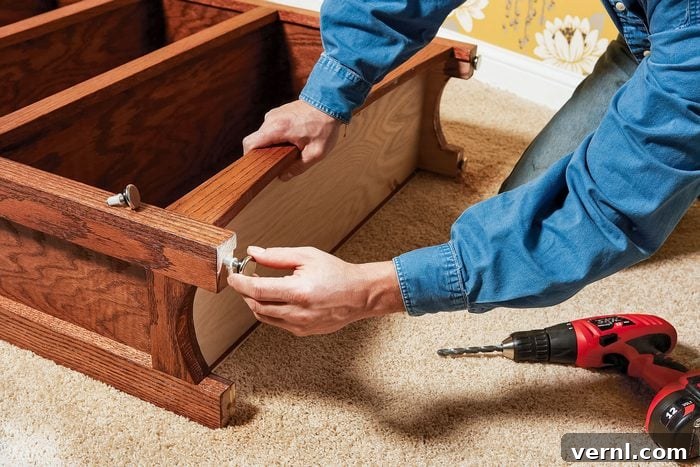
The primary advantages of adjustable feet are their straightforward installation and the ease with which you can fine-tune the levelness without disturbing your existing carpet. They offer a quick and effective solution for immediate stability. However, depending on the design of your bookcase and the style of feet chosen, they might be visible, which could be a minor aesthetic consideration for some.
Critical Warning: Do NOT Remove Carpet Tack Strips
It can be tempting to simply remove the carpet tack strips directly beneath where your bookcase will sit. However, it is crucial to resist this temptation. Removing tack strips will, without question, lead to significant and long-term problems with your carpet. These strips are fundamental to maintaining the carpet’s necessary tension, preventing it from shifting, stretching, and bunching up. Without the tack strips, even the considerable weight of a fully loaded bookcase will not be sufficient to keep the carpet taut against the wall.
Over time, the carpet will inevitably begin to relax and stretch, causing unsightly and potentially dangerous wrinkles, ripples, or buckles to form across the room. These imperfections not only severely detract from the aesthetic appeal of your flooring but also create serious trip hazards. Furthermore, constant movement and friction can accelerate wear and tear on the carpet, leading to premature aging, fraying, and eventually necessitating costly repairs or even a full carpet replacement. Always opt for solutions that work with your flooring, not against it.
The Most Important Step: Securing Your Bookcase to the Wall
Regardless of which leveling method you choose for your bookcase, there is one absolutely essential and non-negotiable step for any freestanding, tall, or heavy furniture piece: anchoring it to the wall. This is not merely a recommendation but a vital safety measure designed to prevent serious injuries or fatalities, particularly involving children. Tragic statistics reveal that hundreds of children are injured or killed each year by falling furniture and televisions, with unsecured bookcases being a common culprit. A child climbing, pulling, or even accidentally bumping into an unsecured bookcase can cause it to tip over, resulting in devastating consequences. Prioritizing wall anchoring is paramount for creating a safe home environment and offering invaluable peace of mind.
Effective Methods for Wall Anchoring Your Bookcase:
1. Utilizing Furniture Anti-Tip Straps or Kits
Furniture anti-tip straps or kits are the most widely used and accessible method for securing furniture. These kits typically contain durable nylon or metal straps, mounting brackets, and screws, and are readily available at hardware stores and home improvement centers.
- Identify Anchoring Points: Locate a sturdy, solid part of your bookcase’s upper back frame. For the wall, you must find wall studs to ensure maximum holding power. Use a reliable stud finder to locate at least two vertical studs behind the upper portion of where your bookcase will stand.
- Attach Straps to Bookcase: Secure one end of the strap’s bracket to the back of the bookcase using the screws provided in the kit. Choose an inconspicuous location, such as behind a fixed shelf or near the top edge, ensuring the screw penetrates solid wood for a secure hold.
- Attach Straps to Wall Studs: Extend the strap to the wall. Secure the other end of the strap’s bracket to the center of the located wall stud using long, robust screws (typically 1.5 to 2 inches in length for drywall applications into studs). Ensure the strap is pulled taut but not excessively strained, allowing for minimal movement while preventing tipping.
- Install Multiple Straps: For optimal safety, always use at least two anti-tip straps. Position them strategically at two separate points along the bookcase and anchor them into two different wall studs if the width of your bookcase allows. This dual-point anchoring provides redundancy and significantly enhances resistance against accidental tipping.
Anti-tip straps offer a degree of flexibility, allowing you to move the bookcase slightly for cleaning or minor repositioning, while still providing crucial protection against tip-overs. They are an inexpensive, quick, and highly effective safety solution for any home.
2. Direct Screwing into Wall Studs: A Robust and Permanent Solution
For an exceptionally strong and permanent connection, directly fastening your bookcase to wall studs using screws is an excellent choice. This method provides superior stability and can often be achieved with minimal visible hardware if executed carefully.
- Locate Wall Studs Precisely: As with anti-tip straps, a reliable stud finder is essential. Accurately locate at least two vertical wall studs behind the upper section of your bookcase. Mark these positions on the wall with a pencil.
- Select Appropriate Hardware: Choose strong wood screws, typically 3 inches in length, with a suitable gauge (e.g., #8 or #10). The 3-inch length ensures sufficient penetration through the bookcase back panel, any drywall, and well into the solid wood of the wall stud, providing a very secure anchor.
- Pre-Drill Pilot Holes: To prevent splitting the wood of your bookcase and to facilitate easier screw driving, pre-drill pilot holes through the back panel of the bookcase. Do this in strategic, obscure locations, such as through the back of fixed shelves, or near the top frame, where the screws will be least visible. Ensure these pilot holes precisely align with your marked stud locations on the wall.
- Secure the Bookcase: Carefully position the bookcase against the wall, ensuring the pre-drilled holes align with the center of the wall studs. Drive the 3-inch screws through the bookcase’s back panel and firmly into the wall studs. For most standard bookcases, a total of four screws—two screws into each of two separate studs—provides ample security and a rigid, immovable connection to the wall.
This direct anchoring method creates a very strong, rigid bond between the bookcase and the wall, virtually eliminating any risk of tipping. It requires precision in locating studs and careful drilling to maintain the bookcase’s aesthetic integrity. Beyond anchoring, remember to always distribute the weight of your books evenly, placing heavier items on lower shelves to further enhance the overall stability and safety of your bookcase.
Conclusion
Ensuring the stability and security of your freestanding bookcase on carpeted floors is a critical investment in both home safety and furniture longevity. By understanding the challenges posed by carpet tack strips and the inherent softness of carpeting, you can confidently implement effective solutions. Whether you opt for the integrated permanence of carpet shims or the convenient adjustability of leveling feet, you’ll create a perfectly level foundation for your beloved book collection.
Even more vital is the non-negotiable step of anchoring your bookcase to the wall. By diligently installing anti-tip straps or directly screwing the unit into wall studs, you actively safeguard your loved ones from the preventable dangers of falling furniture. Take the necessary time to implement these proven strategies, and your bookcase will not only enhance the beauty of your home but will stand as a secure, stable, and safe fixture for many years to come.