
Mastering the Art of Lawn Mowing: Expert Tips for a Pristine Yard
A beautifully manicured lawn is often the crowning glory of any home, significantly enhancing curb appeal and providing a lush, inviting space for relaxation, play, and outdoor gatherings. You’ve likely invested considerable time and effort into cultivating your lawn, from meticulous soil preparation to the careful process of seeding or laying sod. Now, the crucial next step in maintaining that investment is proper lawn care, and no aspect is more fundamental or frequently performed than mowing. However, what often seems like a straightforward chore can harbor common pitfalls that undermine all your hard work, leading to a less-than-ideal green space.
This comprehensive guide aims to transform your mowing routine from a mere task into a strategic approach, ensuring your grass not only survives but truly thrives. We’ll delve into the science and art of lawn mowing, equipping you with essential techniques that will help you achieve a truly professional-looking lawn with vibrant health and irresistible greenery. Avoiding common mowing mistakes is paramount for the long-term health and aesthetics of your lawn. Understanding the nuances of grass growth and responding with informed mowing practices can make all the difference. From the sharpness of your mower blades to the precise height of your cut, every detail contributes to a resilient, disease-resistant, and visually stunning landscape. Read on to discover the expert strategies for cultivating the lawn of your dreams.
The Foundation of Flawless Mowing: Essential Techniques and Practices
The Critical Role of Sharp Blades: A Clean Cut for a Healthy Lawn
Imagine attempting to cut paper with a dull pair of scissors; the result would be a ragged, torn edge rather than a clean line. The same principle applies with even greater impact to your lawn. Dull mower blades don’t cut grass blades cleanly; instead, they hack, tear, and shred the delicate plant tissue. This brutal treatment inflicts significant stress on your lawn, leaving the tips of each grass blade jagged, frayed, and visibly damaged. These damaged tips are not just an aesthetic blight, giving your entire yard a noticeable brown or yellowish tinge; more importantly, they are open wounds that leave your grass vulnerable.
Such open wounds make your grass far more susceptible to a host of problems, including various diseases, pest infestations, and excessive moisture loss. This weakens the plant’s overall health, hindering its ability to grow vigorously and maintain its vibrant green color. In contrast, a razor-sharp blade delivers a precise, clean cut, much like a surgical incision. This clean separation allows the grass to heal quickly, minimizing stress and promoting robust, healthy growth. Regularly sharpening or replacing your mower blades is one of the simplest yet most impactful practices for maintaining lawn health. Experts recommend sharpening blades every 20-25 hours of use, or at least once at the beginning of each mowing season. If you observe your lawn tips looking ragged, shredded, or discolored shortly after mowing, it’s a clear indicator that your blades are past due for attention. Keeping an extra set of sharpened blades on hand allows for quick swaps, ensuring you’re always ready to provide your lawn with the pristine cut it deserves. Properly maintained blades contribute not only to a healthier, more attractive lawn but also to the efficiency and longevity of your mower’s engine.
Embracing Grasscycling: The Power of Leaving Clippings Behind
One of the most beneficial and often overlooked practices in sustainable lawn care is “grasscycling” – the simple act of leaving your grass clippings on the lawn after mowing. Far from being unwanted debris, these clippings are a natural, organic fertilizer packed with vital nutrients that your lawn needs to thrive. Modern mulching blades are specifically engineered to chop grass clippings into exceptionally tiny pieces, ensuring they decompose rapidly and virtually disappear back into the turf, becoming an invisible yet powerful contributor to your lawn’s health.
Once these finely chopped clippings settle onto the soil surface, they begin to break down through microbial action, releasing essential nutrients such as nitrogen, phosphorus, and potassium directly back into your lawn. This natural fertilization process can significantly reduce your reliance on synthetic fertilizers, potentially by up to 25%, saving you money and contributing to a more environmentally friendly lawn care routine. Beyond their nutrient contribution, clippings also act as a thin, natural layer of mulch. This organic layer helps to retain crucial soil moisture by reducing evaporation, suppresses the germination and growth of weed seeds by shading them, and significantly improves overall soil structure by adding valuable organic matter. This fosters a healthier microbial environment in the soil, which in turn supports stronger, deeper, and more resilient grass roots.
While grasscycling is highly recommended for most lawns, there are a few exceptions to consider. If the grass is excessively long and thick, the clippings may clump together, potentially smothering the turf beneath. In such cases, it’s advisable to either remove the clippings or employ a two-pass mowing strategy (discussed later). Similarly, if your lawn is currently suffering from a fungal disease, removing the clippings can help prevent the spread of spores. However, for a healthy, regularly mowed lawn, leaving the clippings is a cornerstone of sustainable, effective, and environmentally conscious lawn maintenance, transforming what might otherwise be considered waste into a valuable resource for cultivating a truly verdant landscape.
The Golden Rule: Never Cut Wet Grass
Patience is undoubtedly a virtue, and this holds especially true when it comes to mowing your lawn. It is crucial to resist the temptation to mow a wet lawn, whether the moisture comes from morning dew, recent rainfall, or an irrigation system. Mowing wet grass creates a multitude of problems, negatively impacting both your lawn’s health and your overall mowing experience. Firstly, wet grass blades tend to stick together and bend under the mower, rather than standing upright. This leads to an uneven, unsightly cut where your mower blades struggle to provide a clean, consistent trim, leaving some areas noticeably longer and others perhaps scalped.
Secondly, wet clippings are heavy and notoriously sticky. They adhere tenaciously to the underside of your mower deck, leading to rapid clogs and significantly reducing cutting efficiency. This build-up not only forces your mower’s engine to work harder, potentially leading to strain and premature wear, but it also creates ideal conditions for rust and corrosion to develop on your deck. More significantly for your lawn, these wet, heavy clumps of clippings will be deposited irregularly across your yard. These thick, matted clumps can suffocate the grass beneath them by blocking essential sunlight and air circulation. Furthermore, they create a damp, stagnant environment that is a prime breeding ground for various fungal diseases, which can quickly spread and lead to unsightly patches of dead or diseased grass, ruining the uniform appearance and health of your lawn.
Beyond lawn health, mowing wet grass can also pose significant safety risks. The slippery conditions on wet grass dramatically increase the risk of slipping, falling, or losing control of the mower, particularly on sloped terrain or uneven ground. It is always best to wait until the grass is completely dry before mowing. This might mean delaying your mowing until late morning or early afternoon on a sunny day. Prioritizing dry grass mowing will ensure a cleaner, more even cut, contribute to a healthier lawn, and guarantee a safer, more efficient operation of your valuable lawn care equipment.
Taming Overgrown Lawns: The Two-Pass Mowing Strategy
Life happens, and sometimes, despite our best intentions, our lawn can get away from us, growing much taller than its ideal height. When faced with an overgrown lawn, it’s absolutely crucial to resist the impulse to cut it all down to size in one aggressive go. The cardinal rule of mowing, often referred to as the “one-third rule,” dictates that you should never remove more than one-third of the grass blade’s height at any single time. Violating this rule can severely shock your grass, hindering its ability to photosynthesize effectively, leading to browning, weakened roots, and a significantly increased susceptibility to stress, disease, and common lawn pests.
For significantly tall or overgrown grass, the most effective and least damaging solution is to employ a two-pass mowing strategy. Begin by setting your mower deck at its highest possible setting. Make your first pass over the entire lawn, removing only the top third (or less) of the grass blades. This initial cut reduces the overall height of the grass and alleviates some of the immediate stress on the plant. After this first pass, you have a couple of options: you can either wait a day or two to allow the grass to recover slightly before the second cut, or if the grass isn’t excessively thick, you can proceed immediately to the second pass.
For the second pass, lower your mower deck to your desired optimal cutting height (which we’ll discuss in detail next) and mow the lawn again. This staggered, gradual approach minimizes the shock to the grass plant. It ensures that the plant retains enough leaf blade material to continue efficient photosynthesis, guaranteeing that its energy production isn’t severely compromised. Additionally, this method prevents the accumulation of excessive, heavy clippings that could smother the turf, leading to localized dead spots. By patiently employing the two-pass method, you can bring an overgrown lawn back to its ideal, healthy height without causing undue stress or damage, thereby promoting a lush, vibrant, and rapid rebound in its appearance and vitality.
The Optimal Height: Mowing for Robust Health and Resilience
One of the most critical decisions in effective lawn care is determining the ideal cutting height for your specific grass type. There is no universal “best height” because it largely depends on your particular grass variety, local climate conditions, and even the season. However, a common misconception, often driven by a desire for a perfectly neat and manicured look, is that shorter is always better. In reality, cutting grass too short, often referred to as “scalping,” is one of the most detrimental mistakes you can make for your lawn’s long-term health and resilience.
Grass blades are essentially the “food-manufacturing facilities” of the plant, primarily responsible for photosynthesis – the vital process by which sunlight is converted into energy for growth. When you cut grass too short, you dramatically reduce its leaf surface area, thereby diminishing its capacity to perform efficient photosynthesis. This effectively starves the plant of its primary food source, weakening the entire root system and making the grass far less resilient to common stresses like drought, intense heat, and various diseases. Conversely, maintaining taller grass blades, within their ideal range, allows for more robust and deeper root development, which is the cornerstone of a strong, drought-tolerant, and healthy lawn.
Furthermore, taller grass provides a natural, protective canopy that effectively shades the underlying soil. This shading offers several significant benefits that contribute to overall lawn health and reduced maintenance:
- Weed Suppression: By blocking direct sunlight from reaching the soil surface, taller grass actively discourages the germination and growth of weed seeds, acting as a natural, non-chemical weed deterrent.
- Moisture Retention: The shade created by a denser canopy reduces direct sunlight exposure to the soil, significantly minimizing evaporation rates. This helps the soil retain moisture for longer periods, meaning your lawn will require less frequent watering and contribute to greater water conservation, especially during hot, dry summer months.
- Temperature Regulation: A thicker, taller canopy helps to keep the soil temperature cooler. This is particularly beneficial for grass health, especially for cool-season grasses that struggle during periods of intense summer heat.
The best height to cut grass is indeed variety-specific. Here are some general guidelines:
- Cool-Season Grasses (e.g., Kentucky Bluegrass, Fescues, Perennial Ryegrass): These grasses generally prefer a cutting height between 2.5 to 3.5 inches. During periods of hot summer stress, increasing the height to 3.5 to 4 inches can provide crucial extra protection and resilience.
- Warm-Season Grasses (e.g., Bermuda, Zoysia, St. Augustine, Centipede): These grasses often tolerate shorter cuts and can thrive at heights typically between 1 to 2.5 inches, depending on the specific variety and your desired aesthetic appearance.
To pinpoint the ideal mowing height for your specific grass varieties, a quick and reliable search for “mowing heights for [your specific grass type]” on reputable gardening or university extension websites (such as pennington.com, as mentioned in the original text, or your local agricultural extension service) will provide precise, localized recommendations. Adjusting your mower deck to the correct height is a simple yet profoundly impactful step with long-term benefits for the vitality, beauty, and overall resilience of your lawn.
Elevating Your Mowing Experience: The Zero-Turn Advantage
Revolutionizing Lawn Care: The Benefits of a Zero-Turn Mower
For homeowners managing larger properties or those with complex landscapes featuring numerous trees, intricate flower beds, and winding pathways, traditional push mowers or even conventional riding lawn tractors can transform mowing into a time-consuming, physically demanding, and often frustrating endeavor. This is precisely where the zero-turn mower steps onto the stage, revolutionizing the entire lawn care experience. Once primarily the exclusive domain of commercial landscaping professionals, zero-turn mowers have become increasingly accessible and popular among discerning homeowners, offering unparalleled efficiency, speed, and maneuverability that fundamentally changes how you approach lawn maintenance.
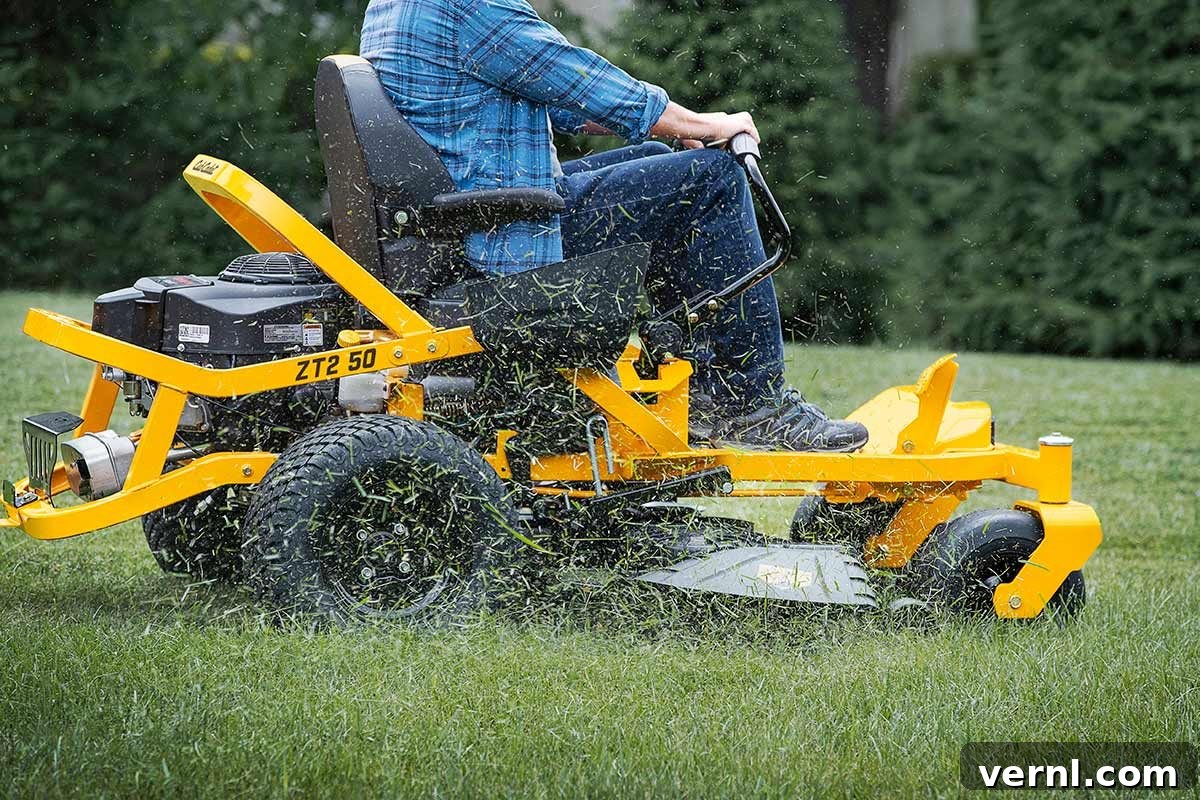
Unlike conventional riding mowers that steer with a traditional steering wheel and possess a comparatively wide turning radius, zero-turn mowers are characterized by their unique and highly effective control system. You steer these machines using two distinct lap bars or levers, one for each drive wheel, which allows for independent control of each side of the mower. Pushing or pulling these levers simultaneously controls forward and reverse speed, while pushing one forward and pulling the other back allows the mower to literally pivot on its own axis – achieving a “zero” turning radius. This exceptional maneuverability allows you to navigate incredibly tight spaces with ease, effortlessly zipping around trees, hugging the precise contours of garden beds, and following intricate landscaping features without the need to stop, back up, and repeatedly reposition the mower.
The advantages of incorporating a zero-turn mower into your lawn care arsenal are manifold and immediately apparent:
- Unmatched Speed and Efficiency: Zero-turn mowers are significantly faster than even the most powerful traditional lawn tractors. Their combination of powerful engines, wider cutting decks, and superior maneuverability drastically reduces mowing time, often by half or more for larger yards. This translates directly into more personal time for you, less time spent on chores, and more time enjoying your pristine, perfectly cut lawn.
- Superior Maneuverability and Precision: The zero-turn capability virtually eliminates uncut strips around obstacles, significantly reducing, and often eradicating, the need for tedious and time-consuming trimming with a string trimmer. You can execute clean, precise passes with remarkable accuracy, ensuring no patch of grass is left untouched or poorly cut.
- Enhanced Comfort and Control: While there might be a slight learning curve to mastering the lever controls, many users find them intuitive and highly responsive after a short period of practice. Modern zero-turn mowers often feature luxuriously comfortable high-back seats, advanced anti-vibration systems, and ergonomically designed controls, making even extended mowing sessions far less fatiguing and much more enjoyable.
- Professional Finish: The inherent ability to make incredibly tight turns and execute precise cuts contributes directly to a consistently neat, uniform, and professional-looking lawn. This level of finish is akin to what you would typically expect from a premium commercial landscaping service, elevating the aesthetic appeal of your entire property.
Choosing Your Zero-Turn: What to Consider for an Optimal Investment
If you’re contemplating a significant upgrade from a traditional push mower or are in the market to replace an existing riding mower, a zero-turn model is unequivocally worth considering, particularly if you maintain an acre or more of lawn. The market now boasts a vast and diverse selection of zero-turn mowers specifically tailored for homeowners, ranging widely in features, capabilities, and corresponding price points, making them more accessible than ever before.
Leading manufacturers in outdoor power equipment, such as Cub Cadet, have robustly embraced the homeowner market with a range of innovative and feature-rich options. For instance, the Cub Cadet Ultima Series, with models typically ranging from an approximate starting price of $2,700 up to $4,700, provides an excellent real-world example of the quality and features available. As you explore and potentially step up through their various series, for example, from the ZT1 to the ZT2 models, you will typically find a progression of significant enhancements and superior components, including:
- Larger Mower Decks: Opting for a wider cutting deck allows you to cut broader swaths of grass in each pass, thereby further reducing the overall mowing time and increasing efficiency, especially on expansive properties.
- More Powerful Engines: Machines with larger, more robust engines provide greater torque and horsepower, essential for tackling thick, dense grass with ease and maintaining consistent speed even on challenging inclines or varied terrain.
- Larger Tires: Upgraded, larger tires offer dramatically improved traction, stability, and a noticeably smoother ride, which is particularly beneficial when navigating uneven landscapes or rough patches of lawn.
- Enhanced Comfort Features: Higher-end models often include substantial seating with high backs and armrests, advanced suspension systems, and more refined ergonomic controls, all designed to provide a more comfortable and enjoyable experience during extended periods of use.
- Durable Construction: Often, stepping up in models means gaining heavier gauge steel decks, reinforced frames, and more robust components, all engineered for increased longevity, resilience, and demanding usage.
When making the significant investment in a zero-turn mower, it’s wise to consider several key factors: the precise size and complexity of your lawn, your allocated budget, and the specific comfort features that are most important to you for reducing fatigue. It is highly recommended to visit your local outdoor power equipment retailer. There, experienced professionals can provide invaluable expert advice, allow you to physically sit on and compare different models, and in some cases, even offer a brief test drive to help you get a genuine feel for the controls and determine which model best suits your unique needs and preferences. Investing in a zero-turn mower genuinely transforms lawn care from what might once have been a tedious, time-consuming chore into an enjoyable, efficient, and almost exhilarating experience, giving you back precious time and culminating in a lawn that will undoubtedly be the envy of the entire neighborhood.
Beyond the Basics: Additional Tips for a Superior Lawn
Vary Your Mowing Pattern for Even Growth
Consistently mowing in the same direction every time can lead to undesirable effects on your lawn, such as creating noticeable ruts and causing grass blades to lean persistently in a particular direction. To prevent these issues and actively encourage more upright, uniform growth, make a conscious effort to vary your mowing pattern with each cut. Alternate between horizontal, vertical, and diagonal passes across your lawn. This practice not only promotes a more even and balanced cut by distributing the pressure of the mower more evenly but also reduces soil compaction in specific, repeatedly traversed areas. Furthermore, varying patterns, especially if your mower is equipped with a roller, can create attractive striped effects, adding to the visual appeal of your lawn.
Adjust for Seasonal Changes
Effective lawn mowing isn’t a one-size-fits-all activity that remains constant throughout the year. As temperatures and seasonal conditions change, so too should your mowing habits. During the peak heat of summer, especially for cool-season grasses that are under environmental stress, it is highly beneficial to raise your cutting height by half an inch to a full inch. Taller grass blades provide more shade to the underlying soil, which helps to keep the grass roots cooler and significantly aids in moisture retention, making your lawn far more resilient to the stresses of heat and drought. Conversely, in the fall, you can gradually lower the cutting height for your final one or two mows of the season. This prepares the lawn for winter by reducing the amount of leaf material, which in turn helps to minimize the potential for certain winter diseases like snow mold.
Prioritize Regular Mower Maintenance
Beyond the critical aspect of blade sharpening, regular and comprehensive mower maintenance is absolutely key to ensuring its optimal performance, operational efficiency, and extended longevity. A thorough maintenance routine should include regularly checking and changing the engine oil as per manufacturer recommendations, cleaning or replacing air filters to ensure proper engine respiration, inspecting spark plugs for wear, and diligently cleaning the underside of the mower deck after each use to prevent grass build-up and corrosion. A well-maintained mower runs more efficiently, consumes less fuel, provides a consistently better quality cut, and is significantly less likely to break down unexpectedly, ultimately saving you considerable time, frustration, and money in the long run.
General Mowing Safety Best Practices
Operating any lawn mower, whether push or riding, always requires a strong emphasis on safety. Always prioritize your personal safety by wearing appropriate footwear (sturdy, closed-toe shoes are essential), eye protection to shield against flying debris, and hearing protection, especially when operating louder riding mowers for extended periods. Before you begin mowing, thoroughly clear your lawn of any potential hazards such as rocks, sticks, toys, or other debris. This prevents damage to your mower blades and, more importantly, reduces the risk of serious injury from objects being ejected at high speed. Never allow children or pets to be near a running mower. Furthermore, it is crucial to fully understand your mower’s controls, emergency shut-off mechanisms, and all safety features before you commence operation.
Conclusion: Your Path to a Picture-Perfect Lawn
Achieving a lush, vibrant, and impeccably healthy lawn doesn’t have to remain an elusive dream. By conscientiously incorporating these expert mowing tips and best practices into your regular lawn care routine, you’re doing far more than simply cutting grass; you are actively cultivating a resilient, beautiful landscape that will undoubtedly become the envy of your neighborhood. From understanding the fundamental importance of maintaining razor-sharp blades and harnessing the nutrient-rich benefits of grasscycling, to mastering the strategic art of cutting at the correct height and recognizing the transformative power of a zero-turn mower, each piece of advice plays a vital and interconnected role in significantly elevating your overall lawn care game.
Always remember, your lawn is a dynamic, living ecosystem that responds profoundly to thoughtful, informed, and consistent care. By proactively avoiding common mowing mistakes and diligently adopting these proven best practices, you’ll not only ensure your green space remains a perpetual source of pride and enjoyment but also one that is robust enough to withstand environmental challenges. Invest wisely in the right tools, dedicate yourself to learning and applying optimal mowing techniques, and then witness your lawn truly flourish, transforming into a magnificent testament to your dedication, understanding, and commitment to proper lawn maintenance. Happy mowing, and enjoy your stunning outdoor oasis!