
Navigating the vast selection of paint brushes at your local home improvement store, paint specialist, or hardware shop can feel like a daunting task. The sheer variety of shapes, sizes, and bristle types is enough to overwhelm even seasoned DIY enthusiasts. However, fear not! Making the right choice is crucial not only for achieving professional-looking results but also for completing your painting project more efficiently and with greater satisfaction. This comprehensive guide will help you understand the different types of paint brushes available, enabling you to select the perfect tool for any task, from meticulous trim work to broad wall coverage, all while ensuring optimal performance and durability. Discover how to streamline your selection process and transform your painting experience into a rewarding endeavor.
Mastering Bristle Types: Your Key to a Flawless Finish
The fundamental distinction among paint brushes lies in their bristle type: synthetic or natural. Matching the bristle to your chosen paint or finish is the most critical step in ensuring a smooth application and achieving the desired outcome.
Synthetic Bristles: The Modern Workhorse
For the vast majority of today’s painting projects, especially those involving water-based paints, synthetic bristles are the undisputed champion. If you’re working with acrylic, latex, or any varnish that cleans up with water, a brush with synthetic bristles is your go-to choice. These bristles, typically made from nylon, polyester, or a blend of both, are engineered to resist absorbing water. This characteristic prevents them from becoming limp and ineffective when used with water-based formulas, allowing them to maintain their stiffness and spring for consistent application. Synthetic brushes excel at delivering a smooth, even finish with water-based products and are also remarkably durable and easy to clean.
- Nylon/Polyester Blends: These offer an excellent balance of softness and stiffness. The softer nylon bristles help achieve a smooth finish, while the stiffer polyester bristles provide the necessary control and durability, making them ideal for a wide range of tasks and paint types. They hold a good amount of paint and release it evenly.
- Chinex Bristles: Considered a premium synthetic option, Chinex bristles are designed for optimal performance, especially with heavier-bodied paints and primers. Their unique structure allows for exceptional paint pickup and release, leading to faster application. Furthermore, their inherent non-stick properties make cleanup significantly easier, often requiring just a rinse for water-based paints. While they might come at a slightly higher price point, their longevity and superior performance often justify the investment for serious DIYers or professionals.
Natural Bristles: The Traditional Choice for Oil-Based Finishes
When your project calls for oil-based paints, varnishes, or alkyd finishes, natural-bristle brushes often provide a superior finish. These bristles, derived from animal hair (such as hog hair, ox hair, or badger hair), have microscopic scales that naturally absorb and hold oil-based paint, allowing for a smoother, more even application and a more controlled release. Common types include Black China, White China, and Ox-hair blends.
- Black China Bristles: Known for their resilience and ability to hold a substantial amount of paint, these are excellent for applying heavier oil-based paints, enamels, and varnishes. They tend to be coarser, which can be beneficial for certain textures or primers.
- White China Bristles: Generally finer and softer than black China bristles, they are preferred for achieving exceptionally smooth finishes with oil-based clear coats, varnishes, and fine enamels.
- Ox-Hair Blend Bristles: These bristles are known for their extreme softness and ability to produce the smoothest, most delicate finishes, particularly with fine varnishes and delicate oil-based paints. They are often found in higher-end brushes.
It’s crucial to avoid using natural-bristle brushes with water-based paints. The natural hair will absorb water, causing the bristles to swell, become overly soft, and lose their ability to apply paint effectively, leading to streaky finishes and frustration. While synthetic brushes can technically be used with oil-based paints, natural bristles typically offer a smoother, more refined finish due to their unique properties and traditional affinity for oil formulations.
Selecting the Perfect Size for Your Project Precision
Once you’ve determined the appropriate bristle type, the next step is to choose the correct brush size. The width of your brush directly impacts control, coverage, and the overall efficiency of your work. Matching the brush size to the task at hand is paramount for achieving clean lines and consistent coverage.
Smaller Brushes: Precision and Detail
For intricate work, such as painting or varnishing woodwork, trim, window frames, or cutting in around ceilings and baseboards, smaller brushes are indispensable. A 1-1/2-inch-wide brush is often considered the ideal all-around size for most detailed woodwork tasks. Its compact width allows for precise control, making it easier to navigate tight corners and create crisp edges. However, if you’re tackling trim that is wider than three inches, you might find that a slightly larger brush, typically up to 2-1/2 inches wide, provides a better balance of coverage and control without sacrificing accuracy.
Medium Brushes: Versatility for Walls and Edges
When painting walls, the primary role of a paintbrush is often for “cutting in”—the process of painting crisp lines where walls meet ceilings, other walls, or trim, before using a roller for the larger areas. While professional painters might opt for three- or even four-inch-wide brushes to maximize speed during cutting in, a 2-1/2-inch-wide brush is widely considered the sweet spot for most DIYers. This size offers an excellent compromise between holding enough paint for decent coverage and providing sufficient control to achieve clean, straight lines without undue effort. It’s a highly versatile size that can handle both detailed tasks and smaller flat surfaces.
Wider Brushes: Efficiency for Expansive Surfaces
Brushes wider than three inches are typically reserved for large, flat surfaces where speed and coverage are prioritized over intricate detail. Consider these larger brushes for projects such as painting wide siding, fences, paneling, large furniture pieces, or exterior walls. Their ability to hold and distribute a significant amount of paint makes quick work of expansive areas, reducing the time and effort required for these bigger jobs.
Choosing the Right Shape for Enhanced Control and Finish
Beyond bristle type and size, the shape of the brush head plays a crucial role in its performance and suitability for specific tasks. The two primary shapes you’ll encounter are angled and square-tipped.
Angled Brushes: The Edge Master
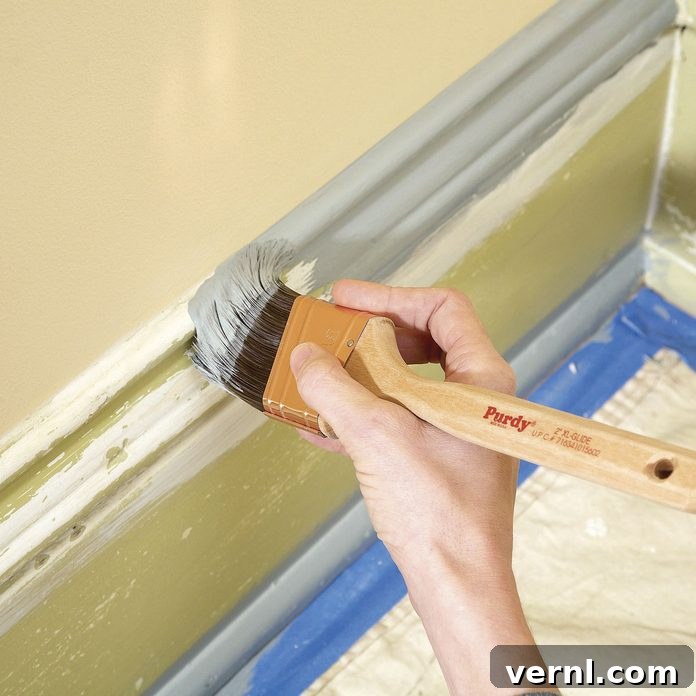
If your project involves painting trim, cutting in around ceilings and floors, or tackling detailed edges, an angled sash brush is highly recommended. The bristles are cut at an angle, creating a fine, tapered point that acts like a natural guide. This angled tip significantly enhances control, allowing you to achieve remarkably precise, clean lines with greater ease. It’s perfect for “feathering” edges and getting into corners smoothly, making it an invaluable tool for any project requiring accuracy and finesse.
Square-Tipped Brushes: The Flat Surface Specialist
Also known as flat brushes, square-tipped brushes feature bristles cut straight across. These brushes are best suited for applying paint to wide, flat surfaces where precision cutting is not the primary concern. They excel at spreading paint evenly over large, unobstructed areas such as tabletops, cabinet doors, or wide trim where you need consistent coverage rather than intricate line work. Their full body allows them to hold a generous amount of paint, making them efficient for broad strokes.
Invest in Quality: The True Value of a Good Brush
It’s often tempting to opt for the cheapest brush available, especially for smaller jobs, with the intention of simply discarding it afterward to avoid the hassle of cleaning. This approach can make sense in very specific scenarios, such as spot priming with alcohol-based shellac or applying oil-based stain sealers where the quality of the finish is secondary and cleanup would require harsh solvents. In these instances, inexpensive “chip brushes” or disposable brushes perform adequately without remorse.
However, for the vast majority of painting projects, investing a little more in a high-quality paint brush is one of the best decisions you can make. The difference in performance is substantial:
- Superior Paint Holding Capacity: Better brushes are designed to hold more paint, allowing you to cover more surface area with each dip and reducing the frequency of reloading. This directly translates to faster work.
- Smoother, More Consistent Finish: High-quality bristles, whether synthetic or natural, are finely tipped and meticulously arranged to lay down paint smoothly and evenly, minimizing brush marks and streaks. This results in a professional-grade finish that cheaper brushes simply cannot achieve.
- Increased Durability and Longevity: Well-made brushes are built to last. Their bristles are securely epoxied into the ferrule (the metal band connecting bristles to the handle), preventing shedding and ensuring the brush maintains its shape and effectiveness through many uses.
- Easier Cleanup: Paradoxically, a higher-quality brush is often easier to clean. Premium synthetic bristles, like Chinex, release paint more readily. Natural bristles, when properly cared for, also clean up effectively, ready for their next use.
- Enhanced Ergonomics: Quality brushes often feature comfortable, balanced handles that reduce hand fatigue during extended painting sessions, making the entire process more enjoyable.
As a general rule, cost is a reliable indicator of quality in paint brushes. Expect to spend around $15 to $25 for a top-quality, general-purpose brush that will serve you well for years with proper care. Considering the hours you might spend on a painting project, a few extra dollars for a superior tool is a small price to pay for a significantly better experience and outcome.
Building Your Essential Brush Collection: Starting Smart
Over time, as you undertake more diverse painting projects, you’ll naturally accumulate a collection of brushes tailored to various circumstances. This allows you to always have the perfect tool at hand, streamlining your work and enhancing your results. However, if you’re just starting out or looking for one versatile brush that can handle a wide array of common household tasks, a strategic initial purchase is key.
We highly recommend beginning your collection with a 2-1/2-inch-wide, angled brush with Chinex bristles. This specific combination offers unparalleled versatility and performance for the aspiring DIY painter:
- Optimal Size: The 2-1/2-inch width strikes an ideal balance, holding a generous amount of paint for efficient coverage while remaining small enough to offer precise control for detailed work. It’s perfect for cutting in around ceilings and trim, as well as painting smaller pieces of furniture or woodwork.
- Angled Tip: The angled shape makes it exceptionally adept at creating crisp, clean lines – essential for trim painting and cutting in without the need for excessive taping. It allows for superior control along edges and into corners.
- Chinex Bristles: As discussed, Chinex bristles are a premium synthetic choice. They excel with all types of paints, particularly water-based, offering excellent paint pickup and release, leading to smooth finishes and remarkably easy cleanup. This means less frustration and more painting time.
This brush will quickly become your go-to for a multitude of tasks, providing reliable performance and a professional finish. If you’re a complete novice and still developing your brushing skills, you might find a slightly smaller, two-inch-wide brush to be a bit more forgiving initially, offering even greater control as you learn the ropes. As your confidence and project scope grow, you can gradually expand your collection with specialized brushes for specific applications, transforming your approach to painting from a chore into a craft.
Remember, the right tools are not just about convenience; they are about empowerment, allowing you to tackle any painting challenge with confidence and achieve results you can be proud of. Happy painting!