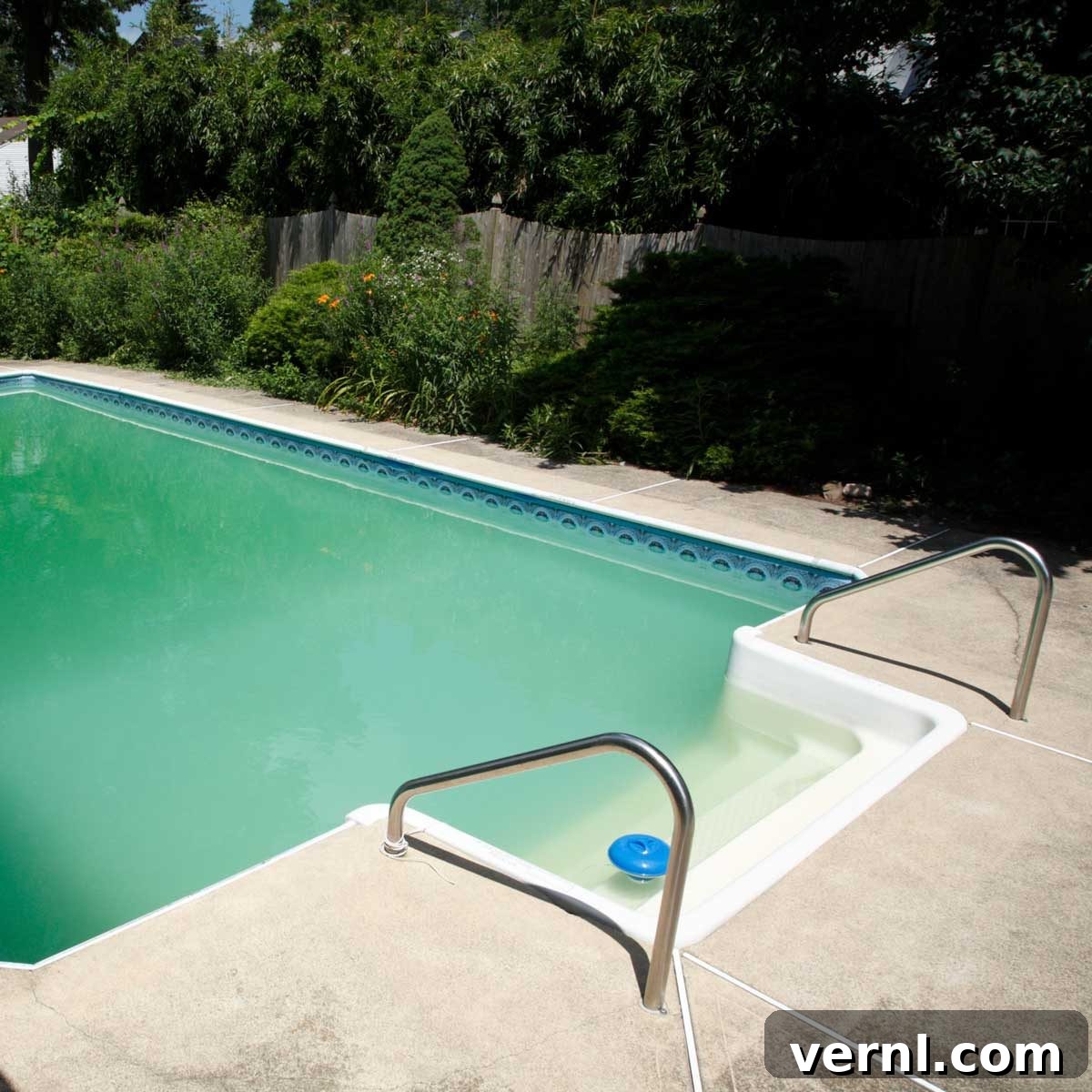
A pristine, sparkling blue pool is the hallmark of summer enjoyment. However, the unwelcome sight of a green pool can quickly turn that joy into frustration. A green pool is not just an aesthetic problem; it’s a clear indicator of underlying water chemistry imbalances or maintenance issues that, if left unaddressed, can lead to unsanitary swimming conditions and potential damage to your pool system. While the primary culprit often points to algae, understanding *why* algae is thriving is crucial for effective treatment and long-term prevention. This comprehensive guide will delve into the five most common reasons your pool might turn green, offering clear, actionable remedies, and essential tips to help you maintain a crystal-clear oasis throughout the swimming season.
The Green Pool Enigma: Understanding Algae Bloom
At its core, a green pool signifies an algae bloom. Algae are microscopic plant-like organisms that thrive in warm water, especially when they have an ample food source and a lack of proper sanitation. They can multiply rapidly, turning your pool water murky green, then dark green, and eventually, if completely neglected, into a slimy, swamp-like mess. While algae itself isn’t directly harmful to swimmers, its presence indicates an unsanitary environment, often accompanied by bacteria and other pathogens. The battle against green pools is, therefore, a battle against the conditions that allow algae to flourish. Let’s explore the primary factors contributing to this common pool problem.
1. Insufficient Chlorine Levels: The Foundation of Sanitation
Chlorine is the bedrock of pool sanitation. It acts as an oxidizer and a sanitizer, effectively killing algae, bacteria, viruses, and other contaminants that enter your pool water. When chlorine levels drop too low, your pool loses its primary defense mechanism, creating an ideal breeding ground for algae. This is perhaps the most common reason for a green pool, as chlorine is constantly consumed by sunlight, swimmers, and organic debris.
Why Chlorine Matters
Chlorine works by breaking down the cellular structure of contaminants. Without adequate free chlorine, algae spores, which are always present in the environment, will begin to multiply unchecked. The warmer your pool water and the more sunlight it receives, the faster algae will grow in the absence of sufficient chlorine.
Diagnosing and Remedying Low Chlorine
The free chlorine level in your pool water should ideally be maintained between two and four parts per million (ppm). Regular testing is paramount. You can use reliable test strips, such as the Poolmaster Smart 4-Way Swimming Pool and Spa Water Chemistry Test Strips, or a liquid test kit to get an accurate reading. If your test reveals a level below 2 ppm, your pool is vulnerable to algae growth.
To remedy this, you’ll need to “shock” your pool. Pool shocking involves adding a large dose of unstabilized chlorine (like calcium hypochlorite or sodium hypochlorite, often referred to as liquid chlorine) to rapidly raise the chlorine level and kill the algae. Follow the product instructions carefully based on your pool volume. For a very green pool, you might need a triple or even quadruple shock treatment. After shocking, run your filter continuously for 24-48 hours and brush the pool walls to dislodge any clinging algae. Re-test your chlorine levels regularly and add smaller doses of chlorine as needed to maintain the ideal range. Implementing a consistent chlorine schedule, whether using tablets, granular chlorine, or a liquid feeder, is key to prevention.
2. Excessive Cyanuric Acid (CYA): The Chlorine Lock
Cyanuric acid (CYA), often referred to as a “conditioner” or “stabilizer,” plays a vital role in outdoor pools by protecting chlorine from degradation by the sun’s ultraviolet (UV) rays. However, there’s a delicate balance. While too little CYA leaves your chlorine vulnerable, too much can render it ineffective, leading to what’s known as “chlorine lock.”
The Role of CYA and Its Pitfalls
CYA binds to chlorine molecules, acting like a shield against UV radiation. This significantly extends chlorine’s lifespan in the water. The ideal CYA level for most pools ranges from 30 to 50 parts per million (ppm). According to pool and spa expert Steve Goodale, “Once you get around 80 to 100 parts per million or more, the chlorine can no longer do its job effectively.” At these elevated levels, the bond between CYA and chlorine becomes too strong, preventing the chlorine from being released to sanitize the water, even if your test strip shows a high total chlorine reading.
Identifying and Resolving High CYA
Many standard home test strips may not accurately measure CYA, or they might only give a broad range. For precise readings, it’s best to take a water sample to a professional pool and spa store for testing. Some advanced liquid test kits also include a CYA test. If your CYA levels are consistently above 50 ppm, especially approaching 80-100 ppm, you have a problem.
Unfortunately, there is no chemical product that effectively lowers CYA. The only reliable method to reduce excessive CYA is dilution. This involves partially draining your pool – often by a third or half, depending on how high the CYA is – and refilling it with fresh, unstabilized water. You’ll then need to re-balance your chemicals. To prevent this issue in the future, be mindful of the type of chlorine you use. Many chlorine pucks or tablets (trichlor) and granular chlorine (dichlor) contain CYA. If you already have adequate CYA levels, consider switching to an unstabilized form of chlorine, such as liquid chlorine (sodium hypochlorite) or calcium hypochlorite, to avoid further CYA accumulation. Regularly check your CYA levels, especially if you rely heavily on stabilized chlorine products.
3. Elevated pH Level: Neutralizing Chlorine’s Power
pH is a measure of how acidic or basic your pool water is, on a scale of 0 to 14. A balanced pH is crucial for swimmer comfort, equipment longevity, and, most importantly, for chlorine efficacy. Your pool’s pH level should ideally be between 7.4 and 7.6. This range is slightly basic, similar to human tears, making it comfortable for swimmers and optimal for chlorine’s sanitizing power.
The Impact of High pH
When the pH level rises above 7.8, and especially at 8.2 or higher, chlorine becomes significantly less effective. At a pH of 8.2, only about 10-20% of the active chlorine molecules are available to kill contaminants, even if your free chlorine reading seems adequate. This drastically reduced sanitizing power allows algae to bloom. Steve Goodale notes this is a common problem, particularly in saltwater pools, which tend to generate chlorine that can cause pH to climb if not carefully monitored.
Accurate Testing and pH Adjustment
While basic test strips can give you a general idea, many don’t accurately measure pH beyond 8.2, making them unreliable for high pH situations. For precise pH testing, investing in a high-quality liquid test kit, like the Taylor FAS-DPD Test Kit, or having your water professionally tested at a pool store is recommended. If your pH is found to be too high, you have several options:
- Acid Treatment: The most common method to lower pH is by adding a pH decreaser, typically muriatic acid (hydrochloric acid) or sodium bisulfate (dry acid), such as HTH pH Decreaser. Always add acid slowly, in small increments, to the deep end of the pool, and always with the pump running. Wait a few hours, then retest before adding more. Handle acids with extreme caution, wearing appropriate protective gear.
- Borates: For persistent pH issues, some pool owners add borates like ProTeam Supreme Plus. Borates act as a pH buffer, helping to stabilize the pH within the desired range and also acting as an algaestat, further inhibiting algae growth. This is often a one-time treatment that provides long-lasting benefits.
Regularly monitor your pH levels (at least once or twice a week) and adjust as needed to keep your chlorine working at peak efficiency and ensure a comfortable swimming environment.
4. Elevated Phosphate Levels: Algae’s Favorite Feast
Phosphates are naturally occurring compounds that act as a primary food source for algae. While chlorine is designed to kill algae, excessively high phosphate levels can overwhelm your sanitizer, leading to persistent algae problems even when chlorine levels appear to be adequate. Steve Goodale aptly describes phosphates as “super food for algae.”
Sources and Impact of Phosphates
Phosphates can enter your pool water from a surprising variety of sources. Common culprits include:
- Environmental Debris: Leaves, dirt, pollen, and other organic matter falling into the pool break down and release phosphates.
- Runoff: Rainwater runoff carrying fertilizers from nearby lawns or gardens (fertilizer runoff is a major source) can introduce significant amounts of phosphates.
- Household Products: Detergents, soaps, and even some pool chemicals (like certain algaecides) can contain phosphates.
- Source Water: Tap water used to fill or top off your pool can sometimes contain phosphates.
When phosphate levels exceed 500 parts per billion (ppb), algae can flourish at an accelerated rate, making it very difficult for your chlorine to keep up. This often results in recurring green pools, even after shocking.
Detecting and Eliminating Phosphates
Most standard pool test kits do not include a phosphate test. You’ll need specific phosphate test strips, such as the Ets Hach Company Phosphate Test Kit, or have your water tested at a professional pool store. If high phosphate levels are detected, the solution is a phosphate remover.
Products like Clorox Pool & Spa Phosphate Remover are designed to bind with phosphates, causing them to clump together and settle out of the water or become large enough to be caught by your filter. Follow the product instructions carefully, which usually involve adding the remover, running your filter for an extended period, and then backwashing or cleaning your filter. In some cases, you may need to vacuum your pool to waste to remove settled phosphates. Regular removal of organic debris, preventing fertilizer runoff, and rinsing pool equipment thoroughly can help prevent phosphate buildup.
5. Inadequate Filtration: A Stagnant Water Problem
Even with perfectly balanced water chemistry, a pool can turn green if the filtration system isn’t doing its job effectively. The filter is the pool’s kidney, responsible for physically removing suspended particles, dirt, debris, and, importantly, dead algae cells from the water. If your filter isn’t running long enough or isn’t clean, these contaminants accumulate, leading to murky water and providing a fertile environment for new algae growth.
The Critical Role of Filtration and Circulation
Filtration isn’t just about cleaning the water; it’s also about circulating it. Proper circulation ensures that pool chemicals are evenly distributed throughout the pool, preventing stagnant areas where algae can take hold. Steve Goodale emphasizes that “a residential pool filter should run enough to filter the volume of the pool at least three times every 24 hours because not 100 percent of the volume gets filtered each time.” He explains that after three turnovers, approximately 95 percent of the pool’s volume has been filtered, which is considered acceptable for maintaining clarity.
Optimizing Your Filtration System
- Run Time: The most common mistake is not running the filter long enough. For most residential pools, running the filter 10-12 hours a day is a good starting point, especially during peak swimming season or hot weather. For a green pool, run the filter continuously (24/7) until the water clears, backwashing or cleaning the filter frequently.
- Filter Maintenance:
- Sand Filters: These require regular backwashing (reversing the water flow to flush out trapped debris) when the pressure gauge reads 8-10 psi above its clean starting pressure.
- Cartridge Filters: Cartridges need to be removed and thoroughly hosed down every few weeks or when the pressure gauge indicates an increase. They also benefit from chemical cleaning to remove embedded oils and minerals.
- Diatomaceous Earth (DE) Filters: These offer the finest filtration. They require backwashing and then recharging with new DE powder when the pressure increases. A full disassembly and cleaning of the grids are needed annually.
- Skimmer and Pump Baskets: Regularly empty these baskets. Clogged baskets restrict water flow, reducing the efficiency of your pump and filter.
- Water Flow: Ensure your skimmer weirs are functioning correctly and that your return jets are angled to promote optimal circulation, pushing water towards the skimmers and main drain.
A well-maintained and properly operated filtration system is your frontline defense against debris and a critical partner in keeping your pool chemicals working effectively to prevent algae.
Beyond the Green: Proactive Pool Maintenance for Crystal Clear Water
Preventing a green pool is far easier and less costly than treating one. By understanding the five core reasons outlined above, you can implement a proactive maintenance routine that ensures your pool remains a sparkling haven throughout the year.
Regular water testing (2-3 times a week, or daily during heavy use or hot weather) is your most powerful tool. Consistently monitor and adjust your free chlorine, CYA, pH, and alkalinity levels. Consider testing for phosphates periodically. Establish a consistent schedule for adding chlorine, whether manually or through an automated system. Ensure your filter runs for an adequate duration each day and perform routine maintenance like backwashing, cleaning cartridges, and emptying baskets.
Beyond chemical balance and filtration, good physical maintenance also plays a huge role. Regularly brush your pool walls and floor to prevent algae from attaching and to dislodge stubborn spots. Vacuum your pool to remove debris, and skim the surface daily to remove leaves, bugs, and other organic matter before they break down and introduce phosphates. Consider using an algaecide as a preventative measure, especially during hot weather or if you’ve had recurring algae problems.
By making these practices a regular part of your pool care routine, you can prevent the frustration of a green pool and enjoy the refreshing beauty of crystal-clear water all season long. Remember, a healthy pool is a happy pool – and a happy swimmer!