
The Indispensable Utility Knife: A Comprehensive Guide to This Essential Cutting Tool
In the vast world of tools, few can match the universal utility and sheer versatility of the humble utility knife. Known by various names such as a box cutter, razor knife, or retractable knife, this handheld device is a staple in toolboxes across countless professions and households. From construction sites to craft rooms, the utility knife stands out as an indispensable instrument for making quick, precise cuts on a myriad of materials. Its compact design, ease of use, and exceptionally sharp blade make it the go-to choice for tasks ranging from opening packages to intricate material shaping. This comprehensive guide will delve into everything you need to know about utility knives, helping you understand their components, diverse applications, types, and how to use them safely and effectively.
What Exactly is a Utility Knife? Dissecting the Essential Cutting Tool
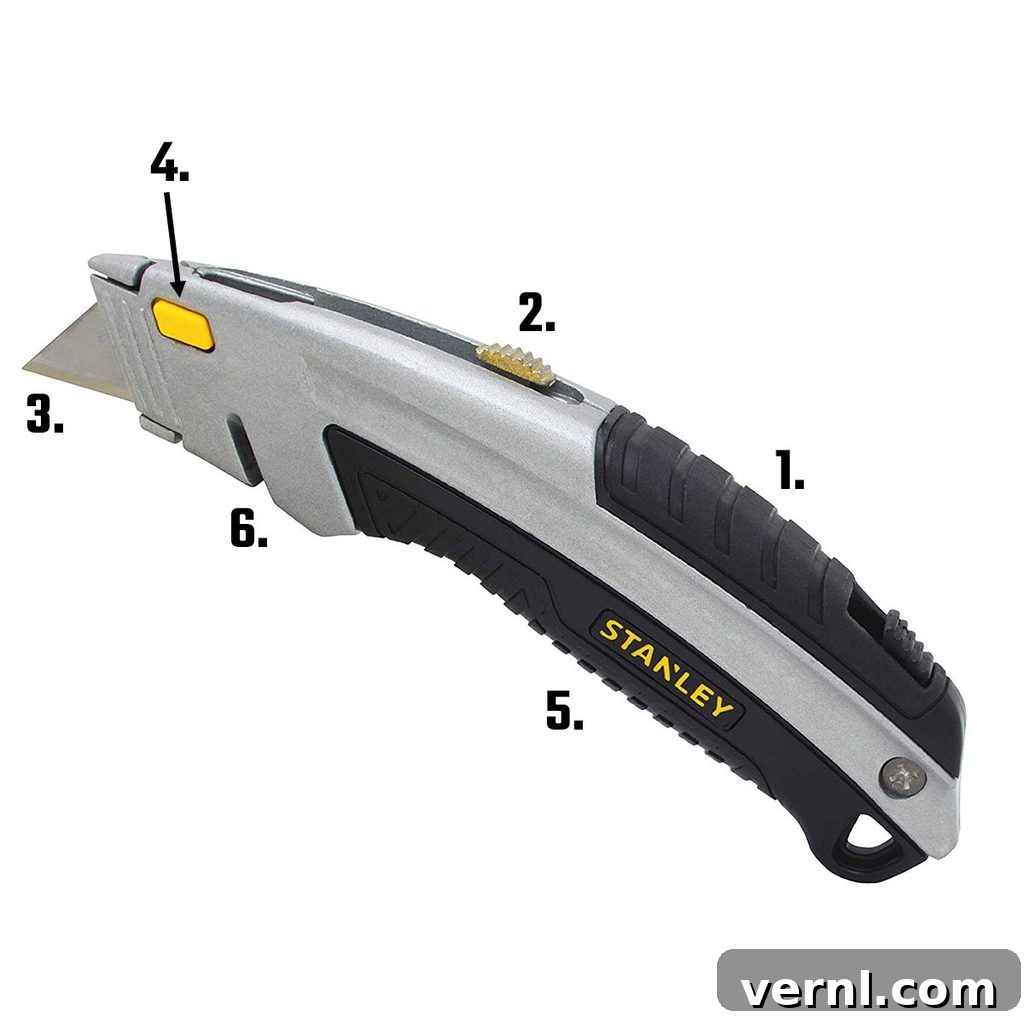
At its core, a utility knife is a hand tool designed for cutting various materials with precision and ease. Its distinguishing feature is a razor-sharp, often replaceable blade housed within a durable handle. The design prioritizes both cutting efficiency and user safety, making it a preferred choice over standard fixed-blade knives for many tasks. Over decades, its design has evolved significantly, leading to a wide array of configurations available on the market today. Despite these variations, the fundamental components remain consistent across most models:
- Handle: This is the primary body of the knife, providing a grip for the user. Handles can be made from various materials like plastic, metal alloys (aluminum, zinc), or composites, often featuring ergonomic designs and rubberized grips for enhanced comfort and control.
- Blade Extension and Retraction Mechanism: Most modern utility knives feature a button, slider, or lever that allows the user to safely extend and retract the blade. This mechanism is crucial for both operational control and storage safety, keeping the sharp edge protected when not in use.
- Blade: The heart of the utility knife, typically a trapezoidal or rectangular blade made from hardened steel. These blades are incredibly sharp, designed to slice through tough materials with minimal effort. They are often double-sided and replaceable, extending the life of the tool.
- Quick Blade Removal Button (Optional but Highly Recommended): Many contemporary utility knives incorporate a quick-release button or lever that facilitates fast and tool-free blade changes. This significantly improves efficiency and safety compared to older models that required screws or disassembly.
- Built-in Blade Storage (Optional): A convenient feature found in many handles, providing a secure compartment for storing spare blades. This ensures users always have fresh blades on hand, minimizing downtime during projects.
- Line/String Cutting Notch (Optional): Some specialized utility knives include a small notch or hook, often near the base of the blade or on the handle, specifically designed for safely cutting string, cord, or thin wire without fully extending the main blade.
While often generically referred to as a box cutter due to its prevalent use in opening cardboard boxes, or simply a razor blade due to the sharpness of its edge, the term “utility knife” accurately encompasses its broad range of applications. It is a fundamental tool for virtually every trade—electricians, plumbers, carpenters, roofers, drywallers, and general contractors—as well as an essential item for homeowners tackling DIY projects, artists, and hobbyists. Some innovative models even feature folding handles, allowing them to be carried and stored much like a traditional pocket knife, enhancing portability and safety.
Mastering the Utility Knife: How It’s Used Across Various Applications
The utility knife’s primary function is to cut, score, or trim various materials. Its straightforward design belies a multitude of techniques and applications. While its operation is generally intuitive, understanding specific methods for different tasks can significantly improve efficiency, precision, and safety.
Operation Basics (Focus on Drywall Use as an Example)
One of the most common and demanding uses for a utility knife is cutting drywall. The process involves a specific sequence of steps to ensure a clean, straight break:
- Mark the Cut Line: Begin by accurately measuring and marking the desired cut line on the drywall sheet using a pencil and a straightedge or tape measure. Precision here is key for a successful cut.
- Score the Line: Place a sturdy straightedge firmly along the marked line. With the utility knife, apply steady, firm pressure and score along the line. The goal is to cut through the paper backing on one side and slightly into the gypsum core. A single, confident pass is often better than multiple shallow passes.
- Snap the Drywall: After scoring, position the drywall sheet with the scored line facing upwards, aligning it over an edge (like a sawhorse or another piece of lumber). Apply downward pressure or tap along the scored line on the opposite side. The gypsum core should cleanly break along the score.
- Fold Back: Once the gypsum is broken, fold the drywall back towards itself, revealing the uncut paper backing on the opposite side. This creates a hinge effect.
- Complete the Cut: With the drywall folded, use the utility knife to score and cut through the remaining paper backing. This final cut fully separates the two pieces of drywall.
Beyond Drywall: A World of Applications
While drywall cutting is a prime example, the utility knife excels in numerous other tasks:
- Package Opening: Safely and quickly opens cardboard boxes, plastic packaging, and shrink wrap.
- Flooring Installation: Cuts carpet, linoleum, vinyl tiles, and underlayment materials with precision.
- Insulation Trimming: Effectively trims various types of insulation, including fiberglass and foam boards.
- Crafts and Hobbies: Indispensable for cutting paper, cardstock, foam core, fabric, and other craft materials.
- Construction & Renovation: Useful for trimming roofing felt, tar paper, flashing, vapor barriers, and stripping small gauges of wire or caulk.
Essential Accessories for Your Utility Knife
To maximize the performance and longevity of your utility knife, a few accessories are crucial:
- Extra Blades: Always keep a supply of replacement blades. Dull blades are not only inefficient but also dangerous. Many utility knives have built-in storage for convenience.
- Alternative Blades: Depending on your projects, specialized blades can significantly enhance capability. For instance, hook blades are specifically designed for cutting roofing materials, carpet, and other thick, fibrous materials by pulling through them. Serrated blades can be useful for certain soft or fibrous materials.
- Cutting Mat/Surface: Protect your work surfaces and extend blade life by using a dedicated cutting mat or a sacrificial piece of wood or cardboard underneath your material.
Prioritizing Safety When Using a Utility Knife
Given the extreme sharpness of utility knife blades, safety must always be paramount. Adhering to best practices can prevent serious injuries:
- Keep Fingers Away: Always ensure your fingers, hands, and other body parts are clear of the blade’s path when cutting. Cut away from yourself whenever possible.
- Change Dull Blades Promptly: This is arguably the most critical safety rule. Counterintuitively, dull blades pose a significantly greater risk than sharp ones. A dull blade requires more force to make a cut, increasing the likelihood of slippage and causing the blade to jump, potentially leading to severe cuts. Replace blades as soon as you notice any dulling or increased resistance.
- Use a Stable Work Surface: Always cut on a stable, flat surface, and ensure the material being cut is secure and won’t shift unexpectedly.
- Retract Blade When Not in Use: Fully retract the blade into the handle immediately after each cut or when setting the knife down.
- Proper Grip: Maintain a firm, controlled grip on the handle to prevent accidental slips.
- Eye Protection and Gloves: For certain tasks, especially those involving material that might splinter or fly, wearing safety glasses and cut-resistant gloves is advisable.
- Safe Disposal: Dispose of used blades properly in a dedicated sharps container or a sturdy, puncture-resistant container (e.g., an empty plastic bottle) before placing them in the trash. Never simply toss loose blades into the garbage.
Exploring the Diverse World of Utility Knives: Types and Features
The market offers a wide array of utility knives, each designed with specific features to cater to different needs and preferences. Understanding these variations can help you choose the best tool for your tasks:
- Retractable Utility Knives: This is the most common type. Blades slide in and out of the handle, offering excellent safety when stored. Many retractable models feature internal storage for spare blades, making them highly practical for various jobs.
- Fixed Blade Utility Knives: Unlike retractable models, these knives have a blade that is permanently exposed or securely locked into place. They are often favored for heavy-duty tasks where maximum blade stability is required, as there’s no movement in the blade mechanism. These typically come with a sheath for safe carrying and storage.
- Folding Utility Knives: Designed for portability and safety, these knives fold in half like a pocket knife. The blade is fully enclosed within the handle when folded, making them easy and safe to carry in a pocket or on a belt clip. They often feature one-handed opening mechanisms.
- Screw-Assembly Utility Knives (Older Models): Many older or simpler utility knives require one or more screws to be removed to open the body of the knife. This allows access to the blade compartment and enables blade changes. While robust, this method is slower and less convenient than quick-release systems.
- Quick-Release Blade Change Knives: These modern designs feature a lever or button that allows for rapid, tool-free blade changes. This is a significant convenience feature, saving time and simplifying blade replacement.
- Safety Utility Knives (Spring-Loaded or Guarded): Designed with enhanced safety features, these knives come in several forms:
- Spring-Loaded Retraction: The blade automatically retracts into the handle the moment finger pressure is released from the button or slider. This prevents accidental exposure.
- Guarded Blades: These knives feature a protective guard around the blade, exposing only a minimal portion of the cutting edge. They are primarily used for box-cutting applications where only the tape or top layer needs to be sliced, reducing the risk of damaging contents or injuring the user.
- Snap-Off Blade Knives: Characterized by segmented blades that run through the body of the knife. When the tip of the blade dulls, a segment can be cleanly snapped off using a built-in tool or pliers, revealing a fresh, sharp edge. These are popular for detailed work and applications where a consistently sharp, fine point is needed.
- Specialty Utility Knives: This category includes knives designed for very specific tasks, such as those with unique blade shapes (e.g., hook blades for roofing or carpet, drywall specific blades) or handles optimized for continuous, repetitive cutting.
What Makes an Exceptional Utility Knife? Key Features to Look For
Choosing a high-quality utility knife can significantly impact your efficiency, comfort, and safety. When evaluating options, consider the following critical features:
- Ergonomic Grip: A well-designed handle that fits comfortably in your hand reduces fatigue during prolonged use and provides superior control. Look for textured or rubberized grips that prevent slippage, even in wet or greasy conditions.
- Heavy-Duty Body Construction: Durable materials like die-cast zinc, aluminum, or robust ABS plastic ensure the knife can withstand the rigors of demanding work environments. A solid, weighty construction often indicates better balance and overall longevity.
- Smooth Blade Extension and Retraction Mechanism: The mechanism should operate effortlessly and consistently. A stiff or sticky slider can be frustrating and even unsafe, hindering quick blade adjustments.
- Easily Accessible Blade Storage: For knives with built-in storage, the compartment should be simple to open and close, allowing quick access to spare blades without fumbling.
- User-Friendly Quick Release Blade Change: A quick-release system should be intuitive and require minimal effort to operate. The blade should lock securely into place once inserted, with no wobble, ensuring safety and precision.
- Blade Security: Regardless of the change mechanism, ensure the blade locks firmly in position during use. Any play or looseness in the blade can lead to imprecise cuts and increase the risk of injury.
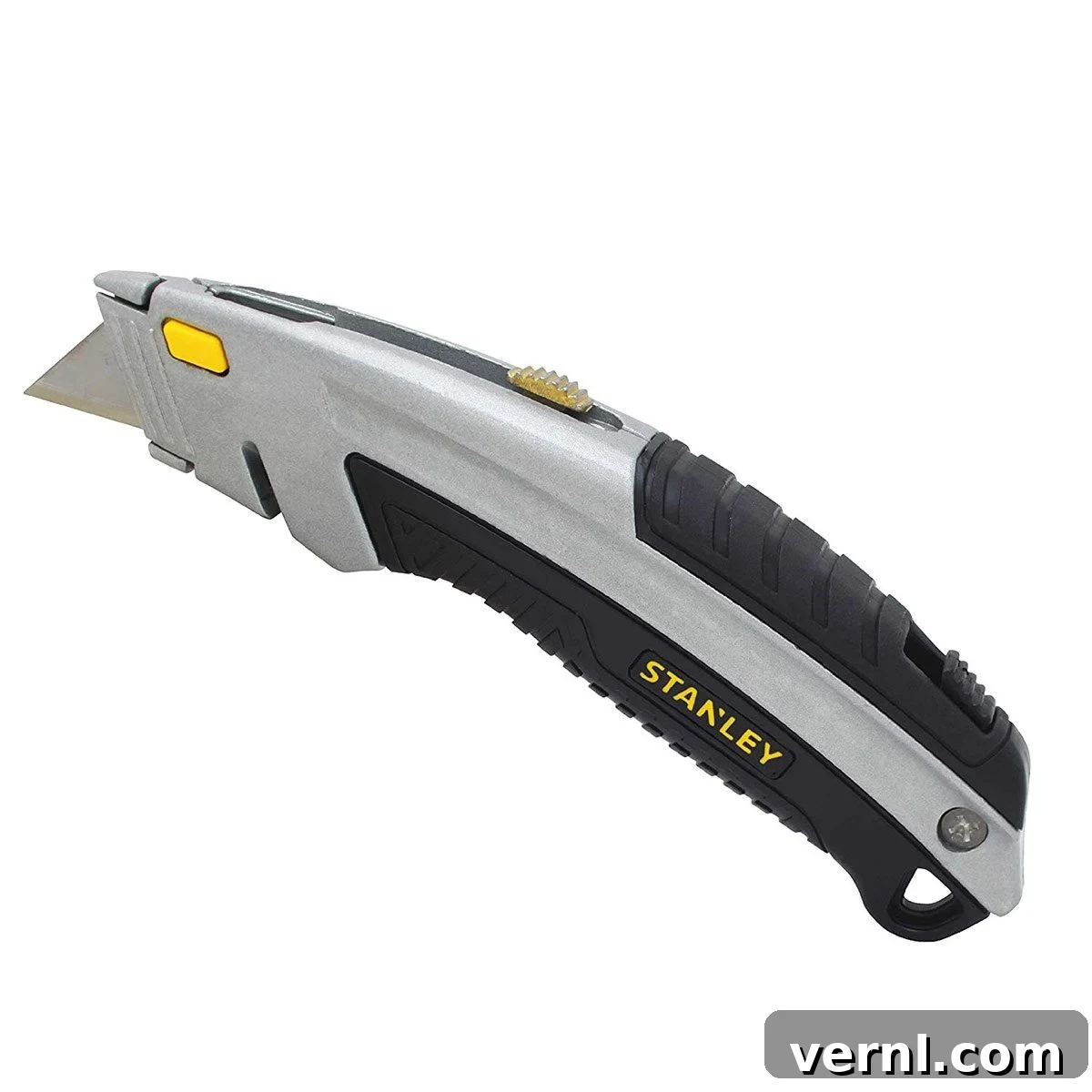
Leading manufacturers like Stanley are renowned for producing high-quality utility knives that incorporate many of these features, offering reliability and performance that professionals trust. For example, Stanley offers contractor-grade retractable blade utility knives that are favorites among those seeking robust and dependable cutting tools.
Stanley makes high qualityutility knives.
Advanced Utility Knife Tips for Optimal Performance and Safety
Beyond the basics, a few expert tips can elevate your utility knife skills, making your work easier, safer, and more precise:
- Embrace Fresh Blades: Never underestimate the power of a sharp blade. If cutting feels difficult, requires excessive force, or produces ragged edges, it’s a clear sign to change your blade immediately. Struggling with a dull blade not only makes your work harder and slower but significantly increases the risk of slippage and injury. A fresh blade glides through material effortlessly, reducing strain and improving control.
- Utilize a Straightedge for Superior Accuracy: For any cut requiring precision, especially on drywall, cardboard, or flooring, always use a sturdy straightedge (a metal ruler, T-square, or level) as a guide. This ensures perfectly straight and clean score lines, which are crucial for achieving accurate finished cuts. Apply firm pressure to the straightedge to prevent it from shifting during the cut.
- Refine Drywall Cutting Technique: When cutting drywall, after scoring and snapping the gypsum core, fold the board back as far as possible. This creates maximum tension on the remaining paper backing, making the final back-cut much cleaner and straighter. Use steady, even pressure for this final pass to avoid tearing the paper.
- Clean Your Knife Regularly: Over time, dust, debris, and adhesive residues can accumulate in the blade mechanism, making it stiff or less reliable. Periodically clean your utility knife, especially the sliding components, to ensure smooth operation and extend its lifespan.
- Store Blades Properly: Keep spare blades in their original packaging or the knife’s built-in storage compartment. Ensure they are kept dry to prevent rust, which can dull edges prematurely.
- Know Your Material: Different materials require different blade pressure and angles. Practice on scrap pieces to get a feel for how your knife and blade interact with the specific material you’re cutting.
Conclusion: The Ever-Present Value of the Utility Knife
From the simplest task of opening a package to the demanding precision required in construction, the utility knife has earned its place as a truly indispensable tool. Its remarkable adaptability, combined with continuous innovation in design and safety features, ensures its enduring relevance in an ever-evolving world of tools. By understanding its components, mastering proper usage techniques, prioritizing safety, and selecting the right type for the job, you can harness the full potential of this versatile cutting instrument. A well-chosen, well-maintained utility knife, coupled with a supply of sharp blades, is more than just a cutting tool; it’s an extension of your capability, empowering you to tackle countless tasks with confidence and precision, making it a cornerstone of any serious toolkit.