Modern homes, built to stringent current codes, are marvels of energy efficiency. With advanced insulation and airtight construction, they excel at keeping you warm in winter and cool in summer, significantly reducing your energy consumption. However, this tight seal, while beneficial for energy conservation, often comes with a hidden downside: compromised air circulation. Your home, much like your body, needs to breathe. It requires a constant exchange of oxygen-rich fresh outdoor air for stale, pollutant-laden indoor air to maintain a healthy and comfortable living environment.
While the simple act of opening a window can introduce fresh air into a specific room, it’s rarely a practical or energy-efficient long-term solution. In colder climates, leaving windows ajar for extended periods is impractical and counterproductive to your heating efforts. Furthermore, an open window only impacts the immediate vicinity, leaving other parts of your home with stagnant air. This is where an advanced solution becomes essential: the Energy Recovery Ventilator (ERV).
An Energy Recovery Ventilator is a sophisticated HVAC component designed to ensure your entire home receives a continuous supply of fresh, filtered outdoor air while simultaneously exhausting stale indoor air. What makes an ERV truly innovative is its ability to recover energy from the outgoing air, pre-conditioning the incoming fresh air. This means warmer air enters your home in winter and cooler air in summer, all while maintaining crucial humidity levels. Whether operating independently or seamlessly integrated with your forced-air central heating and cooling system, an ERV is an excellent investment for homeowners seeking superior indoor air quality and enhanced energy efficiency in a well-insulated, airtight home.
Beyond comfort and energy savings, an ERV plays a vital role in mitigating common indoor air quality issues. Modern homes can trap a variety of pollutants, including volatile organic compounds (VOCs) from building materials and furnishings, carbon dioxide from respiration, pet dander, dust mites, and even mold spores. A properly sized and installed ERV systematically replaces this stale, contaminated air with fresh, filtered outdoor air, creating a healthier living space for you and your family.
Understanding the Energy Recovery Ventilator (ERV)
If you’ve recently moved into a newly constructed home, there’s a good chance you might already be benefiting from an energy recovery ventilator without even realizing it. Many contemporary building codes, such as the 2020 New York City Energy Code, increasingly mandate the inclusion of ERVs or their close cousins, Heat Recovery Ventilators (HRVs), in new residential and commercial developments. These mandates underscore the growing recognition of proper ventilation’s critical role in both indoor air quality and overall energy performance.
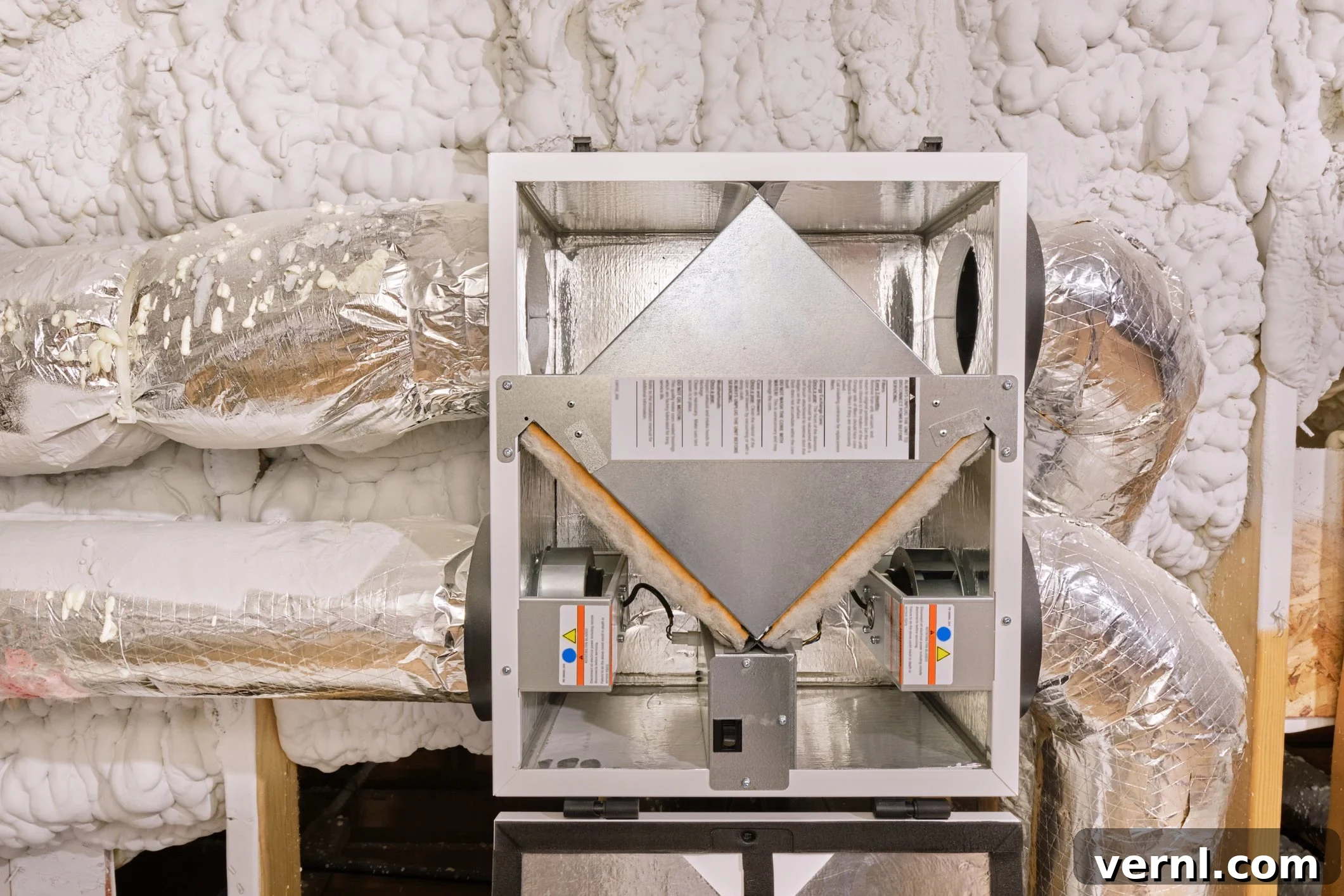
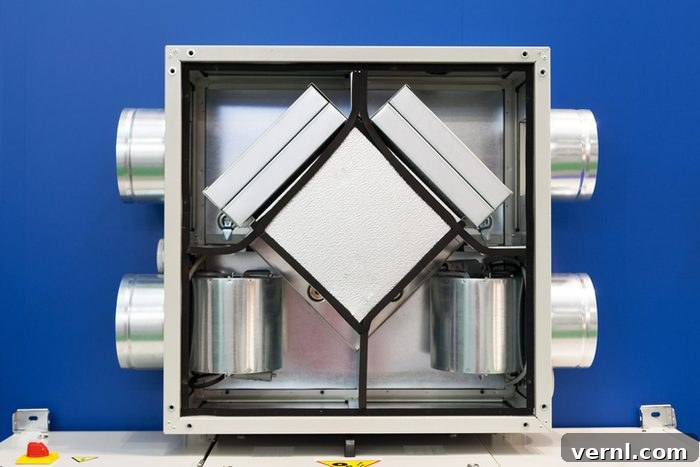
To determine if your home is equipped with an ERV, you can typically locate the unit in your basement, utility room, or furnace area. Look for a rectangular metal box, generally measuring approximately two-and-a-half feet by two feet, or a similar compact size depending on the model and capacity. This unit will feature multiple ports for ductwork – typically two on each side. These ducts facilitate the circulation of air, connecting the ERV to both the exterior of your home and the internal ductwork that distributes air throughout the living spaces.
Upon opening the cover of a residential ERV, you’ll most commonly find a pair of fans and a central core. This core, the heart of the ERV, is typically constructed from engineered cellulose or a composite resin material. This configuration identifies it as a fixed plate or stationary core ERV, which is by far the most prevalent type in residential applications due to its efficiency and simplicity of design.
How an ERV Works: The Principle of Energy Recovery
The operational principle of an ERV is remarkably ingenious and efficient. It operates on a continuous cycle, simultaneously managing two distinct air streams:
- Exhaust Air: One fan draws stale, warm, and often humid air from inside your home. This air typically contains indoor pollutants, odors, and excess moisture.
- Fresh Air: Concurrently, the other fan draws fresh, oxygen-rich air from the outdoors.
These two air streams are then directed through the central core of the ERV. This core is meticulously engineered with specialized channels and materials that allow for the efficient exchange of both heat and moisture between the two air streams without ever allowing them to mix. In essence, the outgoing stale air passes its thermal energy and a portion of its moisture to the incoming fresh air.
After passing through the core:
- The exhausted indoor air, now depleted of much of its energy and some moisture, is vented outside.
- The incoming outdoor air, having absorbed heat and moisture from the outgoing air, is now pre-conditioned. In winter, it’s warmed significantly closer to your indoor temperature, reducing the load on your heating system. In summer, it’s pre-cooled and partially dehumidified, lessening the burden on your air conditioning.
This “conditioned” air, which is warmer than raw outdoor air during winter and cooler in summer, retains some moisture but is also drier than the humid outdoor air in summer. This clever energy transfer significantly reduces the energy required to bring fresh outdoor air to a comfortable indoor temperature and humidity level, making ERVs a cornerstone of energy-efficient ventilation.
Diverse Types of Energy Recovery Ventilators
While the fixed plate or stationary core design is common in residential settings, the world of energy recovery ventilators encompasses several different types, primarily distinguished by the heat exchange mechanism they employ. Understanding these variations can help in appreciating the diverse applications and engineering behind these systems.
- Rotational (Enthalpy Wheel): This type features a large, slowly spinning wheel made of a corrugated material impregnated with a desiccant. As the wheel rotates, one half is exposed to the outgoing air stream, absorbing its heat and moisture. As it continues to spin, the absorbed energy and moisture are then transferred to the incoming fresh air stream. This continuous rotation ensures efficient recovery of both sensible heat (temperature) and latent heat (moisture). Rotational exchangers are highly efficient for both heat and moisture recovery and are frequently found in larger commercial and industrial ERVs, such as those in hospitals and schools, where significant air volumes need to be conditioned.
- Heat-Pipe: Heat-pipe ERVs utilize a series of sealed copper tubes filled with a refrigerant. These tubes are designed to straddle both the incoming and outgoing air streams. The warmer air stream (e.g., outgoing indoor air in winter) causes the refrigerant within the tubes to vaporize, absorbing heat. This vapor then travels to the cooler end of the pipe, where it condenses, releasing its heat into the cooler incoming fresh air stream. This process is passive and highly efficient for sensible heat transfer but does not typically recover latent heat (moisture). While very effective, this system is less common in standard residential applications due to its complexity and cost.
- Runaround Coils: This system employs two separate coil banks, one positioned in the exhaust air stream and the other in the incoming fresh air stream. These coils are connected by a closed loop containing a fluid mixture, typically water and glycol (an antifreeze solution). The warmer air stream passes over its respective coil, transferring heat to the fluid. This heated fluid is then pumped to the other coil, where it releases its absorbed heat to the cooler incoming air stream. This technology is particularly suitable for large systems where the incoming and outgoing air streams are physically separated or far apart, providing flexibility in ductwork design and placement. Like heat pipes, runaround coils primarily transfer sensible heat.
- Fixed Plate or Stationary Core: As previously mentioned, this is the most common residential ERV type. Both incoming and outgoing air streams flow through separate, non-mixing passages within a stationary core. This core is engineered from special materials (e.g., cellulose or specific polymers) that allow for the direct exchange of both sensible heat and latent heat (moisture) between the two air streams. The design is simple, robust, and effective, providing excellent energy recovery in a compact unit.
It’s important to note that not all heat exchange technologies inherently allow for moisture exchange. In systems that primarily recover sensible heat, a separate desiccant material or component might be integrated to actively absorb and transfer moisture from the air, ensuring comprehensive energy recovery across both temperature and humidity.
ERV vs. HRV: Choosing the Right Ventilator
While often discussed interchangeably, Energy Recovery Ventilators (ERVs) and Heat Recovery Ventilators (HRVs) serve distinct purposes and are optimized for different climatic conditions. Understanding their fundamental difference is key to selecting the appropriate system for your home.
- Heat Recovery Ventilator (HRV): An HRV is designed to exchange sensible heat between the incoming and outgoing air streams. It features a core typically made of metal or plastic, which facilitates heat transfer but does not allow for moisture exchange. In an HRV, excess moisture from the warmer outgoing air condenses on the cooler surfaces of the heat exchange core and then drains away into a drip pan.
- Energy Recovery Ventilator (ERV): An ERV, by contrast, exchanges both sensible heat (temperature) and latent heat (moisture). Its core is made from a moisture-permeable material that allows water vapor to pass through, effectively recovering a portion of the humidity.
Climatic Suitability:
- HRVs are generally more suitable for colder, drier climates, such as those found in Northern regions. In these environments, indoor air often becomes excessively humid in winter due to activities like cooking and showering. An HRV helps to expel this excess moisture, preventing condensation on windows and reducing the risk of mold growth, all while recovering valuable heat.
- ERVs are ideal for mixed and humid climates, especially those with hot, sticky summers. In these regions, outdoor air often carries a high moisture content. An ERV effectively transfers a portion of this moisture from the incoming fresh air to the outgoing stale air, helping to dehumidify the incoming air before it enters your home. This reduces the workload on your air conditioning system and contributes to a more comfortable indoor environment by keeping humidity levels in check during warmer months, while still providing heat recovery in cooler months.
In summary, if your primary concern in winter is removing excess indoor humidity and recovering heat, an HRV is an excellent choice. If you live in a climate where managing both heat and humidity (especially in summer) is critical for comfort and energy efficiency, an ERV offers a more comprehensive solution.
Comprehensive ERV Benefits and Considerations
An Energy Recovery Ventilator is a highly valuable component in any modern HVAC system, offering a multitude of advantages for homeowners. However, like any major home improvement, it also comes with certain considerations that potential buyers should be aware of.
Key Benefits of an ERV System
- Universal Fresh Air Distribution: One of the most significant advantages of an ERV is its ability to consistently supply fresh, filtered outdoor air to every room in your house. Unlike opening a window, which only affects a limited area and can compromise security, an ERV ensures comprehensive ventilation without sacrificing safety or comfort. This continuous air exchange helps dilute indoor pollutants, remove stale odors, and maintain a pleasant atmosphere throughout your entire living space.
- Effective Humidity Management: While not a direct replacement for a dedicated dehumidifier, an ERV plays a crucial role in controlling indoor humidity levels. In humid climates, it actively reduces the moisture content of the incoming fresh air, easing the burden on your air conditioning system and enhancing comfort. In drier seasons, it helps retain some indoor humidity, preventing the air from becoming too dry. This balanced approach to humidity control can prevent issues like mold growth, protect wood furnishings, and reduce static electricity.
- Balanced Indoor Air Pressure: By precisely exhausting an equal volume of stale air as it introduces fresh air, an ERV maintains a neutral or balanced air pressure within your home. This prevents undesirable drafts, uncontrolled air infiltration, or exfiltration through cracks and gaps in the building envelope. A balanced pressure contributes significantly to overall comfort and helps maintain the efficiency of your heating and cooling systems by minimizing unwanted air leakage.
- Enhanced Indoor Air Quality (IAQ): Beyond just freshness, ERVs dramatically improve IAQ. They continuously flush out airborne pollutants such as VOCs released from building materials, cleaning products, and furniture, as well as allergens like pollen, pet dander, and dust mites. By diluting carbon dioxide levels, an ERV also ensures a more alert and comfortable environment, especially in tightly sealed homes.
- Significant Energy Efficiency: The core function of an ERV is energy recovery. By pre-conditioning incoming fresh air with the energy from outgoing stale air, it significantly reduces the amount of work your furnace or air conditioner needs to do to bring the fresh air to your desired indoor temperature. This translates directly into lower energy bills and a smaller carbon footprint, making your home more sustainable.
- Odor Reduction: Stale indoor air can accumulate odors from cooking, pets, and general living. An ERV continuously replaces this odor-laden air with fresh outdoor air, ensuring your home always smells clean and inviting.
Important Drawbacks and Considerations
- Electricity Consumption: An ERV’s fans operate continuously or on a schedule, consuming electricity. While a typical residential ERV uses a relatively modest amount, approximately 40 watts per hour, this consumption adds up over time if the unit runs 24/7. At an average national electricity rate, this could equate to an additional cost of nearly $100 per year. It’s important to weigh this operational cost against the significant energy savings achieved through heat and moisture recovery.
- Operational Noise: ERVs contain fans and moving parts, meaning they are not entirely silent. While most modern units are designed to run quietly, especially when properly installed and insulated, some level of operational noise is inevitable. Strategic placement of the unit, such as in a basement or utility room away from living areas, and ensuring proper ductwork acoustics can help mitigate this concern.
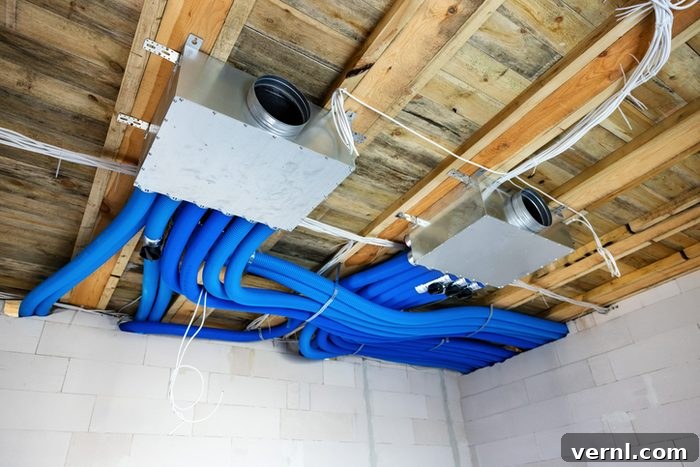
- Installation Complexity and Cost: The initial installation cost of an ERV can be substantial. While some units can be tied into existing HVAC ductwork, ERVs often perform optimally with dedicated intake and exhaust ducts for the fresh air supply. Installing new, extensive ductwork and vents throughout a home is a significant project that requires professional expertise, contributing to the overall expense.
- Regular Maintenance Requirements: To ensure optimal performance and longevity, ERVs require routine maintenance. This typically includes changing or cleaning filters every few months, depending on air quality, and periodically cleaning the heat exchange core. Neglecting maintenance can lead to reduced efficiency, increased energy consumption, and diminished indoor air quality benefits.
- Ductwork Integration: Integrating an ERV into an existing home’s ductwork can be complex. Ideally, the ERV should have dedicated supply and exhaust points that are strategically located to ensure even air distribution and efficient pollutant removal. Retrofitting these duct runs can be labor-intensive and may require modifications to walls or ceilings.
ERV Installation Cost Breakdown
Investing in an Energy Recovery Ventilator is a commitment to improving your home’s air quality and energy efficiency. Understanding the costs involved is crucial for budgeting and planning.
Unit Purchase Price
The average cost to purchase an ERV unit itself typically ranges between $1,000 and $1,900. This price can fluctuate based on several factors, including:
- Capacity: Larger homes or those with higher ventilation requirements will need a higher CFM (Cubic Feet per Minute) unit, which generally costs more.
- Brand and Features: Premium brands or units with advanced features like smart controls, variable speed fans, or enhanced filtration will be at the higher end of the spectrum.
- Efficiency Ratings: More energy-efficient models, often indicated by higher heat recovery percentages, might have a slightly higher upfront cost but offer greater long-term savings.
Materials and Ductwork Costs
Beyond the unit, you’ll need various materials for installation, with ductwork being the most significant component. The cost for ductwork and other necessary materials typically falls between $800 and $1,900. This range is highly dependent on:
- Home Size and Layout: Larger homes or those with complex layouts will require more extensive duct runs, increasing material costs.
- Ductwork Material: Options like rigid metal ducts are more durable but often pricier than flexible insulated ducts.
- Vents and Grilles: The number and type of supply and exhaust vents needed for proper air distribution.
- Miscellaneous Supplies: Adhesives, sealants, fasteners, insulation, and electrical wiring components.
Professional Installation Costs
If you choose to hire a professional HVAC contractor for the installation, which is highly recommended for proper sizing, sealing, and system integration, labor costs will be a significant factor. Professional installation can add anywhere from $1,500 to $4,000 or more to the total project cost. This typically breaks down as:
- Hourly Labor Rates: HVAC technicians charge hourly, and the total labor cost will depend on the complexity and duration of the installation.
- Ductwork Installation: Many contractors charge by the linear foot for ductwork installation, which can range from $3 to $10 per linear foot, excluding the material cost. For extensive new duct runs, this can add substantially to the bill.
- System Integration: If the ERV is being integrated with an existing forced-air system, there might be additional costs for wiring, controls, and balancing.
- Geographic Location: Labor rates vary significantly by region and local market demand.
- Permits: Some localities require permits for HVAC modifications, adding a small fee to the overall cost.
Total Project Cost
Considering all factors, the total installed cost for an ERV system in an existing home typically ranges from $2,500 to $7,800. While this is a considerable investment, it’s essential to view it in the context of long-term benefits, including improved indoor air quality, enhanced comfort, and significant energy savings that can partially offset the initial outlay over the lifespan of the unit. Furthermore, a healthier home environment and protection against mold or moisture issues provide intangible but invaluable benefits.
Before making a decision, it is always advisable to obtain multiple quotes from reputable HVAC contractors. They can assess your home’s specific needs, recommend the appropriate ERV model, and provide a detailed breakdown of all associated costs.