
As the economic landscape shifts with the imposition of new tariffs, homeowners embarking on renovation or repair projects face unprecedented challenges. These evolving trade policies are significantly impacting the cost of a wide array of materials, from the lumber that frames a new deck to the metals used in appliances and the drywall that finishes a room. Essentially, any home improvement endeavor that relies on imported materials or components is likely to see a spike in expenses. “These changes are coming fast, so it’s important to prepare yourself,” advises George Carrillo, CEO of the Hispanic Construction Council. “Whether you’re remodeling a bathroom, crafting furniture, or fixing your car, the next few weeks are critical for avoiding financial stress later on.”
The immediate consequence for many households is a noticeable increase in project costs, which can quickly derail budgets and extend timelines. Materials such as lumber, various metals, drywall, cement, stone, and even essential appliances and electronics are now subject to tariffs, making them more expensive to acquire. This ripple effect extends across the supply chain, affecting manufacturers, retailers, and ultimately, the consumers planning their next home project. Understanding these impacts and proactively strategizing is key to navigating this new financial terrain. While the higher costs are undoubtedly frustrating, a blend of urgency, creativity, and informed decision-making can help mitigate the financial burden. General strategies include comparing prices diligently, securing multiple quotes, accelerating project timelines before tariffs fully entrench, or scaling down initial plans to fit revised budgets. By acting now and thinking strategically, homeowners can soften the financial blow and ensure their home improvement dreams remain within reach.
In this comprehensive guide, we’ll delve into specific home projects most affected by these tariffs, explore expert projections for price increases, and offer actionable advice on how to minimize the financial sting. From minor DIY tasks to major renovations, understanding the cost implications and implementing smart savings strategies is more crucial than ever.
Home Projects Experiencing Increased Costs Due to Tariffs
DIY Furniture: Crafting on a Tighter Budget
The rising cost of lumber is perhaps one of the most widely felt impacts of recent tariffs, directly affecting anyone planning to build or repair furniture. This includes a broad spectrum of wood types, from common softwoods like Canadian pine, often used in frames and simpler constructions, to prized European hardwoods such as white oak, favored for its durability and aesthetic appeal in custom pieces. Beyond the wood itself, the intricate metal hardware essential for furniture assembly – think European hinges, drawer slides, and various fasteners – will also see price increases. This means that even smaller, seemingly insignificant DIY projects are not immune to these escalating costs. As George Carrillo notes, “Even smaller DIY projects won’t be spared. Some raw materials costs are likely to climb by 30% or more,” underscoring the broad reach of these tariff adjustments across the DIY landscape.
For a DIY custom dining table, a centerpiece project for many homes, the financial outlook has shifted significantly:
- Cost before tariffs: $500
- Cost after tariffs: $650
To mitigate these rising expenses, consider these practical approaches:
- Embrace Reclaimed Wood: Sourcing reclaimed or salvaged wood not only offers a unique aesthetic with historical character but also bypasses the tariffs associated with new lumber. Local architectural salvage yards, demolition sites, or even online marketplaces can be excellent resources for finding suitable materials.
- Support Local Sawmills: Purchasing wood directly from local sawmills can often provide more competitive pricing, reduce transportation costs, and support local economies, effectively bypassing the complexities of international trade and tariffs.
- Simplify Your Designs: Opting for simpler, more minimalist furniture designs requires less material, which can translate into significant cost savings. Think about efficient cuts and joinery that minimize waste, further stretching your budget.
Aging-In-Place Projects: Essential Renovations Become More Costly
For retirees and seniors, the financial implications of tariffs are particularly concerning, especially when combined with volatility in the stock market and 401(k) plans. Projects aimed at making homes safer and more accessible for aging in place are facing substantial price hikes. These essential renovations, designed to allow seniors to maintain independence and comfort in their own homes, are now becoming increasingly daunting due to increased material costs. “Costs for renovations needed to help seniors age-in-place will increase because of tariffs imposed by the Trump administration,” states Neal K. Shah, CEO of CareYaya Health Technologies. “This will affect the lowest-income seniors the most,” highlighting the critical social impact of these economic changes on a vulnerable population.
Common aging-in-place modifications include bathroom safety enhancements like grab bars and walk-in tubs, widening doorways for wheelchair accessibility, installing wheelchair ramps, implementing non-skid flooring, and adjusting kitchen cabinetry and fixtures for easier reach and use. These are not luxury upgrades but often necessities for maintaining a good quality of life.
Consider the cost trajectory for a DIY wheelchair ramp:
- Cost before tariffs: $1,700
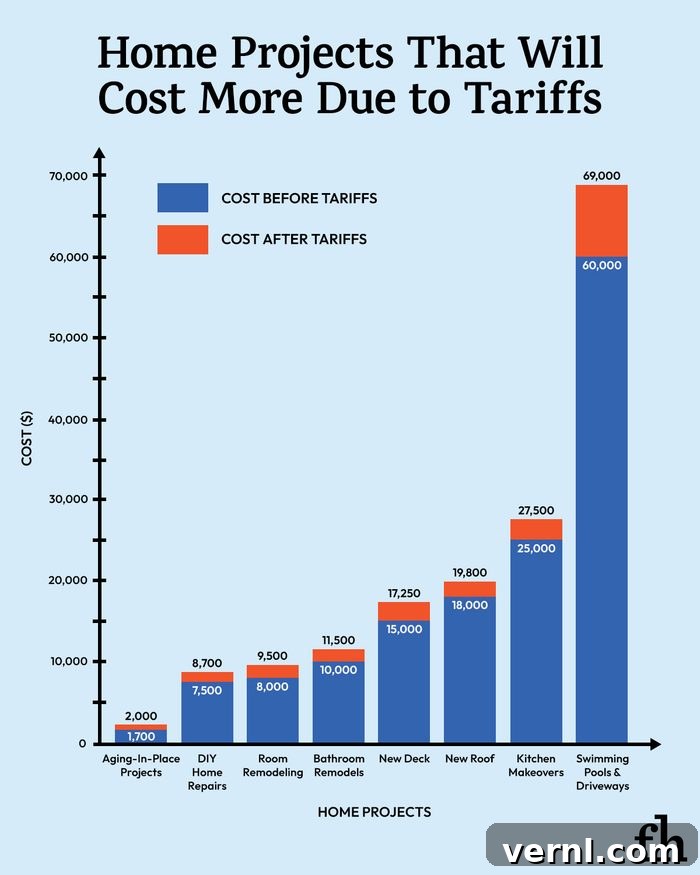
- Cost after tariffs: $2,000
Strategies to make these vital projects more affordable include:
- Early Supply Purchase: Prioritize purchasing critical supplies, such as grab bars and non-slip surfaces, as early as possible to lock in current prices before further increases.
- Utilize U.S.-Made Composites: Whenever feasible, opt for composite decking materials manufactured within the U.S. This strategy helps circumvent tariffs applied to imported alternatives, offering a domestic and often cost-effective solution.
- Reconfigure Before Replacing: Explore options to reconfigure existing rooms or layouts rather than undertaking full replacements. Sometimes, a clever rearrangement of furniture or a minor structural adjustment can achieve the desired accessibility without the need for expensive new materials.
- Short-Term Solutions: For immediate needs, consider temporary or short-term solutions like non-slip mats or portable ramps while you plan for more permanent installations.
- Consult Specialists: Engage with specialists who design continued living solutions at home. Their expertise can help identify the most cost-effective and impactful modifications, ensuring that resources are allocated efficiently.
- Medicare Part B Coverage: Remember to inquire about potential coverage for certain evaluations or specific medical equipment costs under Medicare Part B, which could alleviate some of the financial burden.
Room Remodeling: Adapting to Higher Renovation Expenses
Across the board, virtually all home remodeling projects are experiencing price inflation. On the lighter end of the spectrum, tariffs on metals mean that essential components like aluminum windows and doors will cost more. Furthermore, the prices of paint and drywall are projected to increase by approximately 10% and a significant 22%, respectively. This is particularly impactful for drywall, as ADU contractor Paul Dashevsky explains, “Because Mexico supplies over 70% of American drywall, a tariff on this material translates directly to increased remodeling costs, as it is generally standard practice in today’s construction and doesn’t have a simple substitute.” This highlights how tariffs on key materials with limited alternative sources can have a magnified effect on project budgets.
For a typical dining room remodel, the financial outlook has changed:
- Cost before tariffs: $8,000
- Cost after tariffs: $9,500
To manage these rising costs, consider the following:
- Opt for Vinyl Windows: Instead of aluminum, consider vinyl windows, which often provide comparable energy efficiency at a lower cost, and are less impacted by metal tariffs.
- Lock in Remodel Costs Now: If you have a remodeling project planned, try to secure contracts and purchase materials as soon as possible to lock in current prices before further tariff-driven increases take effect.
- Downscale Projects: Re-evaluate your remodeling plans. Could a smaller scope of work, such as focusing on specific areas or opting for cosmetic upgrades instead of structural changes, still achieve your desired outcome?
Kitchen Makeovers: Budgeting for the Heart of the Home
The kitchen, often considered the heart of the home, is unfortunately not immune to the tariff-induced price hikes. Updates to this vital space will see increased costs, partly due to the rising prices of appliances, which rely heavily on both electric components and sheet metal. Additionally, cabinet doors and panels, crucial for the kitchen’s aesthetic and functionality, are also slated for price increases. Interior designer Alecia Taylor elaborates, “The majority of high-end MDF and veneer panels are manufactured in China and the EU. Refrigerators, ovens, and dishwashers often have imported components, too, so expect a probable 5% to 15% price hike.” This highlights the global supply chain’s influence on even domestically assembled products.
For a comprehensive kitchen makeover, the projected costs have shifted:
- Cost before tariffs: $25,000
- Cost after tariffs: $27,500
To keep your kitchen makeover within budget, explore these cost-saving strategies:
- Choose American-Made Countertops: Prioritize countertop materials that are sourced and manufactured domestically. Options like U.S.-produced quartz or granite can help avoid tariffs imposed on imported stone, offering quality alternatives.
- Consider Cabinet Refacing: Instead of completely replacing cabinets, which is a major expense, explore refacing. This involves replacing doors and drawer fronts and applying a new veneer to existing cabinet boxes, providing a fresh look at a fraction of the cost.
- Purchase Energy-Efficient Appliances Early: If new appliances are on your list, consider buying energy-efficient models now before tariff-related price increases fully hit retail markets. Not only will you save on the purchase price, but you’ll also benefit from lower utility bills in the long run.
- Look for Scratch-and-Dent Specials: Many appliance retailers offer significant discounts on “scratch-and-dent” items. These appliances often have minor cosmetic imperfections that don’t affect performance and can offer substantial savings.
Bathroom Remodels: Navigating Luxury and Necessity
Bathroom remodels, a popular home improvement project, are also facing higher costs, particularly for premium fixtures and finishes. Items like high-end bathtubs and faucets, frequently imported from countries like Germany and Japan, are subject to increased tariffs. Similarly, ceramic tiles and aluminum-framed shower doors, common in modern bathroom designs, will also see price hikes. Interior designer Alecia Taylor further warns, “Imported Italian and Spanish marble vanities and shower surrounds will see a 20% added cost.” Beyond traditional fixtures, smart bathroom features such as imported smart showers and LED mirrors will become more expensive due to tariffs on electronics, adding another layer of complexity to budgeting for a contemporary bathroom upgrade.
For a standard bathroom remodel, expect the following cost changes:
- Cost before tariffs: $10,000
- Cost after tariffs: $11,500
To minimize the financial impact on your bathroom renovation, consider these tips:
- Opt for Domestic Alternatives: Choose domestic quartz or porcelain for vanities and shower surrounds instead of imported marble. These materials offer excellent durability and aesthetic appeal without the added tariff costs.
- Affordable Flooring Options: Swap expensive imported ceramic or natural stone tiles for more affordable domestic options like vinyl tiles. Modern vinyl offers a wide range of styles and textures that can mimic more expensive materials effectively.
- Buy Fixtures in Advance: Secure your desired fixtures, such as faucets, showerheads, and lighting, in advance. Purchasing them before suppliers implement tariff-driven price increases can lead to significant savings.
- Explore Closeouts and Older Models: Keep an eye out for closeout sales on older warehouse models or discontinued lines at plumbing supply stores and home improvement retailers. These items are often available at a substantial discount.
Car Repair and Tools: Keeping Your Ride Running
The impact of tariffs extends beyond the home, reaching into essential vehicle maintenance and tool purchases. Experts anticipate a significant rise in car parts prices, directly attributable to steel and aluminum tariffs. This means everything from brake discs and exhaust systems to body panels will likely cost more. Moreover, electronics tariffs are projected to cause a 15 to 20% increase in the price of power tools, according to George Carrillo. “Car repairs are already feeling the strain,” he observes, indicating that the effects are already being felt by consumers and mechanics alike. This makes proactive maintenance and smart purchasing decisions even more critical for vehicle owners.
For a DIY radiator replacement, a common car repair, here’s how costs might change:
- Cost before tariffs: $500
- Cost after tariffs: $750
To mitigate the rising costs associated with car repairs and tools:
- Act Now on Professional Repairs: If your vehicle requires non-DIY professional repairs, consider scheduling them sooner rather than later to potentially avoid future price hikes on parts and labor.
- Pre-Purchase DIY Repair Parts: For known upcoming DIY repairs, like replacing brake pads or spark plugs, buy the necessary parts now. Stocking up on essential consumables can lock in current prices.
- Explore Used and Aftermarket Parts: Investigate reliable used parts from reputable salvage yards or high-quality aftermarket parts. These alternatives can often provide significant savings without compromising safety or performance.
DIY Pet Enclosures: Building for Your Furry Friends
Pet owners planning to build a doghouse, a catio, or any other type of pet enclosure should prepare for increased costs. The pervasive impact of wood and metal tariffs means that constructing these structures, regardless of their design complexity, will inevitably be more expensive. “Metal doghouses will see the steepest increases,” warns Baltimore-based contractor Yaeir Moinzadeh. He adds, “Simple items, like roofing felt and wood preservatives, will also be affected by these broad tariffs,” underscoring how even the smallest components contribute to the overall cost escalation.
For a standard DIY wooden doghouse, here’s an example of the expected cost increase:
- Cost before tariffs: $250
- Cost after tariffs: $300
To reduce the expense of building pet enclosures:
- Choose U.S.-Made Composites: Opt for composite materials manufactured in the U.S. instead of metal components where possible. These can be more resistant to tariffs and may offer better durability.
- Upcycle Materials: Get creative with scrap wood, metal, or other up-cycled materials. Old pallets, repurposed cabinets, or salvaged fencing can be transformed into safe and comfortable pet homes, saving money and reducing waste.
- Simplify Design or Use Prefab Kits: A simpler design requires less material and less labor. Alternatively, look for prefab kits that were manufactured and imported before the recent tariffs were implemented, potentially offering a cost advantage.
New Roof: Protecting Your Home from the Top Down
A new roof is a critical home investment, and unfortunately, it’s not exempt from the impact of tariffs. Steel and aluminum roofing panels and siding will be among the hardest hit, reflecting the increased cost of imported metals. However, the ripple effect extends to more common materials; asphalt shingles will also experience price increases, alongside essential components like flashing and gutters. Robert O’Sullivan, a roofing contractor in Massachusetts, explains the broad reach: “Even smaller components like nails and adhesives are seeing price hikes because of supply chain disruptions and higher raw material costs.” This means a comprehensive roofing project will likely entail higher expenses across the board.
For a new asphalt shingle roof, expect these changes:
- Cost before tariffs: $18,000
- Cost after tariffs: $19,800
To minimize the financial burden of a new roof:
- Act Quickly: If a roof replacement is imminent, try to initiate the project before material costs climb further. Locking in current prices can lead to significant savings.
- Secure Replacement Deals: Work with roofing contractors to lock in deals at their current pricing. Many contractors might be willing to honor existing material costs for a limited time.
- Consider Alternative Materials: Explore alternatives such as synthetic slate or composite shingles. These materials can sometimes offer comparable durability and aesthetics at a more predictable price point, especially if they rely less on tariff-affected imports.
Furthermore, O’Sullivan advises, “Keep aside extra funds for unexpected expenses. Many contractors offer financing plans to spread the expenditures in a structured way so that it doesn’t feel like a burden. So, go for them!” This proactive budgeting and financial planning can help homeowners manage the significant investment of a new roof.
Swimming Pools and Driveways: Hardscaping on a Budget
Projects involving significant concrete and cement work, such as new swimming pools, driveways, and walkways, are also feeling the pinch of tariffs. According to ADU contractor Paul Dashevsky, over 25% of the cement and concrete used in the U.S. is imported from Canada and Mexico. Consequently, tariffs on these products directly increase the cost of these essential hardscaping projects. Beyond material costs, such labor-intensive projects, which are often less suitable for DIY approaches, could also experience a rise in contractor rates. This is partly due to increasing labor shortages; non-citizen immigrants comprise around 40% of concrete construction workers, and heightened fears of deportation and actual deportations stemming from new immigration policies are expected to drive up wages in the sector.
For a new swimming pool, a substantial investment, the cost implications are significant:
- Cost before tariffs: $60,000
- Cost after tariffs: $69,000
To manage the costs of pools and driveways:
- Driveway Alternatives: For driveways, consider alternative surfaces that are less dependent on tariff-affected concrete, such as gravel or pavers. These options can offer aesthetic appeal and functionality at a lower price point.
- Repair vs. Replace Sidewalks: For sidewalks, prioritize repairing existing surfaces over complete replacement. Patching cracks or resurfacing smaller areas can be much more cost-effective than pouring entirely new concrete.
- Contract Pool Projects Now: If a new swimming pool is on your agenda, aim to contract the project as soon as possible. Securing agreements now can help lock in prices for materials and labor before further tariff-related increases or labor cost pressures take hold.
New Deck: Outdoor Living at a Higher Price
The dream of adding a new wooden deck or enhancing an existing one with stylish outdoor furniture will also come with a higher price tag. This is largely because, as construction manager Docia Boylen explains, “for a standard wooden deck, we would use softwood lumber from Canada,” a material now subject to tariffs. Furthermore, the costs for outdoor furniture and various decorative items are also expected to increase by 10% to 15%, adding to the overall expense of creating an inviting outdoor living space. The combination of material tariffs and the impact on finished goods means homeowners must be more strategic in their planning and purchasing for outdoor projects.
For a new deck installation, here are the estimated cost changes:
- Cost before tariffs: $15,000
- Cost after tariffs: $17,250
To make your new deck project more affordable:
- Source Local Woods: Investigate locally sourced wood options. Purchasing from regional suppliers can help circumvent tariffs on imported lumber and often supports local forestry.
- Consider Composite Materials: Explore composite decking materials, especially those manufactured in the U.S. like Trex. These materials are often more durable, require less maintenance, and are less susceptible to tariffs on imported wood products.
DIY Home Repairs: Tackling Essential Upkeep
Beyond major renovations, the prices of everyday home repair materials are also on an upward trend. This is particularly noticeable in plumbing, electrical, and HVAC (heating, ventilation, and air conditioning) supplies. Alecia Taylor highlights the global nature of these impacts: “South American copper faces higher tariffs, affecting plumbing and electrical supplies.” She adds, “the majority of heating and cooling units contain imported European compressors and Chinese circuit boards,” indicating that even core components of major home systems are subject to tariff-induced cost increases. This means that whether you’re fixing a leaky faucet or replacing a circuit, the cost of materials will likely be higher.
For a basic DIY water-heater piping repair, a common household task:
- Cost before tariffs: $40
- Cost after tariffs: $46
For a more significant investment like a new HVAC system:
- Cost before tariffs: $7,500
- Cost after tariffs: $8,700
To manage these essential repair costs:
- Prompt System Repairs/Replacements: Address old or failing systems sooner rather than later. Proactively repairing or replacing worn-out components before prices escalate further can prevent larger, more expensive problems down the line.
- Buy Domestically Assembled Sets: When purchasing new systems or major components, inquire about domestically assembled sets if available. These might be less exposed to tariffs on individual imported parts, potentially offering a more stable price.
New House Construction: The Foundations of Future Homes
The impact of tariffs extends far beyond individual home projects, fundamentally affecting the cost of building new homes. The National Association of Home Builders estimates that the cost of lumber for framing a new single-family house is expected to rise by approximately $9,200. This significant increase directly affects housing affordability and the overall feasibility of new construction projects. While the long-term effects are still unfolding, construction manager Mike German offers a silver lining, noting, “The good news is that we haven’t seen the prices increase at the supply houses yet. It may be worthwhile to purchase items for a summer project in advance in anticipation of the change.” This advice underscores the importance of foresight in large-scale construction.
Consider the foundational cost of one framing 2×4:
- Cost before tariffs: $4
- Cost after tariffs: $5.6
To mitigate the rising costs of new home construction:
- Negotiate and Lock in Prices Early: Developers and future homeowners should negotiate contracts and lock in material prices as early as possible with suppliers and contractors.
- Simplified Architectural Design: Consider a more simplified architectural design and smaller square footage. Less complex designs require fewer specialized materials and less labor, contributing to overall cost savings.
- Creative Building Approaches: Get creative with less-conventional building and material approaches. Exploring alternative framing techniques, sustainable materials, or modular construction methods could offer cost efficiencies that circumvent traditional supply chain challenges.
About the Experts
- George Carrillo is CEO and co-founder of the Hispanic Construction Council (HCC), an organization dedicated to fostering growth and collaboration within the construction industry.
- Paul Dashevsky is Co-CEO at GreatBuildz.com and MaxableSpace.com, companies specializing in Accessory Dwelling Units (ADUs) and connecting homeowners with qualified contractors.
- Robert O’Sullivan is the founder and a highly experienced roofing contractor at Ranch Roofing Inc., based in Arlington, Massachusetts, known for his insights into roofing material costs and project management.
- Neal K. Shah is CEO of CareYaya Health Technologies, recognized as “America’s Chief Elder Officer” for his advocacy and innovation in senior care and aging-in-place solutions.
- Alecia Taylor is an interior designer at CabinetNow.com, providing expertise on design trends, material selection, and cost-effective solutions for kitchen and bath projects.
- Yaeir Moinzadeh is a licensed contractor and owner of Blue Rise Roofing in Baltimore, Maryland, bringing extensive knowledge of construction materials and project impacts.
- Docia Boylen is owner of Handyman Connection of Golden, Colorado, and an award-winning leader in home repair and renovation services.
- Mike German is the owner of Handyman Connection of Parker, Colorado, offering valuable perspectives on construction timing and material procurement.
RELATED:
- The Real Reason Aluminum Foil Has a Shiny Side and a Dull Side
- Think Adirondack Chairs Are Uncomfortable? You’re Using Them Wrong
- Why You Shouldn’t Crush Aluminum Cans Before Recycling