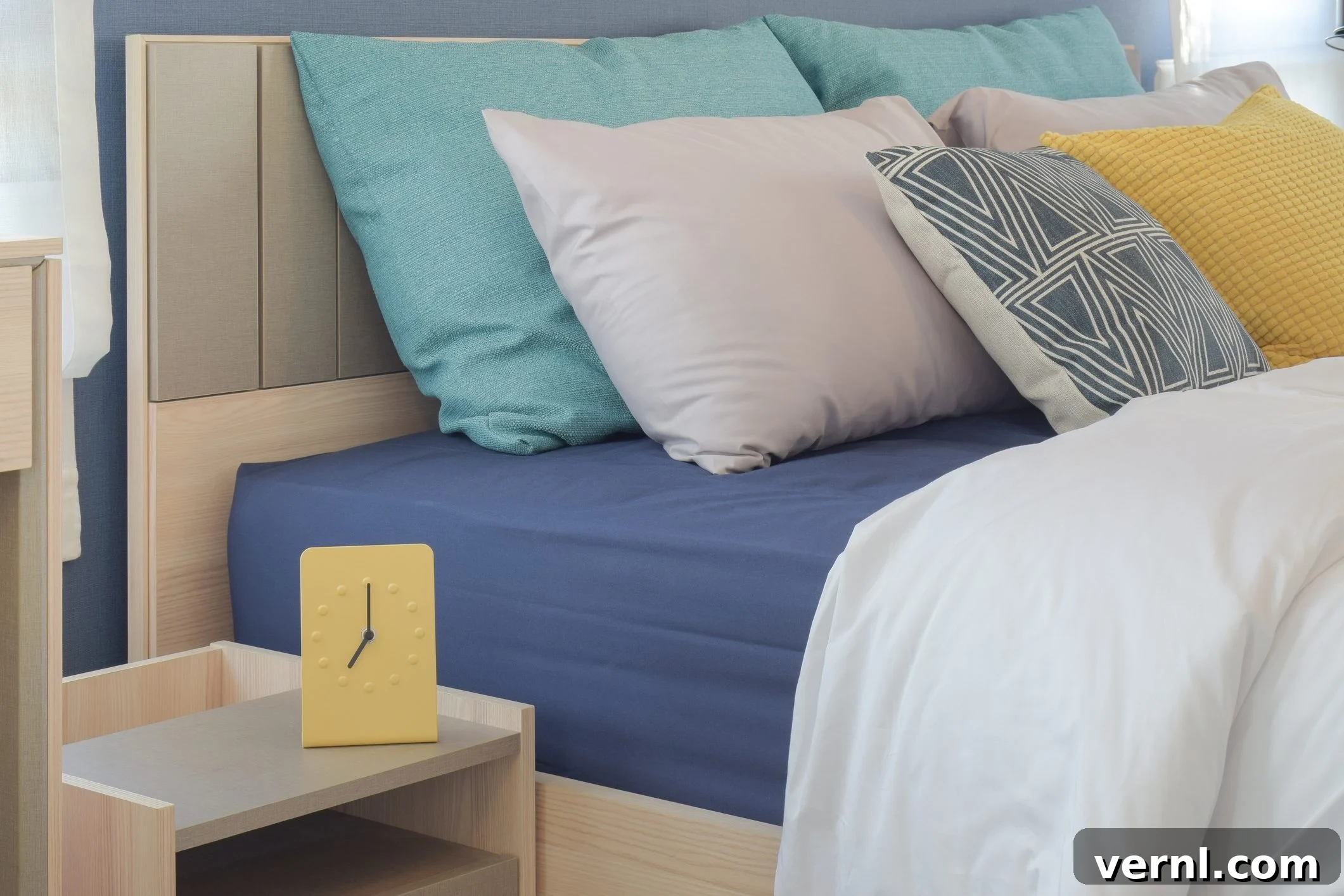
Another day, another captivating internet discussion. We’ve all been swept into debates ranging from “the blue or the gold dress” conundrum to the practical dilemma of whether to dust or vacuum first. Today, we delve into a surprisingly passionate topic that touches on our nightly routines: are you firmly on Team Top Sheet, or do you prefer the minimalist approach of Team No Top Sheet?
This discussion, seemingly simple, centers on bed linens and how we choose to layer our sleeping sanctuary. Do you relish the idea of snuggling directly under a soft, washable duvet cover, embracing a streamlined bedding setup? Or do you lean towards the classic structure of multiple layers—a crisp flat sheet, a cozy blanket, and perhaps a comforter—allowing for easy adjustments to suit the season and maintain impeccable hygiene?
The history of the top sheet, also known as a flat sheet, stretches back millennia. For centuries, it has served as a fundamental component of bed sets, valued for its practicality and versatility. These sheets are remarkably easy to wash, dry, and fold, making them a staple in households worldwide. They even often pull double duty; next time you find yourself in a hotel room, take a moment to inspect the bottom sheet on your bed. It’s highly probable that it’s a standard top sheet, skillfully folded and tucked under the mattress to create a clean, uniform look.
So, where do you stand in this enduring bedding debate? To help you decide, or perhaps reinforce your current preference, let’s explore the compelling arguments for both sides, drawing insights from sleep experts.
Understanding the Role of a Top Sheet
Before diving into the debate, it’s essential to clarify what a top sheet is and its traditional purpose. A top sheet is specifically designed to be placed directly over you while you’re in bed, situated underneath your primary cover like a blanket, comforter, or duvet. It acts as an intimate layer, separating you from your heavier bedding.
“Top sheets — also commonly referred to as flat sheets — are a customary inclusion in most bedding sets sold across the United States,” explains Tom Ryan, Ph.D., a distinguished product expert at the Sleep Foundation. He elaborates, “The primary concept behind using a top sheet is to establish a protective barrier between the sleeper and their comforter or duvet. This barrier is crucial for maintaining the cleanliness and overall hygiene of the more cumbersome-to-wash outer layers of bedding.”
From a practical standpoint, incorporating a top sheet into your bedding routine can significantly simplify laundry day. When it’s time to refresh your bed, you simply strip the top sheet along with your pillowcases and fitted sheet, tossing them into the wash. This eliminates the frequent need to launder your bulky comforter or duvet, which often requires special care or takes up significant space and time in the washing machine and dryer. However, the fundamental question remains: is this protective layer truly necessary for everyone? “Ultimately, the decision to use a top sheet or not comes down entirely to individual personal preference,” Ryan affirms. Let’s examine the compelling evidence presented by proponents and opponents alike.
Embracing the Top Sheet: The Classic Choice
Are you among those who instinctively reach for a top sheet when making your bed? If so, you’re certainly in excellent company. Data from mattress company Casper indicates that a significant 58% of Americans prefer to use top sheets, with a noticeable trend showing that older sleepers tend to be more attached to this traditional bedding component than their younger counterparts.
Why does the top sheet continue to reign supreme for so many? Here are several compelling reasons:
- Unparalleled Comfort and Temperature Regulation: “The ability to customize your sleeping environment for optimal comfort is a key benefit,” Ryan notes. “You might find yourself preferring to sleep solely with a top sheet and a very light blanket during the warmer months, or if you reside in a consistently warm or humid climate.” There’s an undeniable sensory pleasure in slipping between crisp, smooth sheets, especially when facing the sweltering heat of a triple-digit summer day in places like Texas. A top sheet offers a lighter covering than a duvet, providing a gentle embrace without trapping excessive heat, allowing your body to regulate its temperature more effectively throughout the night. It also provides a customizable layer that can be easily adjusted or kicked off without disturbing your entire bedding arrangement.
- Enhanced Aesthetic Appeal: For those who appreciate a meticulously styled and layered bed, a top sheet adds an undeniable touch of elegance. “If you enjoy the visual depth and sophisticated appearance of a layered bed,” Ryan explains, “a top sheet contributes a beautiful visual accent, particularly when it’s folded back over the duvet or comforter.” This classic fold creates a clean, inviting look reminiscent of hotel luxury. While decorative coverlets, cheerful blankets, and plush duvets certainly have their own charm, many people are culturally conditioned to perceive a bed with that peek of a fresh, neatly folded top sheet as the epitome of comfort and readiness. It allows for contrasting colors or patterns, contributing to the overall design scheme of the bedroom.
- Superior Sleep Hygiene and Protection: This is arguably one of the most powerful arguments in favor of the top sheet, especially for the germ-conscious. Mattress company Amerisleep commissioned a fascinating, albeit slightly alarming, study on germy sheets. For germophobes, the findings are quite startling: a typical set of bed sheets can harbor up to 25,000 times more bacteria than a bathroom doorknob, and this accumulation can occur after just a single week of use! This revelation underscores the importance of frequent linen washing. Tossing a top sheet into the laundry with the rest of your everyday linens is an incredibly simple and effective method to combat these pervasive germs. By acting as a washable barrier, the top sheet prevents direct contact between your body (and all its natural oils, sweat, and skin cells) and your larger, often more difficult-to-clean duvet or comforter. This significantly reduces the frequency required for washing your main bedding, extending its life and saving time and effort. It’s a pragmatic solution for maintaining a consistently clean and hygienic sleeping environment, crucial for overall health and well-being, particularly for those with allergies or sensitivities.
- Protection for Expensive Bedding: Duvets and comforters, especially high-quality ones, can be significant investments. A top sheet acts as a sacrificial layer, absorbing much of the dirt, sweat, and body oils that would otherwise soil the more expensive outer bedding. This protection helps to preserve the integrity, cleanliness, and lifespan of your duvet or comforter, reducing wear and tear from frequent washing.
The No Top Sheet Movement: Embracing Simplicity
Despite the compelling evidence and long-standing traditions supporting the use of a top sheet, there is a growing contingent—including some sleep experts—who advocate for a more streamlined bedding approach. “I am firmly entrenched in the camp of Team No Top Sheet,” Ryan declares. “I made the switch several years ago, and I genuinely appreciate the newfound simplicity and minimalist feel of my bed.”
For those who opt out of the top sheet, the benefits are clear and appealing:
- Effortless Bed Making: The most immediate and often cited advantage is the sheer ease of making the bed each morning. Without a top sheet to contend with, the process becomes incredibly swift and straightforward. You simply hop out of bed and smoothly draw up your duvet or comforter, instantly transforming a rumpled bed into a neat and inviting one. This efficiency aligns perfectly with modern, fast-paced lifestyles, making daily chores less burdensome.
- Unrestricted Freedom of Movement: A common complaint among non-top sheet users is the sensation of feeling constricted or tangled. “If I tend to shift or move around frequently during the night,” Ryan explains, “I no longer experience the frustrating feeling of getting twisted or wrapped up in an extra layer of fabric.” Eliminating the top sheet allows for greater freedom of movement, ensuring that your covers move with you rather than against you, contributing to a more restful and uninterrupted night’s sleep. This can be particularly beneficial for restless sleepers or those who find extra layers cumbersome.
- The European Influence and Modern Trends: The practice of ditching the top sheet is far from new. Europeans largely abandoned the traditional top sheet system centuries ago, coinciding with the widespread popularity of the duvet across the continent. “The use of a top sheet is notably uncommon in many European countries,” Ryan confirms. This cultural shift demonstrates a long-standing preference for the duvet-and-cover system as the primary bedding setup. Echoing this trend, the Casper study highlighted that many Americans are also beginning to forgo the flat sheet. Ryan observes that these changing numbers are “predominantly driven by younger generations who are choosing to ditch the top sheet entirely,” indicating a shift in modern bedding preferences towards minimalism and practicality.
- Effective Hygiene with Duvet Covers: The primary concern for those considering abandoning the top sheet is often hygiene. How do you keep your bedding clean without that protective layer? The answer lies in the duvet cover. Just as you would regularly wash your fitted sheet and pillowcases, the key is to ensure that the duvet cover or blanket you are using directly against your body is washed with consistent frequency. “[A]s long as you have a durable duvet cover or a washable comforter that can be laundered weekly or bi-weekly,” Ryan clarifies, “a separate top sheet isn’t genuinely necessary for maintaining cleanliness.” Modern duvet covers are designed to be easily removed and washed, providing the same hygienic barrier as a top sheet while simplifying the overall bedding structure. Many contemporary comforters are also designed to be fully machine washable, further negating the need for an additional protective layer.
Making Your Personal Bedding Choice
Ultimately, the decision to incorporate a top sheet into your bedding ensemble is a deeply personal one, with valid arguments supporting both preferences. There’s no single “right” answer, as comfort, convenience, hygiene practices, aesthetic preferences, and even cultural background all play a significant role.
If you prioritize meticulous hygiene, love the layered look, or find comfort in the distinct feel of crisp sheets, Team Top Sheet offers a time-honored solution. It simplifies the washing of bulky comforters, adds a touch of classic elegance, and provides an additional layer for temperature control.
Conversely, if you value extreme simplicity in bed making, enjoy uninhibited movement throughout the night, and prefer a more minimalist aesthetic, embracing Team No Top Sheet might be your ideal. With the prevalence of easily washable duvet covers and comforters, maintaining hygiene without a flat sheet is entirely achievable.
Perhaps the best approach is to experiment. Try sleeping with a top sheet for a few weeks, paying attention to how it impacts your sleep quality, comfort, and morning routine. Then, remove it and experience the difference. You might be surprised by which method you prefer. Whichever side of the debate you land on, ensuring your bed is a sanctuary for rest and rejuvenation remains the ultimate goal.