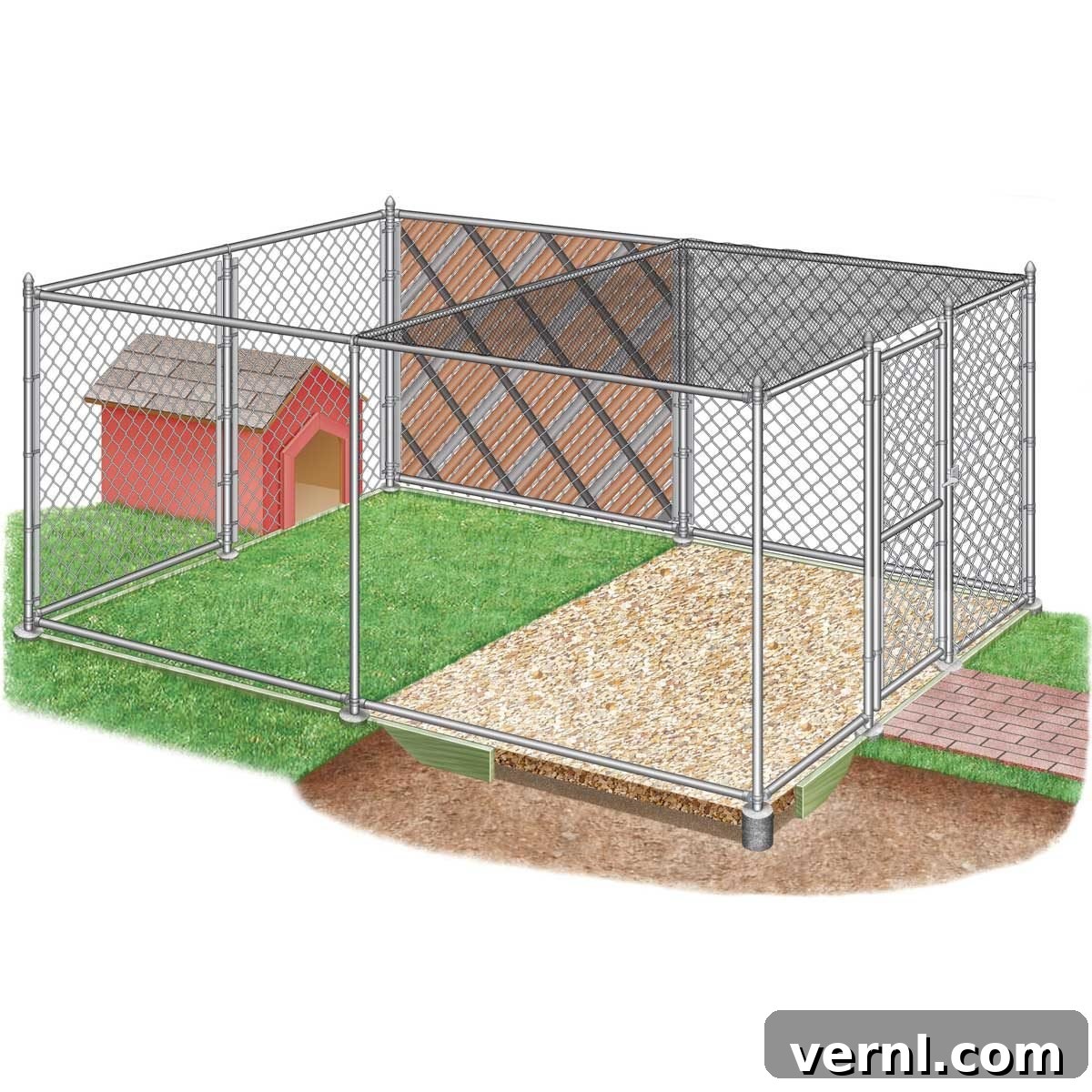
Ultimate Guide to Building an Outdoor Dog Kennel: Comprehensive Plans and Expert Tips
Creating a safe, comfortable, and stimulating outdoor space for your dog is a rewarding project that ensures their well-being and your peace of mind. A well-designed outdoor dog kennel provides a dedicated area for exercise, relaxation, and protection from the elements. This comprehensive guide will walk you through essential steps, from planning the ideal size to selecting the best materials, helping you build a first-class outdoor dog kennel that meets your canine companion’s needs.
Dog Kennel Plans Step 1: Plan the Optimal Size for Your Outdoor Dog Kennel
Determining the right size for your outdoor dog kennel is perhaps the most critical first step. For invaluable guidance and practical tips on building top-tier outdoor dog kennels, we consulted Lisa Peterson, Director of Communications for the American Kennel Club. She provided insightful dog kennel design advice and highlighted some of the most common pitfalls to avoid when planning your dog’s outdoor haven.
While many owners hope for a simple sizing formula, Ms. Peterson confirmed that no such universal rule exists. The ideal kennel size is highly dependent on several crucial factors: how much time your dog will be spending in the kennel, the dog’s breed and size, its energy level, and the amount of space you have available. It’s not just about fitting your dog; it’s about providing a quality environment.
If your dog is expected to spend a significant portion of the day outside, perhaps while you are at work, he absolutely requires a larger kennel or a dedicated dog run. This expansive space allows him ample room to move around, stretch his legs, play with toys, and get adequate exercise. Confining an active dog to a kennel that is too small can lead to a host of behavioral issues. Dogs experiencing confinement stress may become frustrated, leading to non-stop barking, destructive chewing, digging, or even attempts to escape. These undesirable behaviors are often a dog’s way of “getting even” for inadequate space and stimulation. Therefore, when in doubt, opting for a larger size is always the superior choice for a dog run or kennel, contributing significantly to your dog’s physical and mental health. Remember, kennels for dogs vary greatly in design and purpose, demanding a tailored approach for each individual pet.
Consider the purpose of the kennel: Is it for temporary containment, or will it serve as a primary outdoor living space? A temporary enclosure might be smaller, but a long-term kennel should prioritize space for comfort, separate areas for sleeping and elimination, and room for toys or a water bowl without feeling cramped. A good rule of thumb is to provide enough space for your dog to stand up, turn around comfortably, and lie down fully stretched out, plus ample room for movement and play. For high-energy breeds, an even larger footprint will be beneficial to accommodate their need for activity.
Figure A: Essential Features for Outdoor Dog Kennels
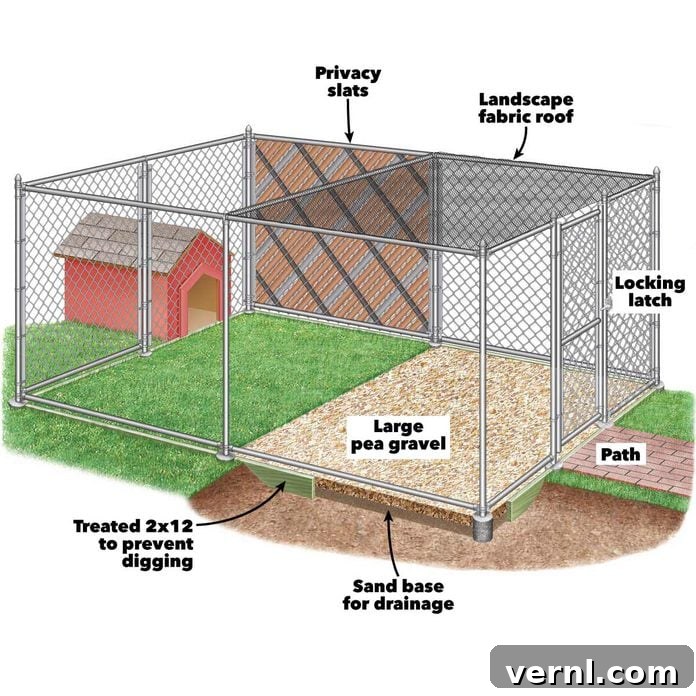
A well-designed outdoor dog kennel goes beyond mere enclosure; it incorporates critical elements for your dog’s health and comfort. As illustrated above, be sure to outfit your outdoor kennel with the proper flooring that offers both drainage and comfort, a dedicated shady area to escape the sun, and an effective windbreak to shield against harsh weather. All the necessary materials for these features can typically be sourced conveniently from your local home center or specialized pet supply stores. Paying attention to these details ensures your dog’s outdoor space is not just safe, but also a truly comfortable sanctuary.
Dog Kennel Plans Step 2: Selecting Durable and Secure Dog Kennel Fencing Materials
When it comes to constructing the walls and doors of your outdoor dog kennel, chain link fencing remains one of the most practical and recommended materials. It offers an excellent balance of affordability, ease of assembly, and robust durability. We suggest a minimum height of 4 feet, but if you have a larger dog, an agile jumper, or a particularly energetic breed, opting for taller fencing, such as 6 feet, is a much safer bet to prevent escapes.
A significant advantage of chain link is the availability of premade wall and door sections at nearly any home center, which can significantly simplify and speed up the installation process. For added security, especially concerning the gate, we strongly advise purchasing a spring-loaded “snap clip” to reinforce or completely replace the standard swing-down latch. Many intelligent dogs can quickly figure out how to manipulate and open conventional latches, turning them into escape artists. A snap clip provides an extra layer of protection, ensuring your furry friend stays safely contained. For detailed guidance, here are a few expert tips to help you install a chain link fence effectively.
Beyond the height and latch security, addressing potential digging is crucial for canine escape artists. If your dog is known to be a digger, you’ll need to implement preventive measures. One effective method is to embed a “direct burial” treated 2×12 lumber board directly below the fence line, extending it into the soil. Alternatively, you can bury the bottom edge of the chain link fence itself about 1 foot deep into the soil (as may be referenced in Figure A). While these methods are not entirely foolproof against the most determined diggers, they significantly increase the difficulty of escape and are usually highly effective in preventing a “great escape.”
To enhance your dog’s comfort and reduce external stressors, consider screening off any sides of the kennel that face busy streets or public sidewalks. This can be achieved by sliding privacy slats through the chain link fencing. These slats serve a dual purpose: they cut down on visual stimulation from passersby, which can often trigger excessive barking, and they also provide an additional layer of privacy and shade, thereby reducing overall stress and creating a more serene environment for your dog. Furthermore, knowing how to fix chain link fence issues will ensure the longevity and continuous security of your kennel.
Dog Kennel Plans Step 3: Choosing the Ideal Dog Kennel Flooring for Health and Hygiene
The choice of flooring material for kennels for dogs is paramount for their long-term health and the ease of maintenance. While concrete may initially seem like the best choice due to its perceived ease of cleaning and the ability to slope it for drainage, it is actually a common mistake. Concrete’s unyielding hardness can, over time, lead to significant health problems for your dog, including painful calluses on elbows and hocks, worn paw pads, splayed toes, and exacerbation of joint pain, especially in older or larger breeds. Its temperature extremes – scorching hot in summer and freezing cold in winter – also make it an uncomfortable and potentially dangerous surface.
Instead, Lisa Peterson strongly recommends alternative, more forgiving materials. Her top suggestions include large pea gravel or large, flat stones like flagstone. It’s important to choose large pea gravel to prevent smaller pieces from being ingested by your dog. The irregular shapes and textures of both pea gravel and flagstone are highly beneficial, as they naturally help your dog develop stronger, healthier paws by providing varied surfaces to walk on, mimicking a more natural terrain. Moreover, these materials offer excellent drainage, allowing urine to seep through and preventing standing water.
Before you lay down any gravel or set stones, invest the time to install a proper base for superior drainage. If you’re building on clay soil, which notoriously retains water, excavate and install a sand base at least 6 inches deep. This granular layer will ensure efficient water runoff. Following the sand base, lay down high-quality landscaping fabric. This critical barrier will prevent weeds from growing up through your chosen flooring material, keeping the kennel cleaner and more aesthetically pleasing. You’ll find that some gravel will naturally be scooped out along with waste during cleaning, so plan on replenishing the pea gravel annually to maintain its depth and effectiveness.
For those with ample space, incorporating a grassy area within the kennel can be the ultimate dog oasis. While grass offers a natural, soft surface, it’s crucial to understand its limitations. Grass can quickly become muddy and worn in high-traffic areas, posing challenges for hygiene and appearance. Therefore, if including grass, ensure it’s part of a larger, well-drained system where hardier surfaces handle the primary activity zones.
Several companies now offer composite flooring materials specifically designed for dog kennels. These options often present a more aesthetically pleasing alternative to gravel and are typically very easy to clean. They can also provide a softer, more insulated surface. However, if your dog has a tendency to chew on objects, composite flooring might not be the best choice. Ingesting pieces of composite material could lead to serious veterinary issues unless, of course, your vet offers free emergency surgery. Evaluate your dog’s habits carefully before opting for this material.
Regardless of your main kennel flooring choice, always plan for a surfaced path leading to the kennel. If you rely solely on grass for access, you’ll quickly discover a muddy, worn path, especially during wet weather. All that mud will inevitably get tracked into your house, creating a constant cleaning chore. Paving stones, gravel, or even sturdy wood chips can create a clean, durable pathway that prevents mud and keeps your home tidier.
Dog Kennel Plans Step 4: Providing Essential Shelter, Shade, and Comfort
Protecting your dog from the elements is a non-negotiable aspect of any outdoor dog kennel plan. The duration your pet will spend outside significantly influences the level of shelter required. While a fully enclosed doghouse isn’t always mandatory, if you choose not to provide one, you must at least install a small roof and an effective windbreak. Dogs possess a remarkable tolerance for cold temperatures, but this endurance quickly diminishes when cold is combined with biting wind or persistent rain. Exposure to such conditions can lead to hypothermia and other health issues.
An elevated cot is another excellent addition, serving to lift your dog off a freezing cold or searing hot floor. This provides crucial insulation from ground temperatures, keeping them comfortable regardless of the season. Even if you include a doghouse, it’s vital to provide additional shaded areas within the kennel. Simple solutions like stretching landscape fabric across the top of a section of the kennel can create an effective, inexpensive shade canopy, protecting against direct sunlight and overheating.
When positioning a doghouse within or adjacent to the kennel, avoid a common DIY mistake: setting it directly in a corner of the enclosure. The roof of a corner-placed doghouse often creates a perfect launching pad, enabling agile dogs to jump over the fence and escape. Instead, consider locating the doghouse just outside the kennel fence, with an entrance hole neatly cut through the fencing, allowing your dog access without providing a climbing aid. Alternatively, placing the doghouse in the center of the kennel eliminates this jump-over risk. If a corner location is unavoidable due to space constraints, make sure to significantly heighten the fence in that specific area to prevent any potential jump-outs. For inspiration on creating a cozy abode, then check out these incredible doghouses that combine function with fantastic design.
Beyond basic shelter, remember to incorporate access to fresh, clean water at all times. Automated water dispensers or heavy, tip-proof bowls can ensure your dog stays hydrated throughout the day. Consider adding enrichment items like durable chew toys or puzzle feeders to keep your dog mentally stimulated and prevent boredom, which can lead to destructive behaviors. A thoughtfully designed kennel provides not just shelter, but a holistic environment for your cherished companion.
Required Tools for this Outdoor Dog Kennel Project
Having the necessary tools for this DIY kennels for dogs project lined up before you start will save you significant time and frustration. Prepare your workspace and check off these essential items as per the dog kennel plans:
- Shovel
- Gloves
- Adjustable wrench
- Circular saw
- Hacksaw
- Level
- Lineman’s pliers
- Posthole digger
- Spade
- Tape measure
- Wheelbarrow
Required Materials for this Outdoor Dog Kennel Project
Avoid last-minute shopping trips by having all your materials ready ahead of time. This comprehensive list ensures you have everything on hand to build your outdoor dog kennel efficiently and without interruption:
- Chain link fencing and gate
- Concrete (if used for post setting, not primary flooring)
- Landscape fabric
- Pea gravel or large flat stones
- Privacy slats (optional, for chain link)
- Sand (for drainage base)
- Sunscreen (shade fabric) and/or dog house
- Treated 2x12s (for digger prevention)
- Water bowl/dispenser
- Dog cot (optional, for comfort)