

The unsettling discovery of tennis balls meticulously stuffed into a wall cavity by a previous landlord to deter rats is enough to make anyone reconsider their living situation. This alarming anecdote highlights a common, yet often underestimated, problem faced by homeowners and renters alike: rodent infestations. Rats and mice are more than just a nuisance; these pervasive pests pose significant health risks and can cause extensive, costly damage to your property. From transmitting serious diseases like hantavirus to contaminating a substantial portion of the world’s food supply, their presence is a call for immediate and informed action.
According to Shane McCoy of Ehrlich Pest Control, a board-certified entomologist, rodents are responsible for tainting up to one-third of global food stores. But while both rats and mice are destructive, understanding their distinct characteristics, behaviors, and impacts is crucial for effective prevention and control. Are mice merely smaller versions of rats, or do they present entirely different challenges? This comprehensive guide will delve into the world of these common household invaders, revealing their key differences, the specific types of damage they inflict, and the most effective strategies for keeping your home rodent-free.
Understanding Rodents: Rats vs. Mice
Before we explore the nuances of their differences, let’s establish a foundational understanding of what defines a rat and a mouse, both belonging to the order Rodentia. The very term “Rodentia” is derived from the Latin “rodere,” meaning “to gnaw,” a defining characteristic of these mammals whose continuously growing incisors necessitate constant gnawing to keep them worn down. This incessant need to chew is, unfortunately, the primary source of the structural damage they cause in our homes.
What Is a Rat?
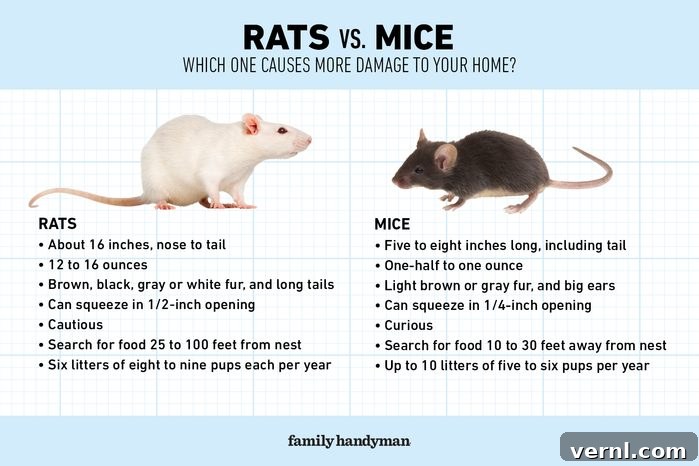
Rats are medium-sized rodents, generally larger and more robust than mice. The genus Rattus encompasses the “true rats,” with the most common species encountered in homes being the Norway rat (Rattus norvegicus) and the roof rat (Rattus rattus). These species exhibit distinct physical traits and behaviors:
- Norway Rats: Also known as brown rats, sewer rats, or street rats, these are typically stout-bodied, measuring about 12 to 18 inches long from nose to tail, and weighing between 7 and 18 ounces. They have blunt snouts, small ears, and tails that are shorter than their head and body combined. Their fur is usually brown or gray with lighter undersides. Norway rats are primarily ground dwellers, nesting in burrows under rocks, vegetation, concrete slabs, and near foundations. These extensive burrow systems can extend up to seven feet long and cause significant structural compromise. Indoors, they favor basements, ground floors, and lower parts of buildings, nesting in wall voids, beneath appliances, and in cluttered areas.
- Roof Rats: Often called black rats, ship rats, or house rats, these are more slender than Norway rats, typically 10 to 16 inches long, including a tail that is longer than their head and body combined. They weigh 5 to 9 ounces, possess larger ears, and have a more pointed snout. Their fur can range from black to dark brown with a lighter belly. As their name suggests, roof rats are agile climbers, preferring to nest in elevated locations such as attics, false ceilings, trees, and upper floors of buildings. They thrive in warmer climates and are adept at navigating utility lines and branches to access structures.
Rats are intelligent creatures with a highly developed sense of smell and hearing. They are cautious, a trait known as “neophobia” (fear of new things), which significantly impacts the effectiveness of control measures. They primarily feed on grains, fruits, nuts, and human waste, but being omnivores, they will consume almost anything available.
What Is a Mouse?
Mice, while also belonging to the order Rodentia, are considerably smaller and more agile than rats. The common house mouse (Mus musculus) is the most prevalent species found in homes globally. These tiny invaders weigh a mere half to one ounce and measure about 5 to 8 inches long, including their slender tails.
- House Mice: Characterized by their relatively large ears, small eyes, and pointed snouts, house mice typically have light brown or gray fur. Their tails are sparsely haired and about as long as their head and body. Unlike rats, mice often live in close proximity to humans, benefiting from the warmth, shelter, and abundant food sources our homes provide. They are highly adaptable and can thrive in diverse environments, from urban buildings to rural fields.
- Other Species: While the house mouse is the main culprit, other species like the deer mouse (Peromyscus maniculatus) and white-footed mouse (Peromyscus leucopus) can also enter homes, particularly in more rural or wooded areas. These mice often carry Hantavirus, making their identification and control particularly critical.
Mice often live outdoors in grassy and wooded areas, primarily feeding on seeds, grains, and insects. However, their strong attraction to the warmth and persistent smells of human homes drives them indoors, especially during colder months. They can squeeze through incredibly tiny openings, as small as a quarter-inch, making exclusion a significant challenge. Their prolific breeding rates and ability to survive on minimal food and water make them formidable pests.
Key Differences in Rat vs. Mouse Behavior
While both rats and mice are rodents, their behavioral patterns are distinct and crucial for effective pest management. Shane McCoy emphasizes that these differences go beyond mere size:
- Curiosity vs. Neophobia: Mice are naturally more curious and exploratory. They are quick to investigate new objects in their environment, including traps, making them relatively easier to catch. Rats, conversely, are neophobic; they are inherently wary of new objects and changes in their surroundings. This caution means that a new trap or bait station may be ignored for several days, or even weeks, before a rat dares to approach it. Homeowners must account for this fear when setting rat traps, often requiring a “pre-baiting” period where traps are left unset with bait for a few days to build familiarity.
- Foraging Range: The distance rodents travel from their nest to find food is another critical differentiator. Mice typically have a very small foraging range, venturing only 10 to 30 feet from their nest. This means if you see mouse droppings or activity, their nest is almost certainly very close by. This information is invaluable for strategic trap placement. Rats, being larger and more adventurous, will search for food much further afield, ranging from 25 to 100 feet or more from their nest. Understanding these ranges helps in pinpointing the likely location of their harborage and identifying potential entry points.
- Water Requirements: Mice are remarkable in their ability to survive with very little direct water intake. They can obtain all the moisture they need from the food they consume. This makes them perfectly content nesting in dry wall voids or attics without a dedicated water source nearby. Rats, however, generally require a more consistent water source, needing about 0.5 to 1 ounce of water daily, which often draws them to plumbing leaks, pet water bowls, or other accessible liquid sources.
- Social Structure: While both are communal to some extent, rats tend to live in more established, hierarchical colonies, often displaying territorial behavior. Mice, while also living in groups, tend to be more numerous and spread out within an infested area, constantly breeding and expanding their numbers.
Rats vs. Mice: Which Can Cause More Damage to a Home?
The question of which rodent causes more damage is complex, as both present significant threats, albeit in different ways. It largely depends on the scale of infestation and the individual size of the pests.
Damage Caused by Mice:
Despite their smaller size, mice are responsible for the vast majority of rodent infestations in homes. Their diminutive stature allows them to squeeze into incredibly tight spaces, navigating behind walls, inside appliances, and through insulation with ease. The damage they cause includes:
- Extensive Gnawing: Mice constantly gnaw on baseboards, drywall, wooden structural elements, insulation, and, critically, electrical wiring. Chewed electrical wires are a major fire hazard, responsible for a significant percentage of unexplained house fires. They also chew through plumbing pipes, leading to leaks and water damage.
- Widespread Contamination: One of the most insidious forms of damage from mice is the contamination of surfaces and food. Mice dribble urine and deposit fecal pellets wherever they travel. Given their small foraging range and prolific movement within confined spaces like kitchens and pantries, this means widespread contamination in areas where food is stored and prepared. Mouse urine has a strong, ammonia-like odor that can permeate wood, fabric, and other building materials, creating a persistent, unpleasant smell. Their droppings, though small, accumulate rapidly and carry numerous pathogens.
- Insulation Damage: Mice tunnel and nest within insulation in attics and walls, compacting it and rendering it less effective, leading to increased energy costs. They also use insulation materials to build their nests.
- Rapid Proliferation: Mice breed at an astonishing rate, with females producing up to 10 litters of five to six pups per year. This rapid reproduction means that a small initial invasion can quickly escalate into a widespread, entrenched infestation that is challenging to eradicate.
Damage Caused by Rats:
While mice cause more frequent infestations, an individual rat is capable of inflicting substantially greater damage due to its larger size and more powerful jaws. Rats gnaw, nest, urinate, and defecate just like mice, but with more severe consequences:
- Significant Structural Damage: Rats have larger, stronger teeth that leave tooth marks about an eighth of an inch long. They can chew through a wider range of materials, including concrete, thick wood, plastic, lead pipes, and even soft metals like aluminum. This can compromise the structural integrity of a building, create larger entry points for other pests, and cause extensive damage to utility lines, including crucial electrical and plumbing systems. A single rat chewing through a PVC pipe can cause a significant flood.
- Heavy Contamination: Rat urine and feces are larger and more abundant, leading to more concentrated areas of contamination. They can spoil large quantities of stored food and goods much faster than mice. The health risks associated with rat waste are also severe.
- Burrowing Damage: Norway rats, in particular, are expert burrowers. Their extensive underground tunnel systems can undermine foundations, sidewalks, and patios, leading to costly structural repairs and potential hazards.
- Disease Transmission: Both rats and mice carry diseases, but rats are often associated with more severe outbreaks. Beyond hantavirus, they transmit diseases such as leptospirosis, salmonellosis, rat-bite fever, and lymphocytic choriomeningitis virus (LCMV). These pathogens can be transmitted through direct contact with urine, feces, saliva, or bites, or indirectly through contaminated food and water, or even airborne particles from dried droppings.
Despite their cautious nature making them harder to trap, rats are also highly prolific, producing up to six litters of eight to nine pups each per year. The longer a rat infestation goes unaddressed, the more profound the damage and the greater the health risks posed by them and their rapidly multiplying offspring.
Effective Rodent Prevention: Sanitation and Exclusion
The most effective strategy against rats and mice is prevention, focusing on making your home both unattractive and inaccessible to these pests. As Shane McCoy succinctly puts it, “The two key features of rodent prevention are sanitation and exclusion.” Rodents are constantly seeking three things: food, water, and shelter. By limiting these essential resources, you significantly curb the growth and establishment of their populations.
Sanitation: Eliminating Food and Water Sources
Maintaining a high level of cleanliness, both inside and outside your home, is fundamental to deterring rodents. Without readily available food and water, your property becomes far less appealing.
- Secure Food Storage: All human and pet food, including dog food, bird seed, and pantry staples like grains and cereals, should be stored in heavy-duty plastic or metal containers with tight-fitting lids. Never leave food out on kitchen counters overnight.
- Pet Dish Management: Pick up pet food and water dishes at night. Pet food is a significant attractant for rodents. Similarly, clean up dog waste in your yard daily, as it can serve as a food source for rats.
- Prompt Cleanup: Wipe down kitchen counters, clean up spills, and sweep crumbs immediately. Don’t leave dirty dishes in the sink overnight.
- Waste Management: Use sturdy trash bags for all household trash and ensure that outdoor garbage bins have tight-fitting, secure lids. Consider using metal bins that rodents cannot chew through. Regularly clean out garbage bins to remove residual food smells.
- Bird Feeder Strategies: If you have bird feeders, use baffles and other rodent-deterring techniques to prevent spilled seeds from accumulating on the ground, which attracts mice and rats. Consider placing feeders away from the house.
- Firewood and Debris: Store firewood off the ground, preferably on a rack, and at least 20 feet away from the house. This prevents it from becoming a sheltered nesting site. Keep your yard free of clutter, overgrown vegetation, and piles of debris, which provide excellent harborage for rodents.
- Garden Hygiene: Harvest garden produce promptly. Fallen fruit and vegetables can attract rodents.
Exclusion: Sealing Entry Points
Rodents are incredibly adept at finding and exploiting even the smallest openings to gain access to your home. Implementing robust exclusion measures is critical to physically blocking their entry.
- Seal Small Gaps: Mice can squeeze through openings as small as 1/4 inch (about the diameter of a pencil), while rats require only 1/2 inch (the size of a quarter). Scour your home’s exterior for any cracks, crevices, or gaps, particularly around the foundation, utility lines (pipes, ducts, cables), and entry points for air conditioning units.
- Appropriate Sealants: Use durable materials to seal these openings. Steel wool, which rodents cannot chew through, is excellent for stuffing into larger holes before sealing with caulk or expanding foam. Hardware cloth (wire mesh with small openings) is also effective for vents and larger gaps. Use cement or concrete for larger foundation cracks.
- Vent and Chimney Protection: Ensure all crawlspace vent covers are tight-fitting and properly screened with durable mesh. Cap chimneys and confirm that all exterior vents (dryer vents, attic vents, fan vents) have sturdy screens to prevent entry.
- Door Integrity: Inspect all exterior doors, including garage doors. Ensure they close completely and have no more than a 1/4-inch gap under and around them. Install or replace worn weatherstripping and door sweeps to seal these gaps. Check thresholds for signs of gnawing.
- Window Screens: Repair any damaged window screens. Ensure window frames fit snugly and have no gaps.
- Roofline and Eaves: Inspect your roof for damaged shingles, loose flashing, or gaps around vents and chimneys. Rats, especially roof rats, are excellent climbers and often use these entry points. Trim tree branches that hang close to your roof, providing easy access.
Mice vs. Rats Control: Effective Methods
Even with diligent prevention, rodents can sometimes find their way indoors. Once an infestation is suspected or confirmed, effective control methods are necessary. Always approach control with caution and prioritize safety, especially when using traps and baits.
Trapping Strategies:
Trapping is a highly effective method for controlling rodent populations, particularly for mice and smaller rat infestations. Success hinges on proper trap selection, baiting, and placement.
- Snap Traps: These traditional traps are popular due to their effectiveness. For mice, use standard mouse snap traps. For rats, use larger, heavy-duty rat snap traps. Place traps along walls, in dark corners, and in areas where you’ve seen droppings or signs of activity. Ensure traps are placed perpendicular to walls with the trigger mechanism facing the wall.
- Baiting Traps: Rodents are attracted to high-protein, high-fat foods. Excellent baits include peanut butter, beef jerky, small pieces of cheese, nuts, seeds, or even a small piece of fruit. For rats, remember their neophobia; McCoy suggests pre-baiting traps by leaving them unset with bait for a few days to build the rats’ confidence before setting the trigger. Check traps daily.
- Live Traps: Live-catch traps are an option for those who prefer not to kill rodents. Once caught, release the rodents far away from your home (at least a mile or two) in a suitable natural habitat. However, check local regulations regarding the release of captured wildlife, as some areas prohibit this due to disease transmission risks.
- Safety First: Always place traps in locations inaccessible to children and pets. Consider using tamper-proof bait stations (even for snap traps) for added safety.
Rodenticides (Poisons):
Rodenticides can be effective, but they come with significant risks and should be used with extreme caution and as a last resort. Exposure to rodenticides can be deadly to children, pets, and non-target wildlife.
- Follow Label Instructions: It is paramount to *always* read and strictly follow the label instructions for any rodenticide product. Labels contain critical information on application rates, safety precautions, and disposal.
- Tamper-Proof Bait Stations: Always use tamper-proof bait stations when deploying rodenticides, particularly outdoors or in areas accessible to children and pets. These stations protect the bait from accidental contact and prevent non-target animals from consuming the poison.
- Secondary Poisoning Risk: Be aware of the risk of secondary poisoning. If a pet or wildlife animal consumes a poisoned rodent, they can also become sick or die.
- Professional Guidance: Due to the inherent dangers, it is often best to consult a professional pest control service for rodenticide application. Professionals have access to restricted-use products and expertise in safe, effective deployment.
Ultrasonic Devices:
While some users report success, Shane McCoy, like many entomologists and pest control experts, approaches “ultrasonic” mice and rat control devices with healthy skepticism. Scientific studies have largely failed to prove their long-term effectiveness against rodents. Rodents may initially be disturbed by the ultrasonic sounds, but they often habituate to them quickly. Furthermore, ultrasonic waves do not penetrate walls or furniture, limiting their reach and effectiveness in real-world scenarios.
When to Call a Professional:
For persistent or large-scale infestations, or if you are uncomfortable dealing with rodents yourself, it is always wise to call a professional pest control service. Experts can:
- Accurately identify the type of rodent and the extent of the infestation.
- Develop a comprehensive, targeted treatment plan.
- Safely and effectively deploy traps and baits.
- Provide expert advice on exclusion and sanitation to prevent future problems.
- Address complex situations such as rodents in inaccessible areas or severe structural damage.
Understanding the distinct characteristics and behaviors of rats and mice is the first step towards effective rodent control. By combining vigilant sanitation practices, robust exclusion methods, and appropriate control strategies, you can protect your home and family from these tenacious and potentially dangerous pests.