
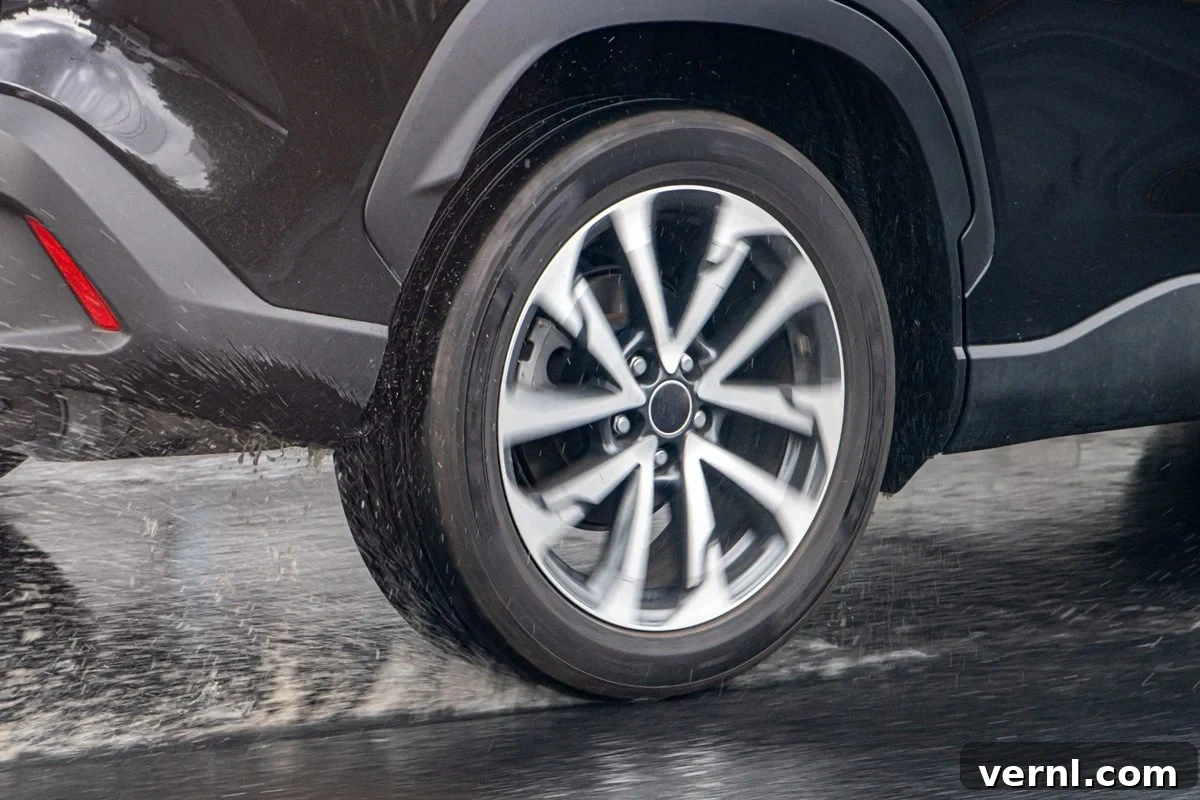
Every driver relies on a critical, yet often overlooked, component for their safety on the road: the tire’s “contact patch.” This small area, roughly the size of your palm, is the only part of your vehicle making direct contact with the road surface. It’s the sole point where traction is generated for steering, braking, and acceleration. When this vital connection is compromised, even by a seemingly insignificant layer of water, your ability to control the vehicle is drastically reduced. At higher speeds, this can lead to a phenomenon known as hydroplaning, where a layer of water completely separates your tires from the road. The consequences are immediate and severe: significantly increased stopping distances, a complete loss of steering control, and a heightened risk of accidents.
To help you navigate wet weather conditions safely, we’ve gathered insights from leading experts in defensive driving and automotive technology. In this comprehensive guide, we’ll delve into the science behind hydroplaning, uncover its primary causes, and, most importantly, equip you with actionable strategies to prevent it. You’ll also learn crucial steps to take if your vehicle begins to hydroplane, ensuring you’re prepared for whatever the road throws your way.
What Is Hydroplaning? Understanding the Phenomenon
Hydroplaning, also known as aquaplaning, is a perilous condition that occurs when a vehicle’s tires encounter more water than their treads can effectively disperse. Defensive driving expert Robert Dillman articulates it simply: “Hydroplaning occurs when a tire collects more water than it can disperse, causing the tread to oversaturate, creating a water-on-water or hydroplaning event.” Instead of gripping the road, the tire rides on a thin film of water, losing essential traction. While water is the most common culprit, vehicles can also “plane” on other slick substances like mud or heavy slush and snow, especially when these materials accumulate faster than the tire can clear them.
Why is Hydroplaning So Dangerous?
The danger of hydroplaning cannot be overstated. When your tires lose direct contact with the road and essentially glide on water, the situation is eerily similar to driving on a patch of black ice. The fundamental forces that allow you to control your vehicle—friction for steering, braking, and accelerating—are severely diminished or altogether absent. This dramatic loss of traction makes it incredibly difficult, if not impossible, to maintain your intended path, slow down effectively, or regain control of your car. The instantaneous reduction in grip vastly increases the likelihood of spinning out, colliding with other vehicles, or veering off the roadway, transforming a routine drive into a high-risk scenario.
Top Causes of Hydroplaning: Identifying the Risks

While waterlogged roads are undeniably the primary catalyst for hydroplaning, creating ideal conditions when water levels surpass the tire tread depth, it’s crucial to understand that numerous other factors contribute to this dangerous phenomenon. Recognizing these common causes is the first step in prevention:
Oil and Other Road Contaminants
The roadway surface isn’t always just asphalt and water. After several days of dry weather, a build-up of oil, grease, and other automotive fluids from countless vehicles accumulates. When the first few minutes of rain begin, these contaminants don’t immediately wash away. Instead, they mix with the initial rainwater, creating a dangerously slick, emulsified layer on top of the water. This oily film drastically reduces friction, making the road surface far more treacherous and significantly increasing the chances of hydroplaning. Dillman emphasizes the severity of this condition: “With minimal friction and chaotic steering control when hydroplaning, drivers try to overcorrect for loss of steerability, which can easily send a vehicle into a spin or off the roadway.” This highlights how a seemingly minor rain shower after a dry spell can be particularly hazardous.
Excessive Speed for Weather Conditions
Perhaps the most common and controllable cause of hydroplaning is driving too fast for the prevailing weather conditions. As Robert Dillman aptly puts it, this is a critical factor. Tires are designed with intricate tread patterns to channel water away from the contact patch. However, this design has its limits. When you drive at excessive speeds on wet roads, your tires simply cannot displace the volume of water quickly enough. The faster you go, the less time the tire has to push water out of its path before it’s forced to ride up onto the water layer. This direct correlation between speed and reduced water dispersal significantly amplifies the threat of hydroplaning, even in relatively shallow water.
Worn Tires and Insufficient Tread Depth
The effectiveness of your tires’ ability to combat hydroplaning is directly linked to their tread depth. Just like speeding, tires with insufficient or worn tread depth are severely compromised in their function. The grooves and channels in a tire’s tread are engineered to scoop and funnel water out from beneath the tire, creating a dry patch for maximum grip. When these treads are worn down, their capacity to perform this vital task is dramatically reduced. A thin, continuous layer of water can then easily form between the tire and the road, leading to a loss of traction and an elevated risk of hydroplaning.
Improper Tire Pressure: Underinflated or Overinflated Tires
Maintaining correct tire pressure is fundamental to road safety, and it plays a critical role in preventing hydroplaning. Both underinflated and overinflated tires can reduce the optimal amount of tire tread contacting the road. An underinflated tire sags in the middle, causing the edges of the tread to bear most of the load, while an overinflated tire bulges, reducing the contact patch to a smaller, central area. In both scenarios, the tire’s intended contact patch shape is distorted, making it much harder for the tread to efficiently displace water from underneath. This inefficiency leads to a compromised grip on wet surfaces, increasing the risk of losing traction and steering control.
Road Surfaces and Drainage Issues
The characteristics of the road surface itself can significantly influence the likelihood of hydroplaning. Smooth roadways, often a result of severely worn-out asphalt, inadequate texture, or poor drainage systems, are particularly problematic. These surfaces are more prone to retaining water, allowing puddles and sheets of water to form easily. Unlike rougher textures that can help dissipate water or provide micro-channels for drainage, smooth surfaces offer less resistance to the water film, increasing the potential for tires to lift off the road. Poorly maintained roads with depressions or ruts can also collect water, creating unexpected hazards.
Quick or Abrupt Maneuvering
Even with good tires and moderate speed, sudden or aggressive driving maneuvers on wet surfaces can trigger hydroplaning. As Kye Grisham, Vice President of Procurement and Automotive Technology at Christian Brothers Automotive, explains, “Sudden turns, swerving away from a puddle or panic braking can cause a vehicle to hydroplane more quickly.” These actions rapidly shift the vehicle’s weight and momentarily overload specific tires, making it harder for them to maintain traction against the water. A sudden steering input can cause the tire to slide sideways on the water, while panic braking can lock up the wheels (even with ABS), preventing the tires from rolling and dispersing water effectively.
Using Cruise Control in Wet Conditions
A common mistake many drivers make is leaving cruise control engaged during wet weather conditions. It is strongly advised to never use cruise control when it’s raining or when the road is visibly wet. Cruise control maintains a constant speed, regardless of changes in road friction. If your vehicle begins to hydroplane while cruise control is active, the system will attempt to maintain its set speed, potentially accelerating or resisting your attempts to slow down. This lack of immediate, direct driver input and delayed reaction time makes it significantly trickier to recover from hydroplaning, reducing your ability to gently ease off the accelerator and regain control.
How to Prevent Hydroplaning While Driving: Proactive Safety Measures
Preventing hydroplaning is largely about proactive driving and vehicle maintenance. By adopting smart habits and ensuring your car is properly equipped, you can drastically reduce your risk on wet roads.
- Reduce Your Speed: The Golden Rule: The most critical piece of advice comes from William Pemberton of the Pemberton Personal Injury Law Firm: “Slow down.” Reducing your speed on wet roads is paramount because it gives your tires more time to push water away from the contact patch. The slower you drive, the greater the chance your tires have to maintain firm contact with the road, even in the presence of water. Adjust your speed significantly below the posted limit, especially during heavy rain or when visibility is poor.
- Follow in the Tracks of the Vehicle Ahead: This is an excellent defensive driving technique. As Pemberton shares, “An old trick I was taught years ago was to follow in the tracks of the vehicle in front of me.” The vehicle ahead has already displaced a significant amount of water from its path, leaving a drier, less slick surface for your tires. This simple strategy can provide a crucial margin of safety, particularly in moderate rainfall.
- Maintain Your Tires Rigorously: Your tires are your only connection to the road. Kye Grisham advises, “Replace tires having tread measuring 4/32 in. or less.” Adequate tread depth is non-negotiable for effective water displacement. Beyond depth, proper tire maintenance, including regular rotation and balancing, ensures even wear and optimal performance across all four tires. Furthermore, regularly checking your suspension and wheel alignment is vital. These systems directly impact how your tires meet the road and their ability to maintain grip in challenging conditions, extending tire life and enhancing overall safety.
- Ensure Correct Tire Pressure: As discussed, improper tire pressure compromises the tire’s ability to disperse water. Regularly check your tire pressure against the manufacturer’s recommendations (usually found on a sticker inside the driver’s side door jamb or in your owner’s manual). Correctly inflated tires maintain their optimal shape and contact patch, allowing the tread to perform its water-channeling function most effectively.
- Avoid Sudden Movements: On wet roads, smooth and deliberate inputs are key. Accelerate gently, brake softly, and steer gradually. Abrupt braking, sharp turns, or sudden acceleration can easily overwhelm the available traction, causing tires to lose grip and initiate hydroplaning.
- Stay Alert and Look Ahead: Pay close attention to the road surface. Identify large puddles, standing water, and areas where water collects. Looking further down the road gives you more time to anticipate potential hazards and adjust your speed or lane position safely and smoothly.
- Increase Following Distance: In wet conditions, it takes longer to stop. Increase your following distance significantly from the vehicle in front of you. This provides more reaction time and allows for gentler braking if necessary, reducing the chances of a sudden stop that could induce hydroplaning.
What to Do If Your Car Starts Hydroplaning? Reacting Safely
Even with the most careful driving and well-maintained vehicle, hydroplaning can sometimes occur unexpectedly. The crucial thing is how you react in those critical moments. The primary rule is: Don’t panic. Panic can lead to instinctual, but incorrect, reactions that exacerbate the situation.
Under no circumstances should you slam on the brakes or violently yank the steering wheel from side to side. These aggressive inputs will only make matters worse, potentially sending your vehicle into an uncontrollable spin. Instead, follow these steps:
- Gently Ease Off the Accelerator: The first and most vital step is to slowly and smoothly lift your foot from the accelerator pedal. This reduces the power being sent to the wheels, allowing them to slow down gradually. The objective is to let the vehicle’s momentum decrease naturally, giving the tires a chance to reduce their speed relative to the water and regain contact with the road.
- Steer in the Direction You Want to Go: With a light and steady grip on the steering wheel, gently steer the vehicle in the direction you wish to travel. Avoid any abrupt or sharp steering inputs. The goal is to make small, subtle adjustments. As your tires begin to regain traction, these gentle steering corrections will guide your car back onto your desired path. You might feel a slight increase in resistance in the steering wheel as traction returns.
- Resist the Urge to Brake Hard: While your instinct might be to brake, heavy braking will only worsen the slide. If you feel the need to slow down further, apply the brakes very gently and progressively. For cars with Anti-lock Braking Systems (ABS), the system will pulsate the brakes to prevent wheel lock-up, but smooth, light pressure is still preferable.
- Hold Steady and Wait for Traction to Return: The most important aspect of recovering from hydroplaning is patience and gentle control. Continue to ease off the accelerator and make minor steering corrections until you feel the tires grip the road again. You will typically feel a noticeable connection with the road surface, and steering control will return. Once traction is regained, you can then gingerly slow down to a safe speed, assess the conditions, and continue driving cautiously.
Remember, the key is to allow the tires to naturally regain traction by reducing speed and providing minimal, guiding inputs, rather than forcing control that isn’t there.
Frequently Asked Questions About Hydroplaning
Does tire tread depth significantly affect hydroplaning?
Absolutely. Tire tread depth and tire wear play a critical role in preventing hydroplaning. The intricate grooves, sipes, and channels within a tire’s tread are specifically engineered to efficiently push water out from under the tire’s contact patch. Deeper, well-defined treads can channel a greater volume of water away quicker, allowing the tire to maintain a firm grip on wet roads. Conversely, tires with shallow or excessively worn treads struggle to disperse water effectively. Their reduced capacity to clear water creates a higher likelihood of a water film forming between the tire and the road, dramatically raising the danger of hydroplaning. Regular inspection of tread depth is a vital safety check.
At what speed does hydroplaning usually happen?
The speed at which hydroplaning occurs is not a fixed number; it “depends,” as Kye Grisham and William Pemberton agree, noting that hydroplaning can happen at speeds as low as 35 MPH, with the probability increasing exponentially the faster you drive. However, Robert Dillman provides a more nuanced explanation: “Hydroplaning is a totality of the circumstances between tread depth, water volume, and speed. This makes it difficult to accurately provide the speed at which hydroplaning occurs.” This means that a vehicle with worn tires could hydroplane at a lower speed than a vehicle with new tires in the same amount of water. Ultimately, the takeaway is clear: if the roadway is wet, significantly reduce your speed to increase your safety margin.
How much water causes hydroplaning?
Again, the amount of water required to cause hydroplaning “depends” on various factors. Astonishingly, as little as one-tenth of an inch of water on the road surface may be sufficient to cause hydroplaning under certain conditions. Even tires with excellent tread depth on a vehicle traveling at 50 mph may struggle to push this seemingly small amount of water out from under the tires fast enough, leading to a loss of traction. Robert Dillman further illustrates this point by stating, “Hydroplaning can occur in a heavy morning dew if you have deeply worn, nearly bald tires.” This highlights that while water volume is a factor, it interacts critically with other elements such as driving habits, tire tread depth, the texture of the road surface, and, of course, vehicle speed. It’s a complex interplay, emphasizing the need for caution even in seemingly light rain or damp conditions.
What cars are more prone to hydroplaning?
While any vehicle can hydroplane under adverse conditions, certain types are inherently more susceptible due to their design, weight distribution, and tire characteristics. Understanding these factors can help drivers exercise extra caution:
- Compact and Lighter Cars: Vehicles with less overall weight exert less downward force, or pressure, pushing the tires onto the road surface. This reduced pressure makes it easier for a layer of water to form and get underneath the tires, effectively lifting them off the road.
- Vehicles with Wide Tires: Paradoxically, while wide tires offer more contact area for grip on dry surfaces, they can struggle in wet conditions. Tires with a wider tread area have a larger surface area that needs to displace water. If the tread pattern isn’t exceptionally efficient, or if water is abundant, these tires can have difficulty forcing water from under their entire width, thereby raising the threat of hydroplaning.
- SUVs and Trucks (Especially Taller Models): Taller vehicles, particularly SUVs and trucks, often possess a higher center of gravity. While this doesn’t directly cause hydroplaning, it makes the vehicle’s reaction to hydroplaning more pronounced and potentially erratic. Once traction is lost, the higher center of gravity can amplify the sensation of instability and make it more challenging to regain control without severe body roll or sudden shifts.
- Rear-Wheel Drive (RWD) Vehicles: RWD vehicles typically have more weight distributed towards the rear axles to improve traction for acceleration. However, this often results in less weight, and consequently less downward force and traction, on the front tires. Since the front tires are crucial for steering, this imbalance can make RWD vehicles more vulnerable to losing front-end traction and hydroplaning, especially during turns or when encountering standing water.
Our Esteemed Experts
- Kye Grisham boasts over 25 years of experience in the automotive service and maintenance industry. He currently holds the esteemed position of Vice President of Procurement and Automotive Technology at Christian Brothers Automotive Corporation, a leading name in automotive care.
- William M. Pemberton is a distinguished legal professional, having graduated from the University of Wisconsin La Crosse in 2001 and Marquette University Law School in 2003. Admitted to the State Bar of Wisconsin in 2004, he initially served at an insurance defense law firm in Milwaukee, WI, before establishing the Pemberton Personal Injury Law Firm. In his practice, he meticulously reviews and comprehends vehicle accident reports to prepare for civil liability cases, offering unique insights into accident dynamics.
- Robert Dillman is a highly respected expert in defensive driving. He earned a Master of Arts in International Security from Arizona State University. In 2012, he founded NEVO Driving Academy, later closing it to take on the critical role of Security Driver Training Instructor for the Department of State, demonstrating his extensive knowledge and practical experience in advanced driving techniques.
Additional Resources for Safe Driving
- AAA: “What Is Hydroplaning?” – A reliable overview from a trusted automotive association.
- Goodyear Tire and Rubber Co.: “Hydroplaning: What is it & What Causes It?” – Manufacturer insights into tire technology and hydroplaning.
- Jeff S. Bartlett; Tires that last the longest. “Make Your Tires Last Even Longer” Consumer Reports – Expert advice on tire longevity and performance.
- Kelly Blue Book: “What Is Hydroplaning and How to Avoid It?” – Practical tips from a well-known automotive valuation and information site.