
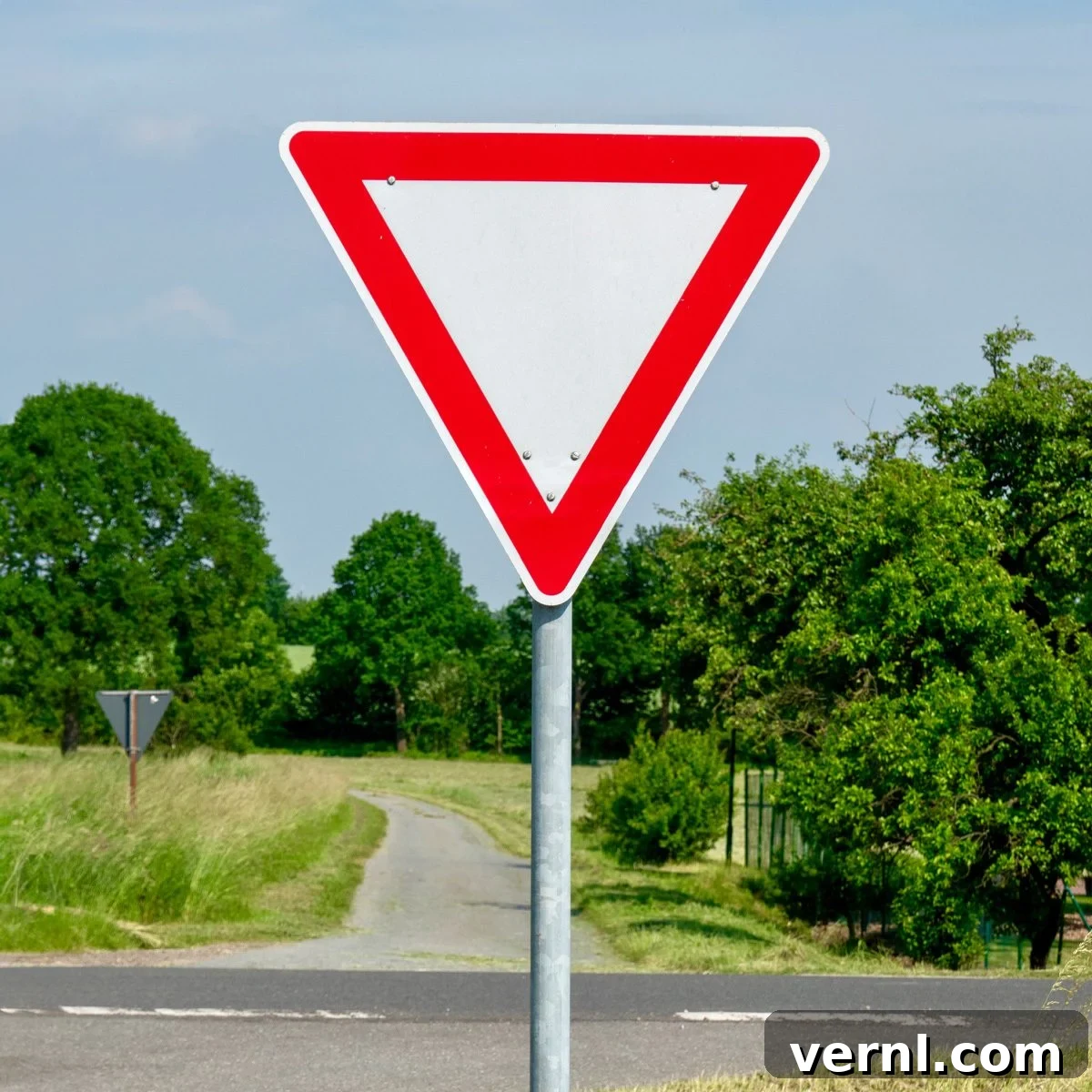
In the evolving landscape of modern roads, understanding and consistently applying the rules of the road is more crucial than ever. While many of us learned to drive with fundamental principles like common sense and courtesy, today’s traffic often presents challenges where these principles seem to be overlooked. What was once a clear set of guidelines for who proceeds first can now feel like a mere suggestion, leading to confusion, frustration, and unfortunately, a higher risk of accidents.
This comprehensive guide delves into one of the most vital aspects of driving: the right of way. We’ll explore what it means, who has it in various scenarios, and critically, what you should do even when another driver fails to adhere to the rules. Our insights come from Steven Norman, a PA Department of Transportation (PennDOT) certified driving instructor, who will share his expert knowledge to help you drive safer and avoid collisions, even when you technically have the right of way. Remember, safety always trumps entitlement on the road. Before we dive into specifics, let’s revisit the importance of always using common sense and adhering to traffic regulations.
Navigating the roads requires more than just knowing how to operate a vehicle; it demands a deep understanding of the intricate dance of traffic flow. Misinterpretations of right of way are a leading cause of fender-benders and serious accidents alike. By clarifying these rules, we aim to equip you with the knowledge to make informed decisions behind the wheel, ensuring not only your safety but the safety of everyone sharing the road. Understanding when to yield and when to proceed can be the difference between a smooth journey and a dangerous encounter. Let’s explore how to avoid a collision, even when the right of way is on your side.
Understanding Right of Way: Your Foundation for Safe Driving
What Exactly Is Right of Way?
According to Steven Norman, a revered PennDOT certified driving instructor, “Right of way determines who has the priority to move first in any given traffic situation.” He eloquently frames this concept by asking his students, “Who gets to go first?” This seemingly simple question underpins the entire framework of traffic management, designed to ensure an orderly and predictable flow of vehicles and pedestrians. However, Norman quickly adds a crucial caveat: “Even if you technically have the right of way, be ready to yield if it prevents a crash. Right of way is not a given or an entitlement.”
This statement highlights the essence of defensive driving. While traffic laws assign priority, a responsible driver understands that the ultimate goal is accident prevention. Exercising your right of way aggressively or without due caution can be incredibly dangerous. True mastery of the road involves not just knowing the rules, but also recognizing when it’s safer, wiser, and more courteous to cede your legal priority to avoid a hazardous situation. It’s a balance between legal right and practical safety, with the latter always taking precedence.
Do Pedestrians Always Have the Right of Way?
Despite the common adage, the notion that pedestrians always have the right of way is a widespread misconception that can lead to dangerous situations. Norman clarifies the specifics: “Vehicles are required to give the right of way to pedestrians crossing a street when the light is green, as well as at both marked and unmarked crosswalks.” This is a fundamental rule designed to protect vulnerable road users. However, this responsibility is not unilateral. Just like drivers, pedestrians are legally obligated to obey all traffic signals and, critically, to proceed only when it is unequivocally clear and safe to do so.
Pedestrians must exercise caution and judgment, understanding that a moving vehicle cannot always stop instantly. Norman emphasizes the perils and illegality of certain pedestrian behaviors: “Crossing in the middle of a block (jaywalking), proceeding when a traffic light is red for their direction of travel, or stepping out from between parked cars directly into the path of a moving vehicle that cannot realistically come to a stop, is not only inherently dangerous but also against the law.” These actions put pedestrians at extreme risk and often negate any perceived right of way they might have. Shared responsibility and mutual respect are paramount for pedestrian and driver safety alike.
Who Has the Right of Way at Intersections?
Intersections are critical points of convergence where the potential for conflict is highest. Understanding right-of-way rules here is vital for smooth traffic flow and collision avoidance.
At Uncontrolled Intersections
An uncontrolled intersection is one without stop signs or traffic signals. These require drivers to be particularly vigilant and rely on established rules and common sense. The primary rule here is that the vehicle arriving first at the intersection typically has the right of way. This emphasizes the importance of attentiveness and observing other vehicles’ approaches. Norman adds a key clarification: “Vehicles traveling straight usually have the right of way.” This means if you are turning, you generally yield to those going straight. Furthermore, if two cars arrive at the intersection simultaneously, the widely accepted rule is that “the driver on the left should yield to the one on the right.” This “right-hand rule” provides a clear tie-breaker, preventing prolonged standoffs and ensuring a predictable order of movement.
At Controlled Intersections
A controlled intersection is equipped with stop signs, yield signs, or traffic lights. These controls are designed to simplify right-of-way decisions, but they still demand careful attention.
- Two-Way Stop Signs: At an intersection where only cross-traffic has stop signs, drivers facing the stop sign must come to a complete halt and yield the right of way to all cross-traffic that is not required to stop. Only when the intersection is completely clear and safe should they proceed.
- Green Traffic Lights: “When a green traffic light is displayed, drivers can proceed with caution but must yield right of way to vehicles or pedestrians already in the intersections,” advises Norman. This ‘proceed with caution’ is crucial, as vehicles or pedestrians might be clearing the intersection from a previous light cycle or making a legal left turn.
- Red Traffic Lights and Right Turns: While making a right turn on red is permissible in many states, it is contingent on strict adherence to right-of-way rules. “A red traffic light means stop completely. Only after coming to a complete stop and yielding right of way to cross-traffic and pedestrians, are drivers permitted to turn on red,” Norman explains. This means scanning for all traffic and pedestrians, ensuring a clear path before making the turn.
- Yellow Traffic Lights: Yellow lights are often misunderstood and can be a source of confusion. They serve as a warning, signifying that the light is about to turn red. “Yellow lights mean be prepared to stop,” says Norman. It’s not an invitation to speed up to ‘beat the light.’ If you are too close to stop safely, you may proceed, but the expectation is to stop if it’s safe to do so. Rushing through a yellow light often leads to entering the intersection on a red light, creating a dangerous situation.
- Left Turns at Intersections: Making a left turn across oncoming traffic is inherently risky and requires extreme caution. Drivers making a left turn must yield the right of way to all oncoming traffic until there is a sufficiently large gap in the opposing lanes to complete the turn safely without impeding others. This requires careful judgment of speed and distance.
Who Has the Right of Way at a 4-Way Stop?
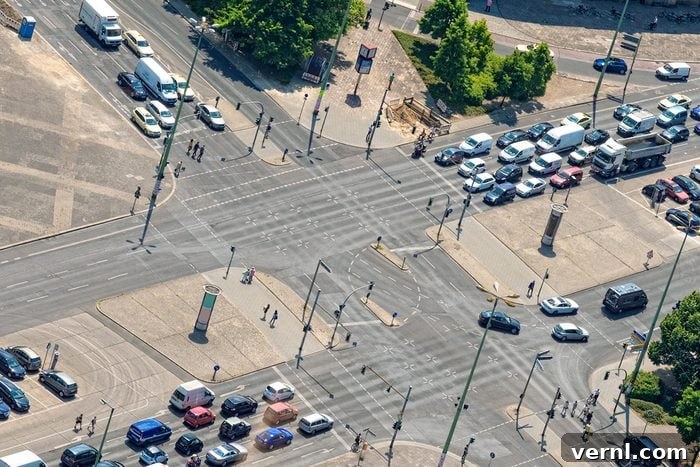
Four-way stops are designed to control traffic flow where two busy roads intersect, but they often present moments of hesitation and potential conflict if drivers aren’t clear on the rules. Norman observes, “Many of my [driver’s education] students assume that the vehicle going straight, or the one turning, has priority, but the basic rule is this: the driver who arrives at the stop sign first has the right of way. That’s why I emphasize the importance of paying attention to the order of arrival.” This first-come, first-served principle is fundamental. However, real-world scenarios are rarely perfectly clear-cut.
If multiple vehicles arrive at the intersection simultaneously, a secondary rule comes into play: “the vehicle furthest to the right has the right of way.” Once this initial right-of-way is established, drivers should then proceed in a clockwise order, ensuring a systematic and predictable flow. This systematic approach minimizes confusion and ensures that all drivers eventually get their turn. To further aid in communication, Norman advises his students: “If they’re unsure whose turn it is, or if they’re not ready to go when it is their turn, they can flash their high beams, use hand gestures, [or] even use eye contact to signal that they’re yielding the right of way to others.” Clear communication, whether through signals or eye contact, is vital to avoid misinterpretations and keep traffic moving safely.
Who Has the Right of Way at a Traffic Circle/Roundabout?
Roundabouts, also known as traffic circles, are becoming increasingly common due to their proven safety benefits and efficiency in traffic management. However, as Norman points out, “Many drivers struggle to navigate them, but they’re actually quite simple if you follow one key rule: vehicles already in the roundabout have the right of way.” This fundamental principle is the cornerstone of roundabout navigation. Traffic within a roundabout typically flows counter-clockwise.
When approaching a roundabout, drivers should always slow down significantly before entering. If the roundabout is clear of traffic, you can proceed cautiously without coming to a full stop. However, it is imperative to always stop and yield the right of way to any traffic and pedestrians already circulating within the traffic circle. Choosing your lane before entering is critical, especially in multi-lane roundabouts. Norman advises, “Don’t change lanes once you’re inside a multi-lane roundabout. Select your lane before entering the traffic circle based on where you plan to exit.” This pre-planning prevents last-minute, dangerous lane changes within the circular flow.
He further stresses a crucial etiquette point: “When practicing roundabouts with my student drivers, I always emphasize the importance of using turn signals when exiting.” This simple act is not only good driving etiquette but also provides invaluable information to drivers waiting to enter from side streets, allowing them to anticipate your move and enter safely, thus maintaining the roundabout’s efficient flow.
When In Doubt, Always Yield the Right of Way
“If you’re unsure, always yield right of way,” is Steven Norman’s overarching advice, a golden rule for any ambiguous traffic situation. This isn’t just a suggestion; it’s the prudent, defensive, and ultimately safer course of action. Yielding when uncertain demonstrates courtesy, discretion, and cautiousness, embodying the spirit of responsible driving. Right of way is more than just a legal statute designed to keep traffic moving smoothly; fundamentally, diligently following right-of-way regulations is a critical component in preventing collisions and ensuring everyone’s safety on the road. When in doubt, prioritize safety over potential legal right.
Special Right-of-Way Scenarios
Left Turn into Oncoming Traffic
As mentioned, turning left across oncoming traffic is one of the most hazardous maneuvers. You must exercise extreme patience and judgment, yielding the right of way completely until the opposing traffic lanes are entirely clear. This means waiting for a gap large enough to execute your turn without forcing oncoming drivers to slow down or swerve. Misjudging the speed of oncoming vehicles or the time needed for your turn can lead to severe head-on or side-impact collisions.
T-Intersections
At a T-intersection, where one road ends at another through road, the vehicle coming from the terminating street (the stem of the ‘T’) must yield the right of way to all traffic on the through road. “Any vehicle coming from the side (terminating) street must yield right of way to all traffic on the through road and wait until it is safe to turn left or right. Patience and clear judgment are key in these situations,” stated Norman. This ensures that traffic on the continuous road maintains its flow, while drivers entering it do so only when safe and clear.
Emergency Vehicles
Ambulances, fire trucks, and police cars are granted special, legal right-of-way privileges, often reinforced by “Move Over” laws enacted to protect both you and emergency responders. These rules are non-negotiable and critical for allowing emergency services to reach their destinations swiftly and safely. Adhere to these essential right-of-way rules when encountering emergency vehicles:
- When you observe flashing lights and/or hear sirens, you must safely pull over to the right side of the road, come to a complete stop, activate your four-way flashers, and remain stopped until all emergency vehicles have passed.
- Do not enter an intersection if an emergency vehicle is approaching from any direction, even if you have a green light. Wait until the intersection is clear.
- Maintain a minimum distance of 500 feet behind emergency vehicles if their lights and sirens are active. This provides them with the necessary space to operate and protects you from potential hazards at an emergency scene.
- If an emergency vehicle is stopped on the shoulder with its lights flashing, “Move Over” laws often require you to move to the farthest lane away from the emergency vehicle if safe to do so, or slow down significantly.
Funeral Processions
Similar to emergency vehicles, funeral processions are accorded special right-of-way privileges, both out of respect for the deceased and to maintain safe and dignified travel. Respecting these rules is a sign of courtesy and helps ensure the procession remains intact. Follow these funeral procession right-of-way rules:
- Even if you have a green light, you must yield the right of way to the entire procession until all vehicles in the procession have safely passed. Do not attempt to join or interrupt the procession.
- Unless explicitly directed by law enforcement officers, never cut into or drive through a funeral procession. This is not only disrespectful but can also be illegal and dangerous.
- If the lead vehicle in the procession legally entered an intersection with a green light, all subsequent vehicles in the procession are generally permitted to follow, even if the traffic light turns red. Drivers not part of the procession must stay stopped at the intersection until the entire procession has passed.
- Conversely, drivers within the funeral procession have responsibilities too: they must operate their vehicles safely and responsibly, staying in line and close to the car in front of them. They must also yield right of way if ordered by law enforcement, at railroad crossings when a train is approaching, or if continuing might compromise pedestrian safety or cause significant traffic backup.
The Experts Behind This Guide
Steven Norman, M.Ed., is a highly regarded Pennsylvania Department of Education (PDE) and PennDOT certified behind-the-wheel driving instructor and driver’s license examiner. With 15 years of experience teaching driver’s education, Steven brings a wealth of practical knowledge to his students. He also currently teaches elementary physical education at Manavon Elementary School in the Phoenixville Area School District and holds PDE K-12 Principal, Curriculum, and Instructional Supervision Certificates.
Additional Resources for Driving Knowledge
- Joe Simes: North Montco Technical Career Center.org (NMTCC), is the former deputy chief (retired) and training officer for Montgomery County, PA. He taught fire science part-time at NMTCC and is currently a Pennsylvania Department of Education (PDE) certified automotive technology instructor at NMTCC located in Lansdale, PA. Electronic communication August 11, 2025.
- Funeral Wise: “Driving in Funeral Processions and What to Do When You Encounter One” (August 10, 2025)
- Legal Clarity: “Criminal Law, When Do Emergency Vehicles Have the Right of Way?” (July 18, 2025)
- Pennsylvania General Assembly: “Chapter 33, Rules of the Road in General; Subchapter B Right-Of-Way” (August 10, 2025)