The Unseen Revolution: Exploring Bladeless Ceiling Fans for Modern Homes
For decades, the ceiling fan has been a staple in homes worldwide, a familiar whirring fixture providing comfort. But what if we told you there’s a new contender on the block, one that redefines both aesthetics and airflow? Enter the bladeless ceiling fan – a marvel of modern engineering that promises a sleek design, enhanced safety, and efficient air circulation without the traditional spinning blades. If the concept of a “bladeless ceiling fan” sounds like something out of science fiction, you’re not alone. Many homeowners are just discovering this innovative technology, and the initial reaction often ranges from curiosity to outright confusion.
In this comprehensive guide, we’ll delve deep into the world of bladeless ceiling fans. We’ll explore how they work, their myriad benefits, potential drawbacks, and ultimately, help you decide if this cutting-edge appliance is the right fit for your living space. Prepare to have your perceptions of home cooling revolutionized.
What Exactly is a Bladeless Ceiling Fan?
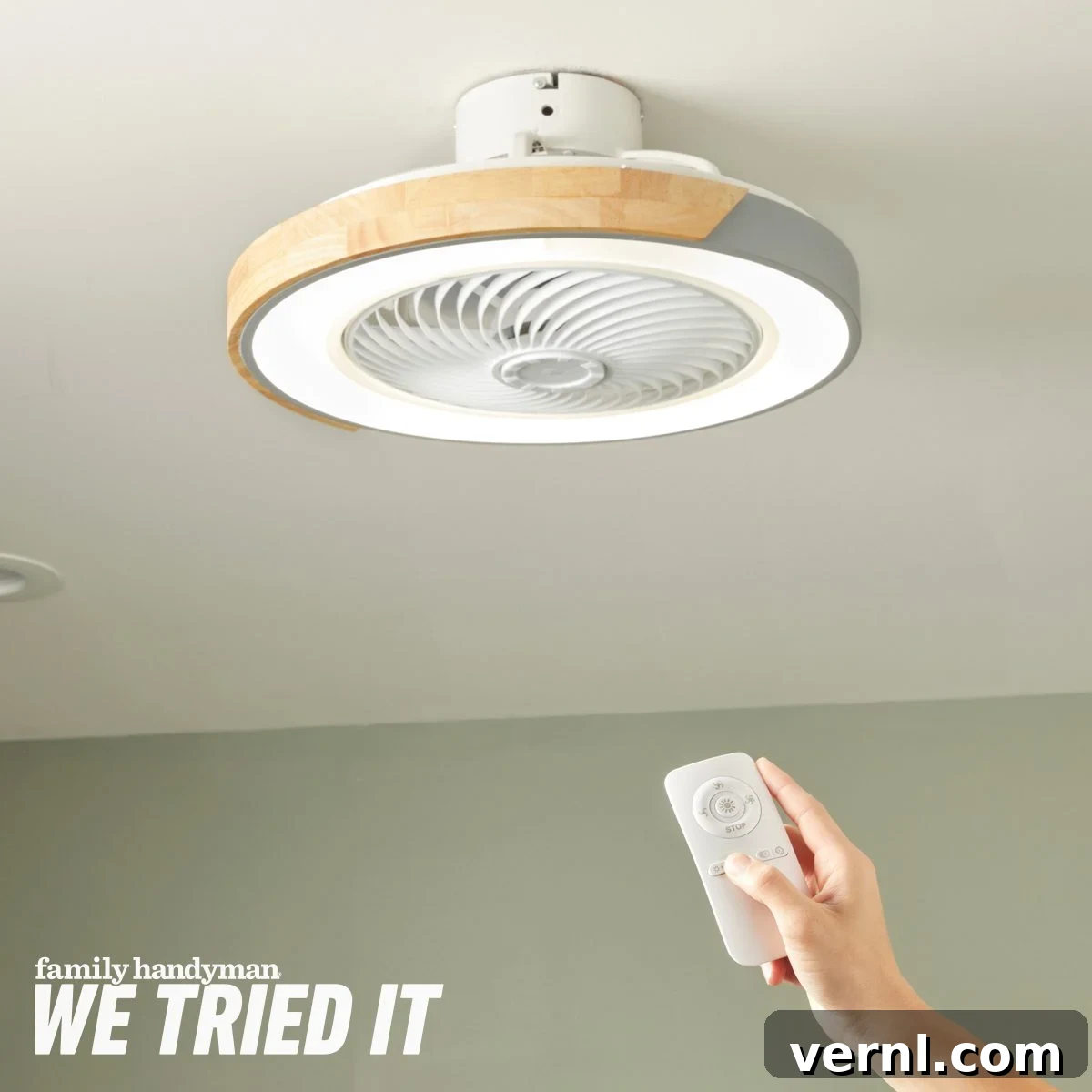
At first glance, a bladeless ceiling fan might seem to defy the laws of physics. Where are the blades that propel the air? The magic lies in its ingenious design, which borrows principles from bladeless tower fans and air purifiers. Instead of exposed, rotating blades, these fans typically feature a hidden internal impeller or turbine that draws air in from the bottom or sides of the unit. This air is then accelerated and expelled through a narrow opening, often a ring-shaped or disc-shaped aperture, creating a powerful and consistent stream of air.
The “bladeless” moniker is slightly misleading, as there are indeed internal components that move air. However, from a user’s perspective, the fan appears to be a solid, often minimalist fixture, with no visible moving parts to catch dust or pose a hazard. This revolutionary design not only transforms the visual appeal of a ceiling fan but also opens up new possibilities for functionality and user experience.
The Science Behind the Airflow: How Do They Work?
The core principle behind a bladeless ceiling fan is similar to that of a jet engine or a modern Dyson fan. A motor-driven impeller, cleverly concealed within the fan’s housing, spins rapidly to draw in ambient air. This air is then compressed and directed into an annular (ring-shaped) or specially designed channel. As the air exits this channel through a precise, narrow slit or multiple small vents, it creates a high-velocity jet of air. This primary airflow then entrains or “induces” the surrounding static air to move along with it, amplifying the total airflow volume.
This process, often referred to as “air multiplier” technology, means that for every unit of air the internal impeller moves, several units of surrounding air are drawn into the flow, creating a much larger and smoother column of air than what the internal components alone would suggest. The result is a consistent, uninterrupted breeze that feels natural and widespread, rather than the choppy gusts often associated with traditional blade-based fans. This design also eliminates the air turbulence and buffeting noise caused by traditional fan blades slicing through the air.
Why Consider a Bladeless Ceiling Fan? The Benefits Explored
The innovation of bladeless technology brings with it a host of compelling advantages that set these modern appliances apart from their conventional counterparts.
Modern Aesthetics and Design
Perhaps the most immediate and striking benefit of a bladeless ceiling fan is its unparalleled aesthetic appeal. Traditional fans, with their rotating blades, can sometimes feel intrusive or dated in contemporary interiors. Bladeless fans, by contrast, offer a sleek, minimalist, and often futuristic look. They can blend seamlessly into modern decor, serve as a stylish focal point, or even disappear almost entirely into the ceiling, especially when designed with integrated lighting. For homeowners who prioritize clean lines, uncluttered spaces, and cutting-edge design, a bladeless fan is an undeniable upgrade that elevates the entire room’s ambiance.
Enhanced Safety for Everyone
The absence of exposed, rapidly spinning blades is a significant safety advantage. This is particularly crucial in homes with low ceilings, bunk beds, or for families with curious children and pets. Traditional ceiling fans can pose a collision risk, both for objects accidentally tossed upwards and for individuals who might inadvertently come into contact with the blades. Bladeless designs eliminate this concern entirely, offering peace of mind and making them a safer choice for various environments, including playrooms or areas where people might reach up.
Easier Cleaning and Maintenance
Cleaning a traditional ceiling fan can be a tedious and messy chore. Dust accumulates on the blades, requiring careful wiping or vacuuming, often resulting in dust falling onto furniture and floors below. With a bladeless fan, maintenance is dramatically simplified. Since there are no exposed blades, dust accumulation is significantly reduced and limited to the exterior surfaces of the unit. A simple wipe-down with a damp cloth is usually sufficient to keep the fan looking pristine, saving you time and effort.
Quieter Operation for Serene Environments
One common complaint about traditional ceiling fans is the noise, ranging from a gentle hum to an irritating rattle, especially at higher speeds. This noise is largely due to the blades cutting through the air and the motor operating under stress. Bladeless fans, utilizing internal impellers and smooth air expulsion, are engineered for significantly quieter operation. The airflow is typically smooth and consistent, minimizing turbulence-related noise. This makes them an ideal choice for bedrooms, home offices, nurseries, or any space where a tranquil environment is paramount.
Space-Saving and Unobtrusive Design
While traditional fans occupy a certain amount of visual and physical space with their wide blade spans, bladeless fans often feature a more compact and integrated design. Their usually smaller overall footprint and lack of sweeping blades can make a room feel more open and less cluttered. This is particularly beneficial in smaller rooms or areas where a large, traditional fan might overpower the space or create a sense of being hemmed in.
Are There Any Downsides? Considerations for Bladeless Technology
While the benefits are numerous, it’s also important to consider the potential drawbacks or unique characteristics of bladeless ceiling fans to make an informed decision.
Initial Cost Can Be Higher
As with many innovative technologies, the initial purchase price of a bladeless ceiling fan tends to be higher than that of a comparable traditional ceiling fan. The advanced engineering, specialized components, and sophisticated design contribute to this premium. While prices are gradually becoming more competitive as the technology matures, this higher upfront investment is a factor to consider for budget-conscious buyers.
Perceived Airflow and Air Distribution
Some users, accustomed to the direct, forceful “choppy” breeze of traditional fans, might initially perceive the airflow from a bladeless fan as less powerful. While bladeless fans are highly efficient at circulating air and creating a broad, consistent current, the sensation is different. It’s often described as a smoother, more gentle, yet pervasive breeze, rather than a direct blast. This difference in perception is important, though objectively, many high-quality bladeless fans deliver excellent air circulation for their rated CFM (Cubic Feet per Minute).
Installation Complexity (Potentially)
While many bladeless fans are designed for straightforward installation, some models with advanced features, integrated lighting, or unique mounting mechanisms might require a bit more attention than a basic traditional fan. For those uncomfortable with electrical wiring or ceiling fan installation, professional installation might be a preferred option, adding to the overall cost.
Bladeless vs. Traditional Ceiling Fans: A Head-to-Head Comparison
To help you weigh your options, let’s compare the key aspects of bladeless and traditional ceiling fans:
- Aesthetics: Bladeless fans offer a modern, minimalist look; Traditional fans have a classic, often more rustic or industrial aesthetic with visible blades.
- Safety: Bladeless fans are inherently safer due to no exposed moving parts; Traditional fans pose a potential hazard, especially in low-ceiling rooms.
- Noise Level: Bladeless fans are generally much quieter, producing a smooth hum; Traditional fans can range from quiet to noisy, with blade-produced air buffeting.
- Maintenance: Bladeless fans are very easy to clean (wipe-down); Traditional fans require dusting of individual blades, which can be messy.
- Airflow Sensation: Bladeless fans provide a smooth, consistent, widespread breeze; Traditional fans provide a direct, sometimes choppy, localized airflow.
- Price: Bladeless fans typically have a higher initial cost; Traditional fans are available across a very wide price spectrum, including many affordable options.
- Energy Efficiency: Both types can be energy-efficient; modern bladeless fans often feature DC motors for optimal power consumption.
- Installation: Both generally require electrical wiring; some bladeless designs might have slightly different mounting requirements.
Key Factors to Consider Before Buying a Bladeless Ceiling Fan
If you’re leaning towards a bladeless ceiling fan, keep these essential considerations in mind to ensure you choose the perfect model for your home.
Room Size and Airflow (CFM)
Just like traditional fans, bladeless models are rated for specific room sizes. Check the fan’s CFM (Cubic Feet per Minute) rating to ensure it can adequately circulate air in your space. A larger room will require a higher CFM. Manufacturers typically provide guidelines for appropriate room dimensions for each fan model.
Noise Level Specifications
While generally quieter, not all bladeless fans are created equal. Look for models that specifically highlight ultra-quiet operation or provide decibel ratings, especially if the fan is destined for a bedroom or study.
Smart Features and Controls
Many modern bladeless fans come equipped with smart features such as remote control operation, app connectivity, integration with smart home systems (e.g., Alexa, Google Assistant), programmable timers, and multiple speed settings. Decide which features are important to you for convenience and enhanced user experience.
Integrated Lighting Options
A significant number of bladeless ceiling fans include integrated LED lighting. Consider the lighting temperature (warm white, cool white, daylight), dimming capabilities, and overall brightness (lumens) to ensure it meets your room’s illumination needs. Some even offer color-changing options.
Design, Finish, and Material Quality
Since aesthetics are a major draw, pay close attention to the fan’s design, finish, and the quality of materials used. Choose a style that complements your interior decor, whether it’s sleek chrome, brushed nickel, matte black, or minimalist white. Durable materials will also ensure longevity.
Warranty and Customer Support
As a relatively newer technology, strong warranty coverage and reliable customer support are important. A good warranty indicates the manufacturer’s confidence in their product and provides peace of mind in case of any issues.
Installation and Maintenance Tips
Once you’ve selected your ideal bladeless ceiling fan, proper installation and minimal maintenance will ensure its optimal performance and longevity.
Professional Installation Recommended?
While many advanced DIY enthusiasts can install a ceiling fan, if you’re unfamiliar with electrical wiring or ceiling fan mounting, it’s always safer and often more efficient to hire a qualified electrician. This ensures the fan is securely mounted, correctly wired, and adheres to all safety codes, preventing potential issues down the line.
Simple Cleaning Routine for Lasting Shine
The beauty of bladeless fans lies in their low maintenance. For routine cleaning, simply use a soft, damp cloth to wipe down the exterior surfaces of the fan and any integrated light fixtures. For more stubborn dust or grime, a mild, non-abrasive cleaning solution can be used. Avoid harsh chemicals or abrasive materials that could damage the finish. Because there are no blades, dust accumulation internally is minimal and typically not a concern for user-level maintenance.
Our Experience: A Real-World Perspective
When we first encountered the concept of a “bladeless ceiling fan,” a healthy dose of skepticism was inevitable. How could a fan without visible blades possibly move enough air to be effective? After testing one out, we experienced firsthand the subtle yet profound difference. The initial confusion quickly gave way to appreciation for its quiet operation and the consistent, smooth airflow that permeated the room. While the direct blast of air from a traditional fan might feel stronger in a concentrated spot, the bladeless design truly excels at creating a comfortable, evenly distributed ambient breeze throughout the space. It proved to be a remarkable conversation starter and a highly functional addition, demonstrating that innovation can indeed redefine everyday appliances.
The Future of Ceiling Fans
Bladeless ceiling fans represent a significant leap forward in home comfort technology. As demand for smarter, safer, and more aesthetically pleasing home appliances grows, we can expect to see further advancements in this segment. Future models may feature even more sophisticated air multiplication techniques, enhanced smart home integration, and potentially even more compact and disguised designs. They are not just a trend but a testament to how design and engineering can converge to create superior user experiences, promising a cooler, quieter, and more stylish future for our homes.
Conclusion: Embracing the Bladeless Revolution
The bladeless ceiling fan is more than just a novelty; it’s a smart, stylish, and safe alternative to traditional ceiling fans. Offering a modern aesthetic, enhanced safety, easier maintenance, and significantly quieter operation, it addresses many of the common drawbacks associated with conventional blade-based designs. While the initial investment might be higher and the airflow sensation different, the long-term benefits in terms of comfort, design integration, and peace of mind are compelling.
If you’re looking to upgrade your home with a cutting-edge appliance that blends seamlessly with contemporary decor while delivering effective air circulation, a bladeless ceiling fan is definitely worth exploring. It’s a testament to how innovation can subtly yet powerfully enhance our living environments, leaving us wondering why we ever settled for anything less.
Learn more about the functionality and design of these innovative appliances:
What’s a Bladeless Ceiling Fan and Does It Really Work?