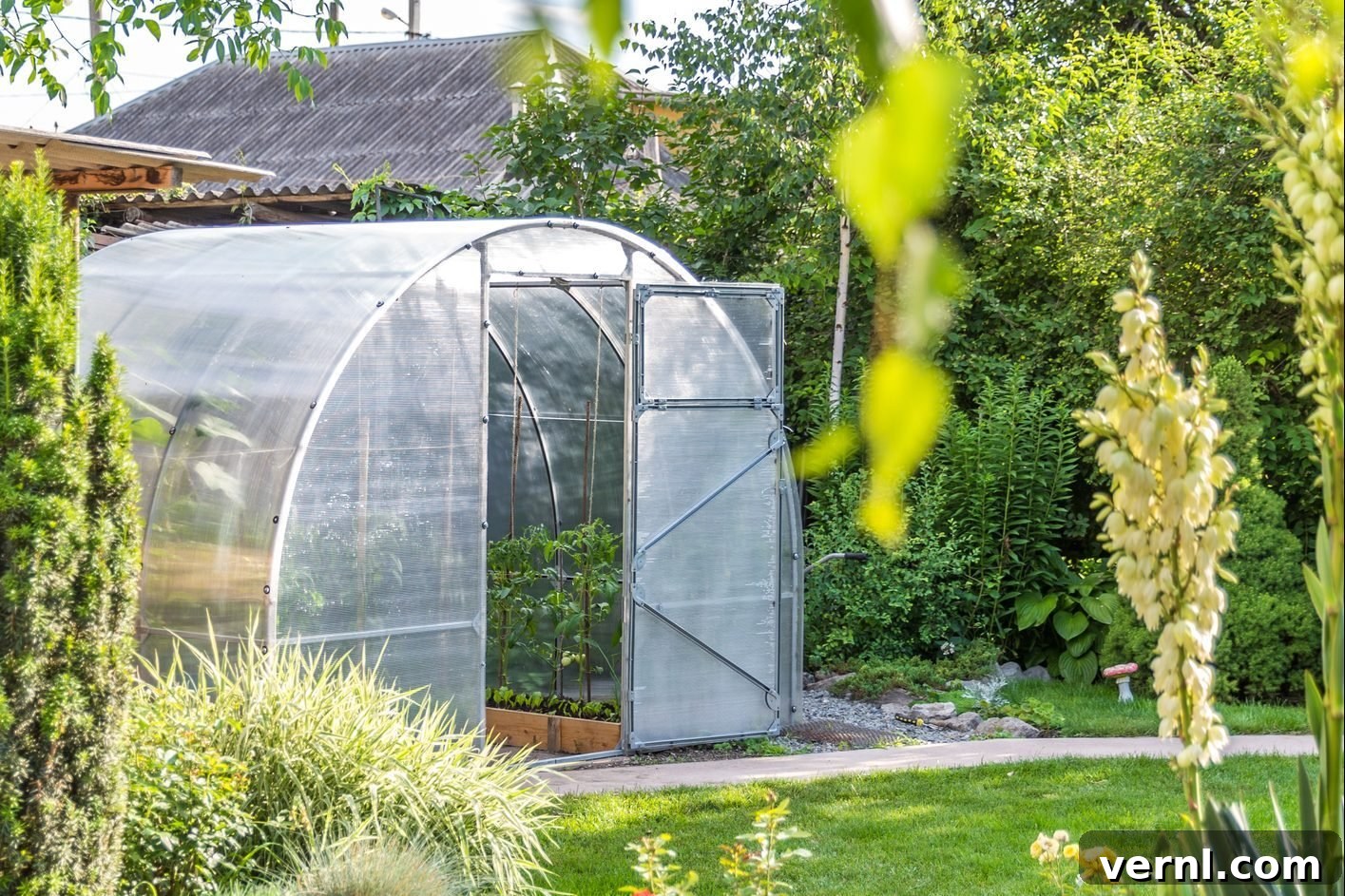
Nestled on a picturesque peninsula along the central California coast, the charming town of Half Moon Bay is renowned for its vibrant surfing scene, especially during the winter months. Yet, its appeal extends far beyond the waves, drawing visitors year-round to a unique spectacle: a long stretch of greenhouses bustling with both locals and tourists. These horticultural havens are vital to the region, providing an abundant supply of everything from exotic flowers and medicinal herbs to fruit trees, resilient succulents, fresh vegetables, and a myriad of other plant varieties. This concentrated cluster of growing spaces in Half Moon Bay offers a glimpse into the incredible potential of controlled environment agriculture, inspiring countless home gardeners to explore the world of greenhouses.
While most communities have a handful of greenhouses, the sheer concentration found in Half Moon Bay is truly exceptional. Greenhouses fundamentally transform the gardening experience, allowing enthusiasts to significantly extend their growing season by planting seeds several weeks, or even months, before the outdoor soil is ready. They also enable the cultivation of mature plants that would otherwise struggle or fail to survive in a particular climate, making exotic and out-of-season crops a reality for home gardeners. Whether you dream of a steady supply of fresh produce for your dinner table, vibrant poinsettias for the holidays, or aromatic herbs like sage, thyme, and cilantro to elevate your culinary creations, a residential greenhouse offers boundless possibilities. This guide delves into the essential aspects of choosing and planning the perfect greenhouse for your home, ensuring your green thumb tingles with anticipation, no matter your location or gardening aspirations.
The array of greenhouse options available today is vast, ensuring that there’s an ideal solution for every gardener, regardless of space constraints or climate. From expansive freestanding structures to compact designs perfect for urban living, the possibilities are extensive. You can even find small greenhouses specifically designed to fit on the balcony of an apartment building, demonstrating the incredible versatility and accessibility of home gardening under glass or plastic. As Manny Barra, a master gardener at TeachMe.To, aptly puts it, “For DIYers, planning a greenhouse can be as thrilling as picking out the plants to grow inside it. Whether you want rustic charm or modern lines, designing a greenhouse can be a great way to blend function and personality in one special gardening space.”
What Exactly is a Greenhouse?
At its core, a greenhouse is precisely what its name implies: a structure specifically designed to cultivate vegetation within a controlled environment. Its primary function is to create an optimal setting for plant growth by effectively managing crucial environmental factors such as sunlight, temperature, humidity, and irrigation. This sheltered space allows gardeners to magnify or reduce light exposure as needed, maintain consistent temperatures, and utilize water resources more efficiently. However, greenhouse gardening is far from a simple endeavor of merely erecting a structure and introducing plants; it involves careful consideration of design, materials, and ongoing environmental management.
The magic of a greenhouse lies in its fundamental design principles: transparent roofing and insulating walls, coupled with controlled ventilation and convenient access to water. These elements work in concert to create a microclimate distinct from the outdoor environment. While many assume all greenhouses amplify light, some are specifically designed to provide shade, protecting delicate plants that cannot tolerate intense full sun and high temperatures. Modern greenhouse designs often incorporate both sunny and shady zones, allowing for a diverse ecosystem of plants with varying light requirements to flourish side-by-side. This meticulous control over light, heat, and moisture makes it possible to grow a wider range of plants, start seeds earlier, and extend the harvest season significantly, making gardening a year-round pleasure.
Choosing the Right Materials for Your Greenhouse
While some grand greenhouses boast structures as robust and permanent as a residential house, most common residential designs feature more rudimentary frames. These frames are typically constructed from metal pipe, plastic pipe, or wood, each offering distinct advantages and considerations in terms of cost, durability, insulation, and ease of assembly.
- Plastic Piping: As the most budget-friendly option, plastic piping (such as PVC) offers an accessible entry point into greenhouse construction. It’s lightweight and easy to work with, making it suitable for temporary structures or smaller, portable greenhouses. However, its primary drawback is a lack of rigidity, which limits its suitability for larger or more permanent structures that need to withstand significant wind or snow loads. For those considering this material, understanding the different types of greenhouse plastics is crucial for maximizing longevity and performance.
- Wood: Wood frames are celebrated for their natural aesthetic and superior thermal insulation properties, making them an excellent choice for greenhouses in colder climates where heat retention is paramount. It creates a beautiful, rustic look and can be very durable if treated properly against moisture and pests. The main considerations for wood include its susceptibility to rot and decay if not maintained, and its generally higher cost compared to plastic.
- Metal Piping: Frames constructed from metal piping, typically aluminum or steel, offer exceptional longevity and durability. Steel provides immense strength, crucial for large, robust structures, while aluminum is lighter and naturally resistant to rust, making it ideal for a maintenance-free frame. However, metal, especially aluminum, is not a good thermal insulator. This means metal-framed greenhouses can lose heat more quickly in cold weather and heat up rapidly in warm weather, potentially requiring more sophisticated climate control systems or additional insulation.
Beyond the frame, the choice of covering material is equally critical, directly impacting light transmission, insulation, and overall cost. While large-scale commercial greenhouses often feature well-insulated glass walls and roofs, several other transparent materials are highly effective, particularly for smaller, residential structures.
- Glass: The traditional and often most aesthetically pleasing greenhouse material, glass offers unparalleled light transmission and excellent insulation when properly installed. It provides a crystal-clear view of your plants and integrates beautifully into any garden design. However, glass is typically the most expensive option, can be challenging and labor-intensive to install, and is susceptible to cracking or breaking. Despite these drawbacks, for those prioritizing beauty and performance, browse our top picks for glass greenhouses.
- Acrylic: While also on the pricier side, acrylic offers an excellent balance of clarity and durability. It’s lighter than glass and significantly more impact-resistant, making it a safer option. A unique advantage of acrylic is its ability to be bent and molded to a certain degree, allowing for more unique, curved greenhouse designs that wouldn’t be possible with flat glass panes. It maintains its clarity over time, resisting yellowing.
- Polycarbonate: A strong, lightweight, and budget-friendly alternative to both glass and acrylic, polycarbonate is a popular choice for DIY greenhouse enthusiasts. It’s available in flexible sheeting or rigid panels (often twin-wall or multi-wall for enhanced insulation) and is highly impact-resistant, making it virtually unbreakable. Polycarbonate tends to diffuse light rather than transmit it directly, which can be beneficial in preventing leaf burn and creating a more even light distribution within the greenhouse.
- Fiberglass: Often the least expensive greenhouse covering material, fiberglass is a viable option, particularly for extreme climates due to its good insulation properties. When new, it can be almost as transparent as glass. However, fiberglass has a tendency to yellow and degrade over time, leading to a reduction in light transmission and a less aesthetically pleasing appearance. Its cost-effectiveness often comes with a trade-off in long-term clarity and durability.
Exploring Diverse Greenhouse Structures
Greenhouse designs vary widely, from completely freestanding units that can be placed anywhere in your garden to structures that are thoughtfully connected to an existing building or even another greenhouse. The choice of structure often depends on the available space, budget, desired aesthetic, and the specific types of plants you intend to grow. Here are the most common types of greenhouse structures suitable for residential use:
Gable-style Greenhouses
The classic and most common greenhouse design, the gable-style structure, mimics traditional house architecture with straight walls and sloping roofs that meet to form a triangular gable at each end. This traditional gable construction offers excellent head-room and ample interior space, making it easy to move around and manage plants. Its design maximizes sunlight exposure and allows for efficient ventilation. Gable-style greenhouses are incredibly versatile, scaling effectively from large, dedicated growing spaces to compact units perfectly suited for a porch or veranda, offering both functionality and timeless appeal.
A-frame Greenhouses
Similar in concept to a gable-style, an A-frame greenhouse is characterized by long, steeply sloped roofs that extend all the way to the ground, forming an “A” shape. This design is relatively easy to build and maximizes light intake, particularly in areas with lower sun angles. However, the sloped walls can limit usable growing space near the ground, and airflow might be restricted in these lower sections. While providing excellent light and a unique aesthetic, A-frames are often better suited for simple storage or for growing smaller, less demanding plants rather than a full-scale diverse crop.
Geodesic Dome Greenhouses
A geodesic dome greenhouse is an engineering marvel, boasting an incredibly strong and stable structure capable of withstanding severe weather conditions, including high winds and heavy snow loads. Beyond its resilience, its unique, spherical shape makes it a striking architectural feature in any garden. You can embark on a DIY project by mass-producing rods of the same length and assembling them with connectors to form a series of interlocking triangles. However, for most home gardeners, purchasing a geodesic dome kit that includes all necessary components for assembly is a more practical approach, even though the assembly process can be more complex than other greenhouse structures. For those looking for flexibility, check out this portable greenhouse option as well!
Gothic Arch Greenhouses
The gothic arch design elegantly blends elements of both gable-style and A-frame greenhouses. It features walls framed with aluminum or steel poles that gracefully curve to meet at a central ridge cap, creating a pointed roof reminiscent of medieval cathedral architecture. This design is not only aesthetically pleasing, arguably the most elegant type of greenhouse, but also highly functional. Its curved surfaces efficiently shed snow and rain, minimizing accumulation and structural stress. Gothic arch greenhouses are relatively easy to assemble and their curved form necessitates the use of flexible covering materials, such as polycarbonate film, which can conform to the graceful contours of the frame.
Hoop House Greenhouses
A highly popular and cost-effective option, the hoop house is characterized by its simple construction from a series of semi-circular hoops. These hoops, typically made of PVC or metal, are anchored to base plates or directly inserted into the ground, automatically forming the supports for both the walls and roof. Hoop structures are ideal for covering long rows of plants and provide more usable space near the walls compared to A-frame designs. They are particularly favored for seasonal growing or for extending the season of cold-hardy crops. Due to their curved nature, hoop houses must be covered with flexible materials like polyethylene or polycarbonate film. While efficient, their design means they may not shed snow and water as effectively as more steeply pitched structures like gable or gothic arch designs.
Saw Tooth Greenhouses
The saw tooth greenhouse design is a practical and ingenious solution, particularly for warmer climates or situations requiring enhanced ventilation. This structure can feature a gable-like profile or arched sides similar to a hoop house. The defining characteristic is its roof, where one side is intentionally built higher than the other. This creates a vertical space or “saw tooth” along the ridge, allowing for the integration of windows or vents that can be opened to provide superior natural ventilation and help dissipate excess heat and humidity, ensuring a cooler, healthier environment for plants.
Uneven Span Greenhouses
For gardeners looking to build a greenhouse on sloped land, an uneven span greenhouse often presents the most efficient and practical design. This is a variation of the traditional gable design, where one side of the roof – typically the south-facing side in the Northern Hemisphere – is significantly longer and steeper than the other. This extended south-facing slope is specifically engineered to maximize the intake of sunlight throughout the day, providing optimal light exposure for plant growth. When building a greenhouse on challenging terrain, the uneven span design intelligently adapts to the landscape while optimizing solar gain.
Lean-to Greenhouses
The lean-to greenhouse is an excellent space-saving solution, designed to be built directly onto the wall of an existing structure, such as a house, garage, or shed. Its roof slopes away from the host building, ideally facing south to maximize solar exposure. This simple yet effective design is perfect for urban properties or gardens with limited space. A significant advantage of the lean-to is its energy efficiency; the adjacent building wall radiates heat, helping to warm the greenhouse, especially during cooler months. Furthermore, the existing structure provides inherent stability, reducing the complexity and material requirements for construction.
Abutting Greenhouses
Similar in concept to a lean-to, an abutting greenhouse also connects to an existing structure, but with a key difference: the building wall forms one of the *ends* of the greenhouse, rather than a side wall. This configuration allows the greenhouse to extend outwards from the building, often in front of a window or door. When positioned strategically in front of a door, an abutting greenhouse can serve a dual purpose, functioning not only as a plant cultivation space but also as a charming sunroom or transitional area, blurring the lines between indoor and outdoor living. For smaller spaces or windows, consider a mini window greenhouse.
Key Considerations for DIY Greenhouse Planning
Embarking on a DIY greenhouse project requires thoughtful planning to ensure your new gardening space meets your specific needs and stands the test of time. As Katie Russo, content operations manager at Bootstrap Farmer, advises, “The first consideration is how permanent you want the structure to be. Permanent greenhouses can require foundations, which sometimes need to be permitted, so if you’re just getting started you might be better off testing the waters with something temporary like a hoop house.”
Beyond permanence, consider these crucial factors:
- Growing Goals: Your horticultural aspirations should guide your greenhouse design. Justin Hancock, a horticulturist at Costa Farms, highlights this, stating, “It’s a totally different approach if you want to grow tropicals over winter in Minnesota, for example, then if you want to keep cool-season crops like lettuce going throughout the winter in Georgia.” Clearly define what you want to grow—be it delicate orchids, robust vegetables, or seedlings for your outdoor garden—as this will influence choices regarding size, heating, cooling, and light management.
- Climate Considerations: The local climate profoundly impacts your greenhouse design. In cold climates, selecting superior insulating materials like thick glass or multi-wall polycarbonate is paramount for heat retention and energy efficiency. Russo notes that “Polycarbonate and polyethylene film are popular options for DIY builds because they’re lightweight, affordable and provide good insulation, while glass gives a classic look but requires a stronger frame.” Conversely, in hot climates, emphasis shifts to effective cooling, shading, and robust ventilation systems to prevent overheating.
- Location and Site Preparation: Choose a site that receives ample sunlight, ideally a south-facing spot that offers maximum exposure throughout the day. Consider accessibility to water and electricity. The site should also be relatively level or easily leveled, and protected from strong winds if possible.
- Ventilation: Proper ventilation is absolutely critical to prevent common greenhouse issues like mold, fungal diseases, and extreme temperatures. It ensures healthy air circulation, regulates humidity, and facilitates temperature control. This can range from simple manual vents and doors to sophisticated automatic vent openers that respond to temperature changes.
- Size: While a larger greenhouse might seem more appealing for variety, remember that larger structures are generally more expensive to build, heat, and maintain. Accurately assess your available space and balance your growing ambitions with practical considerations. Ensure there’s enough room to work comfortably around your plants.
- Heating: If you plan to grow in colder months or cultivate heat-loving plants, heating will be a factor. Consider various options: electric heaters, gas heaters, or even passive solar heating strategies. For precise temperature control, a greenhouse heater with a thermostat is an invaluable investment.
- Budget: A realistic budget is essential. Fortunately, a DIY approach often allows for significant cost savings. Manny Barra advises, “There are plenty of ways to make a DIY greenhouse without breaking the bank, from using reclaimed windows to creating shelving from pallets.” Explore options like pre-made kits, repurposing materials, or building from scratch to find a solution that fits your financial parameters.
The Abundant Benefits of a Residential Greenhouse
Integrating a greenhouse into your residential landscape offers a wealth of advantages that extend far beyond simply growing plants. A home greenhouse can profoundly enhance your gardening experience and overall quality of life:
- Extend the Growing Season: This is arguably the most significant benefit. A greenhouse provides a microclimate that allows you to start seedlings earlier in spring, grow cool-season crops well into winter, and even continue harvesting heat-loving plants past their natural outdoor season. Depending on your climate, you could add months to your active gardening calendar.
- Cultivate a Wider Variety of Plants: Break free from the limitations of your local climate. A greenhouse enables you to grow exotic fruits, tropical flowers, or delicate herbs that would never thrive outdoors in your region, transforming your garden into a diverse botanical sanctuary.
- Enhance Property Value and Aesthetic Appeal: A well-designed greenhouse can be a beautiful addition to any property, adding visual interest and creating a unique focal point in your garden. It can also be seen as an attractive amenity, potentially boosting your home’s curb appeal and overall value.
- Reduce Reliance on Grocery Stores: Growing your own produce fosters self-sufficiency. By having a greenhouse, you can consistently supply your kitchen with fresh, organic vegetables and herbs, reducing your trips to the supermarket and fostering a deeper connection to your food source.
- Increase the Availability of Fresh Produce: Enjoy fresh, pesticide-free fruits and vegetables year-round. This leads to a healthier diet, as homegrown produce is often more nutritious and flavorful than store-bought alternatives, picked at peak ripeness.
- Boost Your Mood and Well-being: Beyond the tangible benefits, a greenhouse offers an invaluable psychological uplift. As Justin Hancock eloquently states, “Particularly if you’re in a cold climate, a greenhouse filled with flowers and foliage can be a great way to combat seasonal affective disorder (SAD).” The warmth, lush greenery, and connection to nature within a greenhouse provide a therapeutic escape, offering solace and joy, especially during harsh weather. “When I had my greenhouse, there was something magical about being able to walk in a lush, tropical environment separate from the snowy outside.”
About the Experts
- Manny Barra is the Community Garden Coordinator for the City of Oakland and a Master Gardener at TeachMe.To. He is deeply passionate about sustainable gardening practices, promoting soil health, pioneering aquaponics, and developing robust community food systems.
- Katie Russo serves as the Content Operations Manager at Bootstrap Farmer, a leading company specializing in greenhouse and farming supplies. A dedicated proponent of sustainable farming, she previously worked as a full-time greenhouse grower and currently co-manages a native tree farm with her husband.
- Justin Hancock is a Horticulturist at Costa Farms, recognized as the world’s largest houseplant grower. With over 25 years of extensive experience in the horticulture industry, his career spans roles as a garden editor, retail garden center operator, and plant tag information specialist.