
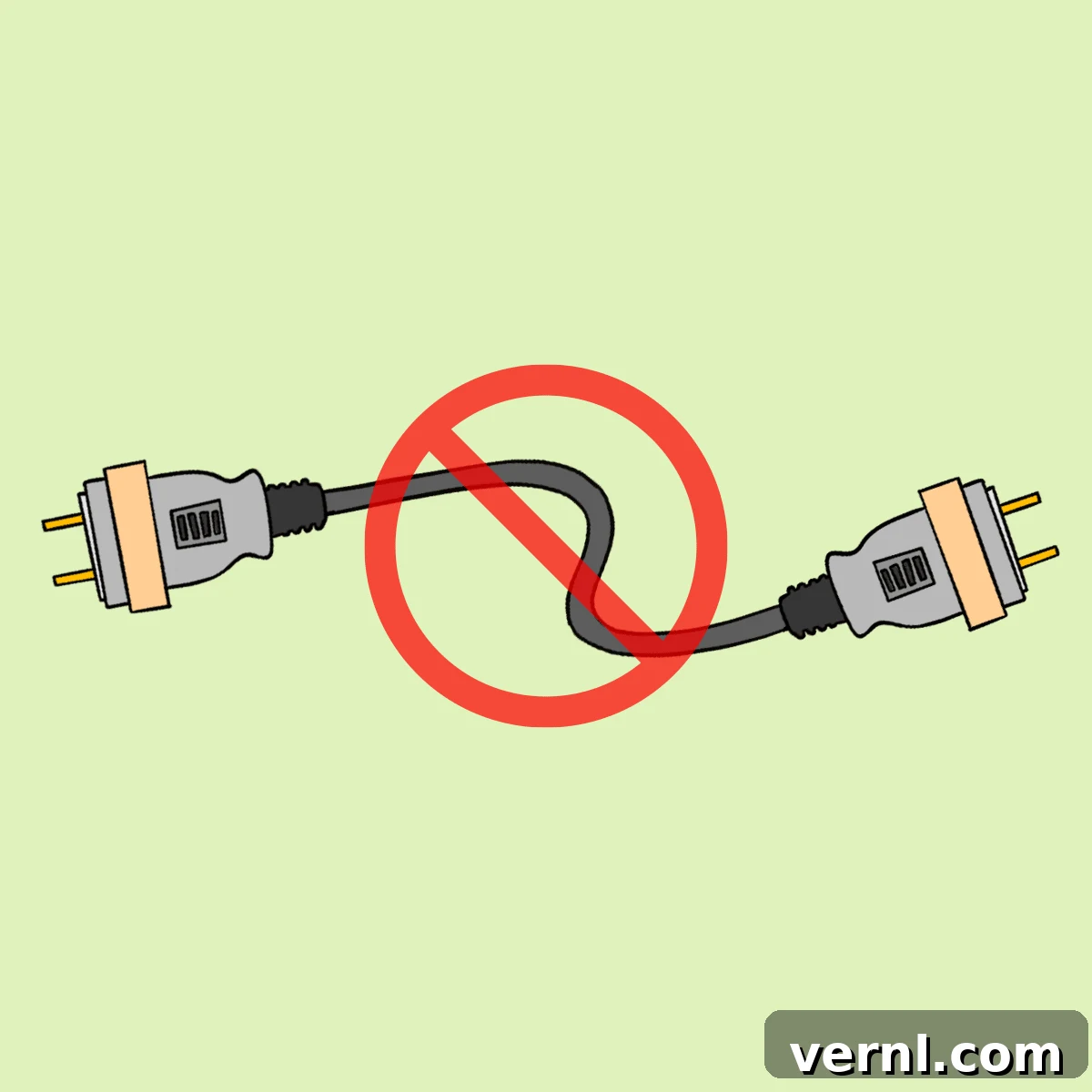
The Hidden Dangers of Male-to-Male Electrical Cords: Why You Must Avoid “Suicide Cords”
Every year, as seasonal decorations illuminate homes or emergency generators roar to life, a perilous misconception leads many to consider a dangerously flawed solution: the male-to-male electrical cord. These seemingly convenient cables, often sought after for misaligned Christmas lights or temporary generator hookups, are not just unsafe – they are profoundly hazardous. Their inherent risks are so severe that electricians and safety professionals have given them the chilling moniker: “suicide cords.”
While the intuitive fix might appear to be finding a cord with two male ends to bridge an electrical gap, experts in electrical safety unequivocally warn against their use. WG Hickman, an HVAC technician, succinctly explains the core danger: “A male-to-male cord has exposed prongs on both ends, meaning one end would always be ‘live’ when plugged in, posing serious shock and fire risks.” This fundamental design flaw makes such a cord a ticking time bomb in any electrical setup, transforming a simple electrical connection into a grave threat of electrocution and fire.
Understanding the Extreme Hazards: Why “Suicide Cords” Are So Dangerous
To truly grasp the gravity of the danger, it’s essential to understand why male-to-male electrical cords have earned the alarming designation of “suicide cords.” The primary issue lies in their unique and inherently unsafe design: two male plugs, each featuring exposed metal prongs, intended to be inserted directly into electrical receptacles.
When just one end of a male-to-male cord is plugged into a live power source—be it a wall outlet, a generator, or an inverter—the prongs on the *other* end immediately become fully energized. Unlike standard extension cords, which are designed with female receptacles to safely enclose live contacts, male-to-male cords offer no such protection. These exposed, live prongs present an immediate and severe risk of electric shock or fatal electrocution to anyone who accidentally touches them. This danger is indiscriminate, threatening adults, curious children, or even unsuspecting pets. The peril is constant and ever-present, whether the cord is in active use, lying on the ground, or simply forgotten after being unplugged from one end.
Beyond the direct shock hazard, these cords carry a significant risk of fire. Exposed live prongs can easily make contact with conductive materials like metal objects, water, damp surfaces, or even dry foliage, leading to dangerous short circuits, intense sparks, and the potential ignition of flammable materials nearby. Furthermore, the absence of proper grounding and any effective control over the power flow in such an improvised setup dramatically increases the likelihood of circuit overload. This can result in severe damage to your home’s wiring, destroy connected appliances, and, in worst-case scenarios, trigger devastating electrical fires.
As WG Hickman reiterates, this “suicide cord” method is not only illegal but profoundly dangerous, risking “damage to home circuits, injury to utility workers, and even fires.” The danger is not merely hypothetical; it’s a preventable catastrophe waiting to happen. Consider what occurs if someone trips on the cord, pulling out the live male end, or simply forgets to plug that end in securely. Human error is inevitable, but in this instance, the potential for fire or serious injury is entirely preventable by avoiding the use of these cords altogether.
Using such a cord outdoors amplifies the risks considerably. Even without direct contact with the live prongs, environmental factors can turn a precarious situation into a deadly one. If it’s raining, or if there’s standing water or wet leaves on the ground, these can act as conductors, transmitting electricity and delivering a shock to someone far from the actual cord. The added risk to animals and children, who may unknowingly touch the exposed prongs, makes outdoor use particularly reckless.
Are “Suicide Cords” Readily Available? A Concerning Reality
Despite their universally recognized hazards and the unanimous warnings from safety experts, male-to-male electrical cords, alarmingly, *are* available for purchase. A quick search on major online retail platforms, including Amazon and various other e-commerce sites, will yield numerous listings for these devices. While you are significantly less likely to find one in a reputable brick-and-mortar hardware store—primarily due to stringent safety regulations, product liability concerns, and a commitment to customer safety—their pervasive online presence remains a critical issue.
The more pressing question isn’t whether they can be found, but whether they *should* be available at all. WG Hickman is unequivocal in his stance, asserting they absolutely should not be sold: “These cords create a high chance of accidental electrocution and can overload circuits, as there’s no grounding or control over the power flow.” This position is not controversial within the electrical industry. Hassett Hardware’s website, for instance, provides a resounding “No” when customers inquire about stocking male-to-male extension cords, adding a stern admonition that “no one else should either.” Their message is clear and urgent: even if these cords are readily accessible online, “we implore you, please don’t use one.”
The widespread availability of these cords, combined with a general lack of public awareness regarding their extreme dangers, creates a perilous scenario. Consumers, often seeking a simple, temporary solution to an electrical inconvenience, may inadvertently put themselves, their families, and their property at severe risk by purchasing and utilizing these illicit and unsafe devices.
The Perils Extend Beyond Your Home: Back-Feeding and Grid Danger
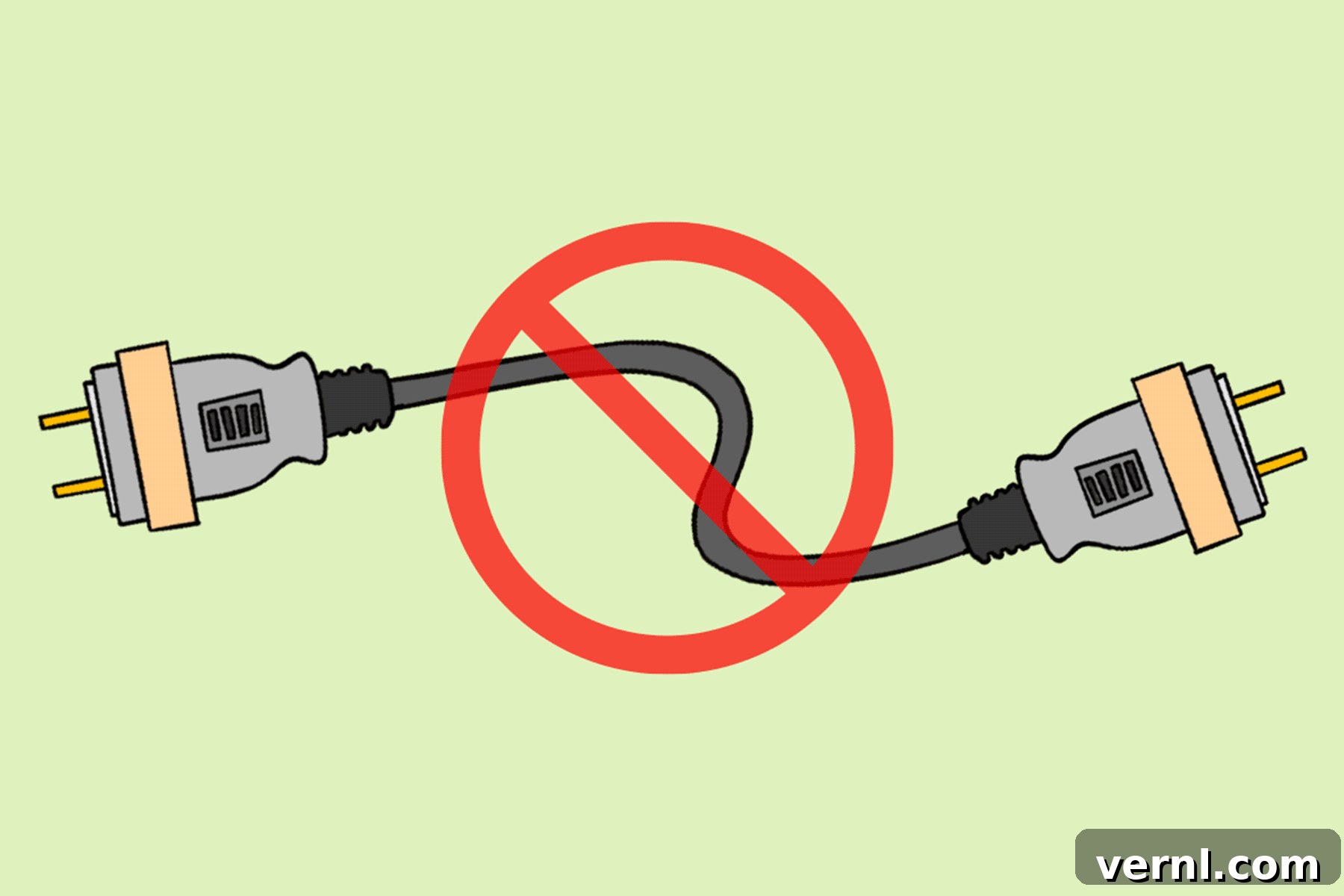
The dangers associated with male-to-male cords are not confined to the immediate vicinity of the cord itself or within your home. One of the most critical and often overlooked risks is the phenomenon known as “back-feeding” electricity into the main power grid. This highly hazardous scenario most commonly arises when individuals attempt to power their homes from a portable generator by plugging a male-to-male cord directly from the generator into a wall outlet in their house.
When you back-feed power, you are essentially sending electricity from your generator back out onto the utility company’s power lines. This action is incredibly dangerous, particularly during power outages when utility workers might be actively working on those very lines, under the assumption that they are de-energized. A live line due to back-feeding can lead to severe injury, permanent disability, or even fatality for utility linesmen. As WG Hickman warns, this “illegal and dangerous” method risks not only damaging home circuits and causing fires but also inflicting “injury to utility workers.”
Furthermore, back-feeding can cause significant damage to your home’s delicate electrical system, your generator itself, and even impact neighboring properties by sending unstable power surges through the grid. It represents a clear violation of all electrical codes and carries substantial legal liabilities. The practice is illegal in virtually all jurisdictions and can lead to hefty fines, civil lawsuits, and criminal charges in the event of injury or death.
Safe, Legal, and Responsible Alternatives: Powering Your Home and Lights
Fortunately, safe and legal alternatives exist for every situation where someone might be tempted to use a male-to-male electrical cord. Prioritizing safety over perceived convenience is paramount for protecting lives and property.
For Temporary Power and Outdoor Lighting (e.g., Christmas Lights):
- Re-stringing Lights: For incorrectly strung Christmas lights, the simplest, most cost-effective, and safest solution is almost always to re-string them correctly so that the male end is positioned near the electrical receptacle. While it might require a little extra time and effort, it completely eliminates the profound dangers associated with improvised connections.
- Proper Extension Cords: Always use appropriately rated outdoor extension cords that are clearly marked for outdoor use, free from any damage (fraying, cuts, exposed wires), and properly grounded. Ensure all connections are secure, tight, and protected from moisture, using weatherproof covers where necessary.
- Portable Power Stations: As WG Hickman sagely advises, “Portable power stations can offer a safe and flexible way to get power without complex wiring or dangerous cords.” These self-contained, battery-powered units are ideal for temporary setups, remote areas, or situations where permanent outlets are scarce. They provide clean, stable power and are inherently safe as they do not connect directly to your home’s permanent wiring or the utility grid. They are excellent for powering lights, small appliances, and charging devices.
- Battery-Powered Lights: For decorative lighting needs, consider investing in battery-operated LED lights. These require no external power source, offering maximum flexibility in placement and completely eliminating electrical hazards.
For Emergency Home Power from a Generator:
If you intend to use a standby or portable generator to provide emergency power to your home during an outage, the only safe and legal methods involve installing a transfer switch or an interlock kit. These specialized devices are engineered to prevent the dangerous act of back-feeding and ensure your generator safely powers your home’s circuits without endangering utility workers or your electrical system.
- Transfer Switches (Manual or Automatic): A transfer switch is a critical safety device installed by a qualified, licensed electrician directly into your home’s main electrical panel. When correctly installed, it provides a safe, direct connection for your generator and effectively isolates your home’s electrical system from the utility grid during an outage. “It will route power to essential circuits without creating hazardous connections,” advises Hickman, emphasizing its role in preventing “back feeding into the grid, which can be deadly to utility workers and others.”
- Manual Transfer Switch: This type requires you to manually switch your home’s power source from the utility grid to the generator, and vice-versa, when power is restored. It’s a robust, reliable, and highly effective solution for most homeowners.
- Automatic Transfer Switch (ATS): Typically used with permanently installed standby generators, an ATS automatically detects a power outage, starts the generator, and seamlessly switches your home’s power supply from the utility to the generator. When utility power is restored, it automatically switches back to grid power and shuts down the generator.
- Generator Interlock Kits: An interlock kit is a mechanical device that is installed on your electrical panel, designed to physically prevent your main utility breaker and your generator’s dedicated breaker from being “on” simultaneously. This mechanism physically ensures that your home cannot receive power from both the utility grid and your generator at the same time, thereby preventing dangerous back-feeding. While often a more cost-effective option than a full transfer switch, an interlock kit must also be installed by a licensed electrician to ensure compliance with all local and national electrical codes and to guarantee its proper, safe function.
Regardless of whether you choose a transfer switch or an interlock kit, professional installation by a licensed electrician is not merely recommended but absolutely non-negotiable for any generator hookup. This ensures that the system is installed correctly, meets all stringent local and national electrical codes, and, most importantly, guarantees the utmost safety for your household and the brave utility workers who maintain our power infrastructure.
General Electrical Safety Best Practices for Every Home
Beyond the critical avoidance of male-to-male cords, adopting a comprehensive approach to general electrical safety is vital for every household:
- Always use electrical cords, extension cords, and power strips that are certified by recognized testing laboratories (such as UL, ETL, CSA) and are appropriately rated for their intended electrical load and environment.
- Regularly inspect all power cords and wiring for any signs of damage, such as fraying, cuts, exposed wires, or discoloration. Immediately replace any damaged cords.
- Never overload electrical outlets. Avoid the dangerous practice of “daisy-chaining” multiple power strips or extension cords together, which can quickly lead to overheating and fire hazards. Use surge protectors for sensitive electronics to prevent damage from power fluctuations.
- Ensure all outdoor electrical connections are weatherproof, protected from the elements, and ideally connected to Ground Fault Circuit Interrupters (GFCIs) to prevent severe shock hazards in wet conditions.
- Keep all electrical appliances and cords away from water sources, including sinks, bathtubs, and damp floors.
- Educate all members of your household, especially children, about the dangers of electricity. Teach them not to play with electrical outlets, cords, or appliances.
The severe dangers associated with male-to-male electrical cords are entirely preventable. By understanding why these “suicide cords” pose such profound risks and by actively choosing safe, compliant, and professionally installed alternatives, you can effectively protect your home, your loved ones, and the dedicated utility workers from potentially catastrophic accidents and electrical tragedies.
About the Expert
- WG Hickman founded Mississippi-based Tri-County Air Service in 2005 and currently owns and operates the business.
Sources
- Hassett Hardware: Can You Buy Double Male Extension Cords? And Why You Should Never Use Them; 2024.