
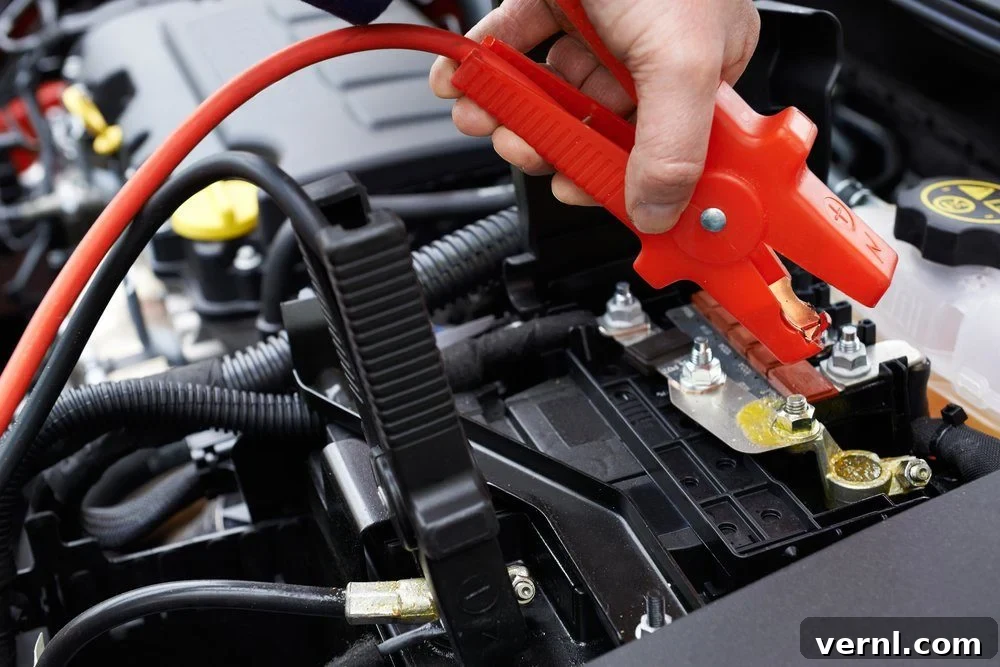
Troubleshooting: Why Your Car Won’t Start Even After a Jump Start
Experiencing a dead car battery is an all-too-common inconvenience. Factors like plummeting cold temperatures, the natural aging of the battery, or simply forgetting to switch off your headlights overnight are frequent culprits. Typically, a quick jump start is enough to breathe new life into your engine, signaling that a mere drained battery was the extent of your troubles.
However, what happens when your car stubbornly refuses to respond, even after connecting the jumper cables correctly? If your vehicle remains silent or struggles to turn over, it suggests a more profound issue than just a temporary power loss. In such scenarios, your battery might be completely discharged, irreversibly damaged, or another component within your car’s intricate system could be failing.
“A jump start isn’t a miracle cure, and it certainly won’t fix underlying mechanical issues,” cautions Kevin Oliff, general manager at AutoNation BMW Buena Park. “While it’s common for a deeply drained battery to resist an initial jump, the problem often lies deeper. It could be that the battery is completely discharged beyond recovery, heavily sulfated, or has sustained physical damage. If your battery is truly ‘toast,’ even the best jumper cables in the world won’t be able to revive it.”
This comprehensive guide delves into the various mechanical and electrical issues that can prevent your car from starting, even when attempting a jump start. We’ll explore common culprits and provide insights into diagnosing whether your battery is simply DOA or if another component is failing. Understanding these potential problems can save you time, money, and frustration.
Safety First: Essential Precautions Before You Begin
Before attempting any diagnostic work or handling a car battery, your safety is paramount. Always consult your vehicle’s owner’s manual for specific instructions and safety guidelines related to jump-starting or working around your car’s electrical system. Remember, a car battery contains sulfuric acid, a highly corrosive substance that can cause severe chemical burns. Furthermore, improper handling can lead to sparks, fires, or even battery explosions.
Therefore, it is crucial to always wear appropriate personal protective equipment (PPE), including heavy-duty gloves and eye protection, such as safety glasses or goggles, when working around a battery or jump-starting a car. Should you come into contact with battery acid, immediately flush the affected area with copious amounts of water for at least 15-20 minutes and seek immediate medical attention. Your health and safety should never be compromised.
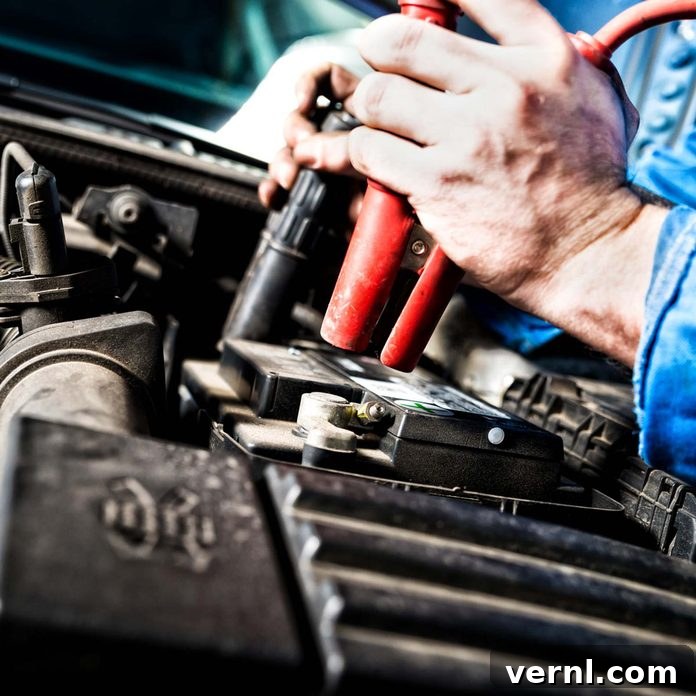
Common Reasons Your Car Won’t Start After a Jump
The Battery Itself: Beyond Just Being Drained
While a jump start is designed to provide enough temporary power to a drained battery to get the engine running, it can’t fix a fundamentally compromised battery. Car batteries do not last forever; their lifespan typically ranges from three to five years, heavily influenced by factors such as climate extremes (both hot and cold), driving habits, and maintenance. If your battery is older than five years, it’s a prime suspect.
Even if it’s not old, an internal short circuit or a defective cell within the battery can prevent it from accepting or holding a charge, rendering a jump start futile. Sulfation, the buildup of lead sulfate crystals on the battery plates, is another common issue, especially in batteries that have been left discharged for extended periods. This sulfation hardens the plates, drastically reducing the battery’s capacity to store and release energy. Physical damage, such as a cracked case or leaking acid, can also lead to complete battery failure. In these scenarios, the only viable solution is a new battery, as a jump start cannot magically repair internal damage or restore lost capacity.
Corroded or Loose Battery Terminals
Even a perfectly healthy battery can appear dead if its connections are compromised. Take a moment to visually inspect the condition of your battery terminals. You might notice a fuzzy, powdery, blue-green, or white substance covering the posts and cable clamps. This is corrosion, and it acts as an insulator, severely restricting the flow of electrical current between the battery and the rest of the car’s electrical system. Similarly, if the terminal connections are loose, the intermittent contact will prevent a consistent and strong electrical connection.
Without adequate electrical flow, your car won’t start, even with a powerful jump. To remedy this, ensure the engine is off and the key is removed. Carefully disconnect the cables (negative first, then positive), clean the corrosion thoroughly using a wire brush and a specialized battery terminal cleaner (or a baking soda and water solution), and then securely re-tighten the bolts. An often-overlooked area is the “ground” side of the negative battery cable, where it bolts to the engine block or chassis. Make sure this connection is also clean, tight, and free from rust or corrosion, as a poor ground connection is a frequent cause of electrical issues.
Failing Alternator: The Car’s Power Generator
The car battery is primarily for starting the engine. Once the engine is running, the alternator takes over, supplying power to the vehicle’s electrical system and, crucially, recharging the battery. If your alternator is failing, it won’t be able to perform these vital functions. This means that even if a jump start gets your car running, the battery won’t be recharged, and the car will soon die again once the minimal charge from the jump is depleted. The battery warning light on your dashboard is a key indicator of an alternator problem.
Symptoms of a failing alternator extend beyond just a dead battery. You might notice your headlights dimming excessively, especially when stopped or at low speeds, or other electrical accessories like the radio or power windows behaving erratically. Strange noises, such as a whining or grinding sound coming from under the hood, can also indicate a failing alternator bearing. A loose, worn, or slipping drive belt that connects the alternator to the engine’s crankshaft will also prevent the alternator from generating sufficient power. If you suspect an alternator issue, it’s wise to have a professional mechanic check the condition of the alternator before simply replacing the battery, as a new battery will quickly fail if the alternator isn’t charging it.
Defective Starter Motor: The Engine’s First Push
The starter motor is responsible for “cranking” or turning over the engine to initiate the combustion process. It draws a significant amount of energy from the battery to perform this action. If the starter motor itself is defective, it won’t be able to spin the engine, regardless of how much power your battery or jumper cables supply. A common symptom of a faulty starter is hearing a single, loud click, multiple rapid clicks, or a grinding sound when you turn the key or push the start button, without the engine actually turning over.
If you get no sound at all, but your dashboard lights and other accessories are working normally, it’s also a strong indicator of a starter issue. The starter solenoid, which is often integrated with the starter motor, can also fail, preventing the starter from engaging. Unlike a dead battery, which usually results in dim lights and no cranking sounds, a bad starter typically allows other electrical components to function while preventing the engine from turning. Unfortunately, a faulty starter is not a DIY fix for most and requires a visit to the repair shop for replacement.
Faulty Neutral or Clutch Safety Switch
Modern vehicles are equipped with safety switches designed to prevent accidental starting. In cars with automatic transmissions, the engine will only crank if the gear selector is firmly in Park (P) or Neutral (N). This is controlled by the neutral safety switch. Similarly, on manual transmission vehicles, a clutch safety switch requires the clutch pedal to be fully depressed before the engine can engage. These mechanisms are crucial safety features to prevent the car from lurching forward or backward unexpectedly.
If either of these safety switches is damaged, worn out, or fails, the electrical circuit that allows the starter to engage will remain open. This means that even if your battery is perfectly fine and capable of cranking the engine, the car’s computer won’t receive the signal to allow the starting process, and your engine won’t turn over, even with a jump start. Sometimes, simply wiggling the gear shifter (for automatics) or ensuring the clutch pedal is pressed all the way to the floor can temporarily help, but a consistently failing switch needs professional attention.
Blown Fuses or Faulty Relays
Your car’s electrical system is protected by a network of fuses and controlled by various relays. A blown fuse in a critical circuit, such as the ignition system, fuel pump, or starter solenoid, can prevent the car from starting. Fuses are designed to blow and break the circuit when an electrical overload occurs, protecting more expensive components. Similarly, relays act as electrical switches, controlled by a small current to switch a larger current. A faulty relay (e.g., the starter relay or fuel pump relay) can prevent the necessary power from reaching its intended component.
If your car shows no signs of life, or if specific components (like the fuel pump not priming) are not working, checking the relevant fuses and relays in the under-hood fuse box and under the dashboard can be a good diagnostic step. A visual inspection of fuses for a broken wire or testing relays with a multimeter can sometimes pinpoint the problem. However, diagnosing intermittent relay failures can be challenging and may require professional expertise.
Fuel System Issues
While often associated with an electrical problem, a car needs three things to start: air, fuel, and spark. If your engine cranks over but simply won’t “catch” and start running, the issue might not be electrical at all, but rather a problem with the fuel delivery system. This is especially relevant if you hear the starter working perfectly but the engine just spins without firing up.
Common fuel system culprits include an empty fuel tank (surprisingly common to overlook!), a clogged fuel filter preventing fuel from reaching the engine, or a failing fuel pump that isn’t delivering fuel under sufficient pressure. Symptoms can include the engine cranking but not starting, sputtering, or a strong smell of gasoline without ignition. While a jump start won’t solve a fuel delivery issue, understanding this distinction helps in proper diagnosis.
Ignition System Problems
Just like fuel, a spark is essential for combustion. If your engine cranks but doesn’t start, or starts roughly and then dies, the ignition system could be at fault. This system is responsible for creating the spark that ignites the fuel-air mixture in the cylinders. Problems here are distinct from a dead battery and would not be resolved by a jump start.
Potential issues include worn-out or fouled spark plugs, faulty ignition coils (one for each cylinder or a coil pack), or problems with the distributor (in older vehicles). Symptoms often include a cranking engine that just won’t fire, misfires if it briefly catches, or a rough idle. Diagnosing ignition problems usually requires specific tools and knowledge, making it another area where professional help is often recommended.
Incorrect Jumper Cables or Improper Technique
Sometimes, the problem isn’t the car, but the method. Connecting jumper cables improperly is not only dangerous but will almost certainly prevent a successful jump-start. Incorrect polarity (connecting positive to negative) can damage electrical components in both vehicles. Furthermore, not all jumper cables are created equal. Cables that are too long, too thin (low gauge), or made of inferior materials have excessive internal resistance. This resistance limits the amount of current they can carry, making them ineffective for transferring enough power to a deeply discharged battery or starting a larger engine.
Even if the battery hasn’t completely discharged, poor quality cables or incorrect connections—such as loose clamps on the terminals—can prevent the necessary current flow. Investing in a set of quality jumper cables (typically 4-gauge or 2-gauge for robust performance) and meticulously following the correct connection sequence (positive to positive, negative to a grounded metal part away from the battery on the dead car) are crucial for a successful jump and for avoiding potential hazards.
FAQ: Your Questions Answered
What should I do after successfully jumping the battery?
Congratulations on getting your car started! The immediate next step is to allow the alternator to recharge the battery. Let the car run for at least 15 to 30 minutes, ideally taking it for a drive at highway speeds. Driving at higher RPMs and consistent speeds is more effective for recharging the battery than simply letting it idle, as the alternator operates more efficiently under these conditions.
As Duane “Doc” Watson, a technical trainer at Bosch Mobility Aftermarket, advises, “Pay close attention to your car over the next few days. If it continues to start without issue, that’s a very good sign that the battery simply needed a boost. However, if you experience stalling, dimming lights, or find yourself needing another jump, it’s a clear indication that a deeper issue is at play that needs immediate professional attention.” It’s often a good idea to have your battery and charging system tested soon after a jump to confirm everything is in good working order.
How can I know for sure that a battery is fully dead?
Determining if your battery is irrevocably dead rather than just discharged involves a few diagnostic steps. If your car won’t start even after multiple jump attempts, or if it starts but won’t hold a charge for more than a few hours, or if the voltage drops quickly after being fully charged, these are strong indicators of a terminal battery failure. Visual inspection can also reveal critical clues: look for excessive corrosion, a swollen or bulging battery case (often a sign of internal damage or overcharging), or leaking battery fluid around the terminals or case.
For a more precise diagnosis, you can test it yourself with a multimeter. A healthy, fully charged car battery should read around 12.6 volts when the engine is off. A reading significantly lower than this, especially after attempting to charge it, suggests a problem. Most local mechanics or auto parts stores offer free battery testing services, which often include a load test to evaluate the battery’s ability to maintain voltage under demand. This is the most reliable way to confirm its health.
Watson adds, “Always check your dashboard lights. If the battery warning light illuminates and stays on while driving, even after a jump, it often signals an issue with the charging system, possibly the alternator, or a fundamental battery problem. Car batteries typically last about three to five years, so if yours falls outside this range, it’s a strong candidate for replacement. When looking for a replacement, prioritize reputable brands like Bosch S5 batteries that offer extended warranties and promise longevity.” Consider batteries designed for your specific climate and driving conditions to maximize their lifespan.
About the Experts
- Duane “Doc” Watson is a technical trainer at Bosch Mobility Aftermarket. With over 45 years of unparalleled experience in automotive repair, he has trained thousands of technicians across the industry and is the recipient of numerous prestigious awards, including Chevrolet Technician of the Year and Buick Service Master of the Year, solidifying his status as a leading authority in automotive diagnostics and repair.
- Kevin Oliff serves as the general manager at AutoNation BMW Buena Park in California. His extensive career spans more than 20 years in the automotive field, providing him with deep expertise in vehicle maintenance, service operations, and customer satisfaction within the high-performance luxury car segment.