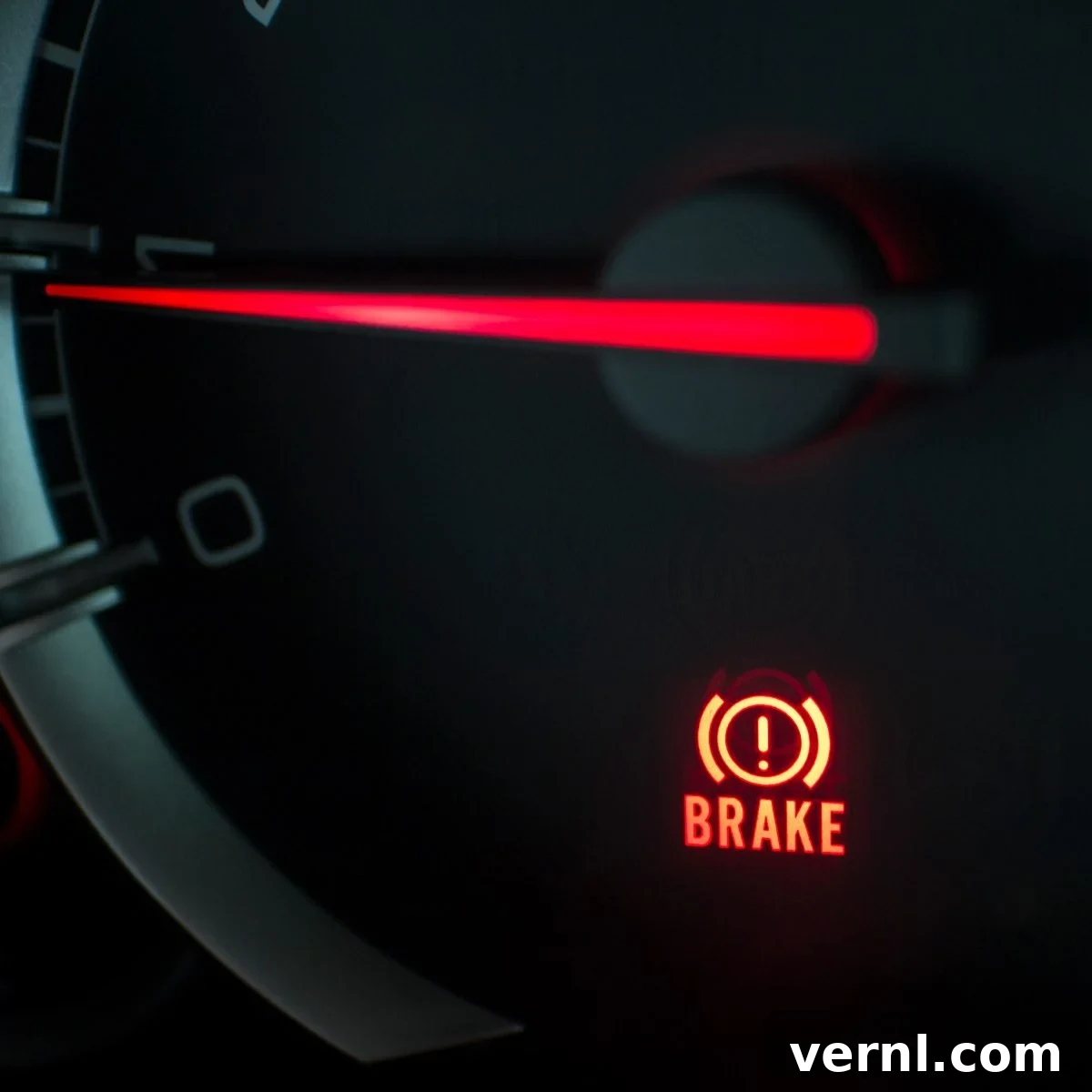
Understanding Your Brake Light: What an Illuminated Warning Means
Few dashboard warnings are as critical as an illuminated brake warning light. When this red or amber indicator lights up, it’s your car’s way of telling you there might be a problem with one of its most vital safety systems: your brakes. While it’s natural to feel a pang of concern, the most important thing is to take it seriously and understand the potential causes, which range from simple oversight to more significant mechanical issues. Ignoring this warning could compromise your ability to stop safely, putting yourself and others at risk. This comprehensive guide will walk you through the common reasons your brake light might be on, helping you diagnose the problem and understand when it’s time to seek professional assistance.
The Simplest Explanation: An Engaged Parking Brake
Before diving into more complex scenarios, start with the most common and often easiest fix: your parking brake. It might seem like a “duh” moment, but it’s surprising how often drivers inadvertently leave the parking brake, also known as the emergency brake or handbrake, partially or fully engaged. Modern vehicles are equipped with a sensor that detects when this brake is activated, triggering the dashboard light as a reminder. This safety feature is designed to prevent you from driving with the brake on, which can lead to excessive wear on brake components, overheating, and a significant reduction in braking effectiveness. If your brake light suddenly appears, the first step should always be to ensure the parking brake is completely disengaged. For lever-style parking brakes, firmly depress the release button and lower the lever all the way. For pedal-activated parking brakes, push the pedal down completely until it releases. In the vast majority of cases, this simple action will extinguish the warning light, allowing you to continue your journey with peace of mind. If the light persists after confirming the parking brake is off, then it’s time to investigate further.
Low Brake Fluid Levels: A Sign of a Deeper Issue
Next on the troubleshooting checklist is your vehicle’s brake fluid level. Brake fluid is a non-compressible hydraulic fluid that transmits the force from your foot on the brake pedal to the brake calipers or wheel cylinders, ultimately stopping your car. Under normal operating conditions, your vehicle’s hydraulic braking system is sealed, meaning you should rarely, if ever, need to add brake fluid. Therefore, a low brake fluid level almost invariably indicates a problem, most commonly a leak somewhere within the system. As fluid escapes, the pressure required to operate the brakes diminishes, severely impairing their stopping power. You can usually check the brake fluid reservoir, typically a translucent plastic container located under the hood, mounted on the driver’s side firewall. It will have clear “MIN” and “MAX” lines. If the fluid level is below the minimum mark, it’s a critical warning sign.
While adding brake fluid can serve as a temporary stop-gap to restore some braking function, it does not address the underlying issue. A leak in your pneumatic braking system is a serious concern that demands immediate professional attention. Driving with a known leak is extremely dangerous, as you risk losing enough fluid to cause complete brake failure, potentially leading to catastrophic consequences. Different types of brake fluid (DOT 3, DOT 4, DOT 5.1) are not always compatible, so always consult your owner’s manual for the correct type. However, the primary focus should be on diagnosing and repairing the leak, not just topping off the fluid, to ensure the long-term safety and reliability of your braking system.
Worn Brake Pads: A Common Culprit
Another prevalent reason for an illuminated brake warning light, especially in newer vehicles, is excessively worn brake pads. Modern cars often incorporate wear sensors, either electronic or mechanical, into their brake pads. These sensors are designed to trigger a warning light (sometimes the general brake light, sometimes a separate pad wear indicator) when the friction material on the pads has worn down to a critical level. Once the pads become too thin, their ability to dissipate heat and effectively stop your vehicle is significantly reduced, leading to longer stopping distances and potential damage to the brake rotors. You might also notice other symptoms of worn pads, such as a squealing or grinding noise when braking, a pulsating brake pedal, or a general reduction in braking performance. While you might be able to visually inspect your brake pads through the wheel spokes, a definitive diagnosis often requires removing the wheels and examining the pads more closely. Replacing worn brake pads and, if necessary, resurfacing or replacing the rotors is a standard maintenance procedure that should be addressed promptly to maintain optimal braking safety and performance.
Faulty Sensors or Electrical Issues
Sometimes, the problem isn’t with the brakes themselves but with the system designed to monitor them. Just like “Check Engine” lights, brake warning lights can sometimes illuminate due to a faulty sensor or an electrical issue within the warning system. The sensors that trigger the brake light can degrade over time, suffer damage from road debris, or develop internal electrical faults. Similarly, the wiring connecting these sensors to your vehicle’s onboard computer, or even the dashboard light itself, can experience issues. It’s crucial not to assume a bad sensor or a false indication at the onset of the light, as the other potential causes are much more critical. However, if you’ve ruled out the parking brake, low fluid, and excessively worn pads, and your brakes feel perfectly normal, then investigating the indicator light system itself becomes a logical next step. A professional technician can use diagnostic tools to test the brake fluid level sensor, parking brake switch, and wiring for continuity and proper operation. While a faulty sensor isn’t an immediate safety hazard in the same way as a fluid leak, it can lead to complacency and prevent you from being alerted to a real brake problem in the future, so it should still be addressed.
ABS (Anti-lock Braking System) Concerns
Many modern cars are equipped with an Anti-lock Braking System (ABS), a crucial safety feature that prevents your wheels from locking up during hard braking, allowing you to maintain steering control. Most ABS systems have their own dedicated indicator light (often labeled “ABS”). However, in some vehicles or for certain ABS-related malfunctions, the general brake warning light may also illuminate alongside the ABS light, or even by itself if the fault is interpreted as a broader brake system issue. ABS systems rely on a network of sensors, primarily wheel speed sensors, which monitor the rotational speed of each wheel. These sensors feed data to an ABS control module, which is essentially a specialized computer within your car’s overall system. If any of these sensors fail, if the ABS module itself malfunctions, or if there’s an issue with the ABS pump or valve body, the system will often deactivate and trigger a warning light.
Dealing with ABS issues typically requires specialized diagnostic equipment. A standard mechanic might not have the tools to properly read the specific fault codes generated by the ABS module. Automotive service centers equipped with advanced diagnostic scanners can connect to your car’s On-Board Diagnostics II (OBD-II) port to retrieve these specific codes. These codes provide valuable clues about the nature and location of the fault, such as a faulty wheel speed sensor, a problem with the ABS hydraulic unit, or a communication error. While a malfunctioning ABS system doesn’t mean your conventional brakes will fail entirely, it does mean you lose the crucial anti-lock functionality, potentially increasing stopping distances and reducing control during emergency braking. Therefore, an illuminated ABS light, especially when accompanied by the general brake light, should be addressed by a professional without delay.
Empowering the Home Mechanic: Diagnostic Tools
For the very dedicated home mechanic, investing in your own OBD-II code reading device can be a valuable asset. These devices connect to your car’s diagnostic port (usually located under the dashboard on the driver’s side) and can retrieve Diagnostic Trouble Codes (DTCs) that the car’s computer has stored. They range from basic models that simply give you a numeric readout, which you then look up in a manual or online database, to more sophisticated scanners that display a brief description of the code issue, live data, and even allow for some basic system resets. While a code reader can provide helpful insights, especially for engine-related codes, it’s important to remember its limitations for complex brake systems. ABS codes often require more advanced scanners, and the presence of a code doesn’t always pinpoint the exact faulty component. It’s a diagnostic aid, not a replacement for expert mechanical knowledge.
When to Seek Professional Help
While some brake light causes, like a partially engaged parking brake, can be easily resolved at home, it’s crucial to recognize when a problem warrants professional intervention. Given that brakes are arguably the most important safety feature on your car, any persistent brake warning light should be treated with utmost seriousness. If you’ve checked the parking brake and the light remains on, or if you suspect low brake fluid, worn pads, or an ABS system fault, it’s time to consult a certified mechanic. They possess the expertise, specialized tools, and diagnostic equipment to accurately identify the root cause of the problem and perform the necessary repairs safely and effectively. Attempting to fix complex brake system issues without proper training and tools can be dangerous and may lead to further damage or, more critically, brake failure. Don’t compromise your safety; when in doubt, always have your vehicle inspected by a qualified professional.
Conclusion: Prioritizing Your Safety
Your car’s dashboard warning lights are designed to communicate vital information about your vehicle’s health and safety. The brake warning light is among the most important of these indicators. Whether it’s a simple reminder about the parking brake, a critical alert about low fluid, a signal for worn pads, or an indication of an ABS malfunction, it demands your attention. Promptly addressing an illuminated brake light is not just about keeping your car running smoothly; it’s about safeguarding your life and the lives of your passengers and fellow road users. Understand the potential meanings behind this warning, act decisively, and don’t hesitate to seek professional help when the situation calls for it. Your safety on the road depends on a fully functional and reliable braking system.
Cars have many warning lights. Learn what they mean.
Is your Check Engine or oil light on? Here’s what to do next.