Moles in Your Yard: Identification, Damage, and Removal
Moles, with their underground lifestyle, are often unseen. While their eyesight is limited, they’re not blind. They’re adept at detecting light, crucial for understanding day and seasonal changes. Their heightened senses, particularly their sensitive snouts and claws, compensate. Moles possess the unique ability to smell in stereo, with each nostril operating independently! This guide explores why moles invade your yard, how to spot an infestation, effective removal strategies, and more.
What Do Moles Look Like? Key Physical Characteristics
Although they may be mistaken for rodents, moles are more closely related to hedgehogs and shrews. Rarely seen above ground, here’s what to look for:
- Fur: Colors range from black, brown, and orange to gray. Albino moles with white fur also exist.
- Size: Small and stout, typically measuring four to seven inches in length.
- Front Feet: Long, curved front feet with powerful claws, perfectly designed for tunneling, contrasting with smaller back feet.
- Tail: Short in length.
- Fur Texture: Fur that stands upright, allowing dirt to easily slide off while digging.
- Eyes and Ears: Small and largely concealed.
Fun Fact: Moles boast exceptional hearing. They can detect insects dropping into their tunnels and accurately gauge the distance!
Why Moles Are Attracted to Your Yard: Understanding Their Habitat
Certain yard features make your property a prime target for mole activity:
- Loose Soil: Commonly found in fields, meadows, and shaded wooded areas, making digging easier.
- Food Sources: An abundance of insects, particularly white grubs, earthworms, millipedes, and snails. Moles consume an amount of insects equal to their weight daily.
- Fungi: Fungi can also be a food source for moles.
Identifying a Mole Infestation: Signs of Mole Activity
According to Meg Pearson, Technical Training Manager at Critter Control, “Moles primarily feed on insects and earthworms beneath the surface. Mole damage is directly related to their tunneling behavior.”
Moles are most active in spring and fall and after rainfall when the soil is easier to dig. Watch for these signs of mole presence:
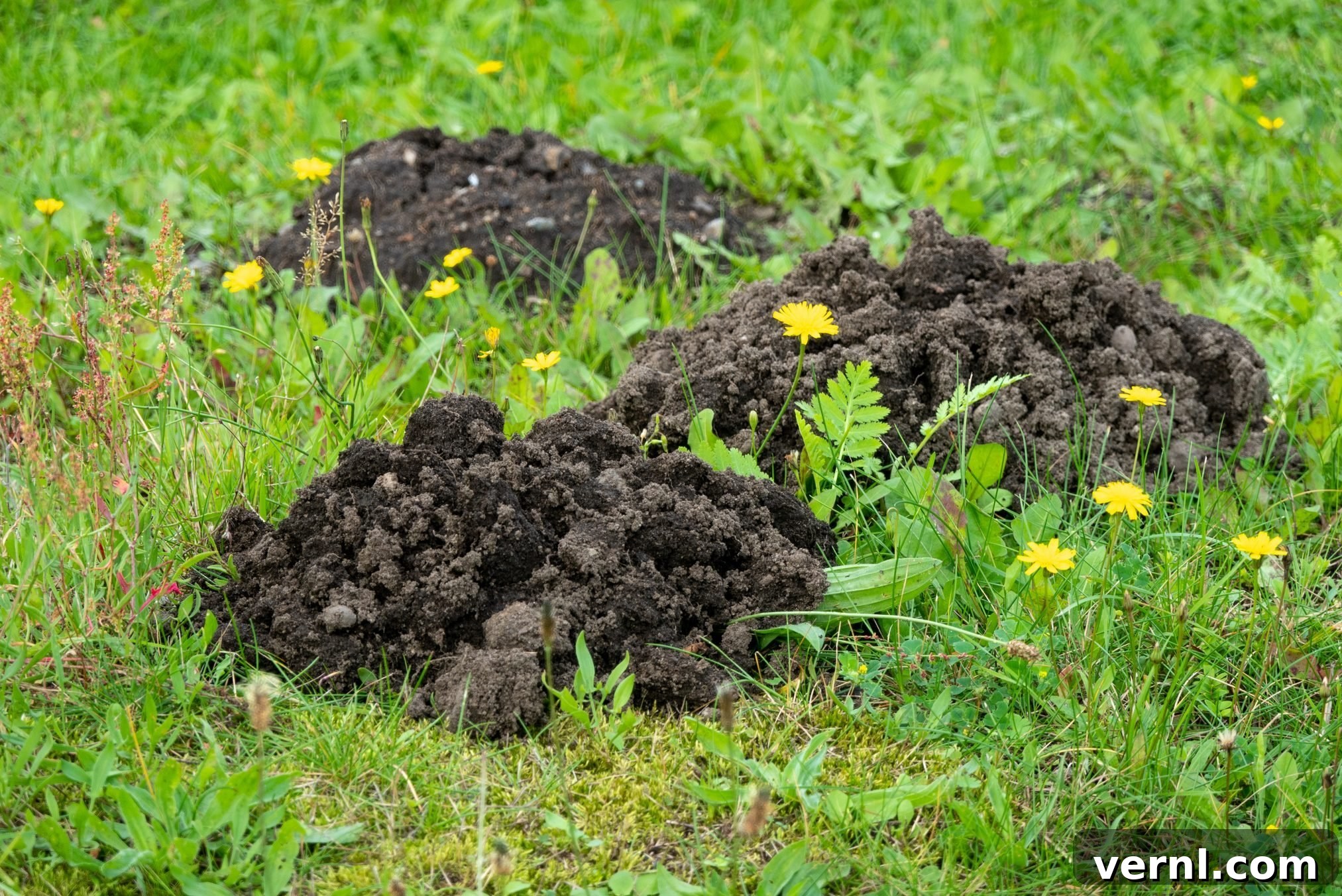
- Shallow Tunnels: Raised ridges on or just below the ground surface, with soil mounds at either end and sometimes in the middle. These tunnels create an uneven lawn appearance.
- Squishy Ground: The ground may feel soft or spongy underfoot. After heavy rain, the tunnels can collapse, creating an uneven, unstable surface.
- Mole Hills: Volcano-shaped piles of soil, typically two to six inches high, pushed up as moles burrow for food. These are a clear indicator of mole activity.
- Dead Grass: While moles don’t eat grass roots directly (like voles), their tunneling disrupts the root systems, causing grass to die.
How to Get Rid of Moles in Your Yard: Effective Removal Methods
While moles can be beneficial by consuming insects, insect larvae, and other invertebrates, they can significantly damage the aesthetics of your yard. If you prefer to handle the problem yourself, try these methods:
- Castor Oil Spray: Moles dislike the smell and taste of castor oil. Mix it with water and spray it on your lawn.
- Repellent Plants: Planting flowers like marigolds or daffodils may help deter moles from your yard.
- Flatten Tunnels: Regularly flattening raised tunnels allows you to monitor new activity and identify active areas.
- Professional Pest Control: For persistent problems, consider contacting a pest control expert for safe and effective solutions.
Frequently Asked Questions About Moles
Are Moles Detrimental to My Yard?
Moles don’t consume your plants, but they can significantly detract from your lawn’s appearance. Their extensive digging creates unsightly tunnels and mounds. They can disrupt plant roots and create an uneven surface, which can make lawn maintenance difficult and potentially lead to dry patches or tripping hazards if left unaddressed.
How Can I Determine If Multiple Moles Are Present?
Typically, a single mole is responsible for the majority of the damage. However, if damage spreads rapidly or new mounds appear in different areas quickly, there is a chance of multiple moles. In that case, inspecting your yard thoroughly and acting swiftly is wise.
About the Experts
- Meg Pearson is a Training Manager at Critter Control. She specializes in wildlife management and humane animal removal, and her insights are published in top pest control and lawn care publications.
Sources
- Vanderbilt University: “Researchers find that common moles smell in stereo”
- Healthline: “How to remove moles: Safe home remedies and when to see a doctor”