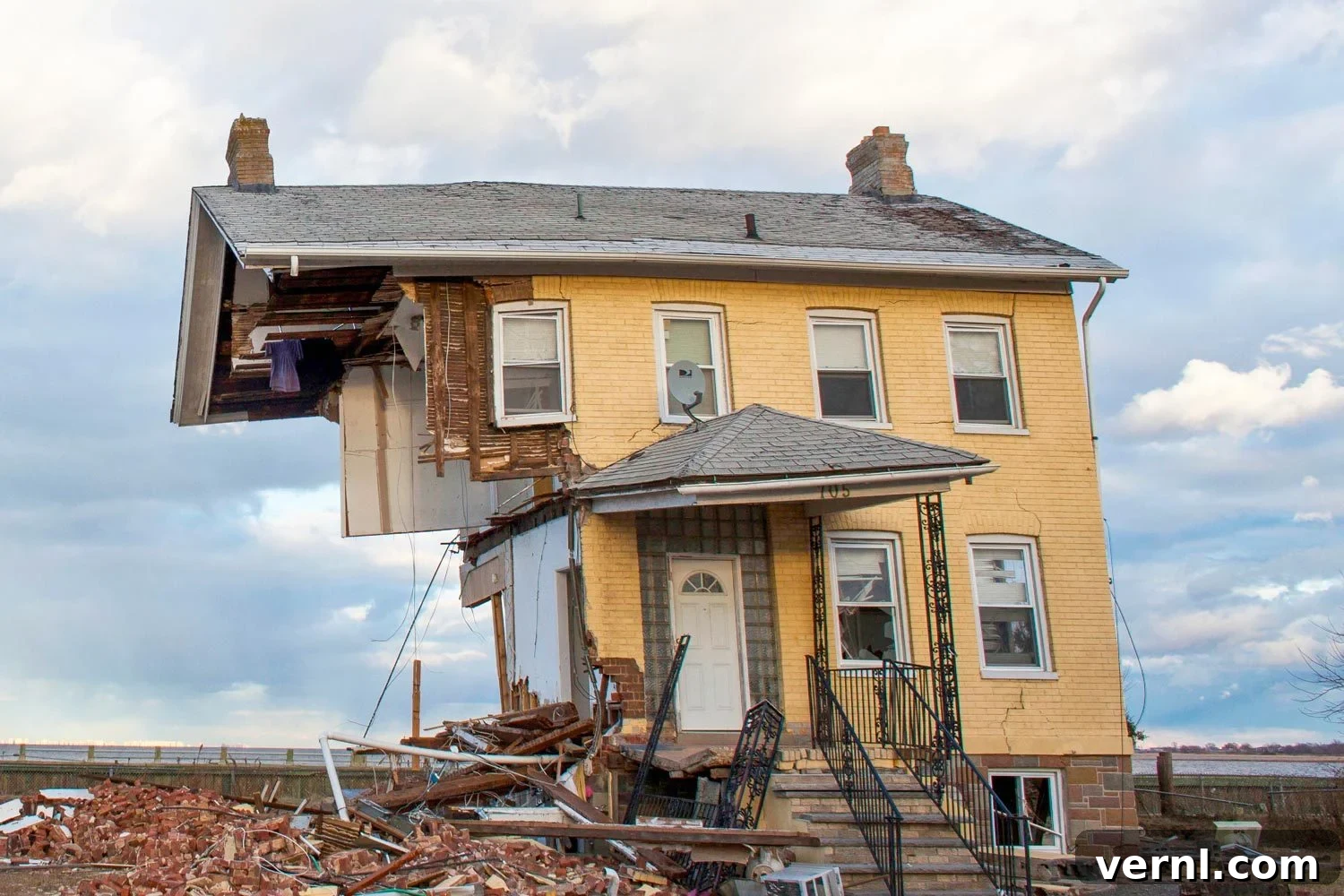
In the face of nature’s formidable and often unpredictable power, the concept of a truly “hurricane-proof” house remains largely mythical. As Mark Buskuhl, the insightful founder and CEO of Ninebird Properties in Dallas, Texas, aptly puts it, no structure can offer absolute immunity against the fiercest storms. This sentiment resonates widely within the construction industry, with most seasoned builders concurring that nature always holds the ultimate trump card. However, the absence of a “hurricane-proof” solution does not leave homeowners defenseless. Buskuhl emphasizes a crucial distinction: “there are certainly measures that can be taken to make a home more resistant to hurricanes and other natural disasters.” This practical perspective forms the bedrock of modern resilient construction, transforming an unattainable ideal into an actionable goal.
Therefore, shifting our focus from the elusive “hurricane-proof” to the achievable “hurricane-resistant” or “hurricane-resilient” becomes a far more realistic and responsible objective when planning new construction or reinforcing an existing property. This paradigm shift acknowledges that while complete invincibility is impossible, significant strides can be made to protect lives, minimize property damage, and accelerate recovery in the aftermath of a devastating storm.
Hurricanes frequently batter the Atlantic seaboard and the Gulf Coast during their designated season, but the threat of extreme weather is by no means confined to these regions. Destructive tornadoes regularly carve paths of destruction across the Great Plains throughout the summer months. Even in areas like California, where atmospheric rivers unleash high winds that can occasionally reach hurricane-force gusts, residents face significant challenges. The escalating realities of climate change further amplify these concerns, threatening to intensify storm severity and expand the geographical reach of dangerous weather phenomena globally. Nonetheless, the Southeast United States, particularly Florida, remains the undisputed epicenter of hurricane activity and, consequently, the forefront of innovation in hurricane-resistant building practices.
The destructive potential of a powerful hurricane, especially a Category 5 storm, is immense and multi-faceted. Winds reaching speeds of over 157 miles per hour can rip roofs from their moorings, shatter windows, compromise a structure’s foundation, and even completely obliterate buildings. Yet, wind is only part of the threat. The often-underestimated perils of flooding, driven by catastrophic storm surges and relentless heavy rainfall, frequently inflict even more widespread and costly damage than the winds themselves. These combined forces underscore the necessity for comprehensive design and construction strategies that address both wind and water resistance.
Recognizing this critical need, various pioneering building companies have dedicated themselves to designing structures capable of withstanding both high winds and high waters. Firms like Ninebird Properties and North Carolina-based Deltec Homes stand out in this field. Deltec, in particular, gained international recognition after Hurricane Dorian ravaged the Bahamas in 2019. Three Deltec-built homes were famously among the very few structures left standing in Marsh Harbour, a testament to the company’s rigorous guidelines and advanced engineering in hurricane-resistant construction. Their innovative approaches are often cited as benchmarks for resilience in vulnerable coastal areas.
What Defines a Hurricane-Resistant House?
A hurricane-resistant house is fundamentally designed to endure the dual threats of extreme winds and substantial flooding. However, its resilience is inextricably linked to its siting. As Mark Buskuhl wisely states, “The location of a home is a crucial element in safeguarding it against hurricanes.” Building in low-lying areas, floodplains, or zones highly susceptible to storm surges inherently elevates the risk of damage, regardless of how robust the structure itself may be. Therefore, selecting an elevated, stable, and strategically chosen site is paramount to a home’s overall survivability and long-term safety.
Beyond location, Buskuhl emphasizes that “the design and construction of the house itself also play a crucial role in determining its overall significance and impact.” While modern building codes have become significantly more stringent, especially in hurricane-prone regions, continuous innovation and proactive measures can further enhance a home’s structural integrity. These advanced measures extend beyond basic compliance. Buskuhl points to essential reinforcements like hurricane straps or tie-downs, which securely anchor the roof to the walls, preventing uplift. Deltec’s approach exemplifies this commitment, incorporating radical design modifications that encompass the very shape of the building, the type of materials employed, and even the precise pitch of the roof, all engineered to deflect and withstand hurricane forces.
Designing for Resilience: Core Principles
Designing a truly hurricane-resistant home involves a holistic approach that considers every element from the ground up. It’s about creating a unified, strong system where each component reinforces the next. The core principles revolve around minimizing points of weakness, channeling destructive forces away from the structure, and ensuring that the building can shed water effectively. This proactive engineering mitigates the cascading failures that often characterize conventional home damage during extreme weather events. It’s a testament to how intelligent design can turn a vulnerable structure into a safe haven.
Essential Features of a Hurricane-Resistant House
Whether you’re safeguarding an existing property or planning new construction in a hurricane zone, incorporating specific features is key to enhancing resilience. For homeowners with existing houses, several vital upgrades can dramatically improve a structure’s ability to withstand a storm. These include reinforcing the roof-to-wall connections with robust hurricane ties and clips, installing hurricane-resistant windows and protective shutters, upgrading the garage door—often a significant point of failure—and diligently sealing any gaps or openings where wind or water could penetrate. Furthermore, maintaining clear gutters and drainage systems is critical to manage the immense volumes of rain runoff associated with hurricanes, preventing water accumulation that can lead to foundation damage or interior flooding.
For new home construction, especially in high-risk areas, adhering to the most stringent building codes, such as those in Florida, provides an excellent foundation for hurricane resistance. Specialized contractors, like Deltec Homes, focus on integrating these particulars into their designs:
- Optimal Home Shape: The geometry of a house significantly impacts its interaction with high winds. Circular or octagonal designs, for instance, naturally deflect wind more efficiently than traditional square or rectangular footprints, reducing concentrated pressure points and minimizing uplift forces.
- Engineered Roof System: The roof is arguably the most vulnerable part of a home during a hurricane. An ideal roof pitch for deflecting wind and preventing lift is generally considered to be 6/12 (a rise of 6 units for every 12 units of run). Multiple rooflines can be advantageous as they help to distribute and direct wind over the roof, rather than creating large, single surfaces prone to uplift. Crucially, keeping roof overhangs short is essential to lessen the leverage wind can exert, preventing it from lifting the roof structure. Beyond shape and pitch, a continuous load path with robust fasteners from the roof sheathing down to the foundation is non-negotiable.
- Reinforced Foundation and Anchoring: An elevated foundation is critical, positioning the main floor above the projected flood level for the specific area. This mitigates flood damage and helps protect the home from storm surge. Securing the roof trusses and wall systems directly to the foundation with continuous metal strapping creates a unified, strong structure. This “continuous load path” ensures that wind forces acting on the roof are transferred down through the walls and securely into the ground, preventing the house from separating from its foundation.
Beyond the Structure: Landscaping and Utilities
Hurricane resistance isn’t solely about the house’s build; it also encompasses its surroundings. Thoughtful landscaping can play a significant role. Choosing native, deep-rooted plants that are less likely to become wind-borne debris is crucial. Avoiding large trees close to the house, or ensuring they are regularly trimmed, minimizes the risk of falling branches damaging the roof or walls. Furthermore, considering how utilities are installed can impact resilience. Burying power lines, for example, can protect against outages caused by falling poles or snapped wires, ensuring essential services remain functional during and after a storm.
What Are Hurricane-Resistant Houses Made Of?
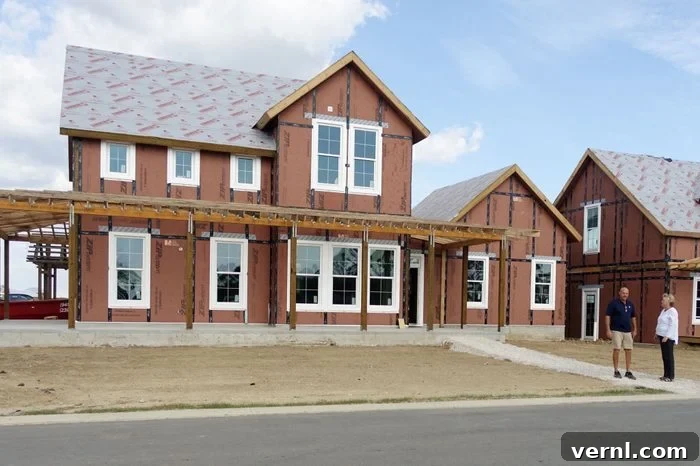
The choice of building materials is fundamental to a home’s ability to resist hurricane forces. Heavy, dense wall materials such as solid concrete, reinforced concrete blocks, or steel framing offer superior wind resistance compared to lighter alternatives like traditional wood framing and plywood. Innovative and sustainable options are also emerging; for example, Nova Scotia-based company JD Composites utilizes composite blocks and timbers made from recycled plastic bottles, claiming they offer even greater wind resistance than conventional materials. These advanced composites provide not only structural integrity but also often come with environmental benefits.
For those who choose to build a stick-framed structure with wood sheathing, material specifications are paramount. Deltec Homes, a leader in hurricane-resistant construction, recommends using five-ply 5/8-inch plywood for sheathing rather than oriented strand board (OSB), which can delaminate when wet and generally offers less impact resistance. For framing lumber in trusses and walls, a minimum of 2,400 psi (pounds per square inch) strength is advised to ensure robust structural performance. Critical to the envelope of the home are hurricane windows, which are designed with impact-resistant glass that will not shatter upon impact, effectively preventing wind and water from entering and pressurizing the structure. This internal pressurization can lead to catastrophic roof failure, making intact windows a non-negotiable component of hurricane resilience.
Advanced Material Technologies
Beyond traditional options, several advanced material technologies are gaining traction in hurricane-resistant building. Insulated Concrete Forms (ICFs), for example, consist of foam forms filled with reinforced concrete, offering exceptional strength, insulation, and soundproofing. Structural Insulated Panels (SIPs), another innovative solution, are high-performance building panels used in floors, walls, and roofs, offering superior insulation and structural integrity. These materials not only contribute to a more resilient home but also often enhance energy efficiency, providing long-term benefits to homeowners.
How Much Does a Hurricane-Resistant House Cost? The Investment in Safety
The cost of building or upgrading to a hurricane-resistant home often represents a significant investment, but it’s one that can yield substantial returns in terms of safety, peace of mind, and long-term financial savings. For those considering modular hurricane-resistant homes, these pre-fabricated structures offer a streamlined and often more controlled construction process. They can be purchased and installed on-site for prices typically ranging from $180,000 to $360,000, depending on the size, floor plan, and level of customization. The average cost for such a home hovers around $270,000. Modular homes are constructed in factory-controlled environments, allowing for superior precision, stricter quality control, and more secure assembly than often achievable with traditional on-site construction. Many are engineered to withstand winds of up to 185 mph. While hurricane windows and shutters may be optional additions, they are highly recommended for optimal protection, adding to the overall cost but significantly enhancing resilience.
Opting for a custom-built hurricane-resistant home from a specialized company like Deltec will naturally command a higher price point. Such custom projects are likely to fall between $175 and $250 per square foot. This cost can be more than double that of constructing a conventional home, reflecting the specialized engineering, advanced materials, and meticulous construction required to meet stringent hurricane resistance standards. However, it’s crucial to view this not merely as an expense but as a vital investment. The upfront cost can be offset by significant savings on insurance premiums, drastically reduced repair costs after a storm, and, most importantly, the invaluable protection of lives and irreplaceable possessions. In hurricane-prone regions, the peace of mind and enhanced safety offered by a resilient home far outweigh the initial investment, making it a wise and responsible choice for long-term homeownership.
Retrofitting Existing Homes: A Cost-Effective Path to Resilience
For homeowners with existing properties, a full rebuild may not be feasible. However, retrofitting offers a cost-effective pathway to significantly enhance hurricane resistance. Implementing measures such as reinforcing roof-to-wall connections, installing impact-resistant windows or storm shutters, strengthening garage doors, and ensuring a robust secondary water barrier under the roof can dramatically improve a home’s ability to withstand high winds and heavy rains. These targeted upgrades often qualify for wind mitigation credits on insurance policies, providing financial incentives for improving home safety and resilience.