Choosing the Perfect Kitchen Cabinet Materials for Your Dream Renovation
Embarking on a kitchen renovation or designing a brand-new culinary space is an exciting endeavor, and one of the most pivotal decisions you’ll face involves your cabinetry. More than just functional components for storage and organization, kitchen cabinets are often the focal point of the room, setting the tone and style for your entire kitchen. Their material choice directly impacts aesthetics, durability, and the overall longevity of your investment.
Thanks to continuous advancements in manufacturing and design, today’s market offers an impressive array of material types and coverings. This innovation has not only empowered experienced DIYers to construct their own high-quality cabinets but has also allowed major retailers like IKEA to provide comprehensive, easy-to-assemble kits. Navigating these options can be overwhelming, which is why we’ve sought the expertise of Nick Yahoodain, CEO of Advanced Builders and Contractors, a seasoned professional in the field of kitchen cabinetry. Yahoodain sheds light on the advantages and disadvantages of each popular kitchen cabinet material, helping you make an informed decision that aligns with your budget, lifestyle, and aesthetic preferences.
From the timeless elegance of solid wood to the budget-friendly versatility of synthetic options, understanding the characteristics of each material is crucial. This comprehensive guide will delve deep into the most common kitchen cabinet materials, offering detailed insights into their composition, performance, maintenance requirements, and overall value. Let’s explore the world of kitchen cabinet materials to help you create a functional, beautiful, and lasting kitchen.
Solid Wood: The Timeless Choice for Durability and Beauty
Solid wood stands as a perennial favorite in kitchen design, renowned for its exceptional durability, inherent strength, and long-lasting nature. Its most distinguishing feature is its natural grain, which provides an authentic, rich aesthetic that is simply unparalleled by other materials. While it typically represents one of the more expensive options for kitchen cabinet materials, Nick Yahoodain emphasizes that the myriad benefits often justify the initial investment, offering significant long-term value.
One of the key advantages of solid wood is its remarkable repairability. Unlike many less forgiving materials, solid wood can be sanded, stained, and refinished relatively easily, allowing it to withstand years of wear and tear and regain its original luster. This makes it an excellent choice for those seeking a cabinet material that can adapt and rejuvenate over time. When selecting solid wood, it’s important to consider the species: harder woods such as hickory, maple, and oak are far less prone to dents and scratches, making them ideal for high-traffic kitchens. Softer species like walnut and mahogany, while beautiful, require a bit more care to preserve their pristine appearance.
It’s worth noting that due to its premium cost, solid wood is usually reserved for visible components such as cabinet faces, doors, and drawer fronts. More affordable and structurally sound materials like plywood are often used for the hidden cabinet boxes and interior shelving to help manage overall project costs without compromising on the exposed beauty and integrity. While solid wood offers incredible beauty and strength, it does demand proper finishing and ongoing maintenance to protect it from moisture, temperature fluctuations, and everyday use. For DIY enthusiasts, achieving a professional-grade finish can be challenging, requiring careful attention to sealing and coating.
Pros: Exceptionally durable and strong. Easily repairable and refinishable. Offers a wide range of natural colors, grain patterns, and wood species. Adds significant resale value to a home. Provides a classic, timeless aesthetic.
Cons: High upfront cost. Requires regular maintenance and proper finishing to prevent warping, cracking, or moisture damage. Can be susceptible to changes in humidity and temperature if not properly sealed.
Plywood: The Robust and Stable Alternative
Plywood is an engineered wood product, meticulously crafted from thin layers of wood veneer, or “plies,” which are cross-laminated and bonded together with strong adhesives under heat and pressure. This unique construction method results in a material that is incredibly sturdy, dimensionally stable, and resistant to warping or shrinking, making it an excellent choice for various cabinet components. Plywood offers a compelling balance between quality and cost, being more affordable than solid wood yet typically more expensive than medium-density fiberboard (MDF) or particleboard.
One of plywood’s significant advantages lies in its versatility and range of grades. Available in grades such as AA, A, B, C, D, and E, the quality and price decrease as you move down the scale. Higher grades (AA, A) feature smooth, blemish-free surfaces suitable for painting or clear finishes, while lower grades may have knots or inconsistencies, making them more appropriate for hidden structural components. For DIYers aiming for a perfectly smooth, paintable surface, AA or A-grade plywood is the recommended choice. Its multi-layered composition provides superior screw retention compared to MDF or particleboard, making it a reliable material for cabinet boxes, doors, and interior walls where fasteners are frequently used.
Plywood’s inherent strength and stability make it a prime candidate for cabinet doors and the structural integrity of interior cabinet walls. It handles moisture better than particleboard, and its robust construction means it can support heavier loads without sagging, a critical factor for shelving filled with dishes or pantry items. While plywood is a step down in price from solid wood, it still represents a significant investment, particularly for higher grades. However, its performance and longevity often justify the cost, providing a durable foundation for your kitchen cabinetry.
Pros: Highly durable and strong. Offers excellent dimensional stability, resisting warping and shrinking. Superior screw-holding capability. More affordable than solid wood. Available in various grades for different applications and budgets. Good resistance to moisture compared to other engineered wood products.
Cons: Generally more expensive than MDF and particleboard. Edges may need finishing (banding or trim) for a clean look. Lower grades can have visible voids or imperfections.
MDF (Medium-Density Fiberboard): The Painter’s Canvas
Medium-density fiberboard, commonly known as MDF, is another prominent engineered wood product that has gained popularity in kitchen cabinetry, particularly for cabinet doors and boxes. It is manufactured by breaking down hardwood and softwood residuals into fine wood fibers, combining them with wax and a resin binder, and then forming panels by applying high temperature and pressure. This process creates a dense, homogeneous, and smooth material, making it an excellent substrate for various finishes.
While MDF may not possess the sheer durability of solid wood or the structural strength of plywood, its smooth, grain-free surface is a dream for painters. “If you are looking for a grainless cabinetry material to paint, MDF is a great option,” confirms Nick Yahoodain. Its uniform texture ensures a flawless, high-quality painted finish without the worry of wood grain bleeding through, making it ideal for sleek, modern, or custom-colored kitchens. This ease of painting often makes MDF a more practical and cost-effective choice for achieving specific aesthetic goals.
However, DIYers should be aware of MDF’s porous nature. It requires proper sealing and priming before painting to prevent excessive water absorption, which can lead to swelling or delamination. Furthermore, due to its dense composition, MDF can be heavy, and its structure makes it challenging, if not impossible, to sand down or effectively repair chips and deep scratches. Any damage is likely to be permanent, necessitating careful handling and use. Despite these considerations, MDF’s resistance to warping and cracking, combined with its smooth finish and lower cost, makes it a valuable material, especially for painted cabinet doors and panels.
Pros: Very low-cost compared to solid wood and plywood. Extremely easy to paint, providing a smooth, flawless finish without grain. Highly resistant to warping, cracking, and shrinking due to its uniform density. Excellent for modern, flat-panel cabinet styles. Readily available and consistent in quality.
Cons: Not as durable as solid wood or plywood, susceptible to impact damage. Cannot be sanded or easily repaired once chipped or scratched. Heavier than plywood. Vulnerable to water damage and swelling if not properly sealed, especially on edges. Poorer screw retention than solid wood or plywood, making re-fastening difficult.
Particleboard: The Economical Foundation
Particleboard, also known as chipboard, is the most budget-friendly of the engineered wood products discussed. It is created by compressing wood chips, sawdust, and synthetic resin under high pressure. While it shares a similar concept with MDF in terms of using wood waste, particleboard is significantly less dense and inherently less strong due to the larger, coarser particles used in its construction. This lack of density and structural integrity limits its application in high-stress areas of kitchen cabinetry.
The primary advantage of particleboard is its affordability, making it an attractive option for homeowners on a very tight budget or for use in concealed parts of cabinetry where strength is not paramount. You’ll commonly find particleboard used for the interiors of base cabinet boxes, drawer bottoms, or shelving in utility areas, often laminated or veneered for aesthetic appeal. However, its inherent weaknesses prevent it from being a suitable material for cabinet doors or highly visible, frequently used components.
Particleboard is notably the least durable material on this list. Its loose, porous construction makes it highly susceptible to water damage, causing it to swell and crumble irreversibly. Furthermore, its ability to hold screws and fasteners is quite poor; while it might accept a screw once or twice, repeated insertion or removal will quickly cause the material to disintegrate around the fastener, compromising the structural integrity. This fragility means particleboard cabinets have a shorter lifespan and are less resistant to the rigors of a busy kitchen. For any part of a kitchen that will see regular use or potential moisture exposure, it is generally advisable to explore more robust alternatives.
Pros: The most affordable kitchen cabinet material option. Environmentally friendly in some cases, as it utilizes wood waste. Lightweight, making it easier to transport and install (though this also contributes to its lack of density).
Cons: Lacks significant durability and strength. Extremely vulnerable to moisture damage, leading to swelling and disintegration. Poor screw and fastener retention, making it unsuitable for frequent disassembly or reassembly. Cannot support heavy loads without sagging. Limited lifespan compared to other materials.
Laminate: The Versatile and Easy-Care Surface
Laminate isn’t a cabinet core material itself but rather a smooth, synthetic plastic covering applied over a substrate, typically plywood or MDF. This versatile covering is a popular choice for cabinet doors and is frequently used for refacing existing cabinets, offering a fresh new look without a complete overhaul. Nick Yahoodain highlights that laminates come in two main types: low-pressure laminate (LPL), often known as melamine, and high-pressure laminate (HPL), sold under well-known brands like Formica and Wilsonart. HPL is significantly more durable, offering greater resistance to impacts and scratches, while LPL provides a more budget-friendly option.
One of the standout features of laminate cabinets is their exceptionally smooth finish, which makes them incredibly easy to clean and maintain with just a wipe. They are highly resistant to stains and moisture, making them practical for the demanding environment of a kitchen. Furthermore, laminate offers an extensive palette of colors, patterns, and realistic faux wood grain or stone textures, providing immense design flexibility to achieve almost any aesthetic from ultra-modern to rustic. This allows homeowners to mimic the look of more expensive materials at a fraction of the cost.
However, DIYers should be aware that painting laminate cabinets is a challenging process. It typically involves thorough sanding, specialized primers, and specific paints designed to adhere to the non-porous plastic surface correctly. Without proper preparation, paint can peel or chip easily. Repairing laminate is also difficult; deep scratches or chips usually cannot be seamlessly fixed, often requiring replacement of the affected panel. Despite these considerations, laminate remains a practical and stylish choice for those seeking an easy-to-maintain, aesthetically versatile, and cost-effective cabinet solution.
Pros: Very easy to clean and maintain. Excellent resistance to stains, moisture, and fading (especially HPL). Low-cost, offering a wide range of aesthetic options. Available in a vast array of colors, patterns, and faux textures (wood, stone). More durable against impacts and scratches than painted surfaces (HPL).
Cons: Challenging to paint or refinish, limiting future aesthetic changes. Difficult to repair deep scratches or chips seamlessly. Can sometimes look less premium or “synthetic” compared to natural materials. Low-pressure laminates (melamine) can be prone to chipping or peeling at edges.
Thermafoil (Rigid Thermofoil – RTF): The Seamless and Affordable Vinyl Option
Thermafoil, often referred to as Rigid Thermofoil (RTF), is another popular cabinet covering, distinct from laminate because it uses a vinyl film rather than plastic. This durable vinyl material is applied by heating a piece of MDF (or sometimes plywood) and then using a vacuum press to seamlessly seal the Thermafoil onto the exterior. This process creates a smooth, continuous surface, wrapping around edges and into grooves, which is particularly appealing for a sleek, modern look or for mimicking specific door styles like shaker without visible seams.
One of Thermafoil’s primary draws is its affordability, often making it a more budget-friendly option than traditional laminate, and significantly less expensive than painted wood or solid wood. The seamless application also means there are no edge bands to peel or chip, providing a clean, contemporary finish that is easy to wipe clean. Its non-porous surface makes it resistant to stains and moisture, contributing to its low-maintenance appeal, which is a significant benefit in a busy kitchen.
However, DIYers should be aware of a few key considerations. While Thermafoil offers a wide array of colors and finishes, allowing for diverse design choices, it shares a common drawback with laminate: it is very challenging to paint. The vinyl surface does not readily accept paint, and any attempt usually requires specialized primers and paints, with no guarantee of a lasting finish. A more significant concern with Thermafoil is its susceptibility to heat. Prolonged exposure to high heat sources, such as those from self-cleaning ovens or dishwashers, can cause the vinyl to delaminate, peel, or bubble, necessitating replacement of the affected door or panel. Despite this, its smooth appearance, ease of cleaning, and economical price point continue to make Thermafoil a popular choice for many homeowners seeking a contemporary and practical kitchen aesthetic.
Pros: Very affordable, often cheaper than laminate. Offers a seamless, smooth finish without visible edge banding. Easy to clean and maintain. Resistant to stains and moisture. Available in a wide range of colors and finishes, including matte, gloss, and faux wood grains. Resists warping and cracking.
Cons: More likely to peel or delaminate than laminate, especially when exposed to high heat (e.g., near ovens, dishwashers). Extremely difficult, if not impossible, to paint or refinish effectively. Damage such as chips or deep scratches is often permanent and irreparable. Can sometimes look less high-end than solid wood or painted cabinets.
Factors to Consider When Choosing Your Kitchen Cabinet Materials
With such a diverse range of kitchen cabinet materials available, making the right choice involves balancing several key factors. Your ultimate decision will not only define the aesthetics of your kitchen but also its functionality, durability, and long-term value. Consider the following points carefully as you plan your renovation:
Budget
The cost of cabinetry can significantly impact your overall kitchen renovation budget. Particleboard and Thermafoil are generally the most affordable options, ideal for tighter budgets. MDF and laminate fall into the mid-range, offering good value for money, while plywood is a step up in price but offers superior durability. Solid wood, being a premium natural material, represents the highest investment but also offers unparalleled longevity and aesthetic appeal. Determine your comfort level for spending early in the process.
Durability and Lifespan
How long do you expect your cabinets to last, and how much wear and tear will they endure? Solid wood and high-grade plywood offer exceptional durability and a long lifespan, often lasting for decades with proper care. MDF provides good stability but is less resistant to impact. Particleboard has the shortest lifespan and is highly susceptible to damage. Consider your household’s activity level and whether you have children or pets that might contribute to daily wear.
Aesthetics and Style
The look and feel of your cabinets are central to your kitchen’s design. Do you prefer the natural warmth and unique grain of solid wood? Or perhaps the sleek, uniform finish of painted MDF or the modern versatility of laminate and Thermafoil? Each material brings a distinct aesthetic. Solid wood lends itself to traditional, rustic, and classic designs, while MDF, laminate, and Thermafoil are often favored for contemporary, minimalist, and transitional styles due to their smooth finishes and wide color ranges.
Maintenance Requirements
Different materials require varying levels of care. Laminate and Thermafoil are remarkably easy to clean, needing just a simple wipe-down. Solid wood requires more attention, including periodic cleaning with specific wood cleaners and potential re-finishing over time. MDF and particleboard, if damaged, can be difficult to repair. Consider how much time and effort you’re willing to dedicate to keeping your cabinets looking their best.
Moisture Resistance
Kitchens are inherently prone to spills and humidity. Plywood offers good moisture resistance, especially marine-grade options, making it a reliable choice. MDF is susceptible to swelling if water penetrates its surface, and particleboard is highly vulnerable to moisture damage. Solid wood, while durable, can warp or crack if not properly sealed and exposed to excessive humidity. If your kitchen is particularly humid or prone to splashes, prioritize materials with higher moisture resistance.
Environmental Impact
For environmentally conscious homeowners, material sourcing is an important factor. Many plywood products are now available with FSC (Forest Stewardship Council) certification, ensuring sustainable forestry practices. Some MDF and particleboard products are made from recycled wood fibers, but it’s important to check for low-VOC (volatile organic compound) or formaldehyde-free options. Solid wood from sustainable sources is also a green choice, given its longevity.
DIY vs. Professional Installation
If you’re planning a DIY project, consider the ease of working with each material. Plywood and MDF are generally easier for DIYers to cut and assemble, though MDF is heavier. Solid wood requires more specialized tools and expertise for intricate joinery and finishing. Laminate and Thermafoil usually come pre-finished, simplifying the aesthetic aspect but posing challenges if you want to modify them.
Making Your Informed Decision
Choosing the right kitchen cabinet materials is a foundational step in creating a kitchen that is both beautiful and functional for years to come. As Nick Yahoodain advises, there’s no single “best” material; instead, the ideal choice depends on a harmonious blend of your personal aesthetic, practical needs, and budgetary constraints. Whether you prioritize the timeless charm and reparability of solid wood, the structural integrity of plywood, the smooth finish of MDF, the cost-effectiveness of particleboard, or the versatile appeal of laminate and Thermafoil, each material offers unique advantages and disadvantages.
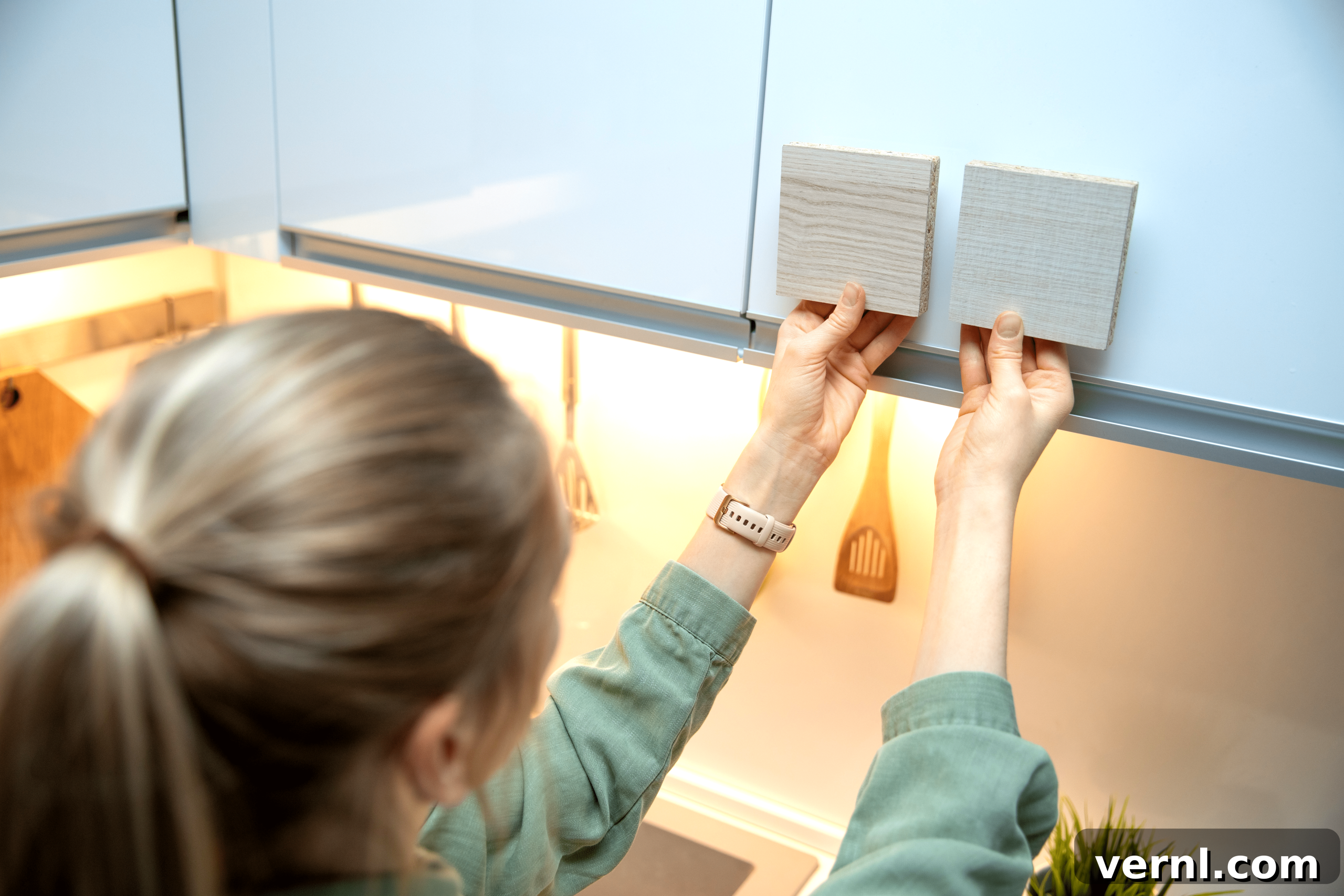
By carefully evaluating each option against the backdrop of your specific renovation goals and lifestyle, you can make an informed decision that ensures your new kitchen cabinets not only look stunning but also perform exceptionally, standing up to the demands of daily life. Take the time to research, compare samples, and consult with experts to bring your dream kitchen to life with confidence.