The Real Truth About Semi-Gloss Paint: Why It’s More Trouble Than It’s Worth
In the vast landscape of home design and renovation, certain trends and product choices stubbornly hold onto their perceived superiority, often despite a glaring mismatch between their reputation and their real-world performance. From the aesthetically divisive vessel sinks to the practicality-challenged open shelving and the inherently damp wet rooms, many popular choices prove less than ideal once you live with them. Allow me to add another to this list: semi-gloss paint. On paper, the promise is alluring: a lustrous, reflective finish that’s super washable and incredibly durable. However, years of extensive interior and exterior painting projects, both for my own properties and countless clients, have unequivocally revealed a different truth. The reality is that semi-gloss paint is notoriously unforgiving, brutally highlighting every minor surface imperfection. Furthermore, achieving a smooth, even finish with semi-gloss demands exceptional skill and meticulous effort, often turning a DIY project into a frustrating ordeal.
I’ve personally developed a strong aversion to semi-gloss paint, having witnessed its pitfalls firsthand time and again. In the following sections, I will meticulously break down precisely why this popular paint finish often fails to live up to its considerable hype. We’ll explore its perceived benefits versus its actual drawbacks, delve into the hidden challenges of its application, and discover superior, designer-approved alternatives. To provide an even deeper level of insight, I’ve enlisted the expertise of Shayne Pancione from Pancione Painting Plus, whose decades of experience in the painting industry offer invaluable perspectives on this contentious paint choice.
Semi-Gloss Paint: Unpacking Its Enduring, Yet Misleading, Appeal
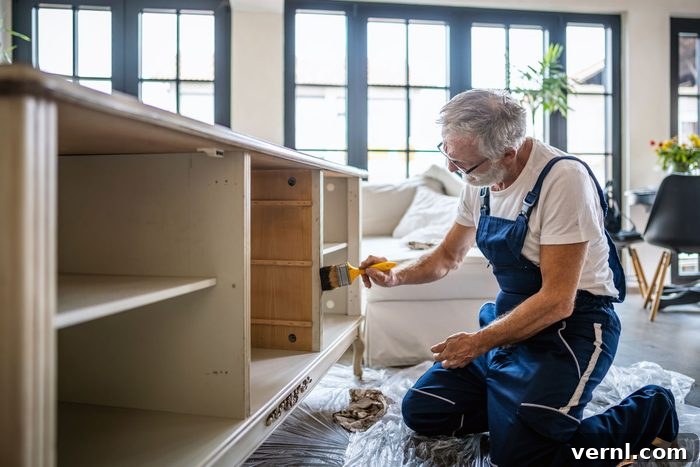
To understand why semi-gloss paint has managed to maintain such a strong foothold in the market despite its numerous drawbacks, we must first examine the qualities that give it its initial appeal. Positioned on the sheen scale between satin and full gloss, semi-gloss delivers a distinctly smooth and reflective finish. Traditionally, it finds its application on interior trim, cabinetry, doors, and sometimes even walls in areas prone to high traffic or significant humidity, such as kitchens, bathrooms, and utility rooms. For decades, homeowners and professionals alike have turned to semi-gloss, driven by a powerful narrative of durability and ease of maintenance.
As Shayne Pancione affirms, semi-gloss boasts a long-standing reputation for being “durable, moisture-resistant, and easy to clean,” and these claims are, technically, rooted in fact. The paint dries to a notably hard, smooth surface that genuinely resists dirt and grime. This robust surface allows for frequent scrubbing and easy wiping, making it seem like the ideal choice for areas that demand rigorous cleaning. Imagine sticky fingerprints on kitchen cabinets or splash marks in a bathroom – semi-gloss promises a quick, effortless clean. Beyond its practical attributes, semi-gloss also offers a distinct visual appeal. Its reflective quality provides a crisp contrast against walls painted with flatter finishes like matte or eggshell, creating a visually appealing definition between architectural elements and wall surfaces. Furthermore, for some homeowners, a touch of shine is simply a preferred aesthetic, and semi-gloss certainly delivers on that front, lending a polished and sometimes even luxurious feel to a space. However, this shiny facade often conceals a host of problems that become painfully apparent during application and over time.
The Hidden Downsides: Why Semi-Gloss Paint Is a Faux Pas in Modern Design
While semi-gloss paint garners considerable attention for its purported washability and reflective qualities, a deeper dive into its practical application and long-term performance reveals a myriad of issues that make it a less-than-ideal choice for most interior spaces. The most significant and frustrating problem homeowners and painters encounter is its uncanny ability to accentuate every single imperfection on a surface.
A Spotlight on Flaws: The Unforgiving Nature of Semi-Gloss
Its highly reflective finish acts like a relentless spotlight, magnifying any dents, bumps, uneven spots, or subtle textures on the underlying surface. This means that every nail pop, every spackle mark, every less-than-perfect drywall seam, and even microscopic dust particles become glaringly obvious. The light catches these inconsistencies, casting shadows and highlights that draw immediate attention to what should be hidden. Consequently, surface preparation for semi-gloss paint must be exceptionally thorough, bordering on professional-grade perfection. Every single flaw, no matter how tiny, must be meticulously filled, sanded, and smoothed to an immaculate finish. Any shortcuts taken in this crucial preparatory phase will inevitably result in a final paint job that looks amateurish and highlights defects rather than concealing them. Even if the initial application appears flawless, semi-gloss paint famously resists seamless touch-ups. Attempting to fix a small blemish often results in a visible sheen variation or an uneven patch, leading to the frustrating conclusion that the entire surface must be repainted to achieve a uniform look. This negates one of its perceived benefits – durability – as minor damage often requires a full overhaul.
Beyond the Price Tag: Hidden Costs and Aesthetic Drawbacks
The issues with semi-gloss extend beyond its unforgiving nature. For starters, semi-gloss paint typically commands a higher price point than lower-sheen alternatives. This is due to the additional binders and specialized additives required in its formulation to achieve that coveted shiny, durable finish. This higher material cost, when combined with the significantly increased labor time needed for meticulous preparation and application, translates into a more expensive project overall, whether you’re hiring a professional or investing your own valuable time. Furthermore, the aesthetic impact of semi-gloss can be quite polarizing. Its high reflectivity tends to make rooms feel colder and more sterile, often evoking the utilitarian ambiance of hospitals, offices, or commercial spaces rather than the warmth and comfort desired in a home. In modern interior design, there’s a strong preference for lower sheens that create a softer, more sophisticated, and inviting atmosphere. The highly reflective surface also has acoustic implications; sound tends to bounce more readily in rooms painted with semi-gloss, potentially making spaces feel louder or creating unwelcome echoes, especially in larger rooms or those with minimal soft furnishings.
The Application Nightmare: Why Semi-Gloss Requires Master-Level Skills
Perhaps the most significant deterrent for anyone considering semi-gloss paint, especially DIY enthusiasts, is the sheer difficulty of achieving a professional-quality finish. Even after investing countless hours in painstaking surface preparation, the actual painting process with semi-gloss is an arduous and technically demanding task where precision is paramount. As Shayne Pancione aptly points out, “Semi-gloss paint can be tricky to work with [and] can show brush strokes or roller marks if not applied carefully.” This isn’t an exaggeration; the paint’s high sheen mercilessly exposes any inconsistencies in application technique.
The Challenge of a Flawless Finish
Achieving a smooth, uniform appearance requires brush strokes and roller marks to be incredibly consistent, even, and applied with meticulous care to prevent visible lines or lap marks. This means maintaining a wet edge – continuously working into previously applied wet paint – which is a technique that requires speed and coordination. The paint’s formulation, designed for durability and a hard finish, often means it dries quickly, adding another layer of complexity. “It also dries quickly, which can make blending harder during application,” Pancione explains. This rapid drying time leaves little room for error and makes it incredibly difficult to go back and smooth out imperfections without creating noticeable textures or unevenness. Thicker spots or overlapping layers can quickly lead to a wavy, uneven finish that is instantly noticeable under light.
Prone to Drips and Sags
To further complicate matters, semi-gloss paint is more prone to drips and sags compared to its lower-sheen counterparts. Its smoother, less porous surface can cause paint to run if applied too heavily, demanding constant vigilance. Painters must continuously stop, check their work, and carefully back-brush or re-roll to catch any nascent drips before they dry. This adds considerable time and frustration to what should be a straightforward process. In essence, making semi-gloss paint look truly good – smooth, even, and free of visible imperfections – demands a level of time, skill, and unwavering attention to detail that is far beyond what most DIY painters possess and often pushes even experienced professionals to their limits. For the average homeowner, the effort and expertise required far outweigh the perceived benefits.
Designer-Approved Alternatives: Embracing Beauty and Practicality
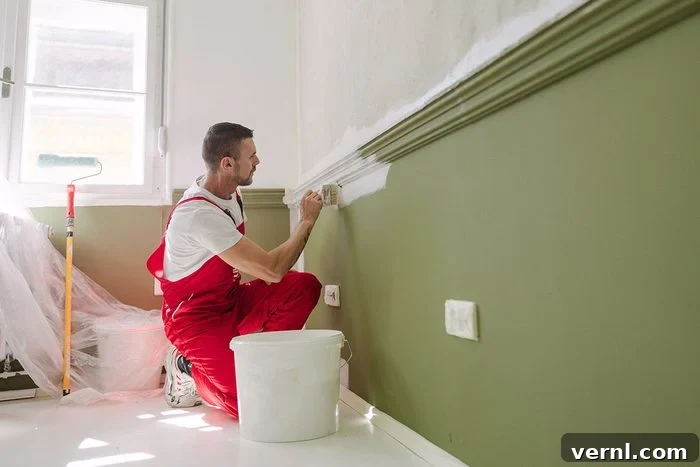
Fortunately, you don’t have to sacrifice durability or washability to avoid the challenges of semi-gloss. A range of superior paint finishes offers better aesthetics, easier application, and more forgiving results, making them ideal choices for virtually any area of your home. These alternatives are generally easier to apply, less expensive in terms of overall project cost, and far more forgiving of minor surface imperfections.
Satin Finish: The Versatile Workhorse
Satin paint stands as a superb alternative, offering a beautiful balance of practical benefits and refined aesthetics. It presents a less shiny appearance than semi-gloss, yet it retains excellent scrubbability and moisture resistance. This makes satin an outstanding option for interior trim, doors, and cabinets, where it provides a subtle gleam without the harsh reflectivity. It’s also highly recommended for walls in high-humidity rooms like bathrooms and kitchens, or in high-traffic areas such as hallways and foyers. Satin hides minor imperfections much better than semi-gloss, making preparation less strenuous and application more forgiving, while still delivering a sophisticated look.
Eggshell Finish: Subtle Elegance and Forgiveness
Moving a step down the sheen scale from satin, eggshell finish paint offers a soft, low-sheen appearance often described as having a delicate pebbled texture with a slight, inviting glow. This finish is exceptionally good at concealing imperfections, making it a popular and highly practical choice for walls throughout the home, from living rooms and bedrooms to dining areas. Its washability is still excellent, allowing for easy spot cleaning. I’ve personally achieved fantastic results using eggshell not just on walls, but also on trim and cabinets when a softer, more integrated look is desired over a stark contrast. Eggshell lends a warm, welcoming ambiance that is highly favored in contemporary design, allowing color to be the focus without the distraction of harsh reflections.
Matte/Flat Finish: The Ultimate Hider
While not mentioned in the original text, matte or flat paint finishes are another excellent alternative, particularly for ceilings and low-traffic walls. These finishes have virtually no sheen, which means they are unparalleled at camouflaging surface imperfections, from drywall flaws to minor dents. Matte paint absorbs light rather than reflecting it, creating a rich, deep color appearance and a soft, sophisticated backdrop for any room. It’s especially effective in bedrooms, formal living rooms, and on ceilings, where a uniform, non-reflective surface is often desired. The primary drawback is that matte finishes are typically less washable than higher sheens, making them less suitable for high-traffic or high-humidity areas, but for ceilings and less-touched walls, they offer an unbeatable combination of elegance and forgiveness.
When Semi-Gloss Might Be Okay (A Rare & Specific Case)
Despite the overwhelming arguments against semi-gloss paint for most interior applications, there are very specific and limited scenarios where its use can be justified. The most prominent of these is on exterior trim. When viewed from a distance, minor imperfections on exterior trim become significantly less noticeable. In this context, semi-gloss’s inherent durability, exceptional moisture resistance, and hard finish truly shine, offering superior protection against the harsh elements – sun, rain, and temperature fluctuations. It forms a resilient barrier that helps preserve wooden trim, making it a practical choice for longevity and weatherproofing. However, even outdoors, meticulous preparation is still key for the best results, though the expectation of flawless perfection is considerably lower than for interior surfaces.
In extremely rare interior instances, perhaps for a highly specific piece of furniture that demands a certain vintage or high-sheen aesthetic, or for trim in a meticulously curated space where absolute flawlessness can be achieved and maintained by professionals, semi-gloss might be considered. However, these are niche exceptions rather than general recommendations, and the challenges of application remain a significant hurdle.
Frequently Asked Questions About Paint Sheens
Doesn’t semi-gloss last longer than other paint finishes?
Semi-gloss paint is indeed formulated with additional binders and additives that contribute to a harder, more durable surface compared to lower-sheen finishes. This makes it more resistant to physical abrasion and moisture. However, this durability comes with a significant caveat: when semi-gloss inevitably sustains damage or requires a touch-up, it is notoriously difficult to blend seamlessly. Any attempt at a localized repair often results in a visible patch due to variations in sheen or texture. This typically means that to maintain a uniform, aesthetically pleasing appearance, the entire surface or section needs to be repainted. Therefore, while the film itself is durable, the practical maintenance—especially the inability to perform invisible touch-ups—can lead to more frequent full repaints, making its overall longevity and ease of maintenance comparable to, or sometimes even worse than, lower-sheen options in the long run.
What is the primary difference between semi-gloss and full gloss paint?
The main difference lies in their level of sheen or reflectivity. Full gloss paint is the most reflective finish available, offering a mirror-like shine that is highly durable and very easy to clean. Semi-gloss, while still highly reflective, has a slightly softer, less intense shine than full gloss. Full gloss is even more unforgiving of surface imperfections and is often reserved for specific applications like furniture, doors, or areas where extreme durability and a dramatic, high-shine aesthetic are desired. It’s rarely used on entire walls due to its intensity and flaw-highlighting properties.
Can I paint semi-gloss paint over a flat or eggshell finish?
Yes, you can paint semi-gloss over a flat or eggshell finish, but proper preparation is crucial for a successful outcome. The underlying flat or eggshell surface must be clean, dry, and free of any loose paint. Because semi-gloss highlights imperfections, you’ll need to meticulously sand the existing surface to create a smooth, even substrate. Any bumps, dents, or textures from the previous finish will be amplified by the semi-gloss. It is also highly recommended to apply a high-quality primer, especially if there’s a significant color change or if the existing paint is porous, to ensure optimal adhesion and a uniform topcoat appearance.
Is semi-gloss a good choice for ceilings?
Generally, semi-gloss paint is NOT recommended for ceilings. Ceilings often have minor imperfections from drywall installation or previous paint jobs, and semi-gloss will unflatteringly highlight every single one of these. Its reflectivity can also create unwanted glare and make a room feel colder or less inviting. For ceilings, a flat or matte finish is almost always the preferred choice, as it helps to absorb light, hide imperfections, and create a soft, uniform appearance that contributes to a serene overhead space.
About the Expert
Shayne Pancione is the esteemed owner of Pancione Painting Plus, a highly regarded painting company based in Easthampton, Massachusetts. With an impressive career spanning over 30 years in the painting industry, Shayne brings a wealth of hands-on experience and expert knowledge to every project. He is also a certified Lead-Safe Renovator, demonstrating his commitment to safety and best practices in all aspects of painting and renovation work.