
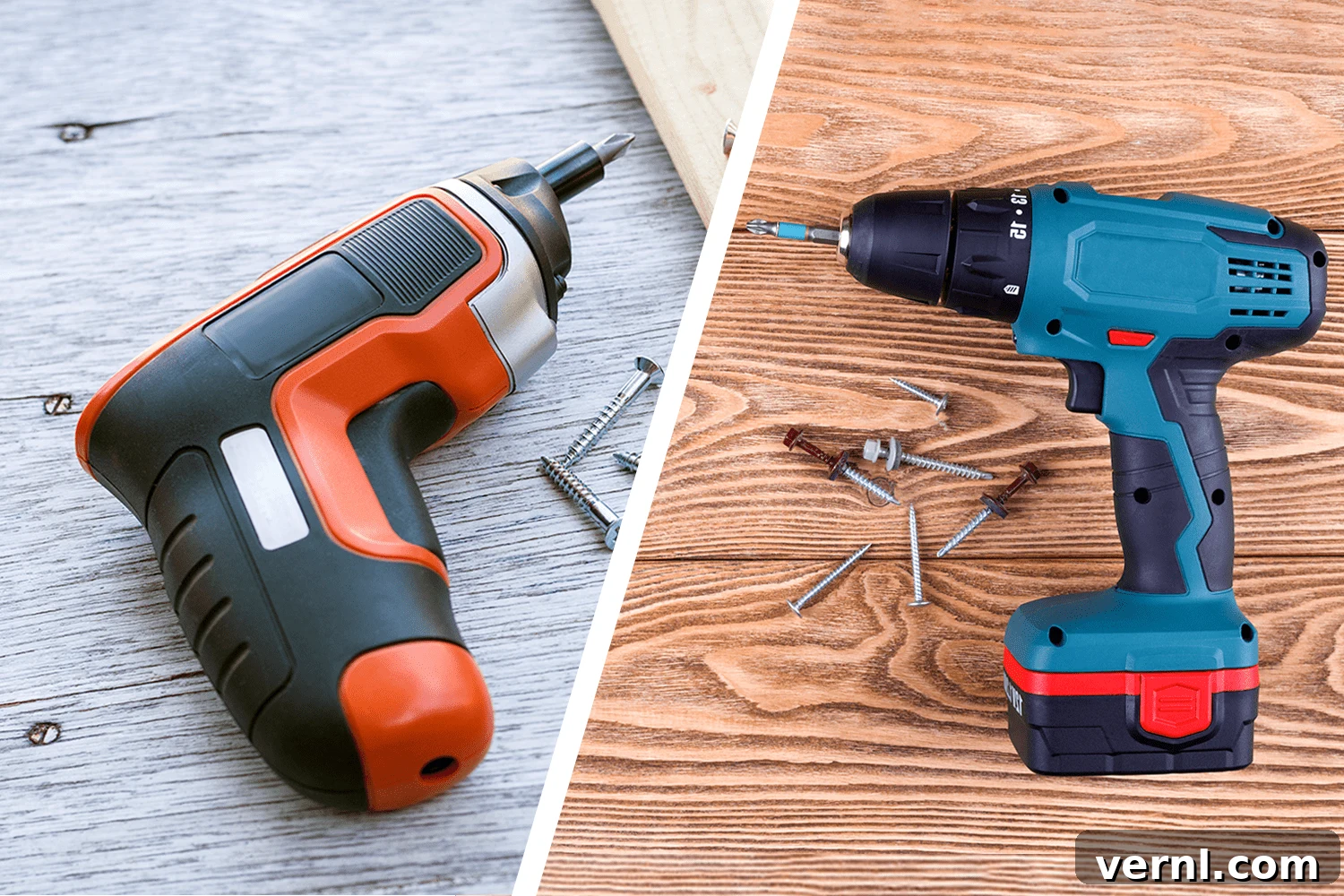
Electric Screwdriver vs. Cordless Drill: Mastering Your DIY Arsenal
In the expansive and ever-evolving landscape of home improvement and do-it-yourself (DIY) projects, few tools are as foundational and frequently utilized as the electric screwdriver and the cordless drill. While they may appear to perform similar tasks on the surface, a deeper understanding of their distinct strengths, design philosophies, and optimal applications is essential for anyone aspiring to build an efficient and effective toolbox. From the pioneering innovations that first brought these powerhouses to life, to the sleek, compact, and highly efficient models available today, these tools have fundamentally transformed how we approach everything from simple assembly to complex construction.
The fascinating journey of these indispensable power tools began over a century ago. It was Black & Decker (now widely recognized as Black+Decker) that etched its name into history by inventing the very first portable electric drill in a momentous year: 1917. This groundbreaking invention brought unprecedented power and efficiency to countless manual tasks, marking a significant leap forward in tool technology. Not content to rest on their laurels, the company followed up just six years later, in 1923, with the introduction of the first electric screwdriver. These early models, while revolutionary, were undeniably robust and often quite cumbersome, typically requiring both hands for effective operation. However, the relentless march of technological progress, particularly in cordless battery systems, has led to a remarkable transformation. Today, contemporary models from a diverse array of manufacturers are marvels of engineering: incredibly compact, remarkably lightweight, and exceptionally user-friendly. For the vast majority of modern DIYers, these advanced cordless tools have transcended mere utility to become absolute essentials, tools they simply wouldn’t want to be without.
Given the inherent overlap in their core functionalities, it’s a common dilemma for homeowners and enthusiasts alike to ponder which tool genuinely meets their needs or if both are necessary. For a seasoned DIYer who regularly tackles extensive home repairs and already possesses a powerful cordless drill, the additional acquisition of a dedicated electric screwdriver might seem redundant. However, a glance inside the toolbox of a homeowner who primarily engages in occasional repairs, furniture assembly, or light-duty tasks, will often reveal an electric screwdriver rather than a drill. What explains this preference? Primarily, the electric screwdriver is often perceived as simpler to operate, more ergonomically designed for delicate work, and crucially, occupies significantly less storage space. Its grab-and-go convenience makes it ideal for quick fixes.
This perspective, however, doesn’t imply that a dedicated DIYer would entirely dismiss the merits of an electric screwdriver. While it is unequivocally less powerful than a full-sized drill, its often superior ergonomic design, lighter weight, and more precise control make it supremely well-suited for a variety of light-duty tasks. Consider scenarios such as meticulously tightening shelf brackets, assembling intricate flat-pack furniture pieces, or performing delicate electrical repairs where finesse and preventing overtightening are paramount. In an ideal scenario, a truly comprehensive and well-rounded tool collection would comfortably include both tools, enabling the user to leverage each for its specific strengths. However, if the decision necessitates choosing just one versatile tool, a cordless drill generally offers a broader spectrum of utility and is often the more pragmatic choice for general home use. Furthermore, for those who frequently rely on cordless drills and drivers, optimizing their organization, perhaps with a dedicated drill station, can significantly enhance workflow and efficiency.
What Exactly Constitutes an Electric Screwdriver?
As its very name clearly denotes, an electric screwdriver is a specialized power tool meticulously engineered for one primary function: efficiently driving and removing screws. These tools are designed with an emphasis on ease of use, precision, and speed in fastening applications. The form factor of electric screwdrivers can vary, catering to different ergonomic preferences and access needs. Some models proudly feature a traditional pistol-grip handle, mirroring the familiar design of many drills to provide a comfortable and intuitive grip. Others adopt a sleek, barrel-shaped or inline design, which is particularly advantageous for reaching into exceptionally tight or confined spaces. A popular and highly versatile variant includes models with handles that can swivel or articulate, allowing users to effortlessly switch between an inline configuration for maximum reach and a pistol-grip for enhanced leverage and torque delivery. This design adaptability significantly boosts user comfort and accessibility across a diverse range of work environments.
A key distinguishing feature of an electric screwdriver, especially when compared to a drill, lies in its bit acceptance mechanism. Instead of the adjustable three-jaw chuck found on drills, which can firmly grip a wide array of round or hex-shanked bits, an electric screwdriver typically incorporates a slotted drive shaft (SDS) or, more commonly, a ¼-inch hex chuck. This specific design is purpose-built to securely accept only driver bits with hexagonal shafts, ensuring a quick, reliable, and positive lock-up. This streamlined and efficient bit-changing mechanism is a significant contributor to the tool’s overall efficiency and user-friendliness in its intended role as a dedicated fastener.
The evolution of electric screwdrivers has also been marked by substantial advancements in their power sources. In bygone eras, models powered by readily replaceable AA batteries were quite popular, offering a certain level of convenience for intermittent usage. However, the vast majority of modern electric screwdrivers today are powered by advanced rechargeable lithium-ion (Li-ion) batteries. These Li-ion power packs offer a superior power-to-weight ratio, considerably longer runtimes, and a more consistent power output throughout their discharge cycle. The battery might be permanently integrated into the tool’s body, requiring charging directly through a standard wall outlet via a USB cable or a proprietary charger. Alternatively, some higher-end and more versatile models feature removable batteries that can be charged independently in a separate docking station, a feature that allows for uninterrupted work if spare, charged batteries are on hand.
Battery voltage in electric screwdrivers, a critical factor influencing both driving torque and rotational speed, generally ranges from a compact 3.6 volts to approximately 10 volts. This specific voltage range is perfectly calibrated for the lighter fastening tasks these tools are designed to handle, adeptly preventing issues such as overtightening, stripping screw heads, or damaging delicate materials. Battery capacity, measured in amp-hours (Ah), is an indicator of how much amperage the battery can deliver over one hour, directly correlating to the tool’s runtime. For typical electric screwdrivers, capacities usually hover around 1.5 Ah, providing ample power for numerous screw-driving operations before a recharge is needed. Many contemporary models also come equipped with extremely useful features like integrated LED work lights to brightly illuminate dark work areas and multiple clutch settings, allowing users to precisely control the torque output and prevent overdriving screws, thereby enhancing both the precision of the work and the overall user experience.
Exploring the Robust Capabilities of a Cordless Drill
A cordless drill represents the quintessential pistol-shaped power tool, primarily engineered for the robust task of boring holes through an extensive array of materials, including wood, metal, and various plastics. Its unparalleled versatility is substantially augmented by its adjustable three-jaw chuck, a mechanism capable of securely gripping a wide spectrum of accessories, ranging from tiny drill bits to large hole saws and mixing paddles. Critically, this highly adaptable chuck also readily accepts standard driver bits, effectively enabling a drill to powerfully double as an electric screwdriver. While both traditional corded drills and modern cordless drills exist, cordless models bear a more direct comparison to electric screwdrivers in terms of portability and the coveted freedom of movement, firmly establishing them as a ubiquitous and indispensable staple in virtually every modern toolkit.
Cordless drills are typically powered by high-performance, removable lithium-ion battery packs, with voltage ratings that commonly range from a robust 12 volts for light to medium-duty tasks, up to a heavy-duty 24 volts, or even higher for professional-grade and industrial applications. As a general rule, a higher voltage rating translates directly into more raw power and greater torque capabilities. The battery capacity for these formidable tools typically spans from an efficient 1.0 Ah up to a long-lasting 4.0 Ah or even more, a factor that significantly influences the tool’s runtime on a single charge. Many modern drills also incorporate advanced brushless motors, which are known for optimizing battery life, delivering increased power output, and enhancing overall tool durability by meticulously reducing internal friction and heat generation.
The sheer performance capabilities of a cordless drill far surpass those of a standard electric screwdriver. The drill bit, under full power, can achieve rotational speeds of up to 2,000 revolutions per minute (rpm), facilitating quick and exceptionally efficient drilling. More crucially, drills are engineered to develop substantially more torque—often exceeding 400 inch-pounds (in-lbs) and reaching well into the thousands for specialized impact drivers, a significant leap compared to the typically lower torque (around 100 in-lbs) delivered by an electric screwdriver. This formidable power allows a drill to confidently tackle an impressive array of tough jobs, such as boring large-diameter holes through dense hardwoods, thick metals, or even masonry (when equipped with a hammer drill function). Simultaneously, thanks to sophisticated variable-speed triggers and multiple adjustable clutch settings, they can deftly handle more delicate, light-duty tasks like driving screws with remarkable precision, making them extraordinarily adaptable to almost any fastening or drilling requirement.
Expanding Your Toolkit: Types of Cordless Drills
The world of cordless drills extends beyond the basic drill/driver, offering specialized variants for specific tasks:
- Drill/Driver: This is the most prevalent and versatile type, excelling at both boring holes and driving screws, thanks to its variable speed controls and multiple clutch settings. It’s the go-to for general household tasks.
- Hammer Drill: Building upon the drill/driver’s capabilities, a hammer drill incorporates a percussive, hammering action alongside its rotational motion. This makes it exceptionally effective and indispensable for drilling into challenging materials like concrete, brick, and other masonry, where a standard drill would struggle or fail.
- Impact Driver: While not a traditional drill designed for boring holes, an impact driver is a high-torque fastening tool engineered for extreme efficiency. It delivers powerful, concussive rotational blows (impacts) in addition to continuous turning. This unique mechanism makes it incredibly efficient for driving long, large screws and lag bolts, particularly in situations where an electric screwdriver would be severely underpowered, and a standard drill/driver might risk stripping screw heads due to its high rotational torque without the benefit of impact.
Practical Applications: Electric Screwdrivers vs. Cordless Drills in Action
A profound understanding of when to reach for an electric screwdriver versus a cordless drill is fundamental to achieving efficient, effective, and damage-free project completion. While it’s true that an electric screwdriver offers less overall versatility compared to a cordless drill, its specialized design and focused capabilities provide distinct and invaluable advantages in a variety of specific situations.
Where an Electric Screwdriver Shines: Precision, Convenience, and Ergonomics
The compact design and controlled power of an electric screwdriver make it the perfect companion for numerous tasks:
- Navigating Tight Spaces and Restricted Access: Its typically compact, often inline form factor allows it to effortlessly fit into exceptionally confined areas where a bulkier drill simply cannot gain access. This feature proves invaluable for tasks inside cabinets, intricate electronic devices, or complex furniture assemblies where space is at a premium.
- Handling Delicate Materials and Softwoods: With its inherently lower torque output, an electric screwdriver is the ideal choice for driving screws into softwoods, various plastics, or delicate materials. This controlled power significantly reduces the risk of overtightening, stripping screw heads, or causing unsightly damage by splitting the material, ensuring a clean and secure fastening.
- Efficient Repetitive Light-Duty Fastening: For tasks that involve driving a multitude of small screws, such as assembling flat-pack furniture, installing numerous outlet covers or light switch plates, meticulously putting together children’s toys, or performing intricate electronic repairs, an electric screwdriver drastically minimizes hand fatigue and significantly speeds up the entire process, making laborious tasks feel effortless.
- Enhanced Ergonomics and User Comfort: Its lightweight design and often smaller, more contoured grip make it considerably easier and more comfortable to hold and operate for extended periods. This benefit is particularly pronounced and appreciated by seniors, individuals with limited hand strength, or anyone experiencing gripping issues.
- Superior Portability and Ease of Storage: The smaller physical footprint of an electric screwdriver makes it incredibly convenient to store in a kitchen drawer, a tool belt for quick access, or a compact toolbox. This makes it an ideal grab-and-go tool for swift repairs and impromptu projects around the house.
Where a Cordless Drill Excels: Unrivaled Power and Versatility
Thanks to its adaptable chuck, substantially higher power output, and a broader array of speed and torque settings, a cordless drill transcends its primary function, becoming a multi-talented powerhouse capable of a multitude of purposes beyond just boring holes and driving screws:
- Heavy-Duty Drilling Across Materials: It effortlessly handles the demanding task of drilling larger diameter holes in a diverse range of materials including dense wood, various metals, and sturdy plastics. When equipped with a hammer drill function, it transforms into an indispensable tool for challenging masonry tasks, making quick work of concrete and brick.
- Driving Large and Stubborn Fasteners: Beyond standard screws, drills are perfectly capable of driving larger and longer fasteners, including robust lag bolts and heavy-duty deck screws, especially when utilized with appropriate hexagonal sockets. They are also crucial for boring precise pilot holes for fasteners of any size, ensuring clean entry and strong, stable connections.
- Operating Specialized Attachments: The drill’s robust motor, coupled with its variable speed control and versatile chuck, allows it to power an extensive array of attachments, effectively transforming it into a multi-functional workshop in itself. This capability includes:
- Sanding: Expertly smoothing surfaces using sanding drums or pads.
- Grinding and Polishing: Achieving desired finishes with wire brushes, grinding stones, or polishing bonnets.
- Mixing: Efficiently stirring paint, thin-set mortar, drywall compound, or other liquids with a specialized mixing paddle, saving immense manual effort.
- Drain Augering: Operating suitably equipped drain augers to effectively clear stubborn clogs in plumbing systems.
- Conquering Stubborn Fasteners: The superior torque generated by a drill can be invaluable for safely loosening stuck screws and bolts that might otherwise require considerable manual effort, specialized extractors, or even resorting to destructive methods.
- Working with Dense and Hard Materials: Its inherent power allows it to confidently drive screws into challenging, dense materials such as exotic hardwoods, composite decking, and even light masonry (when paired with appropriate bits), tasks where a less powerful electric screwdriver would be severely outmatched.
Cost Comparison: A Wise Investment in Your Toolkit
While the initial cost is undeniably a consideration for many consumers, it should not be the singular driving factor in your ultimate decision. The long-term utility, suitability for your most frequent tasks, and overall value that a tool provides are far more paramount. Generally speaking, dedicated electric screwdrivers tend to occupy a more budget-friendly segment of the market compared to their more powerful cordless drill counterparts. However, it’s crucial to acknowledge that the price spectrum for both categories of tools can vary quite widely, and indeed, a high-quality, feature-rich electric screwdriver can sometimes command a price equivalent to, or even exceeding, that of a basic cordless drill.
For illustrative purposes, an advanced, feature-packed two-speed electric screwdriver, such as the acclaimed Milwaukee 4V Cordless Screwdriver, offers exceptional precision and power specifically tailored for intricate tasks, and its price naturally reflects these specialized capabilities and brand quality. At the more accessible end of the spectrum, budget-friendly options like the popular 3.6V Black+Decker Cordless Screwdriver can often be found for less than $16, presenting an excellent, economical entry point for occasional users or as a convenient secondary tool for quick grab-and-go tasks.
Conversely, on the cordless drill side, you will be hard-pressed to discover a model that costs as little as the cheapest electric screwdriver. However, it’s equally true that very few cordless drills, even high-end professional models, typically reach the upper price echelons of the most premium, specialized electric screwdrivers. On average, a reliable, mid-range cordless drill suitable for most household and DIY projects will typically cost between $50 and $100. Models that fall into a higher price range often come thoughtfully bundled with valuable extras. These may include an additional battery for extended runtime without interruption, a comprehensive drill and driver bit set to get you started immediately, or even an extra complementary tool like an impact driver, offering significantly greater value for a slightly higher investment. Surprisingly, it is also quite possible to find a competent cordless drill for less than $35, sometimes even including many of these same valuable extras. This compelling fact brilliantly demonstrates that the enhanced versatility and robust power of a cordless drill do not necessarily necessitate a significantly higher financial investment, making them accessible and attractive to a broad and diverse audience of DIY enthusiasts and homeowners.
Making Your Informed Choice: Key Factors to Consider Before Buying
When you stand in the tool aisle, contemplating which essential power tool will best serve your unique needs, a thoughtful consideration of several key factors will guide you toward the perfect selection:
1. Primary Intended Use and Project Type
- Frequent Light Fastening & Assembly: If the majority of your tasks involve assembling furniture, installing electrical outlet covers, hanging blinds, or working on small, delicate electronics, the superior ergonomics, precise control, and reduced torque of an electric screwdriver will prove invaluable and prevent damage.
- Diverse Drilling & Heavy Fastening: For projects that demand drilling holes of various sizes in different materials, driving large and long screws, or utilizing specialized attachments for tasks like mixing paint or sanding, a cordless drill is the unequivocal winner due to its inherent power, speed, and versatility.
2. Ergonomics and Overall Comfort
- Weight and Balance: Electric screwdrivers are almost universally much lighter and more compact, which significantly reduces hand and arm fatigue during repetitive or extended tasks. Drills, especially higher-voltage models or those with larger batteries, can be noticeably heavier and require more effort to wield.
- Grip and Handle Design: Carefully consider the handle design—whether it’s a pistol-grip, an inline barrel shape, or an articulating handle—and how comfortably and securely it fits into your hand, especially during prolonged periods of use.
3. Battery System and Power Delivery
- Voltage (V): For cordless drills, a higher voltage generally correlates with more raw power and torque, making them suitable for tougher applications. For electric screwdrivers, a lower voltage is typically sufficient and helps maintain precise control, preventing overtightening.
- Amp-Hours (Ah): A higher Ah rating for any cordless tool’s battery translates directly into a longer run time on a single charge. Assess whether your projects require extended, continuous use or merely short bursts of power.
- Battery Interchangeability: If you already own other cordless power tools from a specific brand, prioritize tools that are part of the same battery platform. This allows you to interchange batteries, saving costs on additional chargers and streamlining your charging setup.
4. Essential Features and Advanced Functionality
- Adjustable Clutch Settings: Both tools benefit immensely from adjustable clutch settings. This critical feature allows you to control the maximum torque output, preventing you from overdriving screws, stripping screw heads, or damaging delicate materials.
- Variable Speed Trigger: This is an absolutely essential feature for drills, allowing you to precisely control the rotational speed for both drilling and driving tasks. Some higher-end electric screwdrivers also offer multiple speed settings.
- Integrated LED Work Light: An incredibly useful feature for illuminating dimly lit work areas, this is now a common and highly appreciated addition on most modern cordless tools.
- Bit Retention Mechanism: A secure and reliable chuck (for drills) or bit holder (for screwdrivers) is paramount for both safety and efficiency, ensuring bits don’t slip or fall out during operation.
5. Brand Reputation, Durability, and Warranty
Investing in tools from a reputable brand often translates into higher quality, greater durability, and reliable access to customer support and comprehensive warranty services. Thoroughly researching product reviews and gaining a clear understanding of the warranty terms can proactively save you from potential headaches and additional costs down the line.
Essential Maintenance and Safety Tips for Your Cordless Tools
Regardless of whether your ultimate choice leans towards an electric screwdriver or a cordless drill, adhering to proper maintenance routines and strictly following safe operating procedures are absolutely paramount to ensuring the longevity of your tools and, more importantly, preventing potential injuries.
Optimal Tool Maintenance Practices:
- Diligent Battery Care: Always, without exception, use only the correct charger specifically designed for your tool’s battery. Store batteries in a cool, dry environment and diligently avoid both fully depleting them and leaving them on the charger indefinitely, which can degrade battery life.
- Regular Cleaning Protocol: Consistently clean your tool with a dry, lint-free cloth to remove accumulated dust, sawdust, and other debris, paying particular attention to air vents to ensure proper cooling. Never use harsh chemicals or abrasive cleaners, as these can damage the tool’s housing.
- Organized Bit Storage: Keep all your drill and driver bits clean, sharp, and neatly organized. Promptly replace any bits that become dull, bent, or damaged, as using compromised bits can lead to inefficient work, damage to the workpiece, or even premature wear on the tool itself.
- Proper Storage Conditions: Always store your power tools in their original protective cases or a dry, secure toolbox, keeping them well away from extreme temperatures, excessive humidity, and corrosive environments.
Non-Negotiable Safety Guidelines:
- Mandatory Eye Protection: Always wear appropriate safety glasses or goggles whenever you are operating any power tool. This is a crucial step to protect your eyes from flying debris, dust, or potential projectile fragments.
- Use Appropriate Bits: Always select and use the correct type and size of drill bit or driver bit that is specifically suited for the task at hand and the material you are working with.
- Secure Your Workpiece: It is imperative to always secure your workpiece firmly with clamps, a vise, or another appropriate fastening mechanism. This prevents it from shifting or rotating unexpectedly during operation, which can lead to severe injury or inaccurate results.
- Maintain a Proper Grip: Always maintain a firm and confident grip on the tool, and remain acutely aware of your immediate surroundings and any potential hazards.
- Avoid Overloading the Tool: Never force the tool to work harder than it’s designed to. Let the tool do the work at its own pace. If it appears to be struggling, it’s often an indication that you might be using the wrong tool, the incorrect bit, or that the task simply requires more power than the current tool can provide.
- Remove Battery Before Maintenance: As a fundamental safety rule, always remove the battery pack from the tool before changing bits, making any adjustments, or performing any maintenance or cleaning procedures.
Conclusion: Empowering Your Projects with the Right Tool
Ultimately, the critical decision between an electric screwdriver and a cordless drill hinges meticulously on your individual needs, the predominant types of projects you undertake most frequently, and, of course, your allocated budget. The electric screwdriver stands as a specialized, ergonomic marvel, perfectly tailored for light-duty, repetitive fastening tasks, and exceptionally well-suited for maneuvering in tight, confined spaces where precision, control, and sheer convenience undeniably outweigh raw power. It is an exemplary choice for quick fixes, the often-tedious assembly of furniture, and delicate tasks requiring a deft touch, offering an unparalleled ease of use and portability that larger, more cumbersome tools simply cannot match.
The cordless drill, conversely, asserts its dominance as the undisputed champion of versatility. Its remarkable ability to effortlessly bore holes through a multitude of materials, drive a vast array of fasteners from small screws to large lag bolts, and adeptly adapt to various specialized attachments transforms it into an indispensable workhorse capable of tackling a broad spectrum of home improvement and construction projects. For the quintessential DIYer who seeks one comprehensive tool to handle nearly every task imaginable—from securely hanging pictures and building sturdy shelves to undertaking more demanding drilling and construction-related endeavors—the cordless drill unequivocally provides the most comprehensive and robust solution.
For the aspiration of an ideal and fully equipped workshop, possessing both of these magnificent tools is arguably the most advantageous approach. This allows you the strategic flexibility to precisely select the perfect instrument for each specific task, ensuring optimal results and efficiency. However, if circumstances necessitate choosing only one, a careful and honest assessment of your typical projects is paramount. If versatility, robust power for drilling, and heavy-duty fastening are at the pinnacle of your requirements, then investing in a quality cordless drill will be your most sound decision. Conversely, if your needs primarily revolve around light, precise, and frequent fastening in often-awkward tight spots, a dedicated electric screwdriver will prove to be an invaluable, comfortable, and supremely efficient companion. Whichever intelligent choice you ultimately make, a thorough understanding of your chosen tool’s capabilities and inherent limitations will undoubtedly empower you to work smarter, operate safer, and consistently achieve professional-looking results in all your rewarding DIY endeavors.