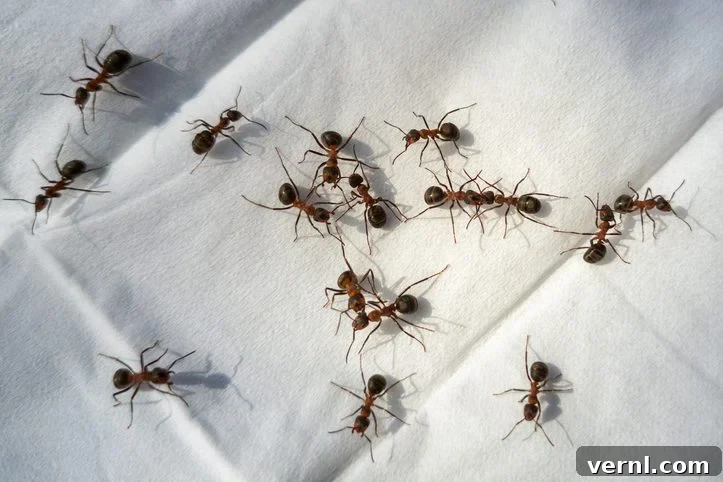
In Florida, discerning between a tourist and a local often comes down to their approach to lunch. A half-eaten banana casually left on a picnic table? Likely a tourist. A swift wipe-up of a spilled jam drip? Definitely a local. This seemingly trivial difference highlights a common concern in warm climates: the relentless pursuit of sweetness by tiny, often invasive, creatures.
That seemingly innocent drip of jam or forgotten crumb can act as a beacon, attracting invasive sugar ants – a widespread nuisance that can quickly escalate into a full-blown infestation in your home. While these tiny invaders can be a significant hassle, there are effective strategies to manage and eliminate them. However, it’s crucial to approach ant control with an understanding of their ecological role, particularly outside your dwelling.
It’s important to remember that outside the confines of your house, many species of native ants play vital roles in the natural ecosystem. Some are even crucial for protecting endangered butterflies and plants, acting as natural pest control or seed dispersers. Therefore, exercising caution and thoughtfulness is paramount when dealing with ants outdoors. “You should not kill an ant outside unless you can confirm it is invasive,” advises Josiah Kilburn, who leads an ant research project at Morehead State University in Kentucky. Kilburn emphasizes that “Killing native ants only perpetuates the invasive pest species they compete with,” disrupting the delicate balance of nature and potentially making the problem worse.
To accurately identify ant species and differentiate between native and invasive types, Kilburn suggests engaging with the community on iNaturalist, a powerful platform for citizen science and biodiversity. Alternatively, you can send him an email directly. “I will gladly answer!” he assures, offering his expertise to help homeowners make informed decisions about ant management.
About the Experts
To bring you the most reliable and up-to-date information on ant control, we’ve consulted with leading entomologists and pest control specialists:
Mark Hoddle, Ph.D. is a distinguished entomologist at the University of California, Riverside. His extensive research program focuses on innovative strategies for controlling sugar ants, particularly in commercial citrus orchards where they pose a significant threat to agriculture.
James Trager, Ph.D., an acclaimed entomologist and contributor to the Myrmecological News Blog, is currently dedicating his expertise to authoring a comprehensive guide to the ants of Missouri, enriching our understanding of local ant populations.
Eric Braun holds a board certification in entomology and serves as a technical service manager for Terminix, one of the nation’s leading pest control companies, offering practical insights into effective ant management solutions.
Walt Cline is the proprietor of DIY Pest Control and has been a licensed pest control professional in Georgia since 1982, bringing decades of hands-on experience to the field.
Josiah Kilburn directs a significant research project at Morehead State University, focusing on the diverse ant species found in Kentucky, providing valuable ecological context to ant behavior and control.
What Are Sugar Ants? A Deep Dive into Common Household Pests
The term “sugar ant” is a common, generic descriptor used by homeowners to refer to a variety of tiny ant species that are frequently found raiding sweet spills, discarded honey, or forgotten birthday cake remnants on kitchen counters. These ants are primarily attracted to sources of sugar, whether natural sugars produced by plants and aphids in the wild, or the refined sugars found in human food products. Globally, thousands of ant species have a sweet tooth, but only a handful are notorious for becoming unwelcome guests in our homes. The ones you’re most likely to encounter on a sugar-hunting mission indoors include:
- Carpenter ants: While they prefer sweets, carpenter ants are also attracted to protein and can cause structural damage by excavating nests in damp or decaying wood.
- Argentine ants: Known for their massive colonies and long foraging trails, these highly invasive ants are a significant pest worldwide, readily consuming sugary foods.
- Crazy ants: Identified by their erratic, rapid movements, crazy ants are generalist foragers, but sweets are a primary draw. They can quickly infest homes.
- Ghost ants: These tiny ants are almost transparent, making them difficult to spot. They often nest indoors and have a strong preference for sugary items.
- Odorous house ants: When crushed, these ants emit a distinctive rotten coconut-like smell. They are common household pests that favor sweets and proteins.
- Immigrant pavement ants: Often found nesting under pavement or stones, these ants enter homes seeking food, including sugary substances and greasy foods.
- Valentine (aka acrobat) ants: Named for their heart-shaped abdomens that they raise when disturbed, these ants feed on honeydew and sweets, often entering homes from outdoor nests.
- Pharaoh ants: Extremely small and notoriously difficult to eradicate, Pharaoh ants are drawn to sweets, greases, and proteins, and can infest nearly every part of a structure.
- Fire ants: Although less common inside homes for foraging, fire ants are a severe biting and stinging pest primarily found outdoors. If they do venture indoors, they are definitely attracted to sweet foods and can deliver painful stings.
“A notorious sugar ant, and one of the most globally invasive pests, is the Argentine ant,” states Dr. Hoddle. “This aggressive ant species is renowned for forming long, linear foraging trails, extending from their extensive underground nests directly to food sources within homes or commercial settings. Their ability to establish supercolonies makes them particularly challenging to control.”
What Causes Sugar Ants in the House? Identifying the Attractants
Understanding why sugar ants invade your home is the first step toward effective control. Their presence is almost always tied to the availability of easily accessible resources: food, water, and shelter. Sweet-tasting foods are, of course, their primary draw. This includes everything from spilled soda and honey to fruit residues, cake crumbs, and even sugary drinks left unattended. However, their diet isn’t solely restricted to sweets. Protein-rich foods are also highly attractive, especially at certain times of the year, as are fats and oils.
Beyond food, water is an equally powerful attractant, particularly during hot and dry weather when outdoor water sources may be scarce. Leaky pipes, condensation around windows, overflowing pet bowls, or even high humidity can provide the essential moisture ants need to survive, drawing them indoors.
Walt Cline, a seasoned pest control expert, sheds light on their seasonal dietary shifts: “Most ants exhibit a preference for starches and sugars during the summertime, which provides them with quick energy for foraging and colony maintenance. Conversely, in the springtime, proteins become a dominant preference. This is crucial for new colony growth and to help restore and build up the colony after a long winter, as proteins are essential for larval development and queen egg production.” This seasonal variation means that baits need to be tailored to their current nutritional needs for maximum effectiveness.
Furthermore, structural vulnerabilities in your home play a significant role. Tiny cracks in foundations, gaps around windows and doors, utility line penetrations, and even unsealed areas where pipes enter walls can serve as easy entry points for these minuscule invaders, providing them with a direct pathway to your kitchen and pantry.
Do Sugar Ants Bite? Understanding the Threat Level
The good news for most homeowners is that while all ant species possess mandibles and the ability to bite, and some can sting, it is highly unlikely that the typical “sugar ants” you find in your house will cause any significant harm. Their mandibles are often too small or weak to break human skin, and they are generally more interested in fleeing than fighting.
The primary exception to this rule is Fire ants. These notorious pests are well-known for their aggressive behavior and painful, venomous stings that can leave itchy, pus-filled welts. If you identify fire ants in your home, professional intervention is often recommended due to their potential to inflict harm.
Eric Braun, a board-certified entomologist, further clarifies: “Most small ants, including many common sugar ant species, do not bite with enough force to be felt by humans. If they did attempt to bite, their mandibles are so minuscule that you would likely not feel it at all.” However, he adds a caveat for larger species: “But larger ants, such as the formidable carpenter ants, are capable of delivering a noticeable pinch with their stronger mandibles, though this is typically a defensive reaction rather than an aggressive attack.”
Some house ants also employ a chemical defense mechanism, producing noxious scents when disturbed, which can be unpleasant but not harmful. Dr. Trager observes that “However, most ants that venture into houses are quite shy when their feeding activities are interrupted. They typically prefer to flee and seek refuge rather than display aggressive behavior, making them more of a nuisance than a direct threat.”
How To Get Rid of Sugar Ants: A Comprehensive Approach
Successfully eliminating sugar ants requires a multi-pronged strategy that combines robust prevention with targeted treatment. Simply spraying visible ants will only offer a temporary fix, as it fails to address the colony at its source. Here’s a detailed guide to effective ant removal:
Prevention: Your First Line of Defense Against Ant Invasions
The simplest and most effective way to manage sugar ants is to eliminate what attracts them in the first place. This involves diligent sanitation and careful food storage:
- Maintain Scrupulous Cleanliness: Regularly clean kitchen counters, dining tables, and floors to remove any food debris, spills, or sticky residues. A quick wipe-down with a damp cloth after every meal can make a significant difference.
- Promptly Address Spills: Even the smallest sugar or syrup spill can attract a scout ant. Clean these immediately and thoroughly.
- Secure Food Storage: Store all food items, especially those ants are attracted to (sweets, baked goods, cereals, pet food), in airtight containers. This prevents ants from detecting and accessing their potential food sources. Do not leave open bags of chips, crackers, or pet food on counters or in pantries.
- Regularly Empty Trash Cans: Food scraps in trash cans are a huge draw. Empty indoor trash cans frequently, especially those containing food waste, and ensure outdoor bins are sealed tightly.
- Manage Pet Food: Pet food is a common attractant. Keep pet food bowls clean, especially after meals. If your pet free-feeds, consider storing the food in an ant-proof container and placing the bowl in a larger, shallow dish of water to create a moat barrier.
- Control Moisture: Fix leaky faucets, pipes, and address any areas of excessive moisture. Ants, especially in dry seasons, are drawn to water sources.
“As long as these guidelines are consistently followed, the sight of a lone ant wandering in one’s house should not be a cause for alarm,” advises Dr. Trager. “Most likely, she — and it’s important to note that all forager ants are genetically female — is merely a scout searching for a treasure trove of food, which, if your home is clean, she won’t find, or perhaps she is simply lost from her trail.”
If these preventive measures aren’t enough to curb an infestation, more active strategies are required. Identifying the specific ant species can also significantly tailor your approach, as not all methods work universally for all types of ants.
Targeted Treatment: Bait Pesticides for Colony Elimination
One of the most effective methods for eliminating ant colonies is the strategic use of slow-acting, non-repellent baits. This approach leverages the ants’ natural foraging behavior to deliver the pesticide directly to the nest, including the reproductive queens.
- How Baits Work: Pest-control experts frequently utilize slow-acting liquid or dust-based baits. The principle is simple yet ingenious: ants consume the toxin-infused sugar or protein matrix from the bait. Crucially, because it’s slow-acting, they don’t die immediately. Instead, they carry the bait back to their nest, sharing it with nest mates, including the larvae and, most importantly, the queen, through a process called trophallaxis (food sharing). “After a day or two, if the ants are consistently taking the bait, entire colonies can collapse and die as the toxin reaches a lethal concentration throughout the nest,” explains Dr. Hoddle.
- Types of Baits: Baits come in various forms, including gels, liquids, and granular products. Liquid baits are often highly attractive to sugar-loving ants. For some species, small indoor bait traps like those offered by Terro can be very effective. It’s important to choose baits specifically designed for ants, as their active ingredients are tailored to ant biology.
- Strategic Placement: Apply baits along known ant trails, near suspected entry points, or in areas where you’ve seen ant activity. For outdoor applications, baits can be applied along the exterior perimeter of your home. Ensure baits are placed out of reach of children and pets.
- Matching Bait to Ant Preference: Remember Walt Cline’s advice about seasonal dietary shifts. Choose a starch (sugar) or protein-based bait depending on the ants’ current nutritional preference for optimal results. You might need to experiment with both.
- Maintenance of Liquid Baits: If using small liquid baits, Cline recommends changing them often. Liquid baits, especially in warmer conditions, tend to harden quickly, becoming less palatable and accessible to ants.
- Non-Toxic Options: For those seeking non-chemical solutions, non-toxic diatomaceous earth (DE) can be effective. This finely powdered fossilized algae works by abrading the ant’s exoskeleton and absorbing its protective waxy coating, leading to dehydration and death. It must be applied in a dry environment and directly on ants or their trails to be effective.
- Why Sprays are Less Effective: Avoid using fast-acting insecticidal sprays directly on ant trails inside your home. While they kill visible ants quickly, they typically only eliminate the foraging workers, leaving the queen and the bulk of the colony unharmed in the nest. This often leads to the colony simply relocating or sending out new foragers, perpetuating the problem rather than solving it. Baits that aren’t slow-acting might work for a while, but they’ll ultimately kill the worker ants too quickly, before the pesticide becomes concentrated enough in the nest.
Safety Precautions with Pesticide Baits: Most commercial ant bait products claim to be safe for pets and children if manufacturer’s directions are strictly followed. However, caution is paramount. This often includes using them only outdoors, avoiding direct contact with skin, refraining from inhaling them, and ensuring kids and pets are kept far away from application sites until the product has completely dried or cured. Always wear appropriate personal protective equipment, such as gloves, when handling pesticides.
“It’s absolutely critical to always be cautious of where any pest control materials are applied,” emphasizes Eric Braun. “Always read, understand, and obey the product labels. Ensuring safety for your family and pets should always be the number one priority when applying any type of pest control product.”
Exclusion: Sealing Entry Points to Prevent Re-Entry
Once you’ve addressed the existing ant problem, preventing future infestations is key. This involves physically blocking their access to your home:
- Thorough Inspection: Conduct a meticulous inspection of the entire exterior perimeter of your home. Look for any potential ant nests in your yard, under paving stones, or near the foundation. More importantly, identify any and all potential entry points into your house. “Keep in mind when looking for areas that ants can access, you will be looking for very, very small holes—often no larger than the tip of a pen,” advises Eric Braun. Ants can squeeze through incredibly tiny cracks.
- Seal All Cracks and Gaps: Use a high-quality caulk to plug any visible holes, cracks, and crevices in your foundation, around window frames, door frames, and where utility lines (pipes, wires) enter your home. Install weather stripping around doors and windows to eliminate gaps.
- Remove Pheromone Trails: After sealing an ant entryway, you can disrupt existing ant communication. Pour a 50-50 mixture of dish soap and water over any visible ant trails. This mixture effectively kills any ants in transit by breaking down their exoskeletons and, critically, removes the invisible pheromone trails that ants use to navigate and guide others to food sources. This was an old trick used by Josiah Kilburn’s dad, and Kilburn has since researched the science behind its effectiveness.
- Create Physical Barriers: “You can also apply an insect slip barrier to any surface they would need to climb to access the sugar source,” explains Kilburn. This barrier can be made from Fluon (a Teflon-derivative chemical often used in laboratories to prevent insects from climbing), or a more readily available household alternative: baby powder mixed with isopropyl alcohol. When applied, these substances create a slick, unstable surface that ants cannot grip, effectively stopping them in their tracks. Petroleum jelly can also be used around pet bowls or on the legs of a pantry shelf for a similar effect.
FAQs: Your Questions About Sugar Ants Answered
What scents keep sugar ants away?
Certain strong scents can act as temporary repellents for sugar ants, disrupting their foraging trails and discouraging them from entering specific areas. These include essential oils like mint (peppermint, spearmint), catnip, and cinnamon. Additionally, common household disinfectants, white vinegar, air fresheners, and insect repellents containing DEET can also have some repellent effect. However, as Dr. Hoddle points out, “While these methods can offer some relief, they tend to be weak and wear off quickly, requiring frequent reapplication. They are more effective as deterrents than as long-term solutions for an established infestation.”
Does vinegar kill sugar ants?
Vinegar, particularly white vinegar, does not kill sugar ants in the same way an insecticide would. As Dr. Hoddle and Josiah Kilburn confirm, the only way vinegar would kill an ant is by physically drowning it in the liquid, which is not a practical or efficient method for pest control. However, vinegar is an effective repellent. Its strong scent can mask pheromone trails, confusing foraging ants and making them avoid the treated area. In some cases, it can also temporarily prevent ants from recognizing one another, disrupting their social structure. You can use a 50-50 mixture of white vinegar and water to wipe down counters and clean floors, serving both as a cleaning agent and a mild ant deterrent.
When are sugar ants most active?
Sugar ants are typically most active during warmer months, from spring through fall, when temperatures are higher and food sources are abundant. Their activity often peaks during the daytime, especially in the mornings and evenings when temperatures are moderate. However, indoor populations can remain active year-round due to the stable indoor environment and consistent food availability. You may notice increased activity after rainfall, as their outdoor nests might be flooded, driving them indoors for shelter and food.
How do I find a sugar ant nest?
Finding a sugar ant nest requires patience and observation. The most effective method is to follow the ant trails. Observe where the ants are coming from and going to. They often create visible trails between their nest and food sources. Look for nests outdoors under rocks, paving stones, mulch, or wood piles. Indoors, they might nest in wall voids, under flooring, behind appliances, or even inside decaying wood (like carpenter ants). Sometimes, they will follow plumbing lines or electrical conduits. Placing a small dollop of honey or jam and observing which direction they take the food can help you trace their path back to the nest.
Are sugar ants dangerous?
For the most part, sugar ants are not dangerous. They are primarily a nuisance pest that can contaminate food, which is their main threat to human health. They do not transmit diseases in the same way other pests might, and as discussed, most common sugar ants do not bite or sting. The main concern for danger comes from specific species like fire ants, which deliver painful stings, or carpenter ants, which can cause structural damage to wood over time. For the average homeowner, a sugar ant infestation is more about hygiene and annoyance than a direct physical threat.
When should I call a professional pest control service?
While many sugar ant infestations can be managed with DIY methods, it’s advisable to call a professional pest control service in several situations. These include: persistent infestations that don’t respond to home remedies or over-the-counter baits; difficulty in identifying the ant species, which is crucial for targeted treatment; discovery of larger, more destructive species like carpenter ants; or if you have a severe infestation that seems overwhelming. Professionals have access to stronger, more specialized products and techniques, and their expertise ensures safe and effective eradication while minimizing risks to your family and pets.