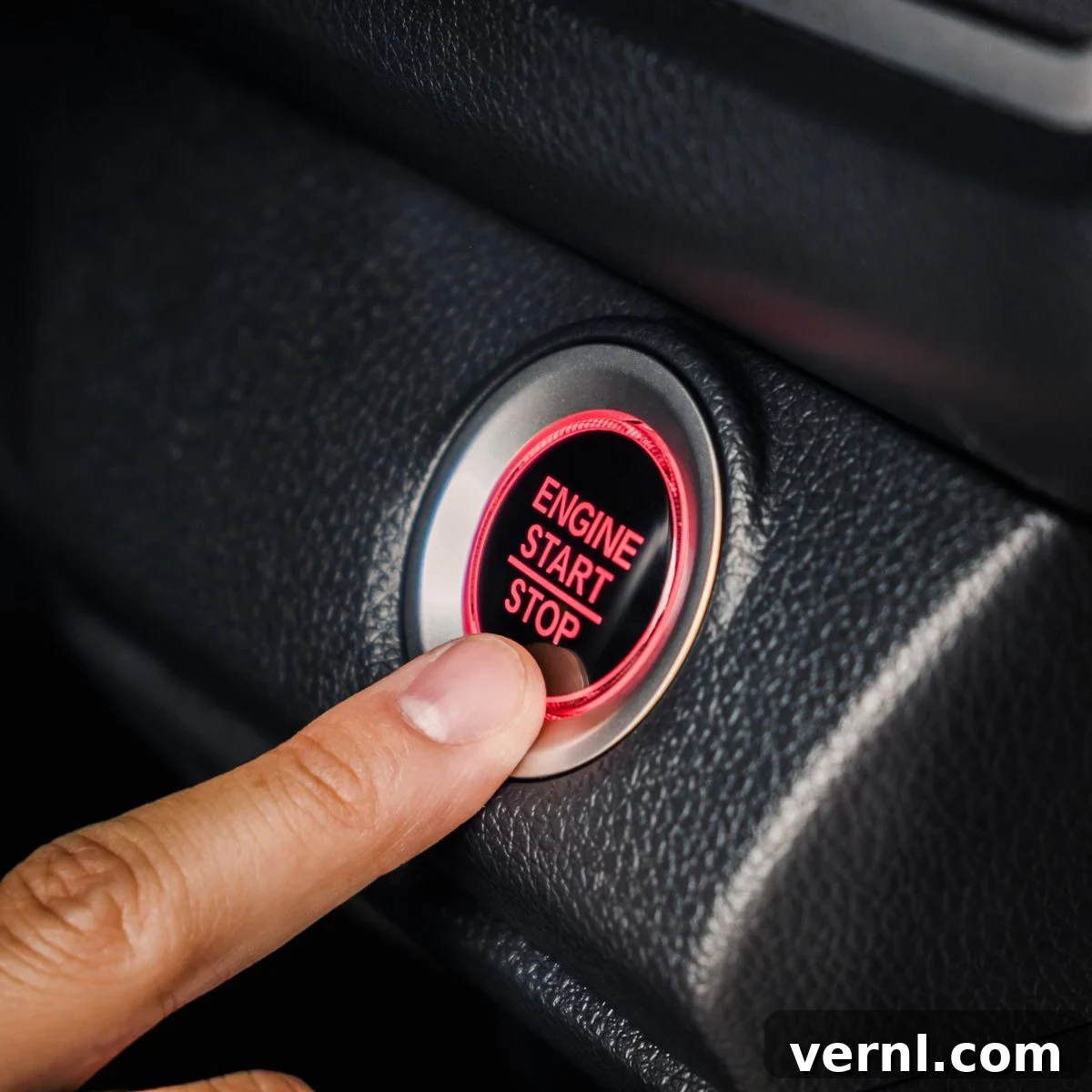
The innovation of a push-button start in vehicles has transitioned from a luxurious novelty to an almost universal standard in just a couple of decades. What once felt like a futuristic feature is now an expected convenience in nearly every new car rolling off the production line. This evolution, while enhancing ease of use, introduces a critical safety consideration: what happens when the start/stop button is accidentally pressed while the vehicle is in motion? This question has sparked considerable discussion in online automotive forums, where drivers share concerning anecdotes about encountering this unexpected scenario.
“For many, the thought of accidentally pressing the engine stop button while driving isn’t on their radar until they hear about a potential catastrophe,” explains Melanie Musson, a seasoned auto industry expert from CarInsurance.org. “Once they become aware of the possibility, it suddenly feels very real, prompting them to wonder about the consequences if they were to inadvertently push that button.”
This natural curiosity can sometimes lead to individuals attempting to test the functionality themselves, purely to satisfy their wonder, notes Chris “Moose” Pyle, an automotive expert affiliated with JustAnswer. However, he strongly advises against such experimentation due to the inherent risks involved.
Engineers at the Nissan Group of the Americas offer a slightly different perspective on the trending interest in this topic. They suggest that it stems from people’s innate curiosity about the mechanics of their vehicles. As they shared with Family Handyman, “People are naturally curious about how things work, especially when it comes to their cars. It presents a fantastic opportunity to showcase how contemporary vehicle technology is meticulously engineered with both convenience and paramount safety in mind.”
This comprehensive guide delves deeper into the potential repercussions of pressing the start/stop button at an inopportune moment and, more importantly, provides crucial guidance on how to react effectively should you ever find yourself in such a situation.
What Is the Push-Button Start/Stop System?
The push-button start/stop system is a cornerstone of modern automotive design, serving as the primary interface for activating or deactivating a vehicle’s engine. This innovative technology effectively replaces the traditional method of inserting and turning a physical metal key in the ignition cylinder. Instead, drivers simply press a button, often illuminated and conveniently located on the dashboard or center console, to bring their vehicle to life or power it down. This keyless ignition system relies on proximity sensors to detect the presence of the vehicle’s key fob inside the cabin, adding a layer of convenience and sometimes enhanced security compared to older ignition systems. Its widespread adoption underscores a broader industry trend towards more streamlined, user-friendly, and technologically advanced vehicle operation.
What Happens If I Press the Stop/Start Button While Driving?
The consequences of pressing the engine stop/start button while driving are not uniform; they are meticulously engineered variables dependent on several critical factors: your vehicle’s specific design, its current speed, and the duration for which the button is pressed. Modern vehicles are equipped with sophisticated safety protocols, but their implementation varies significantly across manufacturers and models.
At Low Speeds: Immediate Impact and Risks
At lower speeds, typically below 5-10 mph, some vehicles are designed to allow the engine to shut off if the start/stop button is pressed. As Xavier Sabastian, an automotive expert at Way.com, explains, this immediate engine shutdown leads to a critical loss of several vital functions. The most concerning are the loss of power steering, power brakes, and acceleration. Without power steering, the steering wheel becomes significantly harder to turn, requiring considerable physical effort, especially as the vehicle slows. Similarly, the power braking assist is deactivated, meaning the brake pedal will feel much stiffer and require far greater force to achieve effective stopping, leading to extended braking distances. The sudden loss of acceleration also creates an immediate hazard, particularly in traffic or at intersections, where responsive power is crucial for safe maneuvering.
At Higher Speeds: Engineered Safeguards
In contrast, when traveling at higher speeds, a vast majority of modern vehicles incorporate advanced safety features designed to mitigate the risks of an accidental engine shutdown. These systems are typically programmed to disregard a single, brief press of the start/stop button. This intelligent design prevents inadvertent nudges or accidental touches from suddenly cutting power, which could lead to catastrophic loss of control on highways or busy roads. However, this protective measure usually has an override: holding the button down for a sustained period, typically a few seconds, or pressing it multiple times in quick succession, may still trigger an engine shutdown, even at higher speeds. This functionality is often reserved for emergency situations where the driver intentionally needs to stop the engine.
Consult Your Owner’s Manual: Your Vehicle’s Specifics
Given these variations, the definitive source for understanding your vehicle’s specific behavior in such a scenario is always its owner’s manual. This crucial document outlines the exact safety protocols implemented by the manufacturer. For instance, a member of the Nissan engineering team elaborated to Family Handyman on their vehicle’s design: a brief, accidental press of the ignition button while driving will not turn off the engine. This robust design prioritizes driver safety against momentary distractions. However, acknowledging the need for extreme emergency situations, Nissan vehicles also provide a deliberate override: a driver can shut off the engine while in motion by either pressing the ignition button three times in quick succession (each press lasting less than 1.5 seconds) or by pressing and holding the ignition button for more than 2 seconds. The Nissan representative emphatically underscores the gravity of such an action, stating, “Of course, as we point out in our owner’s manuals, stopping the engine while a vehicle is being driven could lead to a crash and serious injury.” This highlights the immense importance of understanding these safety features and using them only as a last resort.
What Happens If I Press the Stop/Start Button While Not In Park?
Another common scenario fraught with potential hazards involves pressing the engine stop button when the vehicle is not in “Park.” This often occurs due to distraction, rushing, or simply forgetting to engage the park gear before turning off the engine. The outcome in this situation also heavily depends on your car’s specific design and its integrated features.
The Risk of a Rolling Vehicle
If your vehicle does not have automatic parking features, shutting off the engine while it’s still in “Drive,” “Reverse,” or “Neutral” (and your foot is off the brake) carries the significant risk of the car rolling away. This can happen in unexpected ways, especially on an incline, leading to collisions with other vehicles, property damage, or even serious injury if a person is in the vehicle’s path. This is a critical safety concern, particularly in parking lots, driveways, or areas with slight gradients.
Automatic Parking Features in Modern Cars
Fortunately, many contemporary vehicles are equipped with advanced safety systems designed to prevent such incidents. Taking Nissan as a prime example, models like the current Nissan Rogue and Pathfinder feature electronically controlled transmissions, often referred to as “shift-by-wire” systems. These sophisticated transmissions are not mechanically linked to the shift lever in the same way traditional systems are. This allows for intelligent, automatic interventions.
As a Nissan engineer explains, “In other words, if the driver forgets to put the transmission in park, it will automatically shift to park when they turn off the engine with their foot on the brake.” This means that even if a driver neglects to move the shift lever to “Park,” the vehicle’s onboard computer will recognize the engine shutdown command and engage the park brake or shift the transmission into “Park” to secure the vehicle. This greatly enhances safety and reduces the potential for a vehicle rolling inadvertently.
Traditional Designs and Warning Systems
In contrast, vehicles with more traditional mechanical transmission designs behave differently. In these cars, the shift lever is physically and mechanically connected to the transmission. If the engine is shut off while the vehicle is not in “Park” in such a system, the driver will typically receive an audible chime and/or a visual warning message on the instrument cluster, explicitly prompting them to shift into “Park” before exiting the vehicle. This warning is a crucial last line of defense, reminding the driver to take the necessary action to prevent the vehicle from rolling. Understanding your car’s specific transmission type and its associated safety features is paramount for responsible operation.
Tips to Avoid Pressing the Push-Button Start/Stop Button By Accident
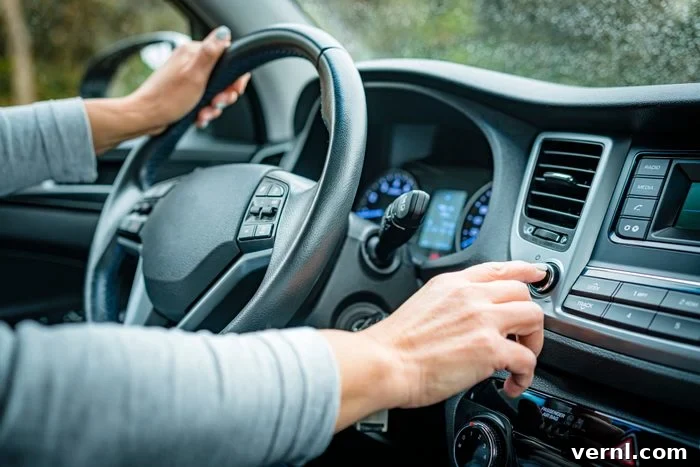
Preventing an accidental press of the start/stop button largely comes down to conscious awareness and developing safe driving habits. By anticipating actions that might bring your hand or other objects into close proximity with the button, you can actively mitigate the chances of an inadvertent engine shutdown. Consider these practical strategies:
- Pre-Drive Setup: Before you even put the car in motion, take a moment to set up your environment. Turn on your music, adjust the volume, or select your podcast. Ensure your navigation system is programmed and visible. Completing these tasks before driving eliminates the need to reach around while the vehicle is in motion.
- Familiarize with Controls: Before embarking on your journey, especially in an unfamiliar vehicle, take a few moments to acquaint yourself with the location and operation of essential controls, including the temperature settings, radio presets, and other dashboard functions. This prevents fumbling around blindly while driving, reducing the likelihood of accidentally hitting the start/stop button.
- Mindful Hand Placement: Consciously practice keeping your hands on the steering wheel, in the appropriate “10 and 2” or “9 and 3” positions, or on the gear selector when required. Avoid resting your hand near the start/stop button unless you intend to operate it.
- Clear the Area: Keep the immediate vicinity of the start/stop button free from loose items such as phones, coffee mugs, snack bags, or other personal belongings that could shift and accidentally activate the button.
- Minimize Distractions: Avoid engaging in activities that require you to take your eyes off the road or move your hands away from safe positions, such as eating, applying makeup, or heavily interacting with your phone. As Chris “Moose” Pyle advises, “Get in the habit of not putting your hand near the button or juggling things like a phone or coffee mug while driving.” A focused driver is a safer driver.
What To Do If You Press The Start/Stop Button Accidentally?
While prevention is key, knowing how to react if you accidentally press the start/stop button is equally crucial for maintaining safety. The immediate aftermath depends heavily on how long the button was pressed and your vehicle’s safety programming.
If the Engine Shuts Off: Immediate Actions
If you press the button long enough for the engine to shut off, you will immediately notice a significant change in the vehicle’s behavior. The most critical aspect is the loss of power assist to the steering and brakes. Melanie Musson offers vital advice: “Hold the steering wheel with both hands and prepare to use significant muscle to maintain your steering, especially as the vehicle slows.” Without power steering, turning the wheel becomes physically demanding, and you’ll need to exert considerable force to keep the car on its intended path. Similarly, be prepared to push the brake pedal much harder than normal to achieve effective stopping, as the power braking assist will be lost, increasing your stopping distance.
Step-by-Step Recovery: Expert Guidance
Xavier Sabastian provides a clear, actionable sequence of steps to follow if your engine accidentally shuts off while driving:
- Stay Calm: Panic is your worst enemy. A calm mind allows for rational decision-making and precise actions. Take a deep breath.
- Keep a Firm Grip on the Steering Wheel: Immediately grasp the steering wheel with both hands. The loss of power steering means you will need maximum leverage and physical strength to control the vehicle’s direction.
- Shift to Neutral (N): If safe to do so, quickly shift the transmission into neutral. This disengages the engine from the drivetrain, allowing you to attempt a restart without putting undue strain on the transmission.
- Restart the Engine: While keeping your foot firmly on the brake pedal, press the start/stop button again. In most modern vehicles, this action should attempt to restart the engine. If the engine catches, you will regain power steering and brakes.
- Safely Pull Over: Once the engine is running and you have regained control, activate your hazard lights and safely pull your vehicle over to the side of the road or a secure location. Assess the situation, collect yourself, and ensure the vehicle is operating normally before continuing your journey.
“Understanding your vehicle’s specific features and responses is crucial for safe operation,” Sabastian emphasizes. Always remember to refer to your owner’s manual for detailed, model-specific information regarding emergency procedures and vehicle functionality. Being prepared and knowing these steps can make a critical difference in ensuring your safety and the safety of others on the road.
About the Experts
- Melanie Musson is a recognized expert in the auto industry, having contributed her insights to CarInsurance.org for nearly a decade. Her extensive experience provides valuable perspectives on vehicle safety and insurance trends.
- Xavier Sabastian is a prominent author and authority on automotive and insurance topics, sharing his expertise through the popular Way.com auto app.
- Chris “Moose” Pyle brings over two decades of automotive experience as a master-certified technician. Since 2006, he has also served as a trusted expert for JustAnswer, offering his comprehensive knowledge to a wide audience.
- Valuable contributions to this article were also provided by a dedicated member of the engineering staff at the Nissan Group of the Americas, offering crucial manufacturer insights into vehicle design and safety protocols.