
The Ultimate Guide to Ventless Washer-Dryer Combos: Efficiency, Convenience, and Modern Living
In North America, the term “ventless dryer” often conjures images of innovative, perhaps niche, appliances. However, across Europe, these machines are simply known as “dryers” – a testament to their long-standing popularity and integration into everyday life since the late 1990s. Prized for their compact design and significantly lower energy consumption compared to traditional vented dryers, ventless units, especially when combined with a washing machine, offer an unparalleled space-saving and energy-efficient laundry solution that can fit comfortably even in a closet.
This sounds like an ideal solution for many, but its suitability largely depends on your household’s size and laundry habits, explains Ron Shimek, president of Mr. Appliance, a Neighborly company. While ventless washer-dryer combos deliver superior efficiency and substantial energy cost savings, these advantages often come with tradeoffs, such as smaller load capacities and extended drying times. Nevertheless, for a growing segment of consumers, these appliances are nothing short of a game-changer.
“If you reside in an older home or an apartment not originally constructed with a dryer in mind, and therefore lacking an outside vent, a ventless dryer provides an excellent alternative to undertaking costly and disruptive vent installation,” Shimek states. This makes them a perfect fit for urban dwellings, apartments, condos, and even mobile homes where external venting is impractical or prohibited.
The efficiency of ventless washer-dryer combos is so profound that some countries, like Switzerland, have taken the step of prohibiting traditional vented dryers altogether. While North America has yet to reach this regulatory milestone, the market is rapidly evolving. Historically, ventless dryers here have been criticized for their limited capacities, which can be frustrating for busy individuals managing laundry for large families. However, recognizing the increasing demand for higher efficiency and the global shift away from gas appliances, manufacturers are continuously innovating. Newer models boast larger capacities and significantly faster drying times, addressing previous concerns and making ventless technology more appealing to a broader consumer base.
What Is a Ventless Washer-Dryer Combo and How Does It Work?
A ventless washer-dryer combo is a single appliance that performs both washing and drying functions without requiring an external exhaust vent. Unlike conventional vented dryers that expel hot, moist air outside, ventless systems operate on a closed-loop principle, making them highly efficient and versatile.
Ron Shimek explains the core mechanism: “A ventless dryer draws in cool air from the room, heats it up, similar to a vented dryer. But instead of expelling the humid hot air outdoors, it routes this air through a condenser loop. This loop cools the air down, causing the moisture to condense into water, which is then drained into a storage tank or directly into your home’s drain system.” This continuous recirculation of air between the tumbler compartment and the condensation chamber completely eliminates the need for an external vent.
The drying process essentially mimics a refrigeration system or a dehumidifier. Inside the tumbler compartment, condensing coils heat the circulating air, enabling it to absorb moisture from the wet clothes. As this moisture-laden air then circulates through evaporative coils located in a drain area, it cools rapidly. This cooling causes the absorbed moisture to condense back into liquid water, which is then collected. The compressor driving this sophisticated process operates with an energy footprint comparable to that of a standard refrigerator compressor, highlighting its energy efficiency.
The washing component of the combo unit functions much like a conventional washing machine. It requires standard hot and cold water hookups and a drain line, which is typically shared with the drying system for water disposal. The beauty of these machines lies in their integrated operation: you simply load your laundry, select the appropriate wash/dry cycle, and the appliance handles the rest. Once the washing cycle concludes, the dryer automatically commences. It continues to operate until an internal moisture sensor accurately detects that the clothes have reached the desired level of dryness, ensuring optimal results without over-drying.
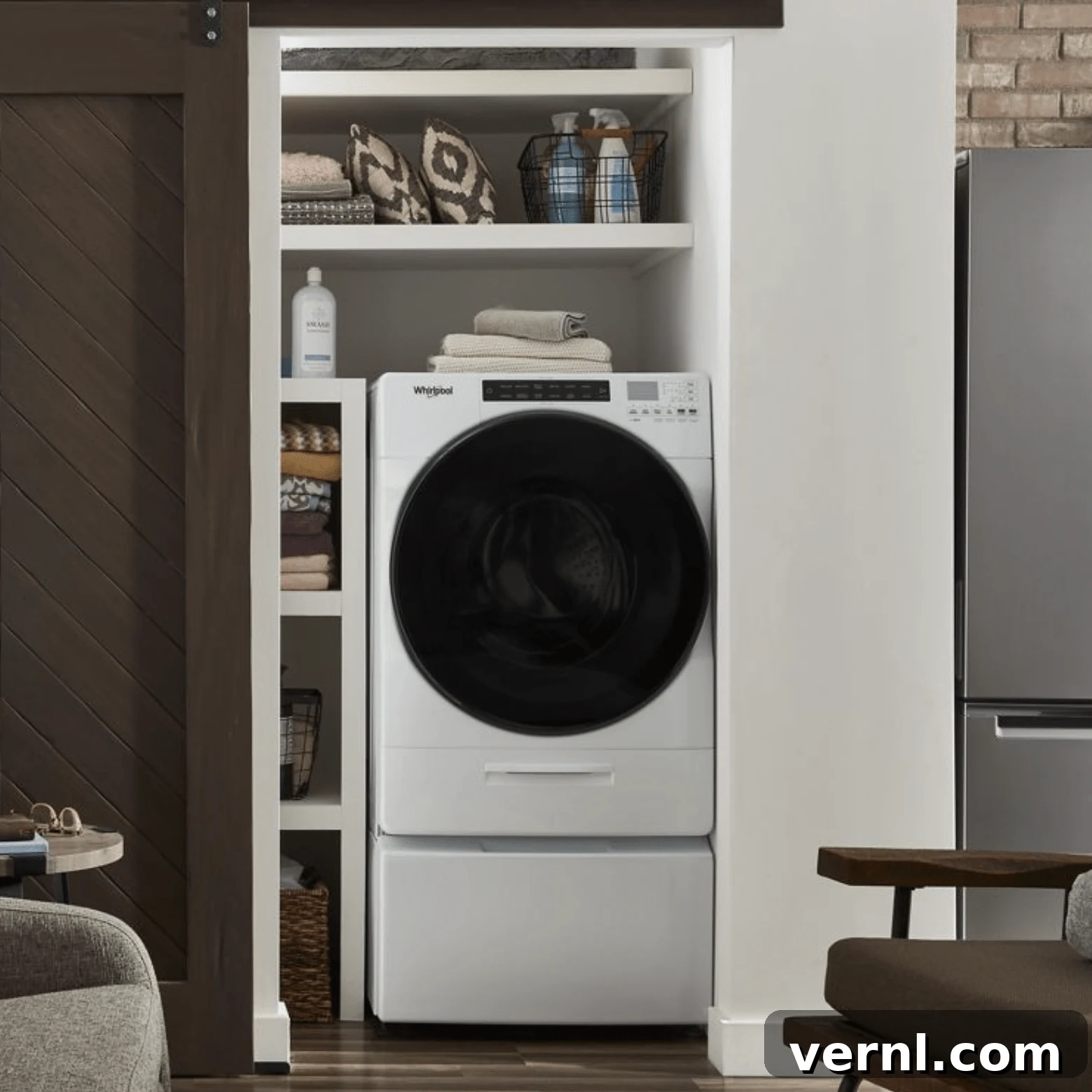
Traditionally, many washer-dryer combos have been compact, front-loading rectangular units offering capacities typically ranging from 2.4 to 2.7 cubic feet. However, advancements in appliance engineering are rapidly changing this. For example, the acclaimed GE Profile Ultrafast Combo, an award-winning product at the 2023 International Builders’ Show, and the Whirlpool Ventless All In One Washer Dryer both boast impressive 4.8-cubic-foot capacities. This expanded capacity signifies a major leap forward, making ventless combos viable for a wider range of households and addressing a key past limitation.
Ventless Washer-Dryer Combo Pros and Cons: A Balanced Perspective
Deciding whether a ventless washer-dryer combo is the right choice for your home requires careful consideration. While these innovative appliances offer compelling advantages, it’s equally important to understand their limitations to make an informed decision.
Pros: The Advantages of Going Ventless
- Unmatched Versatility and Installation Freedom: One of the most significant benefits is the freedom of placement. Without the need for external venting, a ventless washer-dryer combo can be installed virtually anywhere there are water hookups and a standard 120-volt GFCI electrical receptacle. This opens up possibilities for installation in compact spaces like a small corner of the kitchen, an alcove in a bathroom, under a counter, or even neatly tucked away in a closet. This flexibility is a huge boon for apartment dwellers, condominium owners, tiny home enthusiasts, and those living in older homes where installing traditional dryer vents would be costly or impractical.
- Superior Energy Savings: Ventless combos are celebrated for their exceptional energy efficiency. They can be plugged into a standard household outlet, eliminating the need for a dedicated 240-volt circuit, which can save on electrical installation costs. More importantly, they consume significantly less energy – often as little as 40 percent of the energy used by conventional vented units. This translates to noticeable reductions in utility bills and a smaller environmental footprint, aligning with modern sustainability goals.
- Unparalleled Convenience: The “all-in-one” nature of these appliances offers peak convenience. You simply load your laundry, start the wash cycle, and return to find your clothes clean and dry. There’s no need to transfer wet clothes from a washer to a separate dryer, streamlining your laundry routine and saving valuable time and effort. This ‘set it and forget it’ functionality is particularly appealing for busy individuals and those who prefer a hands-off approach to chores.
- Gentler Fabric Care: Ventless dryers operate at much lower temperatures compared to conventional vented dryers. While this contributes to longer drying times, it’s also significantly kinder to your clothes. The reduced heat minimizes wear and tear, prevents shrinkage, and helps to preserve fabric integrity and color vibrancy. Delicate items, activewear, and everyday garments alike benefit from this gentle drying process, extending the life of your wardrobe.
- Enhanced Safety: Without ductwork to accumulate flammable lint, ventless units inherently pose a lower risk of lint-related fires, which are a serious concern with traditional vented dryers. While regular cleaning of the lint filter is still necessary, the absence of extensive ducting eliminates a major fire hazard, offering greater peace of mind for homeowners.
- Reduced Installation Costs and Complexity: The elimination of exhaust ductwork means there’s no need to cut holes in walls, install vent pipes, or ensure proper outdoor ventilation. This not only simplifies installation but also reduces associated labor and material costs, making the initial setup potentially more affordable than a traditional two-unit system requiring professional venting.
Cons: Potential Drawbacks to Consider
- Higher Initial Cost and Shorter Lifespan: Ventless washer-dryer combos typically come with a higher upfront price tag than conventional separate washer and dryer units. Furthermore, their complex internal mechanisms can sometimes lead to a slightly shorter lifespan. Ron Shimek indicates a typical lifespan of eight to ten years for ventless combos, compared to ten to thirteen years for conventional combo units, meaning the initial investment might need to be recouped over a shorter period.
- Limited Capacity (Though Improving): While newer models are expanding capacity, many ventless combos still offer less space for clothes than conventional separate units. This can be a significant drawback for larger families or households that frequently wash bulky items like blankets, duvets, or large loads of towels. You might find yourself doing more frequent, smaller loads.
- Longer Drying Times: The condensation drying process, by its nature, is slower than the high-heat, high-airflow method of vented dryers. Some units can take up to an hour longer to dry clothes than their conventional counterparts. While modern advancements have reduced this difference to 10 or 15 minutes for some premium models, it’s still a noticeable increase that can impact your laundry schedule, especially if you need to do multiple loads in a single day.
- Potential for Increased Room Humidity: Because ventless dryers release a small amount of heat and moisture into the surrounding air as part of their condensation process (even with the water being drained), they can potentially increase the humidity level in the room where they are located. Shimek warns that this elevated humidity, if not properly managed, could lead to problems with mold, mildew, or a generally clammy feeling in poorly ventilated spaces. Adequate room ventilation is advisable.
- Regular Maintenance Requirements: To maintain optimal efficiency, ventless dryers require specific maintenance. This often includes regularly cleaning the lint filter (sometimes a finer filter than traditional dryers), emptying the condensate water tank (if not plumbed directly to a drain), and periodically cleaning the condenser coils to prevent lint buildup from impeding performance. Neglecting these tasks can lead to decreased efficiency and longer drying times.
- Less Bone-Dry Results (Sometimes): Due to the lower drying temperatures and the nature of condensation, clothes from a ventless dryer might sometimes feel slightly less “bone-dry” than those from a conventional vented dryer. They are perfectly dry and ready to put away, but the tactile difference can be noticeable to some users.
Is a Ventless Washer-Dryer Combo Right for You?
Deciding on a ventless washer-dryer combo involves weighing your specific needs, living situation, and priorities against the unique characteristics of these appliances. This innovative laundry solution could be an ideal fit if any of the following scenarios describe you:
- Compact Living or Small Households: If you live alone, with a partner, or a small family of one or two other people, the capacity of a ventless combo is often perfectly adequate for your daily laundry needs.
- Limited Space Availability: For those residing in apartments, condos, or homes where space is at a premium and there’s simply no room for separate conventional washer and dryer units, a ventless combo provides an elegant, all-in-one solution that maximizes your living area.
- Renters or Restricted Installations: If you’re renting an apartment, living in a condominium, or have building rules that prohibit cutting a hole in the wall for an external vent, a ventless unit becomes not just a convenience, but often the only viable option for in-unit laundry. Explore the best washer and dryers for apartments to find suitable models.
- Prioritizing Energy Efficiency and Sustainability: If saving energy, reducing your carbon footprint, and lowering utility bills are top priorities, the inherent efficiency of ventless technology makes it a compelling choice.
- Patient Laundry Habits: While newer models are faster, if you don’t mind slightly longer drying times or typically plan your laundry in advance rather than needing rapid turnarounds, the convenience and other benefits might outweigh this factor.
- Desire for Gentle Fabric Care: If you frequently wash delicate clothing or want to extend the life of your garments by avoiding harsh, high-heat drying, the gentler process of a ventless dryer is a significant advantage.
However, the time when energy concerns render conventional gas and electric combo units entirely obsolete has not yet arrived for everyone. If you routinely handle very large volumes of laundry, already have pre-installed vents in your laundry room, and find that patience isn’t your strongest virtue when it comes to chores, a conventional washer-dryer combo might still be the more practical choice for your immediate needs. Modern conventional units also offer robust performance for high-demand households.
Ultimately, the decision comes down to a careful assessment of your lifestyle, living space, and personal preferences. Ventless washer-dryer combos represent a significant leap forward in laundry technology, offering a smart, sustainable, and highly convenient option for a growing number of homeowners and renters looking for an efficient solution for modern living.