
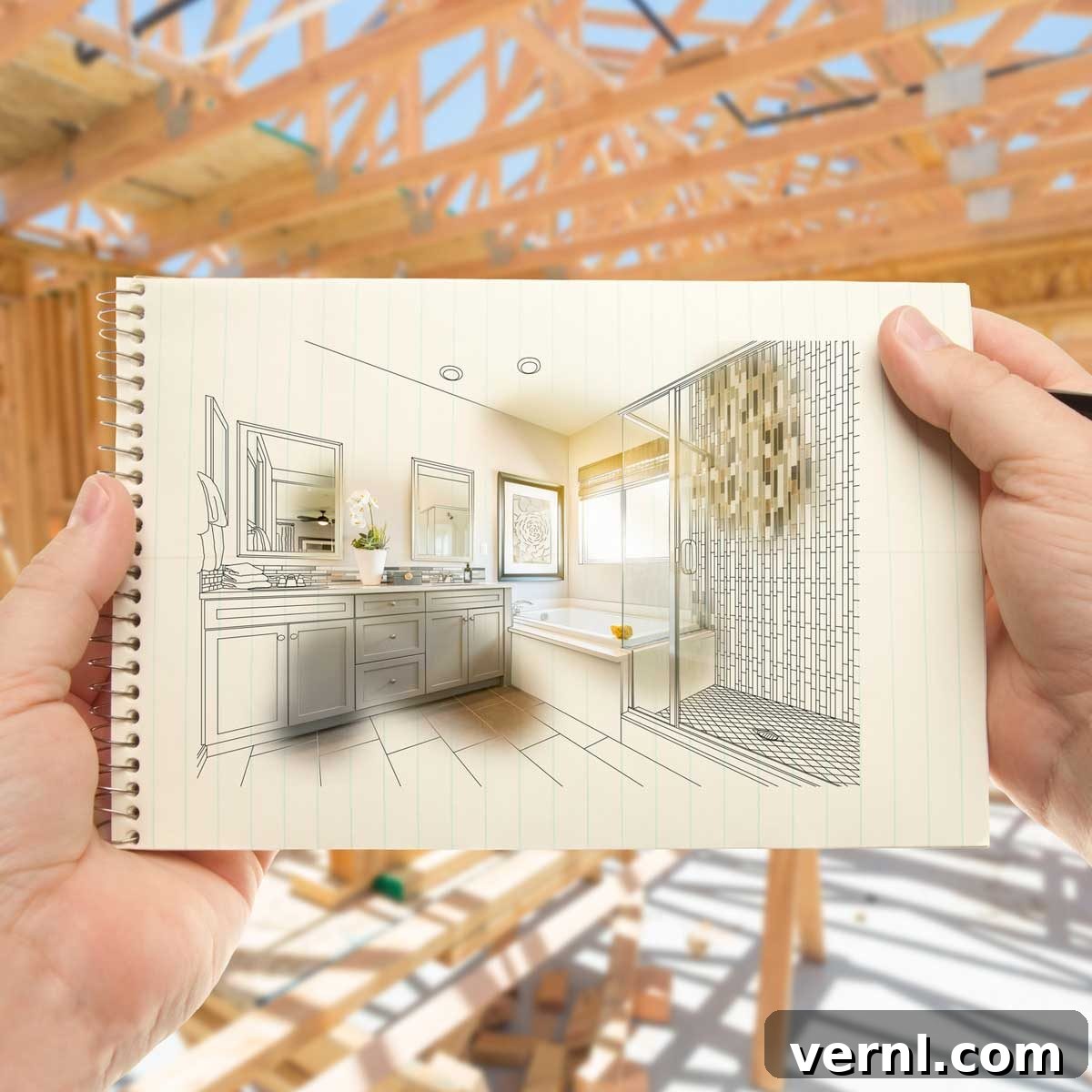
Building a new home is an exhilarating journey, but it’s also an investment that can quickly escalate. With every professional, from the general contractor to the landscaping crew, on the clock, costs accumulate rapidly. Savvy homeowners are increasingly exploring creative strategies to manage their budget, and one of the most effective methods is by undertaking a portion of the labor themselves. This approach, often referred to as “sweat equity,” empowers you to directly influence the bottom line, turning your effort into tangible savings.
“Industrious and creative people have many paths to the home of their dreams,” states Janie Coffey, a respected general contractor and real estate broker at The Coffey Team – Compass. She emphasizes the importance of professional expertise for critical systems: “You will always want to have licensed professionals for the mechanical, electrical, and plumbing (MEPs).” However, Coffey adds, “a DIY effort for the non-systems parts of the home can go a long way to stretch a budget.” This strategy allows you to strategically tackle tasks that don’t require specialized licenses or highly technical skills, freeing up financial resources for essential components.
This owner-builder approach is particularly well-suited for projects like building a smaller, more manageable cabin or a second home. In such cases, stretching the project over several months of dedicated DIY weekends becomes less disruptive to daily life and can be a rewarding endeavor. It offers flexibility and the opportunity to truly personalize your living space while keeping costs in check. However, embarking on a DIY home build requires careful consideration and an honest assessment of your capabilities.
Tom Kraeutler, host of The Money Pit podcast, offers a crucial warning: the key to a successful DIY approach lies in meticulous planning and a realistic understanding of your limits. “Sometimes tackling a project yourself saves money and time, but in other cases, it can end up costing you more all the way around,” he cautions. Before you even pick up a hammer, Kraeutler advises, “When trying to decide if you should hire a contractor or do it yourself, the first step should be an honest evaluation of whether or not you’re the best person for the job based on your level of skill and experience, as well as how much time you have available.” This self-assessment is paramount to ensuring your DIY efforts lead to savings, not costly mistakes or delays.
If you’ve carefully weighed the pros and cons, realistically assessed your skills, and are ready to roll up your sleeves, significant savings await. Here are several proven ways you can save money on your new home or cabin build by strategically taking on specific tasks yourself.
Embrace the Efficiency of Stock House Plans
One of the initial and most substantial expenses in home construction is architectural design. Hiring a professional architect or engineer to create custom blueprints can add thousands, or even tens of thousands, to your overall project cost. For those looking to control their budget without compromising on quality or aesthetics, browsing premade or “stock” house plans presents an excellent alternative. These plans are pre-designed by professionals, eliminating the need for bespoke architectural fees.
Choosing a stock plan is a fantastic option if you possess a natural eye for design and can effectively visualize two-dimensional floor plans in three dimensions. Online databases and specialized websites offer a vast array of designs, allowing you to filter by size, style, number of rooms, and even specific features, making it easier to find one that aligns with your vision and budget. While you won’t have complete control over every minute detail of your home’s layout, many reputable blueprint companies offer limited customization services for an additional, albeit often reasonable, fee. This allows you to make minor adjustments, such as modifying a room dimension or adding a window, without incurring the full cost of a custom design.
Furthermore, if significant but not exhaustive changes are required, you can still hire a local professional to make specific adjustments to the chosen stock plans. This approach allows you to meet your most important specifications and functional requirements while sidestepping the premium price tag associated with a fully customized, from-scratch design. It’s a smart way to get a well-engineered home tailored to most of your needs, at a fraction of the cost.
Take the Helm: Be Your Own General Contractor
Assuming the role of your own general contractor (GC) is arguably the single most impactful way to reduce the cost of building your home. Most states do not require you to be a licensed general contractor for the construction of your personal residence, making this a viable option for many owner-builders. By managing the project yourself, you can potentially save more than 10 to 15 percent of your total building cost, a figure that translates into tens of thousands of dollars on an average home.
This significant saving comes with significant responsibility. As your own GC, your primary duties will include hiring and coordinating all expert subcontractors (e.g., foundation crew, framers, plumbers, electricians), overseeing their work, managing the project schedule, tracking expenses, and ensuring quality control. You will need a basic, yet solid, understanding of the entire construction process, from groundbreaking to final inspection. Success in this role often hinges on strong organizational skills, meticulous attention to detail, excellent communication abilities, and a knack for problem-solving under pressure. If you are a natural people person and good at juggling multiple tasks and timelines, managing a straightforward cabin or home build can be a rewarding challenge.
However, it’s crucial to understand the administrative and legal aspects. When you act as your own general contractor, you are typically required to obtain all relevant building permits yourself, navigate local zoning laws, and schedule inspections. Furthermore, securing appropriate insurance, such as a builder’s risk or fire policy, effective from when the building materials arrive or the first worker sets foot on the site, becomes your responsibility. While some architects or subcontractors may offer to handle permits as part of their fees, the ultimate liability and oversight fall squarely on your shoulders. It’s a demanding role, but for the right individual, the financial rewards and sense of accomplishment are immense.
Direct Procurement: Purchase Building Materials Yourself
Another effective strategy for cutting construction costs is to take direct control over purchasing building materials. When a subcontractor is responsible for material procurement across numerous projects, they often factor in a margin for their time, effort, and the financial strain of fronting these costs. Since you will ultimately be billed for materials like lumber, wiring, siding, roofing, and insulation anyway, offering to purchase these materials directly from suppliers based on the subcontractor’s precise specifications can lead to considerable savings.
By buying materials yourself and paying for them in full upfront, you gain several advantages. Subcontractors may be more willing to reduce their bids for labor, as the financial burden and logistical complexities of material acquisition are lifted from their shoulders. Additionally, suppliers frequently offer slight discounts for upfront payment, particularly for large bulk orders. This direct purchasing power allows you to shop around for the best prices, compare quality across different vendors, and even negotiate deals, something a busy subcontractor might not have the time to do for every item.
Beyond cost savings, direct procurement gives you greater control over the quality and timing of deliveries. You can ensure that materials meet your exact standards and are on-site precisely when needed, minimizing potential delays. Just be prepared for the logistical challenge of managing deliveries, inventory, and secure storage for all the materials. This method requires meticulous organization and communication with your subcontractors to ensure seamless material flow without disrupting the construction schedule.
Smart Savings: Assemble Wholesale Cabinets and Countertops
Kitchen and bathroom cabinetry represents a significant line-item cost in any new home build. Custom-built cabinets and high-end countertops can easily consume a substantial portion of your budget. However, you can secure premium-quality cabinets at a fraction of the normal price by opting for Ready-To-Assemble (RTA) options from a wholesaler. RTA cabinets are manufactured components that you assemble on-site, saving significantly on manufacturing labor costs.
Once the RTA cabinets arrive, the next step is to assemble and hang them yourself. While this requires patience, attention to detail, and often an extra helper or two, the process is generally straightforward with clear instructions. Many top-tier RTA cabinet manufacturers also provide excellent customer support, offering guidance if you encounter any challenges during assembly or installation. This DIY effort not only saves on installation labor but also allows you to invest in higher-quality cabinet materials or features than you might otherwise afford.
Similarly, for countertops, opting for premade, standard-size marble, granite, or other solid surface countertops is an increasingly popular and cost-effective choice. If you design your kitchen and bathroom layouts to accommodate these standard sizes, you can purchase slabs directly and potentially install the countertop yourself, spending about half of what you would on a custom-fabricated and installed option. For instance, while custom marble or granite countertops can range from $2,000 to $4,500 or more for an average kitchen, going prefab with DIY installation can easily save you over $1,000, allowing those funds to be allocated elsewhere in your build.
The Wisdom of Standard Sizes
Whether you’ve meticulously selected off-the-rack blueprints or invested in a custom architectural plan, a cardinal rule for cost-efficiency is to insist on standard sizes for key components, especially windows and doors. While a unique, oversized circular window might seem appealing, oddly-sized or unusually shaped windows and doors necessitate custom manufacturing. This customization drives up the overall purchase price significantly and often increases installation costs due to the specialized labor and framing required.
Standard-sized windows and doors, on the other hand, are mass-produced, making them far more readily available and significantly less expensive. They can be purchased off-the-shelf from most building supply stores and are often included in bulk discounts from suppliers. Furthermore, you can often shop around for remnants, clearance items, or discontinued lines at construction supply stores, where standard windows and doors are frequently priced to sell, offering excellent bargains. Not only do standard sizes save money upfront, but they also simplify future maintenance and replacements, as finding compatible parts or units will be much easier and more affordable down the line. This principle extends to other fixtures and appliances as well; choosing standard dimensions minimizes custom cabinetry work or structural modifications, further streamlining your budget.
The Art of Comparison Shopping for Bargains
One of the most enjoyable and impactful ways an owner-builder can save money is by dedicating time and energy to comparison shopping for finishes and appliances. The more effort you invest in this process, the greater your chances of scoring high-quality, even name-brand, items at bargain-basement prices. This isn’t just about finding the cheapest option; it’s about maximizing value by getting premium products at reduced costs.
Top money-saving tricks abound for the diligent shopper. Explore local carpet and tile warehouses for sale-priced remnants or end-of-lot deals, which can often cover smaller rooms or specific areas beautifully. For lighting and plumbing fixtures, online retailers often offer significantly better prices than brick-and-mortar stores, thanks to lower overheads and broader competition. Keep an eye out for discounted floor models, open-box items, or “scratch-and-dinged” appliances at appliance outlets; these often have minor cosmetic imperfections but are fully functional and come with substantial price reductions. Additionally, regularly check online marketplaces like eBay, Craigslist, Facebook Marketplace, or local salvage yards for used, repurposed, or even new-old-stock items. You might discover unique architectural elements, vintage fixtures, or perfectly usable building materials that add character to your home at a fraction of the cost.
Crucially, never hesitate to negotiate prices, especially when purchasing multiple items or dealing with independent suppliers – it’s always worth a try! As Janie Coffey wisely notes, “When you are doing the legwork on your own, you can be more creative in finding materials.” She adds, “A bit of ingenuity and elbow grease as well as being a savvy online, an in-person materials scavenger can go a long way to achieving your dream home. Not all paths are the traditional one!” This creative approach to sourcing can transform your budget and allow you to infuse your home with unique touches without overspending.
Strategic DIY: Take on Less-Skilled Jobs
If you have embraced the role of your own general contractor or have negotiated with your builder, there are numerous jobs that, while labor-intensive, do not require the specialized licensing or advanced skills associated with MEP (mechanical, electrical, plumbing) systems. These “less-skilled” tasks are excellent candidates for DIY efforts, allowing you to contribute significant sweat equity and keep overall costs down. Examples include installing wall sheathing, applying batting insulation, hanging and finishing drywall, putting down plywood subfloor decking, and installing wood or laminate flooring.
These tasks are often more about careful measurement, repetitive physical work, and following instructions rather than complex technical knowledge. Many resources, including online tutorials, workshops, and even local building supply store clinics, can teach you the necessary techniques. However, clear communication and approval are essential if you are working with a professional builder. “Check with your local building department as regulations vary, but if you are working with a general contractor, you need to get [their] support,” advises Tim Bakke, a home building and residential general contractor from The Plan Collection.
Bakke highlights a common concern among contractors: “Many contractors don’t or would rather not allow you to participate. Because you’re an unknown quantity, the GC may not want to risk his insurance coverage on you. And because the GC is in charge of meeting deadlines and getting the house finished on budget, [they] need to be assured that you can hold up your end.” This underscores the need for an open discussion with your builder upfront. If they agree, ensure you commit fully to the agreed-upon tasks and timeline, maintaining clear communication to avoid any delays or conflicts that could ultimately cost more. Focus on tasks you can confidently complete to a professional standard, or where minor imperfections are acceptable for a rustic or personal touch.
Personalize Your Space: Leave the Final Touches for Yourself
Even if you decide to hire a general contractor for the bulk of the construction, you can still achieve significant savings and infuse your personal style by requesting that certain final touches be excluded from their bid. These are often labor-intensive tasks that don’t require highly specialized tools or licenses, making them perfect for a motivated DIY homeowner once the main structural work is complete. Such tasks commonly include interior painting, staining wood trim, installing light fixtures, hanging doors, and tackling all aspects of landscaping.
Painting, for instance, is a task that most homeowners can master with a bit of practice and patience, and it offers substantial savings compared to professional painters. Similarly, landscaping, from planting shrubs and trees to laying sod or creating garden beds, can be approached incrementally over weekends, allowing you to spread the cost and effort. These projects allow you to directly contribute to the aesthetic appeal of your new home and truly make it your own.
However, it’s crucial to approach these “final touches” with a realistic understanding of the time and effort involved. “Just keep in mind that every project requires a certain amount of preparation and a sliding scale of time to accomplish,” reminds Tom Kraeutler. He cautions against the idealized portrayals often seen on television: “Neither of which is obvious in the many popular home improvement TV shows that edit days, weeks and months of hard work down to a few minutes of home improvement bliss.” Be prepared for the reality that these tasks will consume your evenings and weekends, but the satisfaction of doing them yourself, and the money saved, will be well worth the effort.
Building your own home is an immense undertaking, but by strategically employing these DIY strategies, you can transform a daunting financial challenge into an achievable dream. From selecting cost-effective plans to taking on specific construction tasks and handling the final aesthetic touches, every hour of your effort can translate directly into substantial savings. Success in this journey hinges on thorough planning, honest self-assessment, continuous learning, and a relentless commitment to your vision. Embrace the journey, and you’ll not only save money but also build a profound personal connection with the home you create.