Embarking on a new home build is a multifaceted endeavor, requiring careful consideration of numerous elements. You’ve likely dedicated significant thought to major decisions like siding, roofing, and landscaping materials, along with the various types of driveways and their respective pros and cons. While these aesthetic and functional aspects are undeniably crucial to your home’s final appearance and longevity, there’s a vital, often-overlooked component of site preparation that demands your immediate and proactive attention: the installation of a silt fence. If this critical step hasn’t yet been planned, it’s essential to pause and prioritize it now—it is an absolute must-have for any new home construction project to ensure both compliance and environmental responsibility.
The importance of silt fences extends far beyond good practice; most jurisdictions have strict regulations requiring their presence at all construction sites. Failing to install an effective silt fence can lead to a cascade of costly and frustrating issues. Without these barriers, you could find yourself contending with a clogged municipal sewer system, significant amounts of sediment pouring into public streets, and valuable topsoil washing away. Such oversights not only threaten local ecosystems and water quality but also carry severe penalties. If you or your contractor choose to skip this fundamental step, you’re likely to face substantial fines from local authorities, project delays due to stop-work orders, and understandably, the ire of annoyed neighbors concerned about environmental impact and property damage. Proactive planning and proper installation of a silt fence are foundational to a smooth, compliant, and environmentally conscious building process.
What Is a Silt Fence and Why It’s Indispensable for Your Project
A silt fence differs significantly from typical property fences you might consider for privacy or security. It is a specialized, temporary barrier primarily employed at construction sites for the express purpose of erosion and sediment control. As the Environmental Protection Agency (EPA) emphasizes, its fundamental role is to “retain the soil in disturbed land.” This means it acts as a crucial safeguard, preventing the soil excavated, graded, and moved during your home build from washing into roads, storm drains, and ultimately, into precious natural waterways such as rivers, lakes, streams, ponds, and estuaries. The environmental ramifications of unchecked sediment runoff are profound, impacting aquatic life, water quality, and the overall health of ecosystems.
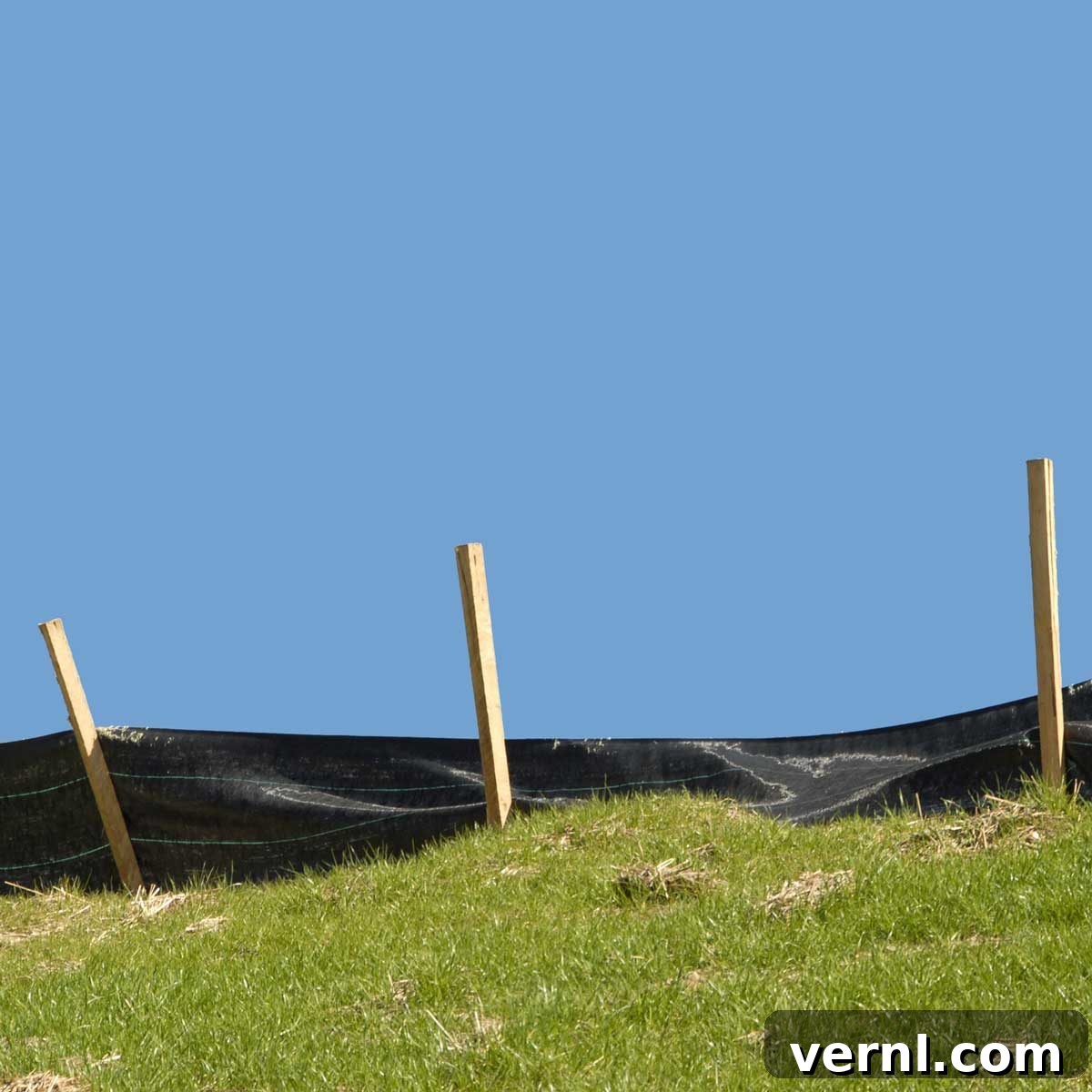
You’ve undoubtedly observed silt fences when driving past residential and commercial development sites. They are easily recognizable by their utilitarian appearance: a continuous line of porous fabric, known in the industry as a geotextile, securely held upright by a series of sturdy posts. It’s important to remember that these fences are designed for temporary use; they are not intended to be a permanent feature once construction is complete and the ground has been stabilized with landscaping or other permanent cover. The effectiveness of a silt fence is not inherent simply by its presence but depends entirely on its proper design, strategic placement, and meticulous installation. This process involves precise measurements, significant trenching to anchor the fabric, and careful consideration of site hydrology to ensure it functions as an efficient filtering and containment system.
The Mechanics of Effective Sediment Control
To truly understand the value of a silt fence, it’s helpful to grasp its underlying mechanics. When rainwater flows across a graded construction site, it picks up loose soil particles, creating sediment-laden runoff. The silt fence acts as a physical barrier that intercepts this flow. The specially designed geotextile fabric is permeable, meaning it allows water to slowly pass through while simultaneously trapping the solid sediment particles. As the water encounters the fence, its velocity is reduced, causing the suspended soil to settle at the base of the barrier. The filtered water, now significantly cleaner, can then continue its course, minimizing its impact on downstream environments. This controlled filtration process is essential for protecting water quality and preventing the accumulation of silt in drainage systems and natural habitats.
The geotextile fabric itself is engineered for specific performance characteristics, including filtration efficiency, tensile strength to withstand pressure, and often UV resistance to prevent degradation from sun exposure throughout the construction timeline. For a silt fence to perform optimally, proper installation is paramount. This typically involves digging a trench at least 6-8 inches deep along the planned fence line. The bottom edge of the fabric is then placed into this trench, with the excavated soil backfilled and compacted firmly against it. This crucial step, known as “keying-in,” prevents runoff from undermining the fence and flowing beneath it. The support posts, whether wood or metal, are driven firmly into the ground at specified intervals to keep the fabric taut and upright, even when sediment begins to accumulate against it. Shortcuts in any of these installation steps can severely compromise the fence’s integrity and its ability to effectively control sediment.
Exploring the Types of Silt Fences for Home Builds
While various methods exist for erosion and sediment control, specific types of silt fences have become standard for home construction sites. These variations are designed to accommodate different site conditions, soil types, and the potential volume of sediment runoff. When installed correctly and maintained diligently, all approved types are engineered to be sturdy and highly effective at preventing soil from reaching local roads, storm drains, and sensitive watersheds, thereby safeguarding the environment and ensuring regulatory compliance.
Standard Staked Silt Fences: Types A and B
The standard staked silt fence is the most basic and frequently used type, making it the one you are most likely to install for an average residential construction project. Its widespread use is due to its cost-effectiveness and proven efficiency in moderate erosion conditions. The primary distinction between Type A and Type B standard fences lies in the dimensions of the geotextile fabric and the corresponding length of the support posts. These variations allow for customization based on the specific requirements of the site and local regulations.
A Type A fence typically necessitates a 36-inch wide fabric, which allows for a deeper buried section and a taller exposed barrier. It requires a minimum post length of four inches driven into the ground, ensuring adequate stability. In contrast, a Type B fence uses a 22-inch wide fabric and a minimum post embedment of three inches. Beyond these dimensional differences, the overall design and installation principles remain largely consistent. Both varieties commonly feature wooden posts, often hardwood for enhanced durability and structural integrity, or PVC posts, which offer advantages like resistance to rot and insects. The choice between wood and PVC often depends on material availability, cost, and the desired lifespan for the temporary installation. Proper post spacing, typically around 6 to 8 feet, and secure attachment of the fabric to the posts are crucial for the fence’s performance.
Type C Silt Fences: The Reinforced Solution (Wire-Back)
Also known as wire-back silt fences, Type C fences represent a more robust and reinforced solution, engineered for challenging site conditions where standard fences might prove inadequate. They are typically recommended for home builds adjacent to highly sensitive areas such as creeks, streams, and ponds, or on sites characterized by steeper slopes, highly erodible soils, and a higher anticipated volume of sediment runoff. The enhanced construction of Type C fences provides the extra reinforcement needed to withstand greater pressure from accumulated sediment and water without failing.
According to comprehensive guidelines, such as those detailed in Dyersburg, Tennessee’s erosion control handbook, Type C fences are constructed with heavier-duty materials. They commonly utilize 40-inch metal or steel posts, which offer superior strength and rigidity compared to the wooden or PVC posts found in Type A and B fences. These stronger posts support 36-inch geotextile fabric, which is further reinforced with a woven wire mesh backing. This wire mesh acts as a crucial secondary support structure, preventing the fabric from bulging, tearing, or collapsing under significant sediment loads. The combination of sturdy metal posts and wire-backed fabric makes Type C silt fences an indispensable choice for environments where maximum strength and durability are required to ensure effective and reliable erosion control throughout the construction period.
Selecting the Right Silt Fence for Your Project’s Needs
The decision regarding which type of silt fence your home build requires is not a one-size-fits-all answer; it depends on a careful evaluation of various specific factors unique to your construction site. These critical considerations include the slope and topography of your land, the specific characteristics of your soil (e.g., sandy, clayey, loamy), the expected rainfall intensity and patterns in your region, the overall size of the disturbed area, and most significantly, the proximity of your site to sensitive environmental features such as waterways, wetlands, or protected habitats.
Before you proceed with any groundwork or material purchases, it is absolutely essential to consult with your local building inspections department or the equivalent municipal planning and environmental agency. These authorities are the definitive source for confirming specific requirements, design standards, and approved materials lists for sediment and erosion control in your area. Many cities and counties, like Faribault, Minnesota, proactively provide detailed specifications for silt fences and other best management practices directly on their websites. This information is often available as downloadable PDF handouts or comprehensive erosion control manuals, allowing you to easily access and understand the exact guidelines you need to follow for compliance.
Key Factors Influencing Your Silt Fence Selection:
- Site Topography and Slope Gradient: Steeper slopes lead to faster runoff velocities and higher potential for erosion, often necessitating stronger, reinforced fence types like Type C to effectively manage the increased sediment load.
- Soil Type and Erodibility: Fine, silty, or sandy soils are generally more prone to erosion than cohesive clay soils. The soil composition will influence the choice of geotextile fabric and the required frequency of maintenance.
- Rainfall Intensity and Volume: Areas experiencing heavy or frequent rainfall events will require more robust and well-anchored silt fences to prevent breaches and maintain their effectiveness.
- Size of the Disturbed Area: Larger construction footprints naturally have a greater potential for soil disturbance and sediment generation, which may necessitate more extensive fencing layouts and a combination of control measures.
- Proximity to Water Bodies: Sites located adjacent to creeks, rivers, lakes, or storm drains are considered highly sensitive. These locations typically have stringent regulations and often mandate Type C or other enhanced sediment control measures to prevent direct water contamination.
- Local Jurisdictional Requirements: The most crucial factor. Local codes and permits will dictate precise specifications for fabric type, post material, spacing, trenching depth, and overall placement. Always defer to these local regulations.
Understanding Silt Fence Costs and Its True Value
When you’re meticulously planning the budget for your new home, the cost of a silt fence might appear as another line item to consider. However, it’s crucial to frame this expenditure not merely as a cost, but as an indispensable investment. The actual expense of installing a silt fence is typically minimal when compared to the overall cost of your entire home construction project. More importantly, this upfront investment pales in comparison to the potentially devastating environmental costs and the severe financial penalties and legal liabilities that can arise from neglecting proper sediment control. Consider it an essential insurance policy that protects your project, your finances, and the integrity of the local environment.
The real cost associated with a silt fence will primarily depend on several key factors: the total linear footage required to enclose your construction site, the specific type of silt fence chosen (e.g., standard Type A/B versus a reinforced Type C), and the materials used (e.g., wooden posts versus metal, different grades of geotextile fabric). For smaller projects or DIY installations, you can often find convenient complete kits at major home improvement retailers. For example, a 300-foot Type C silt fence kit, which includes both the reinforced fabric and posts, might be available for less than $1,300. Alternatively, for more localized needs, a 50-foot roll of basic silt fence fabric can be purchased for less than $15. For larger-scale projects or custom requirements, individual components can be procured from wholesalers and specialized retailers focusing on erosion control products, where basic wooden posts are frequently available for less than $2 each, making bulk purchases economical.
Navigating Material Shortages and Contractor Bids
It’s important to remain cognizant of the broader economic landscape, particularly regarding construction supplies. In recent years, numerous reports have indicated record numbers of builders experiencing material shortages and extended backorder delays across various construction items. This volatility can significantly impact both the cost and the timeline for acquiring silt fence materials. Therefore, it is highly advisable to plan ahead, order your materials well in advance, and maintain flexibility to consider alternative suppliers or products if your preferred options are unavailable. Always confirm lead times with your suppliers to mitigate potential project delays.
If you have hired a general contractor to oversee your home build, the cost for both the silt fence materials and its professional installation will most likely be incorporated into your overall project bid. It is prudent to ensure that your contract clearly outlines the type of silt fence to be installed, its placement conforming to local regulations, and that the associated cost is either itemized or explicitly accounted for within the comprehensive bid. A reputable and experienced contractor will inherently understand the critical importance of proper sediment control and will factor in quality materials and professional installation, recognizing that effective erosion control is a fundamental and non-negotiable aspect of responsible and compliant construction practices.
DIY Silt Fence Installation: To Tackle or To Hire a Pro?
For seasoned DIY enthusiasts who possess a strong foundational knowledge of erosion control principles, landscaping techniques, and general construction site management, installing a silt fence can indeed be a feasible undertaking. It presents an opportunity to save on labor costs and maintain direct oversight of a critical component of your site’s environmental compliance. However, it is paramount to approach this project with a realistic understanding of its challenges and demands. The most physically demanding aspect of the installation process is often the digging of the trench, which must be precisely executed to effectively anchor the geotextile fabric. While it can be accomplished manually with shovels for smaller sections, this is an incredibly arduous task for any significant length of fencing. Therefore, the use of a small excavator or a dedicated trenching machine is highly recommended to ensure the trench is dug to the correct depth and width efficiently and consistently.
Before any ground is broken for a DIY installation, your absolute first step must be to thoroughly research and track down all local requirements and specific regulations pertaining to erosion and sediment control within your municipality or county. These regulations are precise and often dictate everything from the type of silt fence materials approved, to detailed installation methodologies, and exact placement guidelines. Simultaneously, it is crucial to educate yourself on the EPA’s best management practices for silt fences, which provide comprehensive guidance on proper trenching depths, post spacing, fabric anchoring techniques, and ongoing maintenance. Seek out clear, reliable instructions and consider watching instructional videos to gain a full understanding of the practical nuances of correct installation.
The High Stakes of Improper Installation
It cannot be overstated: a silt fence is emphatically not a project to experiment with if you are a beginner with limited or no experience in construction or erosion control. The stakes involved are simply too high. An improperly installed silt fence is not only ineffective but can also create a false sense of security, potentially leading to far greater problems than having no fence at all. Weak points in the installation, an inadequately dug trench that allows water to flow underneath, insufficient post support, or incorrect attachment of the fabric can all lead to the fence failing under pressure from heavy rainfall or accumulated sediment. Such a failure will result in the uncontrolled release of sediment, leading directly to the very fines, environmental damage, and costly project delays that you are striving to prevent.
If you harbor any doubts whatsoever about your ability to properly design, install, and consistently maintain a compliant and effective silt fence, the wisest course of action is always to consult a professional. Erosion control specialists, experienced excavation contractors, or even your general contractor can provide invaluable expertise, ensuring that the fence meets all local regulatory standards and effectively protects your site. Investing in professional installation offers peace of mind, guarantees compliance, and ultimately safeguards both your construction project and the surrounding environment from potentially costly mistakes and liabilities.
Ongoing Maintenance: A Crucial, Often Overlooked Step
The installation of a silt fence is not the final step; its sustained effectiveness is heavily reliant on consistent inspection and timely maintenance throughout the entire construction period. Silt fences should be inspected regularly, ideally on a weekly basis, and most critically, immediately after any significant rainfall event. During inspections, carefully check for any signs of damage, such as tears or rips in the fabric, loosened or leaning support posts, sections where water has visibly flowed underneath the fence, or areas where sediment has accumulated to the point of potentially overflowing the barrier. Any identified issues must be repaired promptly to restore the fence’s integrity and functionality. Accumulated sediment needs to be removed periodically to maintain the fence’s capacity to trap new sediment and prevent it from breaching. This diligent and proactive maintenance is absolutely essential to ensure the silt fence continues to perform its vital function effectively, protecting your site and the environment until the land is permanently stabilized and the fence can be safely and legally removed.