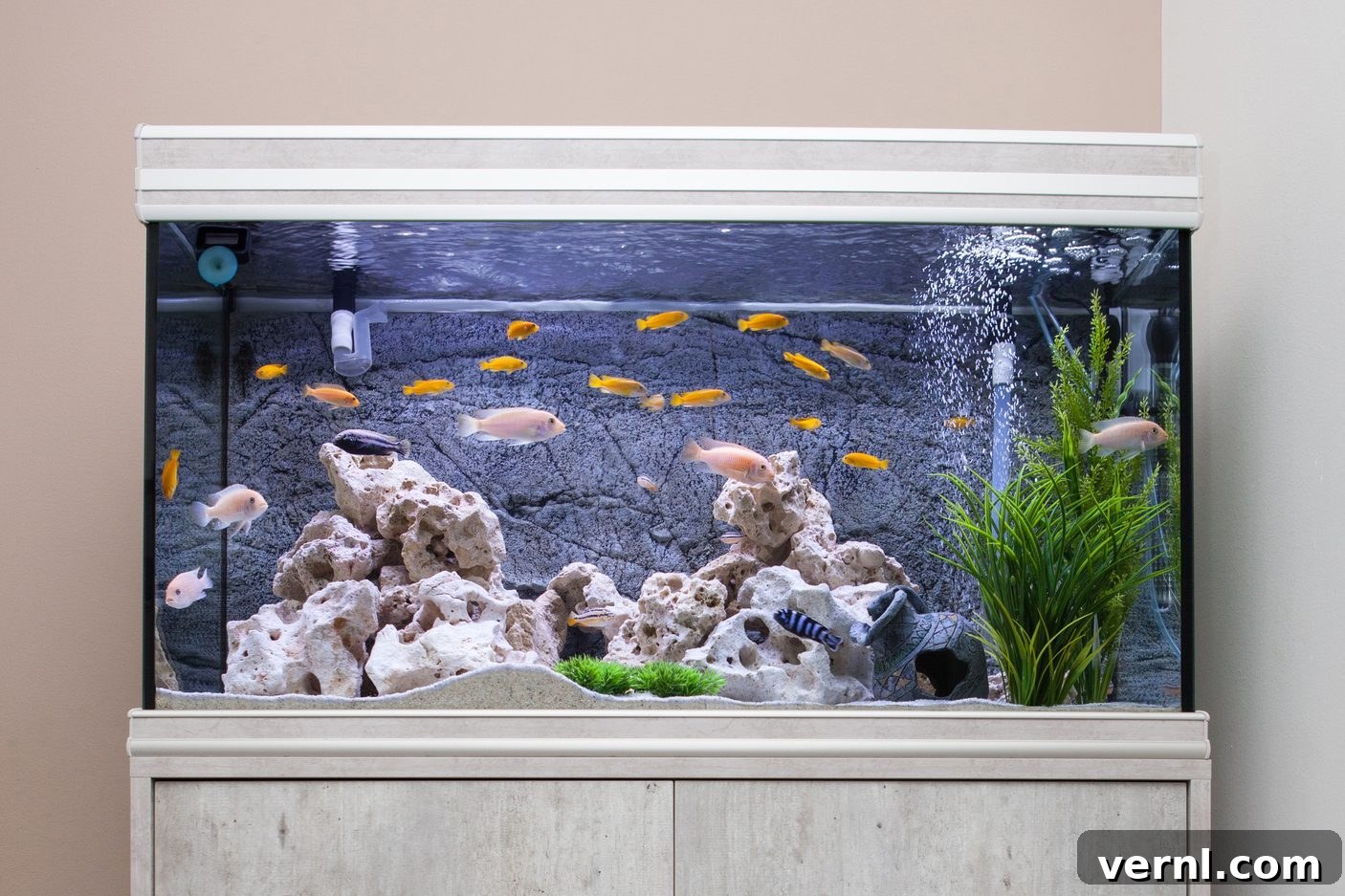
Maintaining a stable and appropriate pH level is paramount for the health and well-being of your aquarium inhabitants. While pH might not always be the first parameter that comes to mind, significant fluctuations in acidity or alkalinity can inflict considerable stress on fish and other aquatic life. Fish are particularly sensitive to sudden environmental changes, and certain species thrive only within specific pH ranges.
As highlighted by professional aquarist Douglas McComb, the cornerstone of successful aquarium keeping is stability. “In most circumstances, a neutral or slightly alkaline pH that is stable is the goal,” he advises. “The pursuit of an ideal pH can often lead to unnecessary complications or problems.” This underscores the importance of consistency over an exact, arbitrary number. Instead of striving for a specific pH that might be difficult to maintain, focus on achieving a level that remains constant and is suitable for your tank’s residents.
If your aquarium water tests reveal a higher pH than recommended for your specific species, understanding the causes and implementing safe, gradual methods to lower it is crucial. This comprehensive guide will walk you through identifying high pH issues, understanding their origins, and applying expert-approved techniques to safely adjust your aquarium’s pH, ensuring a thriving habitat for your aquatic friends.
While ensuring proper pH, don’t overlook other vital aspects of tank maintenance. Discover essential tips for cleaning aquarium sand and maintaining an impeccably clean and safe environment for your cherished aquatic companions!
Understanding pH: Why Aquarium pH Levels Matter
Before diving into solutions, it’s essential to grasp what pH represents and why it’s so critical for an aquarium. pH is a measure of the acidity or alkalinity of water, expressed on a scale from 0 to 14. A pH of 7 is considered neutral; values below 7 indicate acidity, while values above 7 signify alkalinity. For most freshwater aquariums, a pH range between 6.5 and 7.5 is generally acceptable, though many species have narrower, specific requirements.
Dramatic shifts in pH, whether up or down, can cause immense stress to fish, leading to a condition known as “pH shock.” This stress can manifest as lethargy, erratic swimming, labored breathing, increased susceptibility to disease, and in severe cases, even death. A stable pH allows fish to regulate their internal bodily functions more efficiently, promoting stronger immune systems, better digestion, and overall vitality.
Beyond direct impact on fish, pH also influences the toxicity of ammonia. In higher pH conditions, less harmful ammonium converts into highly toxic ammonia, posing a significant threat to your tank’s inhabitants even at low concentrations. Therefore, understanding and managing pH is not just about comfort; it’s about life and death for your aquatic pets.
When Does High pH Become a Problem in an Aquarium?
While slight variations in pH are often harmless, consistently high pH levels or sudden spikes can create significant health challenges for your fish. One of the primary concerns is the adverse effect on the natural slime coat that fish produce to protect themselves. This protective barrier defends against parasites, bacteria, and fungal infections. When pH levels are too high, this slime coat can be compromised, leaving fish vulnerable and susceptible to various ailments.
Moreover, pH levels often serve as crucial indicators for other influential water parameters, such as carbonate hardness (KH) and general hardness (GH). KH, also known as alkalinity, is a measure of the bicarbonates and carbonates in the water, which act as natural buffers to prevent drastic pH swings. High pH can sometimes be linked to high KH, meaning the water has a strong buffering capacity, making it resistant to pH changes, even if you try to lower it.
Douglas McComb notes that most captive-bred fish commonly found in pet stores are surprisingly resilient and can adapt well to the typical pH levels of home aquariums, which tend to be slightly alkaline (often ranging from 7.5 to 7.8). However, there are specific situations where elevated pH levels can become a considerable concern:
-
Introducing New Fish: When bringing new fish home, they are already undergoing stress from transportation. If their previous environment had a drastically different pH level from your tank water, introducing them abruptly can lead to severe pH shock. To mitigate this risk, it’s crucial to acclimate them slowly. Gradually add small amounts of your tank water to the bag they arrived in, approximately every fifteen minutes over several hours. This allows the new fish to slowly adjust to the chemical properties of your water, including pH, minimizing stress and ensuring a smoother transition.
-
Keeping Certain Species or Wild-Caught Fish: While many tank-bred species are adaptable, some fish, particularly those collected from the wild or species with specific natural habitat requirements, are highly sensitive to pH. For instance, McComb points out that wild-caught Cardinal tetras and Rummy-nose tetras naturally prefer more neutral or slightly acidic pH levels found in their native South American blackwater rivers. Discus, Angelfish, and many other Amazonian species also thrive in softer, more acidic water. However, it’s worth noting that even some wild-caught fish can be conditioned to slightly higher pH levels over time if the changes are gradual and stability is maintained. If your sensitive species are visibly thriving and healthy in a slightly more alkaline pH than typically recommended, it’s often best to prioritize stability and avoid unnecessary adjustments that could cause more harm than good.
-
Cultivating Specialty Planted ‘Nature’ Aquariums: Aquascaping, particularly in the style of “nature aquariums” rich with live plants, often aims for a slightly acidic environment. While some aquatic plants tolerate high pH levels, many enthusiasts prefer to maintain a pH between 6.5 and 7.0. This slightly acidic range enhances the bioavailability of essential nutrients like iron and other trace elements, promoting optimal plant growth, vibrant coloration, and reducing the risk of algae proliferation. In such setups, the interaction between CO2 injection (often used for plant growth) and water hardness becomes particularly critical for maintaining the desired pH.
To accurately monitor your aquarium’s pH, McComb strongly advocates for standard pH reagent tests. These liquid-based tests, readily available at fish retailers and online, provide a significantly more precise and reliable measure of pH levels compared to less accurate paper indicator strips. Consistent testing is your first line of defense in identifying and addressing pH imbalances. If your tests reveal a pH that is unexpectedly low, understanding how to raise pH in an aquarium safely will be your next step.
What Causes High pH in an Aquarium?
Understanding the root causes of high pH in your aquarium is the first step toward effective and sustainable solutions. Several factors can contribute to elevated pH levels, some of which are inherent to your water source or choice of aquarium décor. Let’s explore the most common culprits:
Hard Tap Water
The most prevalent reason for high pH in home aquariums is often the mineral composition of your tap water. Many municipal water supplies are characterized by “hardness,” meaning they contain high concentrations of dissolved minerals, particularly calcium and magnesium carbonates. These carbonates act as natural buffers, resisting changes in pH and often pushing it towards the alkaline side. While Douglas McComb acknowledges that “When you have an established aquarium, with the nitrogen cycle producing acid all the time, you’re not going to end up with a pH of 9.0” naturally, a high initial pH from hard tap water can still set your baseline high and make it challenging to lower.
It’s crucial to test your tap water directly to understand its baseline pH and hardness (KH and GH). This will inform your strategy for water changes and overall pH management. Regions with limestone bedrock, for example, often have naturally hard and alkaline tap water. If your tap water is the primary cause, simply performing water changes with it will continuously reintroduce the elements that raise pH.
Water Softeners
Counter-intuitively, relying solely on a residential water softener might not solve your aquarium’s high pH problem. McComb clarifies, “A water softener removes only general hardness — the calcium or magnesium components that have no impact on pH. Traditional water softeners leave behind the carbonates, which are a major contributor to elevated pH levels.” This means that while your household water might feel “soft” (due to the removal of calcium and magnesium ions that cause scale buildup), its carbonate content (KH) and consequently its pH might remain high, or even be inadvertently increased depending on the specific softening agent used. Therefore, even if your house has a water softener, you can still face challenges with high aquarium pH.
Certain Aquarium Substrates and Decorations
The materials you choose for your aquarium’s substrate and decorations can significantly influence water parameters, including pH. Substrates rich in calcium carbonate are notorious for leaching minerals into the water, thereby increasing both hardness and pH. Examples include:
- Coral Gravel/Crushed Coral: Highly effective at raising and buffering pH to alkaline levels, often used in marine or African cichlid tanks where high pH is desired.
- Aragonite: Similar to crushed coral, this calcium carbonate-based substrate is excellent for marine tanks.
- Limestone/Marble Rocks: Any rock containing calcium carbonate will gradually dissolve and raise pH.
- Shells: Decorative shells, while aesthetically pleasing, are composed of calcium carbonate and will raise pH over time.
McComb notes, “However, in most cases that won’t cause problems unless you have sensitive animals. I actually add coral substrate to some of my aquariums to help keep them stable.” This highlights that a “problem” is often relative to the specific needs of your fish. For species that prefer alkaline conditions, these substrates can be beneficial for stability, but for soft-water species, they are detrimental.
Lack of Regular Water Changes and Overcrowding
While not a direct cause of *high* pH in the same way as hard water or substrates, a lack of consistent water changes can prevent the natural acidic processes within the tank from balancing out alkaline influences. Overcrowding, which leads to increased organic waste, can also strain the buffering capacity of the water, making pH more susceptible to swings, though often towards the acidic side if not managed properly. Nonetheless, regular water changes are crucial for maintaining overall water quality and parameter stability.
How To Safely Lower pH in Your Aquarium
If your aquarium’s pH levels are consistently on the high side for your inhabitants, it’s time to implement strategies to safely and gradually lower them. Remember, stability is key, so avoid drastic changes. Here are five expert-approved methods to reduce pH and maintain a healthier environment:
1. Utilize Reverse Osmosis (RO) or Distilled Water
One of the most effective and precise ways to reduce pH and hardness is by using water with very low or zero alkalinity. Douglas McComb advises, “Reducing carbonate hardness by performing a water change with water of a low or zero alkalinity, such as reverse osmosis or even distilled, will ultimately result in a lower pH.”
Mechanism: Reverse Osmosis (RO) and deionized (DI) water purification systems remove nearly all dissolved solids, including the carbonates and minerals that contribute to hardness and high pH. By performing regular water changes using RO/DI water, you gradually dilute the hard, alkaline water in your tank with pure, soft water.
Application: You can either install reverse osmosis filters for your whole house (a significant investment) or, more commonly for aquarists, use dedicated aquarium-specific RO/DI units to produce water for your tank. Since RO/DI water is almost entirely devoid of minerals, it lacks buffering capacity and essential trace elements. Therefore, it’s crucial to remineralize it with an appropriate buffer solution or by mixing it with a percentage of your regular tap water to achieve the desired pH and hardness before adding it to your tank. This process allows for precise control over your water parameters.
Benefits: Highly effective for lowering both pH and hardness; removes nitrates, phosphates, and heavy metals.
Considerations: Initial cost of equipment; produces wastewater; requires remineralization for fish health; best suited for serious enthusiasts committed to precise water parameter control.
2. Invest in a Carbon Dioxide (CO2) Injection System
For planted aquariums, a carbon dioxide injection system is a dual-purpose solution that not only promotes lush plant growth but also effectively lowers and stabilizes pH.
Mechanism: When carbon dioxide (CO2) is injected into water, it reacts to form carbonic acid (H2CO3). This weak acid increases the acidity of the water, thereby lowering the pH. Running a carbon dioxide reactor or diffuser in your tank precisely adds CO2, offering a level of pH control and stability that chemical additives often cannot match.
Application: CO2 injection systems typically consist of a CO2 cylinder, regulator, diffuser, and often a pH controller that automates the release of CO2 to maintain a target pH. This system makes nutrients more bioavailable for plants, which thrive in slightly acidic conditions.
Critical Warning for Planted Tanks: McComb stresses a vital precaution: “However, McComb says continual CO2 injection in an aquarium with a heavy plant load is a bad idea. Because plants don’t photosynthesize at night, they consume oxygen and release CO2. That can lead to excessive CO2 buildup, causing rapid drops in pH.” This nighttime CO2 spike can deplete oxygen, stress fish, and cause dangerous pH crashes. Therefore, always turn off the CO2 system when the lights go out or use a timer to ensure it operates only during daylight hours.
“Reverse-timer aeration is strongly recommended if you have heavy plant loads, even with a daytime-only CO2 injection regimen,” McComb adds. Introducing oxygen bubbles at night through air stones or a sponge filter provides essential oxygen for both your plants and fish when CO2 levels are naturally rising.
Benefits: Excellent for plant growth; precise and stable pH control; natural method if managed correctly.
Considerations: Higher initial cost; requires careful monitoring and maintenance; crucial to manage nighttime CO2 buildup to prevent harm to fish.
3. Introduce Natural Tannins
Harnessing the power of natural organic materials can be a gentle and effective way to lower pH, especially if you appreciate a natural, “blackwater” aesthetic.
Mechanism: Douglas McComb explains, “Driftwood, Indian almond [catappa] leaves, and peat moss all produce tannins that naturally reduce pH and lower alkalinity.” These tannins release humic and fulvic acids into the water, which slightly acidify it. They can also interact with calcium and magnesium, further contributing to a reduction in hardness.
Application:
- Driftwood: Malaysian, Manzanita, or Cholla wood will release tannins. Ensure driftwood is aquarium-safe and presoaked extensively to reduce initial discoloration.
- Indian Almond (Catappa) Leaves: These leaves are well-known for their beneficial tannins, which not only lower pH but also have mild antibacterial and antifungal properties, benefiting the health of fish like Bettas, Discus, and Tetras.
- Peat Moss: Aquarium-grade peat moss can be added to a filter bag and placed in your filter or directly in the tank.
- Alder Cones: Small cones that also release tannins and are popular for blackwater setups.
Aesthetic and Limitations: These methods will inevitably darken your water, creating a “blackwater” effect. While this natural look is highly prized by some aquarists and beneficial for fish that originate from such environments (e.g., many South American cichlids, tetras, Bettas), it might not appeal to everyone. McComb cautions, “if you have very high alkalinity, those methods are going to be much less effective,” as the strong buffering capacity will resist the acidic impact of tannins. Dosage is largely trial and error; always introduce these materials slowly and monitor pH closely. This method produces slow, minimal changes, not significant shifts overnight.
Benefits: Natural method; beneficial for fish health (stress reduction, mild antibacterial properties); creates a unique aesthetic.
Considerations: Dyes water brown; less effective with high alkalinity; dosage requires experimentation; slow and subtle changes.
4. Change Your Substrate
If your aquarium’s high pH is primarily caused by an inappropriate substrate, a permanent solution is to replace it.
Mechanism: As discussed, substrates like crushed coral, aragonite, or limestone rocks are rich in calcium carbonate and constantly release minerals that raise and buffer pH. By removing these “leaching” substrates and replacing them with inert materials, you eliminate a continuous source of pH elevation.
Application: Consider swapping out calcium carbonate-heavy substrates for more inert types such as:
- Aquarium Sand: Many types of inert sands (e.g., play sand, pool filter sand, specific aquarium brands) will not affect pH.
- Traditional Gravel: Ensure it’s aquarium-safe and doesn’t contain calcareous elements.
- River Stone/Pebbles: Generally inert, but always test any new rock before adding it to your tank by pouring vinegar on it – if it fizzes, it contains calcium carbonate and will raise pH.
- Clay Substrates (e.g., planted tank substrates): Many specialized planted tank substrates are designed to be inert or even slightly acidic to benefit plant growth.
Considerations: Changing substrate can be a disruptive process for an established tank, potentially stirring up detritus and stressing fish. It might even trigger a mini-cycle if beneficial bacteria residing in the old substrate are significantly removed. Plan this carefully, perhaps doing it during a major tank overhaul or when starting a new setup.
Benefits: Permanent solution to substrate-induced high pH; provides a stable foundation.
Considerations: Disruptive process; can affect beneficial bacteria; requires careful planning.
5. Introduce Chemical Additives (Use with Extreme Caution)
Chemical pH-lowering products are available and can rapidly adjust pH levels. However, Douglas McComb generally does not recommend them due to significant risks.
Mechanism: These additives typically contain acids (e.g., phosphoric acid, hydrochloric acid) that directly reduce pH. They can provide an exact pH level in the water almost immediately.
Why Caution is Advised: While effective in the short term, chemical additives come with several drawbacks:
- Instability: Their effects are often fleeting. Without addressing the underlying cause of high pH (e.g., hard tap water, buffering substrate), the pH levels can quickly rebound to their original high state, leading to dangerous and stressful pH swings for your fish.
- Risk of pH Crash: It’s incredibly easy to accidentally overdose these products, triggering a drastic and rapid drop in pH (a “pH crash”). Such sudden changes are extremely harmful, and often fatal, to fish.
- Buffer Depletion: Some products work by depleting the water’s buffering capacity (KH). While this lowers pH, it leaves the tank vulnerable to even more extreme and unpredictable pH swings in the future.
- Chemical Imbalance: Repeated use can introduce unwanted chemicals and contribute to overall water instability, making long-term maintenance more challenging.
If you choose to use a chemical additive as an absolute last resort, exercise extreme caution: always follow the manufacturer’s instructions precisely, dose in very small increments, and test your pH frequently to monitor the changes. Consider it a temporary fix rather than a sustainable solution.
Benefits: Rapid pH adjustment.
Considerations: Highly unstable; high risk of pH crash; temporary effects; not recommended for long-term stability; can deplete natural buffers.
Conclusion: Prioritizing Stability and Gradual Change
Managing pH in your aquarium is a continuous process that prioritizes stability over achieving an arbitrary “perfect” number. Rapid fluctuations in pH are far more detrimental to fish health than a stable pH that is slightly outside the ideal range for a given species, provided it’s within tolerable limits. By understanding the causes of high pH and applying these safe, gradual methods—especially focusing on natural solutions like RO water, CO2 injection, natural tannins, or substrate changes—you can create a stable and thriving environment where your aquatic inhabitants can flourish. Consistent testing and patient observation of your fish are your best tools in maintaining optimal water parameters and ensuring the long-term success of your aquarium.