Understanding Your Home’s Electrical System: Capacity, Load, and Future-Proofing
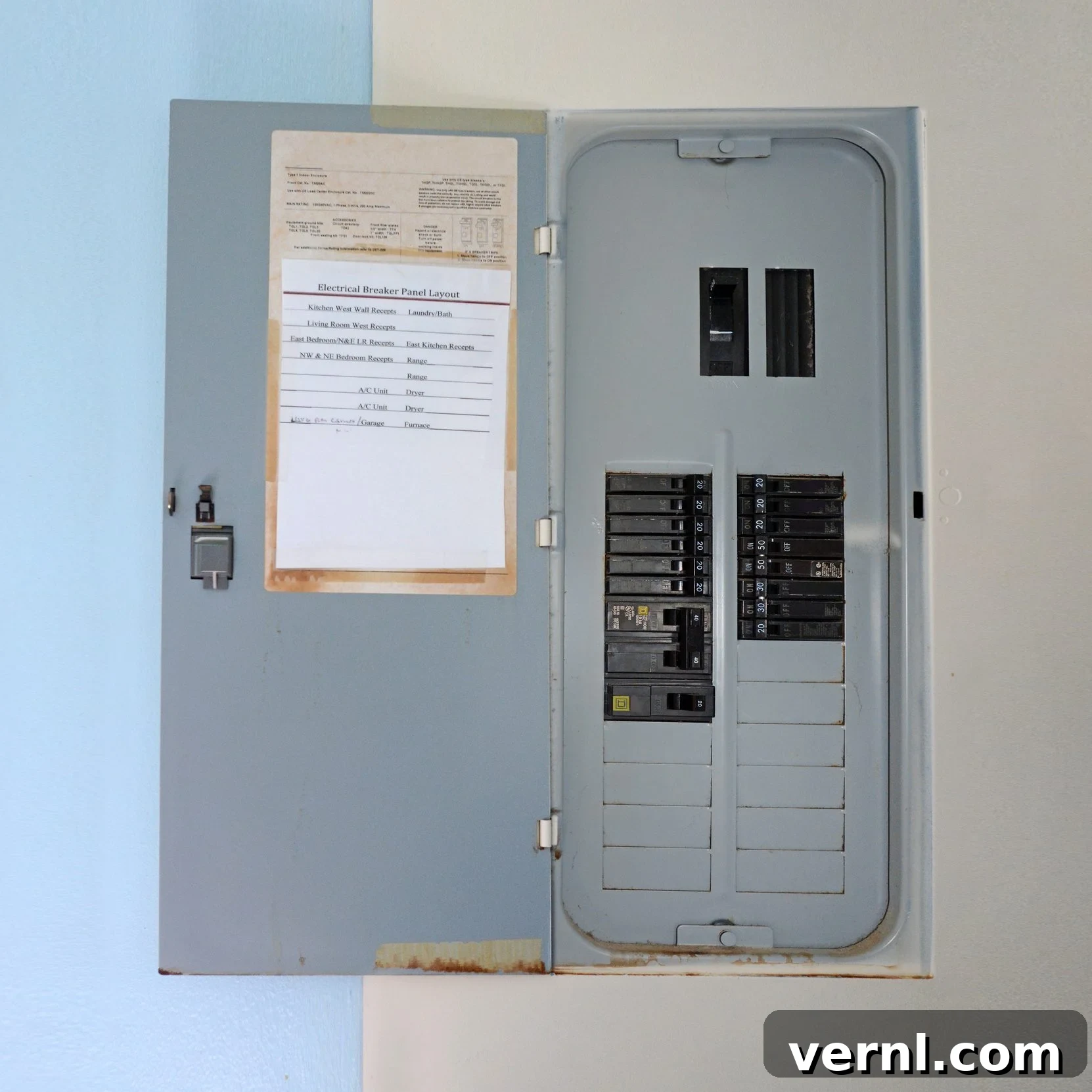
The electrical panel, often referred to as the service panel or breaker box, stands as the undisputed control center for all electrical activity within a residence. It is the crucial hub that safely distributes power to every light fixture, appliance, and electronic device in your home, acting as a vital guardian against overloads and electrical hazards.
In stark contrast to their predecessors, modern electrical panels are significantly larger and more robust. This expansion is a direct reflection of our evolving lifestyles and technological advancements. Today’s homes are teeming with an unprecedented array of appliances, sophisticated smart home controllers, and countless other electrical and electronic devices. Furthermore, with a growing societal emphasis on sustainability and the push to transition away from fossil fuel-powered cars, garden tools, cooking methods, and heating systems, residential electrical demand is set to skyrocket. This increasing reliance on electricity brings with it an elevated potential for power disruptions, overloads, and the need for a more resilient electrical infrastructure. Should you find yourself without power, it’s always wise to know some effective ways to charge your phone without electricity.
The importance of adequately sized electrical panels cannot be overstated. Reflecting on a past experience, I once resided in an older home equipped with an undersized panel that was woefully unprepared for the demands of contemporary living. Despite having an electric stove, my preference for microwave ovens led me to acquire one. Inevitably, attempting to operate both appliances simultaneously resulted in the main breaker tripping consistently. The combined electrical load simply exceeded the panel’s archaic capacity, a common issue in properties not updated for modern energy consumption.
For any homeowner aspiring to incorporate modern electrical conveniences — whether it’s upgrading to energy-efficient heat pumps, installing an electric vehicle (EV) charging station, or simply swapping a gas water heater for a more efficient electric model — ensuring the electrical panel’s capacity aligns with the projected load is paramount. Failing to do so can transform a seemingly straightforward upgrade into an unexpectedly expensive and complex project involving a full panel replacement.
This comprehensive guide will walk you through the process of calculating your home’s electrical load. By understanding your current and future electrical demands, you’ll be empowered to make informed decisions about potential additions like a heat pump or an EV charger, ensuring your electrical system remains safe, efficient, and capable of meeting your evolving needs.
Electrical Load vs. Electrical Capacity: Defining the Core Concepts
To effectively manage your home’s electrical system, it’s crucial to first grasp the fundamental differences between “electrical load” and “electrical capacity.”
Simply put, electrical load represents the total amount of electrical power that all your home’s devices and appliances would draw if they were all operating concurrently. It’s a hypothetical maximum that helps in planning, as in reality, not everything is ever on at the same moment. This load dictates the demand placed on your home’s electrical infrastructure.
Conversely, electrical capacity refers to the absolute maximum amount of electrical power that your service panel is designed to safely supply at any given time. This capacity is a fixed limit, predetermined by the design and installation of your electrical panel and the main breaker protecting it.
While electrical power is fundamentally measured in watts (W) or volt-amperes (VA), professional electricians primarily measure both load and capacity in units of current, known as amperes (amps). This preference stems from the fact that residential voltage (typically 120 volts for smaller circuits and 240 volts for larger appliances) remains relatively constant. Therefore, current (amps) becomes the most practical and direct indicator of how much “work” your electrical system can handle. For basic electrical calculations, especially in a residential context, watts and volt-amperes are often considered synonymous to simplify the process for homeowners, despite minor technical differences related to power factor in alternating current (AC) systems.
Determining Your Service Panel’s Current Capacity
Before you can assess whether your home’s electrical system can accommodate new additions, you need to know its current capacity. Fortunately, this information is readily accessible and straightforward to determine.
To find your service panel’s capacity, simply locate your main electrical panel, which is typically found in a utility room, garage, or basement. Carefully open the panel door – not the metal cover secured by screws, but the hinged access door. Inside, you’ll spot the main breaker. This is usually the largest breaker in the panel, centrally located either at the very top or the very bottom of the breaker bank, and often clearly labeled “Main” or similar. The current rating, expressed in amperes (amps), is distinctly marked on the main breaker’s handle. This number represents your panel’s maximum electrical capacity.
Today, the National Electrical Code (NEC), which sets the standards for electrical installations in the United States, mandates a minimum capacity of 100 amps for new residential panels. However, for new construction, a 200-amp service has become the widely adopted standard, reflecting the modern homeowner’s increased electrical needs. This standard ensures sufficient power for a broader range of appliances and devices, as well as future expansions.
In contrast, many existing panels in older homes may be rated for 60 amps, or even less. My previous residence, for example, had a 60-amp panel, which perfectly explains why the main breaker frequently tripped under even moderate load. On the other end of the spectrum, larger, custom-built homes or those with extensive electrical demands might feature panels rated for 300 or even 400 amps, providing substantial capacity for multiple high-draw appliances and systems.
Why Calculating Your Electrical Load is Essential for Every Homeowner
Understanding your home’s electrical load is not just a technical exercise; it’s a critical step in ensuring the safety, efficiency, and future readiness of your property. Proactively calculating your electrical load provides invaluable insights that can prevent costly problems and enable seamless upgrades.
Without an accurate understanding of your current electrical consumption, you risk overloading your system when adding new appliances or technologies. Overloaded circuits are a significant fire hazard and can lead to frequent breaker trips, appliance damage, and overall system instability. By calculating your load, you can confidently determine the feasibility of incorporating new high-demand items, such as an electric vehicle charging station, a modern heat pump for heating and cooling, or an induction range, without immediately facing the need for an expensive and disruptive panel upgrade. This foresight allows you to budget effectively, plan renovations more strategically, and prioritize energy-efficient solutions.
Furthermore, an accurate load calculation is indispensable for future-proofing your home. As technology advances and our reliance on electricity grows – with the advent of smart home systems, increased home office setups, and the ongoing transition away from fossil fuels – your electrical needs will continue to evolve. Knowing your panel’s current limitations and potential headroom empowers you to make sustainable choices and ensures your home’s electrical infrastructure can support these exciting new developments safely and reliably.
A Practical Guide to Calculating Your Home’s Electrical Load
To determine if your current electrical system can safely accommodate new, large appliances without requiring a panel upgrade, you need to calculate the approximate electrical load your home currently draws. While the National Electrical Code (NEC) provides highly detailed and complex methods for electricians to calculate loads, which are crucial for new construction and major renovations, a simplified yet effective approximation is suitable for most homeowners. Master electrician John Williamson, the retired chief electrical inspector for the Minnesota Department of Labor and Industry, advocates for this practical approach, which provides a good estimate without requiring intricate engineering knowledge.
Follow these steps to estimate your home’s electrical load:
-
Step 1: Determine Your Home’s Approximate Square Footage
Begin by calculating the exterior dimensions of your home to find its approximate square footage. This figure is fundamental because general lighting and receptacle circuits are often estimated based on the dwelling’s size. When performing this calculation, remember to include any attached garages, as they often house general lighting and outlets. However, explicitly exclude open porches and any unfinished areas that are not adaptable for future habitable use, as these do not contribute to the typical general living load.
-
Step 2: Estimate Power Draw for General Lighting and Receptacle Circuits
Once you have your home’s square footage, you can estimate the power draw for all your general lighting and receptacle circuits. The NEC provides a standard guideline of 3 volt-amperes (VA) per square foot for these general loads. Multiply your calculated square footage by 3 VA to get a baseline load for your everyday lighting and wall outlets throughout the living spaces.
-
Step 3: Account for Dedicated Small Appliance and Laundry Circuits
Next, specifically include dedicated circuits that supply major small appliances and laundry areas. For each 120-volt, 20-amp kitchen circuit (typically two are required), add 1,500 VA to your total. Similarly, for a 20-amp laundry circuit, add another 1,500 VA. These circuits are designed for high-demand appliances like blenders, toasters, and washing machines, and are often treated as continuous loads in calculations due to their potential for simultaneous use.
-
Step 4: Identify and Quantify Fixed Appliances
Now, add the power rating (in volt-amperes) for all permanently installed, fastened-in-place appliances or those on dedicated circuits. This category includes items such as your electric washer/dryer, dishwasher, electric range or cooktop, built-in microwave, refrigerator, garbage disposal, and water heater. To obtain the most accurate rating, check the appliance’s label (often found on the back, side, or inside the door) or consult the product specifications online or in the owner’s manual. If the label specifies current draw in amperes (amps) instead of watts or VA, multiply the amperage by the operating voltage (either 120 volts for smaller appliances like a refrigerator or garbage disposal, or 240 volts for larger appliances like an electric range or dryer) to get the power rating in watts or VA. Important Note: If you are performing this calculation to determine if your panel can handle a *new* appliance (e.g., an electric vehicle charger, a new electric water heater, or an additional oven), make sure to add the wattage or VA rating of that specific appliance into this step.
-
Step 5: Evaluate Heating and Air Conditioning Systems
Finally, check the labels on your furnace and air conditioning system for their respective power ratings. Since these two major climate control appliances are typically not operated simultaneously (you’re either heating or cooling, not both), you will only add the larger of the two ratings to your total load calculation. This approach prevents an inflated estimate by acknowledging their exclusive operation.
To illustrate these steps, John Williamson provided the following table, which shows a sample load calculation for a typical 1,500 square foot home. This example demonstrates how the various components of your electrical load are tallied and then adjusted using a “demand factor,” which acknowledges that not all circuits and appliances operate at their maximum capacity all the time.
| General Lighting and Receptacles: 1,500 sq. ft. home x 3 VA per sq. ft. |
4,500 VA |
| Small Appliance Circuits: 2 circuits x 1,500 VA |
3,000 VA |
| Laundry Circuit: 1 circuit x 1,500 VA |
1,500 VA |
| Gas Furnace: 1 circuit x 1,500 VA |
1,500 VA |
| Microwave Oven: 1 circuit x 1,500 VA |
1,500 VA |
| New Electric Water Heater: 1 circuit x 3,000 VA |
3,000 VA |
| Subtotal Existing Load | 15,000 VA |
| First 8,000 VA of existing load at 100% | 8,000 VA |
| Remaining existing load at 40% (15,000 VA – 8,000 VA = 7,000 VA) (7,000 VA x 40% = 2,800 VA) |
2,800 VA |
| Total Adjusted Load | 10,800 VA |
| Convert 10,800 VA to amperes (10,800 VA divided by 240 Volts = 45 Amps) |
A 100-ampere service is more than adequate for this home |
This table demonstrates the application of a “demand factor,” which is a key concept in electrical load calculation. It acknowledges that not all appliances draw their full rated power continuously or simultaneously. For residential services, the NEC allows for a reduction in the calculated general load. Specifically, the first 8,000 VA of the subtotaled load is counted at 100%, while any remaining load beyond that 8,000 VA is calculated at a reduced rate of 40%. This adjustment provides a more realistic estimate of the actual peak demand on your electrical system.
The final step in the calculation is to convert the total adjusted volt-amperes (VA) into amperes (amps), using your home’s main supply voltage. For whole-house load calculations, 240 volts is typically used, as it represents the main incoming service voltage that powers your entire home. Dividing the total adjusted VA by 240 volts yields the total estimated amperage required by your home.
Interpreting Your Results: Comparing Load to Panel Capacity
Once you’ve meticulously calculated your home’s estimated electrical load, the next crucial step is to compare this figure against the capacity of your existing service panel. This comparison is vital for ensuring the safety and reliability of your entire electrical system, particularly when planning for new appliance installations or future upgrades.
A fundamental principle in electrical safety and design is the “80% rule.” To prevent chronic overloads, potential overheating, and undue stress on your electrical infrastructure, the continuous operating load on your service panel should never exceed 80 percent of its total rated capacity. For instance, if your home is equipped with a 100-amp electrical panel, the maximum safe operating load you should place on it is 80 amps (100 amps x 0.80 = 80 amps). Adhering to this rule provides a crucial safety margin, preventing breakers from tripping frequently and mitigating the risk of electrical fires.
Now, take your calculated total adjusted electrical load (in amps) and compare it directly to 80 percent of your service panel’s capacity. If your calculated load is smaller than this 80% threshold, your existing panel has sufficient headroom to safely accommodate your current demands and potentially some new additions. This means you’re likely “good to go” for minor upgrades or additions within that remaining capacity.
However, if your calculated load is larger than 80 percent of your panel’s capacity, it indicates that your electrical system is already operating near or beyond its safe limits. In this scenario, any significant new appliance, such as an EV charger, a large heat pump, or an electric tankless water heater, would necessitate an upgrade to your electrical panel for safety and compliance with electrical codes.
It’s important to recognize that an electrical panel upgrade is a significant and often expensive project. It typically involves replacing the existing panel with a larger one, potentially upgrading the service entrance wiring from the utility, and ensuring all new components meet current codes. Due to the complexity, safety implications, and regulatory requirements involved, it is highly recommended to consult with a licensed, qualified electrician at this stage. An electrician can confirm your load calculations, provide a professional assessment of your current system, and explore all possible solutions. They might identify ways to reduce your overall load, such as improving energy efficiency, or advise on alternative solutions like installing a sub-panel for specific circuits if appropriate, before recommending a full main panel upgrade. Their expertise is invaluable in ensuring that any modifications to your electrical system are performed safely, legally, and effectively.