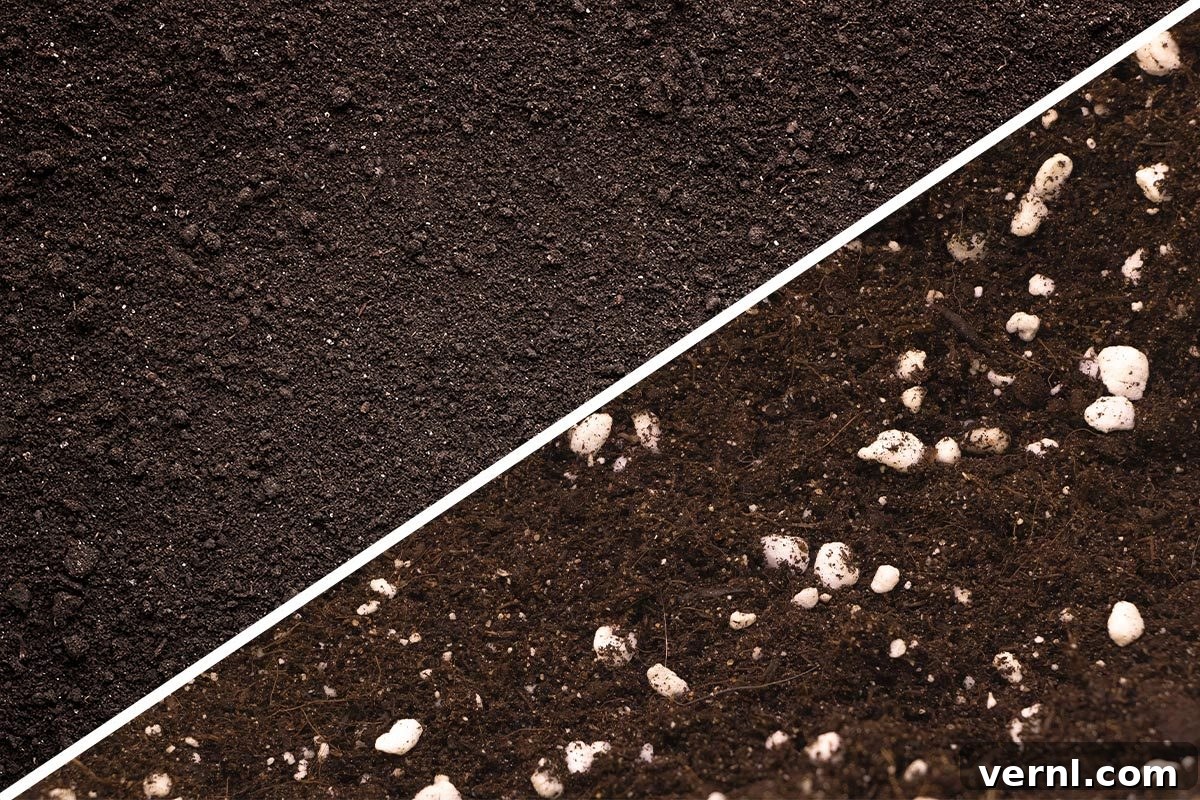
For many gardening enthusiasts, understanding the very foundation of plant life – soil – is paramount. While some might casually refer to it all as “dirt,” seasoned gardeners know better. “We refer to it as soil, because dirt is a four-letter word,” says Tony Provin, Ph.D., a distinguished professor and soil chemist at Texas A&M Agrilife Extension in College Station. This subtle distinction highlights a crucial truth: not all growing mediums are created equal. The success of your plants, whether they’re nestled in a vibrant flower bed or thriving in a charming container, largely depends on selecting the appropriate medium. Two common terms often cause confusion: garden soil and potting soil. While both are designed to support plant growth, their compositions, costs, and ideal applications differ significantly. Understanding these differences is key to cultivating a flourishing garden.
Garden Soil: The Foundation for In-Ground Success
When embarking on larger landscaping projects or enhancing existing garden beds, garden soil is often the go-to choice. Priced typically around $1 less per bag than potting soil at retailers like Ace Hardware, it’s a more economical option for covering extensive areas, reflecting its primary purpose as an amendment for natural ground soil rather than a standalone growing medium for confined spaces.
What Exactly is Garden Soil?
At its core, soil is a living, dynamic ecosystem naturally found beneath our feet. The top six to eight inches, commonly known as topsoil, is a complex mixture of mineral particles (sand, silt, and clay) and decomposed organic matter. This intricate blend is a direct result of your local climate and environmental factors, providing the essential nutrients and structure that plants require to establish their roots and absorb sustenance.
However, when we talk about bagged garden soil, we’re referring to a product that differs from the native soil in your backyard. Bagged garden soil is specifically formulated to be less variable and more consistent. It typically includes extra organic matter mixed in, such as nutrient-rich compost, moisture-retaining peat, structural bark shreddings, or even a starter dose of fertilizer. This careful blend is designed not to replace your existing soil entirely, but rather to amend and improve its properties.
As Judy Daniels, CEO and principal scientist at Soil Sage in Arvada, Colorado, explains, “Typically, you add garden soil according to the amount of clay you have. With large amounts of hard clay, it’s hard for plants to get established and grow. Or you have a lot of sand, which does not hold water. So you’d bring in garden soil to amend that so the soil is able to hold water better.” This highlights garden soil’s critical role in correcting structural imbalances, enhancing drainage in heavy clay, and improving water retention in sandy soils, thereby creating a more hospitable environment for plant roots.
Optimal Uses for Garden Soil
Garden soil is primarily engineered for outdoor, in-ground applications. It’s the ideal choice for creating new flower beds, vegetable patches, or improving the existing soil structure in your yard. Its robust composition and natural weight make it unsuitable for containers, where better drainage and aeration are crucial.
It’s important to recognize that not all bagged garden soil offers the same quality or consistency. Dr. Provin recounts an experience where he purchased 30 bags from one garden-store pallet and another 30 from a different pallet, only to find them “entirely different.” He advises vigilance, suggesting gardeners “look for broken bags in the pallet. I check the contents and get an idea of what I’m purchasing, whether it’s more soil material or clay balls with a bunch of wood chips around them.” While local stores may offer more consistent products, a trial purchase of a single bag is always a wise first step.
For gardeners undertaking substantial projects, such as building extensive raised beds or preparing large planting areas, sourcing from a local soil supplier is often more cost-effective and ensures higher quality. “If you’re building beds and need a large supply, seek a local soil supplier and go see the pile of soil. They can deliver to your driveway,” Dr. Provin recommends. Even apartment dwellers looking to enhance a small ground plot can benefit from careful selection, starting with a single bag to confirm its suitability before committing to more from the same batch. For those with limited outdoor space, making your own compost in your apartment can also provide valuable organic matter.
The Non-Negotiable Step: Soil Testing
Before you even consider purchasing garden soil, the single most impactful action you can take is to test the soil in your yard. This vital step provides a clear picture of your soil’s current condition, revealing critical information about its pH level, salinity, and nutrient deficiencies or excesses. Understanding these factors is fundamental to making informed decisions about soil amendments and ensuring long-term plant health.
“Make sure you understand what is needed,” advises Daniels. University extension services offer comprehensive soil tests,and numerous reputable soil testing laboratories can be found online. Alternatively, readily available soil test kits typically cost between $30 and $50, with results usually delivered within about two weeks, as Daniels notes. These kits can provide a basic understanding, while professional services offer more detailed analyses.
Addressing soil issues identified through testing upfront is far more effective and economical than attempting to remedy problems later. “If you have problems that come out in the soil test, you have to address those first,” emphasizes Dr. Provin. “Think long term. It’s a lot easier to do it right up front.” He vividly illustrates the pitfalls of neglecting this step: “I can’t tell you how often we get individuals who are throwing money at observed problems. And then they get a soil test and find out, ‘Wow, the pH is 5.2 and nothing I grow does well at that low pH.’ Gardening without soil testing is a lot like going to the drugstore and grabbing stuff off the shelf to treat an illness without a diagnosis.” A proper soil test acts as your garden’s diagnostic tool, guiding you toward targeted solutions and preventing wasted effort and resources.
Potting Soil: The Specialized Blend for Containers
For cultivating plants in pots, hanging baskets, or for the delicate task of seed starting, potting soil is the superior, if slightly more expensive, choice. Typically costing about $1 more per bag than garden soil at hardware stores, its specialized composition justifies the premium price for its intended use.
Unpacking the Composition of Potting Soil
Despite its name, potting soil – also frequently called potting mix or potting media – isn’t technically soil at all. It’s a carefully engineered, soilless blend of various materials designed to provide the optimal environment for plants grown in confined spaces. Common components include moisture-retaining sphagnum moss or coco coir, lightweight bark for aeration, perlite for excellent drainage, vermiculite for superior water retention and nutrient exchange, and sometimes a small amount of compost or slow-release fertilizer for initial plant nourishment.
A key characteristic of potting soil is its sterility. This is a significant advantage for potted plants, as it reduces the risk of introducing soil-borne diseases, weed seeds, or pests that can thrive in natural garden soil. The organic components like compost or moss provide a gentle, consistent supply of nutrients, while the mineral additives such as perlite and vermiculite are crucial for maintaining an open, well-draining structure. This prevents the mix from compacting around plant roots – a common issue with garden soil in pots – and ensures it doesn’t hold too much water, which can lead to root rot, a deadly condition for containerized plants.
When to Choose Potting Soil
Potting soil is specifically formulated for growing plants in containers of all sizes, from small indoor pots to large outdoor planters, and for the delicate process of starting seeds. Its light, fluffy texture allows tender seedlings to emerge easily and roots to develop without impedance. For established container plants, it provides the ideal balance of aeration, drainage, and moisture retention necessary for healthy growth in an enclosed environment.
However, potting soil is generally not recommended for large-scale applications like flower beds or raised garden beds. Its higher cost makes it impractical for extensive areas, and its specialized composition is not designed for long-term nutrient cycling in the way natural soil is. While it provides initial nutrients, these deplete faster in a container environment, requiring supplemental fertilization over time. Moreover, potting soil is significantly lighter than garden soil. For large, top-heavy plants in containers, especially those exposed to wind, this lighter medium may not provide adequate stability, leading to plants tipping over as the mix dries out and shrinks.
Dr. Provin advocates for its primary use in initial plant development: “I use potting media for starting garden plants from seed. Roots penetrate potting media easily. It holds water well and is transplanted nicely into more traditional garden soils.” This highlights its role as an excellent nursery for young plants before they transition to more robust outdoor environments.
Garden Soil vs. Potting Soil: A Comprehensive Comparison
To truly master your gardening endeavors, understanding the distinct characteristics and applications of garden soil and potting soil is essential. While both aim to foster plant growth, they achieve this through different means, tailored to specific environments.
Composition and Structure
Garden Soil: Typically a blend of natural topsoil, mineral components (sand, silt, clay), and amended with organic matter like compost, peat, or bark. It’s designed to be heavy, providing structural support, and to improve existing ground soil. It often contains beneficial microorganisms, but can also harbor weed seeds, pests, or disease pathogens.
Potting Soil: A soilless mix primarily composed of lightweight organic materials (sphagnum moss, coco coir, bark fines) and inorganic aerators (perlite, vermiculite). It’s sterile, preventing soil-borne issues, and engineered for superior drainage and aeration in containers. Its light texture prevents compaction around roots.
Cost and Value
Garden Soil: Generally less expensive per bag, making it cost-effective for large-scale applications such as amending garden beds, filling raised beds, or grading landscapes. Its value lies in improving soil structure and nutrient availability over extensive areas.
Potting Soil: More expensive per bag due to its specialized, manufactured components. Its value is found in its precise performance for container gardening and seed starting, where its unique properties are critical for plant success despite the higher unit cost.
Ideal Applications
Garden Soil: Best suited for in-ground applications. Use it to enrich existing flower beds, vegetable gardens, improve drainage in clay soils, enhance water retention in sandy soils, or establish new planting areas directly in the ground. It’s too dense and lacks sufficient drainage for pots.
Potting Soil: Specifically designed for growing plants in any type of container – indoor pots, outdoor planters, hanging baskets, window boxes – and for propagating seeds. Its sterile, free-draining nature prevents common container gardening problems like root rot and compaction.
Nutrient Content and Longevity
Garden Soil: Provides a slower, more sustained release of nutrients, especially when enriched with compost. Its complex microbial life contributes to long-term soil fertility and health, supporting plants season after season with proper amendments.
Potting Soil: Often includes a starter dose of nutrients for initial growth, but these are depleted relatively quickly due to frequent watering and limited volume. Container plants in potting mix will require regular fertilization to thrive long-term.
Drainage and Aeration
Garden Soil: Its drainage and aeration properties vary greatly depending on its natural composition and amendments. While amendments improve it, it can still become compacted and waterlogged in pots, leading to poor root health.
Potting Soil: Engineered for optimal drainage and aeration, preventing water from pooling and ensuring roots receive adequate oxygen. Its loose structure is crucial for container success, but this lightness can also make it less stable for very large plants.
Frequently Asked Questions About Garden and Potting Soil
Clearing up common misconceptions can save gardeners time, money, and heartache. Here are some frequently asked questions regarding garden and potting soils:
Can I use garden soil in pots?
While technically possible, using garden soil in pots is not ideal and generally discouraged. The composition of garden soil, especially with its added organic matter and heavier mineral content, can lead to several problems in a confined container. It tends to compact easily, hindering adequate drainage and aeration. This poor drainage can quickly lead to waterlogged conditions, creating an anaerobic environment that promotes root rot and suffocates plant roots. Moreover, garden soil may introduce weed seeds, pests, or pathogens into your clean container environment.
Can I mix garden soil with potting soil?
Yes, mixing garden soil with potting soil can be a beneficial practice, particularly in specific scenarios. Adding potting soil to garden soil can significantly improve drainage and aeration, especially in garden beds with heavy clay content. It can also introduce a boost of initial nutrients and improve overall soil structure. This mixture can be particularly effective in garden beds with inherently poor soil, in large raised beds, or in very large plant containers where some added weight for stability might be desired, along with improved moisture retention. The key is to achieve a balanced blend that leverages the best qualities of both mediums without compromising their individual strengths.
What about “topsoil” or “raised bed mix”?
Topsoil is essentially the uppermost layer of natural soil, rich in organic matter and nutrients, often used for leveling or building up beds. It’s generally coarser than bagged garden soil and less refined. Raised bed mixes are specialized blends, often a hybrid of garden soil and potting soil characteristics, designed for the unique environment of raised beds, balancing drainage, aeration, and nutrient retention over a larger, yet still contained, area.
Can I reuse potting soil?
Reusing potting soil is generally not recommended for more than one or two seasons, especially for plants prone to disease. Over time, potting soil depletes its nutrients, breaks down its structure, and can accumulate salts or pathogens. If you do reuse it, consider refreshing it with new compost, perlite, and a balanced fertilizer.
Cultivating Success: Choosing the Right Medium
The journey from a novice gardener to a green-thumbed expert often involves learning the nuances of the very ground (or medium) your plants grow in. Recognizing the fundamental differences between garden soil and potting soil is more than just academic; it’s a practical skill that directly impacts the health and vitality of your plants. By understanding their unique compositions, ideal applications, and inherent strengths and weaknesses, you can make informed decisions that pave the way for a flourishing garden, whether it’s a sprawling outdoor landscape or a charming collection of container plants. Remember, a healthy plant begins with a healthy foundation, and choosing the right soil is the first, most crucial step.
About the Experts
- Judy Daniels is CEO and principal scientist at Soil Sage, an environmental consulting company in Arvada, Colorado.
- Tony Provin, Ph.D., is a professor and soil chemist at Texas A&M Agrilife Extension Program.