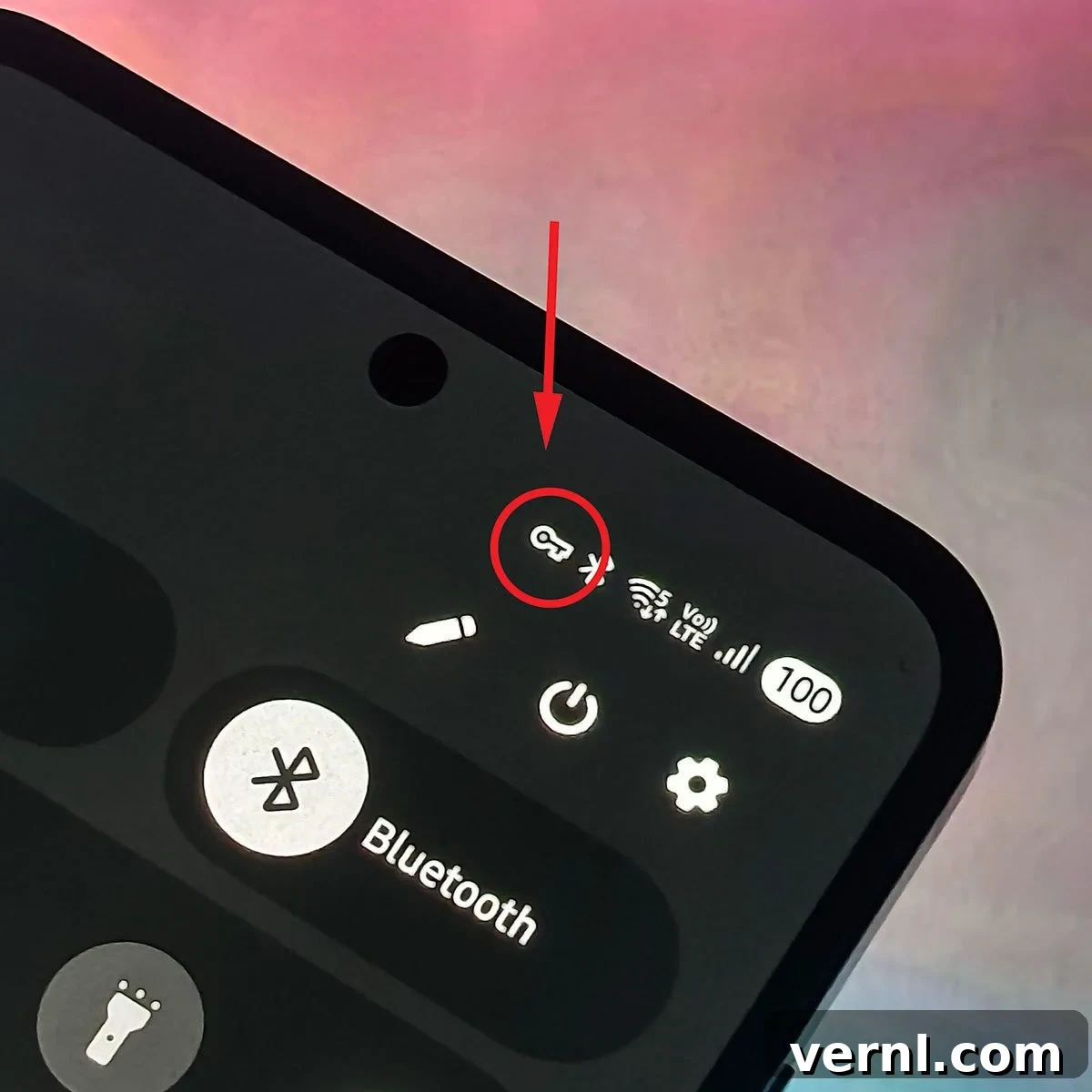
In our increasingly connected world, smartphones have become indispensable tools, serving as our primary gateways to information, communication, and entertainment. With this constant digital engagement comes a stream of notifications and icons in the status bar, some of which can be a bit cryptic. One such enigmatic symbol that frequently piques the curiosity of Android users is the small key icon. If you’ve ever found yourself wondering what this unassuming icon signifies and what, if any, action you need to take, you’re not alone. This comprehensive guide will demystify the key icon on your Android device, explain its underlying technology, and shed light on why it’s a crucial indicator for your digital privacy and security.
Deciphering the Key Icon: What It Means on Your Android Device
Much like other notification icons provide instant visual cues about your phone’s current status or active features – such as Wi-Fi connectivity, battery level, or new messages – the key icon serves a very specific and important purpose. When you see the key icon prominently displayed in your Android device’s notification tray, it is unequivocally alerting you to one thing: your phone is currently connected to a Virtual Private Network (VPN).
The presence of this icon is Android’s way of ensuring transparency and keeping you informed about your network connection. A VPN creates an encrypted tunnel for your internet traffic, a process that fundamentally alters how your device communicates with the wider internet. By showing the key icon, Android ensures that users are always aware when this protective layer is active, confirming that their online activities are being routed through a secure, private network.
Understanding VPN Activation and Management on Android
Connecting to a VPN on your Android device offers several configuration options, allowing users to tailor their security preferences to their specific needs. The Android operating system provides robust features for managing these connections, as detailed in the Android Help Center. Here are the primary ways you might activate or configure a VPN, which subsequently triggers the appearance of the key icon:
- Manual Toggle: Many users opt to enable their VPN manually. This involves navigating to the network settings and switching on the VPN when desired, for instance, before connecting to public Wi-Fi or accessing sensitive information.
- Always-On VPN: For those prioritizing constant security, Android allows you to configure an “Always-on VPN.” When this setting is activated, your device will automatically connect to the specified VPN as soon as an internet connection is established, ensuring that your data is always protected without manual intervention. This is particularly useful for users who frequently use untrusted networks.
- App-Specific VPN Rules: Modern Android versions, especially in enterprise or work environments, offer granular control over VPN usage. You can specify whether certain applications should utilize the VPN connection while others bypass it. This can be critical for optimizing performance for some apps while ensuring maximum security for others, particularly those handling sensitive work data.
- Work Profile Integration: For business users, the Android Enterprise Help Center explains how VPNs are seamlessly integrated with work profiles. This allows organizations to enforce VPN usage for all apps within a specific work profile, ensuring that corporate data remains secure and compliant with company policies, regardless of where an employee is working from. Administrators can configure either an “allowed list” or a “disallowed list” for apps to use the VPN, ensuring fine-tuned control over network traffic routing. If no list is created, all network traffic within the work profile is routed through the VPN by default.
The key icon, therefore, acts as a dynamic indicator, constantly reassuring you that the VPN service is active and diligently protecting your online presence according to your chosen settings.
What Exactly Is a Virtual Private Network (VPN)?
To fully appreciate the significance of the key icon, it’s essential to understand the technology it represents: a Virtual Private Network. At its core, a VPN is a service that establishes a secure, encrypted connection over a public network, such as the internet. It acts as a protective shield for your online activities, safeguarding your privacy and enhancing your security by creating a private “tunnel” through which all your data travels.
The Core Mechanics of VPN Technology
When you connect to a VPN, several critical processes occur to secure your internet traffic:
- Encryption: This is arguably the most vital function of a VPN. Before your data leaves your device, the VPN client encrypts it, essentially scrambling the information into an unreadable format. This encryption ensures that even if malicious actors intercept your data, they cannot decipher its contents. Common encryption standards like AES-256 are used, providing robust security that would take supercomputers millions of years to crack.
- Secure Tunneling: A VPN creates a secure, dedicated connection – often referred to as a “tunnel” – between your device and a remote VPN server. Instead of connecting directly to websites and online services, your internet traffic first travels through this encrypted tunnel to the VPN server.
- IP Address Masking: Once your data reaches the VPN server, it is then decrypted and sent to its intended destination on the internet. Crucially, when your request leaves the VPN server, it does so using the server’s IP address, not your actual IP address. This process, known as IP address masking, effectively hides your true geographical location and identity from websites, online services, and potential snoopers.
- Rerouting Your Traffic: By routing your internet activity through a remote server, a VPN effectively changes your virtual location. If the VPN server is in a different country, websites and online services will perceive your connection as originating from that country, not your actual physical location. This “location spoofing” has significant implications for accessing geo-restricted content and enhancing anonymity.
In essence, a VPN acts as an intermediary, taking your internet requests, encrypting them, sending them through a secure server, and then forwarding them to their destination while masking your identity. This intricate process ensures a higher degree of privacy and security than a standard internet connection.
Why Incorporate a VPN into Your Digital Life? The Multifaceted Benefits
The decision to use a VPN goes beyond simply understanding what the key icon means; it’s about proactively taking control of your digital footprint. VPNs offer a wide array of benefits, making them an indispensable tool for anyone concerned about their online privacy, security, and freedom. Here are the primary reasons why millions worldwide rely on VPN services:
1. Bolstered Online Privacy and Anonymity
In an era where personal data is a valuable commodity, protecting your privacy is paramount. A VPN significantly enhances your online anonymity by hiding your IP address and encrypting your internet traffic. This means your Internet Service Provider (ISP), government agencies, advertisers, and other third parties cannot easily monitor your browsing habits, the websites you visit, or the data you transmit. By masking your real IP and routing your traffic through a VPN server, you gain a substantial layer of defense against invasive tracking and surveillance, allowing you to browse the internet with greater peace of mind.
2. Enhanced Security on Public Wi-Fi Networks
Public Wi-Fi networks, such as those found in coffee shops, airports, hotels, and libraries, offer convenience but often come with significant security risks. These networks are frequently unsecured, making your data vulnerable to interception by cybercriminals through methods like “man-in-the-middle” attacks, where an attacker positions themselves between your device and the Wi-Fi hotspot to snoop on your data. By connecting to a VPN before accessing public Wi-Fi, all your data is encrypted, rendering it unreadable to potential eavesdroppers. This transforms an otherwise risky public connection into a secure and private channel, safeguarding sensitive information like passwords, banking details, and personal communications.
3. Secure Remote Work and Business Operations
The rise of remote work has made VPNs an essential tool for businesses of all sizes. Many workplaces utilize corporate VPNs to enable their remote employees to securely connect to the company’s internal network and access sensitive resources. A corporate VPN creates a secure bridge between an employee’s home office and the company’s servers, ensuring that all data exchanged is encrypted and protected from external threats. This maintains the same level of security and data integrity that employees would experience if they were physically present in the office, supporting seamless and secure collaboration across geographically dispersed teams.
4. Bypassing Geo-Restrictions and Censorship
VPNs are highly effective for overcoming geographical content restrictions and internet censorship. By connecting to a VPN server in a different country, your device appears to be located in that country. This enables you to access region-locked content on streaming platforms, international news sites, or online services that might otherwise be unavailable in your actual location. Similarly, in regions with strict internet censorship, a VPN can help circumvent government firewalls and allow access to blocked websites and social media platforms, promoting freedom of information.
5. Protection Against ISP Throttling
Some Internet Service Providers (ISPs) practice bandwidth throttling, where they intentionally slow down internet speeds for specific activities, such as streaming video, torrenting, or online gaming, often after a user consumes a certain amount of data. Since a VPN encrypts your internet traffic, your ISP cannot see the nature of your online activities. This makes it much harder for them to selectively throttle your connection based on content, potentially allowing you to enjoy consistent speeds for all your online endeavors.
6. Secure Online Transactions and Banking
When conducting sensitive online transactions, such as banking or online shopping, the added layer of encryption provided by a VPN offers crucial protection. It ensures that your financial details, credit card numbers, and other personal information are securely transmitted and less vulnerable to interception by malicious actors, especially when using potentially insecure networks.
Managing Your VPN Connection on Android: Practical Steps
Understanding the key icon and the benefits of a VPN is just the beginning. Knowing how to manage your VPN settings on your Android device is crucial for maintaining control over your online security. Here are practical steps you can take:
- Checking VPN Status: To confirm if a VPN is active, simply look for the key icon in your notification tray. For more details, swipe down from the top of your screen to open the notification panel. You will often see a persistent notification from your VPN app or a system message indicating “VPN connected.”
- Enabling/Disabling a VPN:
- Go to your phone’s Settings app.
- Tap on Network & internet (or similar, depending on your Android version).
- Look for VPN.
- Here, you’ll see a list of configured VPN profiles. You can toggle an existing VPN connection on or off.
- If you’re using a third-party VPN app, opening the app itself will typically give you an obvious “Connect” or “Disconnect” button.
- Configuring “Always-On VPN”:
- Navigate to Settings > Network & internet > VPN.
- Tap the gear icon (or settings icon) next to the VPN profile you wish to configure.
- Toggle on the Always-on VPN option. Some versions might also offer “Block connections without VPN” for enhanced security, preventing accidental unencrypted connections.
- Adding a New VPN Profile:
- In the VPN section of your settings, tap the + icon or “Add VPN” (often in the top right corner).
- You’ll be prompted to enter details such as VPN type (e.g., PPTP, L2TP/IPSec, IKEv2), server address, username, and password, which are typically provided by your VPN service provider or network administrator.
- Removing a VPN Profile:
- From the VPN list in your settings, tap the gear icon next to the profile you want to remove.
- Select “Forget network” or “Remove VPN” to delete the profile from your device.
Regularly reviewing your VPN settings ensures that your device’s security configuration aligns with your current privacy and connectivity needs.
Conclusion: Embrace the Key to Your Digital Security
The humble key icon on your Android phone is far more than just another symbol in your notification tray; it’s a powerful indicator of your device’s security posture. It signals that your Virtual Private Network is active, diligently working to encrypt your data, mask your IP address, and shield your online activities from prying eyes. Whether you’re browsing from a bustling coffee shop, working remotely, accessing geo-restricted content, or simply seeking enhanced digital privacy, the VPN is an invaluable ally.
Understanding what the key icon means empowers you to take control of your digital security. By familiarizing yourself with VPNs and how to manage them on your Android device, you equip yourself with the tools to navigate the internet safely, privately, and without unnecessary restrictions. So, the next time you spot that key, remember it’s a reminder of your proactive choice for a more secure and private online experience.
Sources
- Connect to a virtual private network (VPN) on Android, Android Help Center
- Set up VPN on Android devices, Android Enterprise Help Center