If you’re noticing persistent dampness, standing water, or even efflorescence on your basement walls or floor, it’s a clear indicator that excessive moisture is entering your home. This pervasive issue is most commonly attributed to groundwater, a silent adversary that can undermine your home’s structural integrity, foster mold growth, and damage valuable possessions.
Before diving into more complex solutions, the initial and most crucial step in addressing basement moisture should involve a thorough examination of your home’s exterior drainage. This includes inspecting your gutters, ensuring downspouts are properly extended away from the foundation, and verifying that the soil grading around your house slopes away from the structure. These external measures are often easy, affordable fixes that can significantly reduce the amount of water accumulating near your foundation. However, if these elements are in optimal condition and you’re still experiencing water intrusion, it’s time to consider a more robust and permanent solution: a drain tile system. This often-overlooked feature acts as a powerful, subterranean defensive barrier, meticulously designed to direct water away from your home, thereby keeping your basement consistently dry and healthy.
What Exactly is a Drain Tile System?
The term “drain tile” can be a bit misleading, often conjuring images of the small, round or square grates commonly found in many basement slabs. While these are indeed part of a drainage system, they are accurately referred to as floor drains, designed to handle spills or minor interior water events. A true “drain tile” system, however, refers to an intricate network of perforated pipes strategically laid along the interior or exterior perimeter of your home’s foundation. These systems are also widely recognized by other names such as French drains, perimeter drains, or weeping tile. Their fundamental purpose is to intercept and channel groundwater away from the foundation before it ever has a chance to seep into your basement. While “French drain” is often used interchangeably, it commonly refers to the exterior application of this perimeter drainage technology.
The Science Behind a Dry Basement: How Drain Tile Works
The operational principle of a drain tile system is elegantly simple yet incredibly effective: it captures groundwater and hydrostatic pressure before water can penetrate your basement walls or floor. Water naturally flows to the path of least resistance. When groundwater saturates the soil around your foundation, it exerts hydrostatic pressure against the basement walls and floor. A drain tile system intercepts this water before it builds up pressure.
Here’s a detailed breakdown of its function:
- Collection: As groundwater saturates the soil around your foundation, it naturally seeks the easiest path downwards. The perforated pipes, typically surrounded by a layer of coarse gravel and filter fabric, provide this path. Water seeps through the porous soil, passes through the gravel and filter fabric, and enters the pipe through its perforations.
- Filtration: The surrounding layers of gravel and specialized geotextile fabric play a critical role. The gravel provides an open channel for water flow, while the fabric acts as a filter, preventing fine soil particles and silt from entering and clogging the pipe. This ensures the longevity and efficiency of the system.
- Channeling: Once inside the pipe, the water travels along its length, which is installed with a subtle downward slope. This slope, usually 1/8 to 1/4 inch per linear foot, ensures that gravity efficiently moves the collected water towards a designated discharge point.
- Discharge: The accumulated water is then directed to a specific location for disposal. For interior systems, this is almost always a sump pit within the basement, where an electric pump activates to eject the water out and away from the home. Exterior systems often “drain to daylight,” meaning they channel water to an appropriate lower-grade location far from the house, such as a storm drain, dry well, or a sloped yard area.
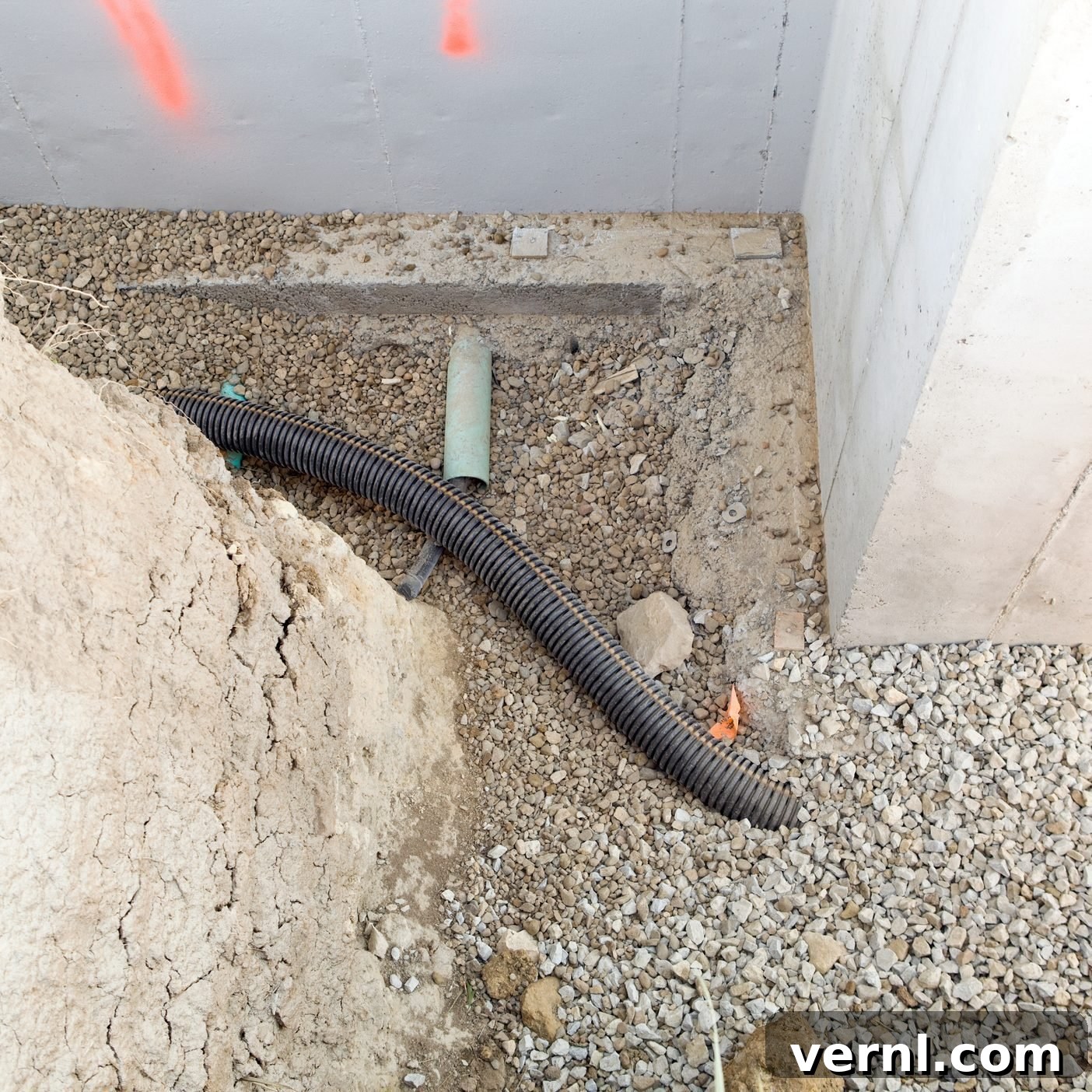
Historically, these pipes were indeed made of short, porous clay segments, hence the enduring name “drain tile.” Today, modern systems predominantly utilize robust, perforated PVC (polyvinyl chloride) or flexible corrugated HDPE (high-density polyethylene) pipes, which offer superior durability and ease of installation while retaining the effectiveness of their predecessors.
Key Components of a Robust Drain Tile System
While specific installation methods and materials can vary between interior and exterior systems, the core conceptual elements remain universal for effective groundwater management:
Trench
The trench is the foundational element of any drain tile system. It defines the route the drainage system will take along the perimeter of the home, whether it’s excavated outside the foundation footings or inside along the basement floor. For exterior systems, this trench typically extends down to or just below the foundation footings. For interior systems, a trench is carved into the basement slab along the walls. Crucially, the trench must be meticulously dug with a gentle, consistent slope (as mentioned, typically 1/8 to 1/4 inch per foot) towards the designated runoff destination, ensuring efficient gravitational flow of water.
Perforated Pipe
Nestled within the trench, the perforated pipe is the heart of the system. It needs to be sufficiently robust to withstand the considerable weight and pressure from the surrounding soil, concrete, and backfill, while also possessing enough flexibility to accommodate minor ground shifts without compromising its integrity. The pipe’s perforations, strategically placed along its circumference, are designed to allow water to enter while keeping larger debris out. This pipe is typically enveloped by layers of coarse, washed gravel and/or a specialized geotextile filter fabric, which work in tandem to filter out fine soil particles and prevent clogging, thereby maintaining optimal drainage capabilities over many years.
Filter Material (Gravel & Fabric)
This critical layer often surrounds the perforated pipe within the trench. Washed gravel, typically 3/4-inch clean stone, provides an open void space for water to flow freely to the pipe. A geotextile filter fabric (a specialized permeable membrane) is often used to line the trench before the gravel and pipe are laid, and sometimes wrapped around the pipe itself. This fabric is permeable to water but impermeable to fine soil particles, preventing them from migrating into the gravel and pipe system and causing blockages over time.
Covering / Backfill
Once the trench is filled with the pipe, gravel, and filter fabric, it is then covered. For exterior drain tile systems, the trench is typically backfilled with soil, restoring the landscape. It is essential that this soil is regraded to slope away from the foundation. For interior drain tile systems, a layer of new concrete is poured over the trench, seamlessly integrating the system back into the basement floor, leaving a clean and finished appearance.
Water Discharge System (Sump Pump & “Drain to Daylight”)
Collecting groundwater is only half the battle; the system must effectively direct it away from the home. The method of discharge depends largely on whether it’s an interior or exterior system and the surrounding topography.
- Sump Pit and Pump: Interior drain tile systems almost universally drain into a sump pit, which is a basin typically installed at the lowest point of the basement floor. Once water reaches a certain level in the pit, a float switch activates a powerful sump pump, which then draws the excess water out of the home through a discharge pipe, typically sending it far away from the foundation, often to a municipal storm drain or a designated drainage area on the property. Battery backup sump pumps are highly recommended for continuous protection during power outages.
- Drain to Daylight: Exterior drain tile systems often “drain to daylight.” This means the pipes are routed with a continuous downward slope to an appropriate lower-grade location away from the home, such as a street discharge, a dry well, or a natural slope where the water can safely dissipate without affecting the foundation. This method is cost-effective as it requires no pump but relies heavily on proper grading and clear discharge paths.
Undeniable Indicators: When to Consider Drain Tile Installation
Recognizing the early signs of groundwater issues is critical to preventing extensive damage. If you find yourself answering “Yes” to any of these questions, it’s a strong indication that you should consider a drain tile system repair or installation:
- Persistent Basement Leaks or Dampness: Have you addressed all potential external issues like clogged gutters, improperly aimed downspouts, and poor soil grading, yet your basement still struggles with water intrusion or persistent dampness? This suggests that groundwater is finding its way through your foundation, even with surface water managed. Look for musty odors or efflorescence (white, powdery mineral deposits) on walls.
- Wet Basement Walls and Floors: Are your basement walls visibly wet, discolored, or showing signs of peeling paint? Is there actual water seeping up from your basement floor or pooling in certain areas? These are clear manifestations of hydrostatic pressure forcing water through cracks or porous concrete, indicating a significant groundwater problem that a drain tile system is designed to resolve.
- Mold and Mildew Growth: The presence of mold or mildew, often accompanied by a distinct musty smell, is a critical health hazard and a tell-tale sign of excessive moisture. Mold thrives in damp, dark environments, and its growth can quickly spread, compromising indoor air quality and potentially causing structural damage. A dry basement eliminates the conditions necessary for mold proliferation.
- Planning a Finished Basement or Storing Valuables: If you have plans to finish your basement, transforming it into a living space, home office, or extra bedroom, ensuring it’s completely dry and waterproof is an absolute prerequisite. Investing in a drain tile system beforehand protects your significant investment in drywall, flooring, furniture, and electronics from future water damage. Similarly, if you store valuable items, heirlooms, or important documents in your basement, a drain tile system offers invaluable peace of mind against potential loss.
Investment in Protection: Drain Tile System Costs and Value
The cost of installing a drain tile system is a significant consideration, and it varies widely depending on numerous factors. The primary driver of expense is labor, as the installation process involves considerable manual work such as digging trenches, breaking up and removing concrete (for interior systems), and hauling debris. Local market rates for labor, the complexity of your home’s foundation, soil conditions, and accessibility will all influence the final price.
Generally speaking, exterior drain tile retrofits typically range from $20 to $60 per linear foot. This cost will encompass the full footprint of your house’s perimeter plus the additional length required to channel water to an appropriate street discharge location or dry well. Interior drain tile systems, while generally more complex due to concrete removal and replacement, typically range from $60 to $100 per linear foot. This price usually includes all necessary components such as the perforated pipe, gravel, filter fabric, and any required sump pit or pump installation.
It’s important to note that an interior system’s linear footage is based solely on the perimeter of the basement, whereas an exterior system must account for the additional distance to the discharge point. While the upfront investment can be substantial, consider it a long-term protective measure. A properly installed drain tile system can prevent far more costly repairs down the line, such as foundation damage, mold remediation, and the replacement of water-damaged belongings, ultimately adding significant value and peace of mind to your home.
DIY or Professional Installation? Navigating Your Drain Tile Project
For many avid DIYers, the question arises: can I install a drain tile system myself? The answer is yes, the technical skills required are often within reach for those with a good understanding of construction basics and a strong work ethic. However, it’s crucial to understand that this is an incredibly labor-intensive and dirty job, not for the faint of heart. It requires significant physical exertion, especially when dealing with heavy soil, gravel, and potentially concrete.
If you choose the DIY route, meticulous planning and adherence to best practices are paramount. Consult reliable online guides, instructional videos, and, most importantly, any appropriate local building codes and regulations. For example, Chapter 33 of the International Residential Code (IRC) provides comprehensive guidelines for storm drain systems, which would apply to exterior drain tile installations.
Careful project planning is essential, particularly for exterior systems. You’ll need to consider how the trenching will impact existing landscaping, such as mature bushes, trees, patios, decks, or walkways, all of which may need to be removed or temporarily altered. Additionally, you must be extremely cautious of underground utility lines (water, gas, electric, sewage) before any digging commences. Always call 811 (or your local equivalent) to have utilities marked.
Interior drain tile systems, while still physically demanding, can sometimes be more straightforward in terms of site preparation, as they don’t typically involve exterior landscaping disruption. However, the most challenging aspects often involve breaking up significant sections of your basement’s concrete slab and then hauling out large quantities of concrete debris and excavated mud from your home without making a monumental mess. Homes built on crawlspaces present unique and amplified accessibility challenges, making the task significantly more difficult; imagine attempting to dig a drain trench while lying on your side in cramped, often damp conditions!
Given the complexity, physical demands, and the critical importance of a correctly installed system for your home’s health and value, many homeowners opt to hire a professional basement waterproofing company. Professionals bring specialized equipment, extensive experience, and often offer warranties for their work, providing peace of mind. Whether you decide to tackle the drain tile installation yourself or entrust it to a seasoned professional, investing in a new or improved system is a proactive step toward ensuring a perpetually dry basement, safeguarding your property, and cultivating a profound sense of security for your home.
Maintaining Your Drain Tile System
Once installed, a drain tile system requires minimal but important maintenance to ensure its long-term effectiveness. For systems with a sump pump, regular checks of the pump (at least quarterly) are vital. Test the float switch to ensure it activates the pump, and periodically clean out any debris from the sump pit. Ensure the sump pump’s discharge line is clear of obstructions, especially during freezing weather. For exterior systems, regularly clear any leaves or debris from the discharge point to prevent blockages. Periodic professional inspections can also help identify potential issues before they become major problems, ensuring your basement remains dry for decades to come.
The Lasting Value of a Dry Basement
A drain tile system is more than just a series of pipes; it’s a comprehensive solution that offers unparalleled protection against the damaging effects of groundwater. By proactively intercepting and redirecting water away from your foundation, these systems prevent structural damage, eliminate moisture-related health hazards like mold, and protect your home’s interior finishes and personal belongings. Whether you are battling existing basement leaks or proactively safeguarding a valuable space, investing in a robust drain tile system is an intelligent decision that secures a healthier, more comfortable, and significantly more valuable home for years to come.