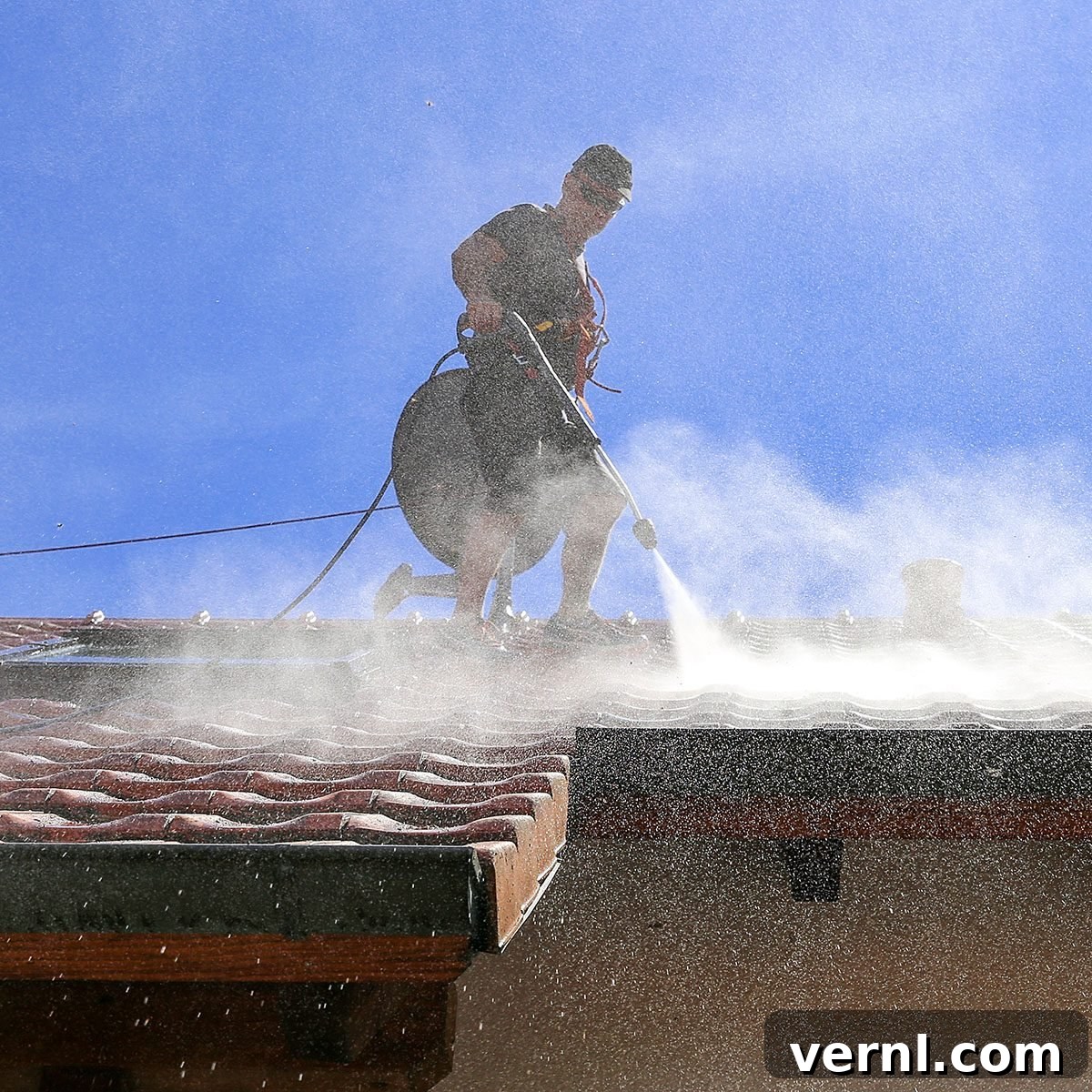
Pressure washers are lauded for their exceptional versatility, serving as a powerful and indispensable tool in any homeowner’s arsenal. Their utility spans a broad spectrum of tasks, from meticulously preparing home exteriors for a fresh coat of paint to rejuvenating dull driveways and sidewalks, effortlessly blasting away years of accumulated grime. They can even tackle surprisingly niche tasks like peeling potatoes, showcasing their broad range of applications across home maintenance. However, when you find yourself gazing up at a roof marred by dirt, unsightly moss, or stubborn algae stains, contemplating the use of your trusty pressure washer, a critical warning must be heeded: this is almost certainly an ill-advised approach that could lead to significant and potentially costly damage. While the immediate allure of powerfully blasting away grime seems incredibly tempting, the delicate nature of most roofing materials makes high-pressure washing a hazardous and counterproductive endeavor.
The Dangers of Pressure Washing Your Roof: Why It’s a Bad Idea
Pressure washers are engineered to generate highly-pressurized jets of water, powerful enough to strip away stubborn sediment, dirt, and grime from robust and durable surfaces. This aggressive cleaning methodology proves incredibly effective on hard, resilient materials like concrete patios, sturdy vinyl siding, or brick walls that can readily withstand the intense force. However, the unique composition, intricate layering, and critical protective function of your roof demand a far gentler and more nuanced approach. Asphalt shingles, which constitute the vast majority of residential roofing in many regions, are designed to endure heavy rainfall, high winds, and various harsh weather conditions. Yet, the impact of a raindrop, even during a torrential downpour, is fundamentally different from a concentrated, high-velocity stream of water emanating from a pressure washer’s nozzle.
Understanding the Vulnerability of Asphalt Shingles
Unless meticulously set to an extremely low—and often considerably less effective—pressure, attempting to clean your roof with a standard pressure washer is highly likely to inflict more harm than good. The primary reason for this lies in the very structure and protective layers of asphalt shingles. These shingles are generously coated with a protective layer of ceramic granules, which serve several vital functions. They are essential for deflecting harmful UV rays from the sun, providing a crucial layer of fire resistance, and contributing significantly to the roof’s aesthetic appeal. High-pressure water jets can easily dislodge, erode, and blast away these essential granules, severely compromising the shingle’s protective capabilities. This premature granule loss accelerates the natural aging process of your roof, exposing the underlying asphalt to the elements and drastically shortening its overall lifespan, potentially necessitating a costly roof replacement long before its expected end.
Structural Damage and Pervasive Water Intrusion Risks
The damage incurred from pressure washing isn’t limited to mere surface erosion. The powerful, focused stream from a pressure washer can work its way insidiously under the edges of shingles, disrupting and weakening the critical adhesive bonds that hold them securely in place. Once these vital bonds are compromised, shingles can lift, curl, buckle, or even detach entirely, rendering your roof highly vulnerable to wind uplift and severe water infiltration during storms. Even more alarmingly, the high-pressure water can seep directly beneath the shingles and penetrate the roof’s fabric underlayment. While this underlayment is designed to provide an additional layer of protection against moisture, it is not impervious to the concentrated force of high-pressure blasts. Water intrusion into these layers can lead to widespread moisture damage, including dangerous wood rot in the roof deck, pervasive mold and mildew growth within the attic space, and ultimately, costly interior leaks that can damage ceilings, walls, and personal belongings. Such extensive structural damage can be exceedingly difficult and expensive to repair, often requiring comprehensive professional intervention.
Ineffective Cleaning and Warranty Voidance Concerns
Furthermore, despite its aggressive nature, pressure washing can prove surprisingly ineffective at achieving a truly thorough and lasting roof clean. While it might superficially blast off some visible debris and surface growth, it often simply redistributes dirt, moss spores, and algae rather than completely eradicating them from the shingle surface. This typically leads to rapid re-growth and an ongoing, frustrating cycle of repeated cleaning attempts. Perhaps even more critically, a significant number of roofing manufacturers explicitly state that using a pressure washer on their asphalt shingles will immediately void the warranty. This alone should serve as a powerful deterrent for any homeowner, as a voided warranty leaves you personally liable for any future repairs or premature replacements necessitated by damage.
Significant Safety Hazards for Homeowners and Property
Beyond the inherent potential for severe roof damage, using a pressure washer on a roof presents considerable safety risks for the homeowner. The act of lugging a heavy and cumbersome pressure washer up a ladder and onto an elevated surface is inherently dangerous and can lead to serious injury from falls. Once on the roof, the combined weight of the machine, the intense recoil force of the water jet, and the slick, hazardous surface of a wet roof create an extremely unstable and dangerous environment. A pressure washer can generate a powerful kickback, causing you to lose your balance and potentially fall from a significant height. There’s also the risk of inadvertently damaging or dislodging shingles simply by maneuvering the heavy equipment across the roof surface. For electric pressure washers, the perilous combination of electricity and water on a wet roof introduces additional serious electrical shock hazards. Roof work is already considered one of the most hazardous home maintenance tasks, and adding a powerful, unwieldy tool like a pressure washer only amplifies these significant risks, making professional assessment and approach crucial.
Safer and More Effective Alternatives for Roof Cleaning
The core reason to steadfastly avoid using your pressure washer to clean your roof isn’t solely about the potential for damage; it’s the undeniable fact that there are demonstrably better, significantly safer, and ultimately more effective methods available for maintaining your roof’s cleanliness and ensuring its long-term longevity. These recommended methods prioritize gentle cleaning and proactive prevention of future growth, rather than resorting to aggressive, potentially destructive blasting techniques.
Embracing the Power of Soft Washing
The most widely recommended and professionally recognized approach for cleaning asphalt shingle roofs is a technique known as “soft washing.” Unlike conventional high-pressure washing, soft washing utilizes very low-pressure water (often comparable to the pressure of a standard garden hose) in conjunction with specialized, highly effective, and typically biodegradable cleaning solutions. These scientifically formulated solutions are designed to effectively kill and thoroughly remove algae, moss, lichen, and mildew at their root level, providing a deeper and significantly longer-lasting clean without inflicting any damage whatsoever to the delicate shingles. The soft washing process generally involves carefully applying the cleaning solution, allowing it to dwell for a specific period to chemically break down and loosen the organic growth, and then gently rinsing it away. Soft washing is inherently safer for your roof, your home’s exterior, and when performed correctly by trained professionals, it poses minimal risk to your surrounding landscaping and plants.
Gentle Manual Cleaning and Maintenance Techniques
- Leaf Blowers and Soft Brooms: For roofs primarily covered in loose debris such as fallen leaves, pine needles, light accumulations of moss, or general surface dirt, a powerful leaf blower can be an excellent and safe first step. Always begin at the roof’s peak and systematically work your way downwards, ensuring all debris is blown clear. For more stubborn clumps of debris or very light moss, a soft-bristled broom can be utilized with extreme care, always ensuring not to dislodge any protective granules or inadvertently damage the shingles. Crucially, always be profoundly mindful of your footing, maintain three points of contact on a ladder, and utilize proper fall protection equipment when working on a roof.
- Hose and Nozzle with Non-Toxic Chemicals: For persistent black streaks, which are primarily caused by the alga Gloeocapsa magma, or for localized patches of moss and lichen, a simple garden spray nozzle combined with a non-toxic, roof-safe cleaning solution can work wonders. A wide array of commercial roof cleaning products are readily available that are specifically designed to be applied via a garden sprayer and then either gently rinsed or left to naturally dissipate with subsequent rain. Alternatively, you can use a diluted oxygen bleach solution (never chlorine bleach, as it can be highly detrimental to landscaping and potentially corrosive to asphalt) applied with a sprayer. After application, allow the solution to sit for the recommended duration specified by the manufacturer, then gently rinse the area with your garden hose. Always remember to protect surrounding vegetation by covering them with tarps or thoroughly wetting them down before and after the application of any cleaning solution.
- Specialized Moss Removal Tools: For larger, more established moss patches, specialized tools designed to gently scrape moss off roofs can be effective. However, these tools must be used with the utmost caution and skill to avoid scratching or otherwise damaging the shingle surface. A stiff, but not wire, brush can also be used, always brushing downwards in the direction of the shingle overlap to prevent lifting or damaging them.
Proactive Preventative Maintenance for a Cleaner Roof
The most effective strategy for keeping your roof immaculately clean and prolonging its lifespan is through consistent, proactive maintenance. Regularly cleaning your gutters is paramount, as it prevents water from backing up, pooling on the roof surface, and promoting organic growth. Trimming any overhanging tree branches significantly reduces shade, which actively encourages moss and algae growth, and simultaneously minimizes the accumulation of organic debris on the roof. Ensuring proper attic ventilation is also critical, as it helps regulate the roof’s temperature, reducing moisture buildup that can foster microbial growth. Furthermore, installing zinc or copper strips along the roof ridge can serve as a long-term deterrent for algae and moss growth, as rainwater washes trace elements of the metal down the roof, creating an environment inhospitable to biological colonization.
When Cleaning Isn’t Enough: Roof Repair and Full Replacement Considerations
It’s important to recognize that sometimes, a dingy or aesthetically unappealing roof isn’t simply a sign that it needs to be cleaned; it might indicate more significant, underlying structural issues that necessitate professional repair or even a complete roof replacement. Recognizing these critical signs early can save homeowners from enduring far more extensive and significantly more expensive problems further down the line, preserving both their investment and their peace of mind.
Identifying Key Signs of Roof Distress and Deterioration
Homeowners should regularly inspect their roofs (from a safe vantage point) and keep a vigilant eye out for key tell-tale signs of distress. These include excessive granule loss, often visibly accumulating in gutters or downspouts, which indicates a significant breakdown of the shingle’s protective layer. Other red flags include cracked, broken, or missing shingles, which compromise the roof’s watertight integrity, and curling or buckling shingles, signaling moisture damage or improper installation. While dark streaks can often be attributed to algae, widespread darkening or inconsistent coloring across the entire roof surface could also indicate general wear and tear, granule degradation, and the advanced age of the roofing material. The age of your roof is another crucial factor; most asphalt shingle roofs are designed with an estimated lifespan of 20-30 years, and once they begin to approach or exceed this duration, a full replacement often becomes a more pragmatic and cost-effective solution than continuous, piecemeal repairs.
Understanding DIY Roof Repairs Versus Professional Full Replacement
Repairing a few isolated damaged or missing shingles is a task that many proficient DIYers, particularly those who are comfortable with heights and are meticulous about ladder safety, can confidently tackle. This process typically involves carefully prying up the edges of surrounding shingles, meticulously removing the damaged shingle, applying roofing cement to secure the area, and then sliding a new, matching shingle into place. However, it’s absolutely crucial to match the new shingle to the existing ones not only for aesthetic consistency but also for proper weather protection. On the other hand, tearing off an entire existing roof and then meticulously reshingling the entire structure is a significantly more complex, physically demanding, labor-intensive, and inherently hazardous undertaking. This extensive project demands specialized knowledge, considerable experience, a comprehensive understanding of roofing systems, and strict adherence to rigorous safety protocols. Consequently, it is unequivocally a job best left to certified, licensed, and insured roofing professionals who can guarantee the work is performed correctly, safely, and in full compliance with local building codes, often backed by robust warranties on both materials and labor.
Special Considerations for Cleaning Roofs with Uncommon Shingles
While the emphatic advice against pressure washing applies broadly to the vast majority of residential roofs featuring standard asphalt shingles, there are specific and nuanced instances where different roofing materials might necessitate alternative, and sometimes more specialized, cleaning methods. If your home proudly boasts a less common style of shingle or utilizes a unique roofing material, it is absolutely imperative to proceed with extreme caution and undertake thorough, material-specific research before initiating any cleaning regimen.
Cleaning Clay, Concrete, Metal, and Other Specialty Roofs
For certain exceptionally durable roofing materials, a very carefully controlled, low-pressure wash might indeed be permissible, but this should always be considered the rare exception rather than the general rule. For instance, Homeguide actually suggests that homeowners with robust clay roof tiles might safely use a pressure washer set at a very moderate 1200 PSI to effectively clean their roof. This pressure setting is significantly lower than typical residential pressure washer outputs, which can often exceed 2000-3000 PSI, and still necessitates careful technique to avoid chipping or breaking the tiles. Concrete tiles, being similar in composition and durability to clay, might also tolerate very low-pressure cleaning. However, for metal roofs, while generally resilient, high pressure can strip away essential protective coatings or specialized paint finishes, potentially leading to premature corrosion and a significantly diminished lifespan. Soft washing consistently remains the safest and most recommended approach for cleaning most metal roofing systems.
Conversely, more delicate and aesthetically sensitive specialty roofs such as natural wood shakes or shingles require the utmost care and a profoundly gentle approach. High-pressure washing will inevitably splinter, erode, and degrade wood roofing materials rapidly. These types of roofs are best cleaned using gentle brushing techniques, specific wood-safe cleaning solutions designed to combat organic growth without harsh chemicals, or extremely low-pressure soft washing methods meticulously applied by professionals to preserve their natural beauty and structural integrity. Slate roofs, while remarkably durable and long-lasting, are inherently brittle and can easily crack or break if stepped on improperly or if subjected to the intense impact of high-pressure water. Consequently, cleaning slate roofs should almost always be entrusted exclusively to highly experienced professionals who possess a deep understanding of the material’s unique nuances and specific care requirements.
Always Consult the Manufacturer or a Roofing Professional
The cardinal rule for addressing the cleaning or maintenance of any specialty roofing material is to conduct thorough, additional research specific to that material and, most importantly, to consult directly with the manufacturer of your roofing product or a highly qualified, experienced roofing professional who specializes in that particular material. Roofing manufacturers often provide explicit guidelines, detailed care instructions, and specific recommendations for cleaning their unique products. Adhering to these guidelines is absolutely crucial not only for maintaining your roof’s warranty but also for ensuring its long-term health, performance, and aesthetic appeal. A professional roofer can also conduct a comprehensive assessment of your roof’s current condition, recommend the most appropriate and safest cleaning methods tailored to your specific material, or provide expert advice if cleaning is even necessary versus a more significant repair or a complete replacement. Prioritizing and acting upon this expert advice will undoubtedly help you avoid costly mistakes, prevent unnecessary damage, and ensure your unique roof remains in pristine condition for many years to come.