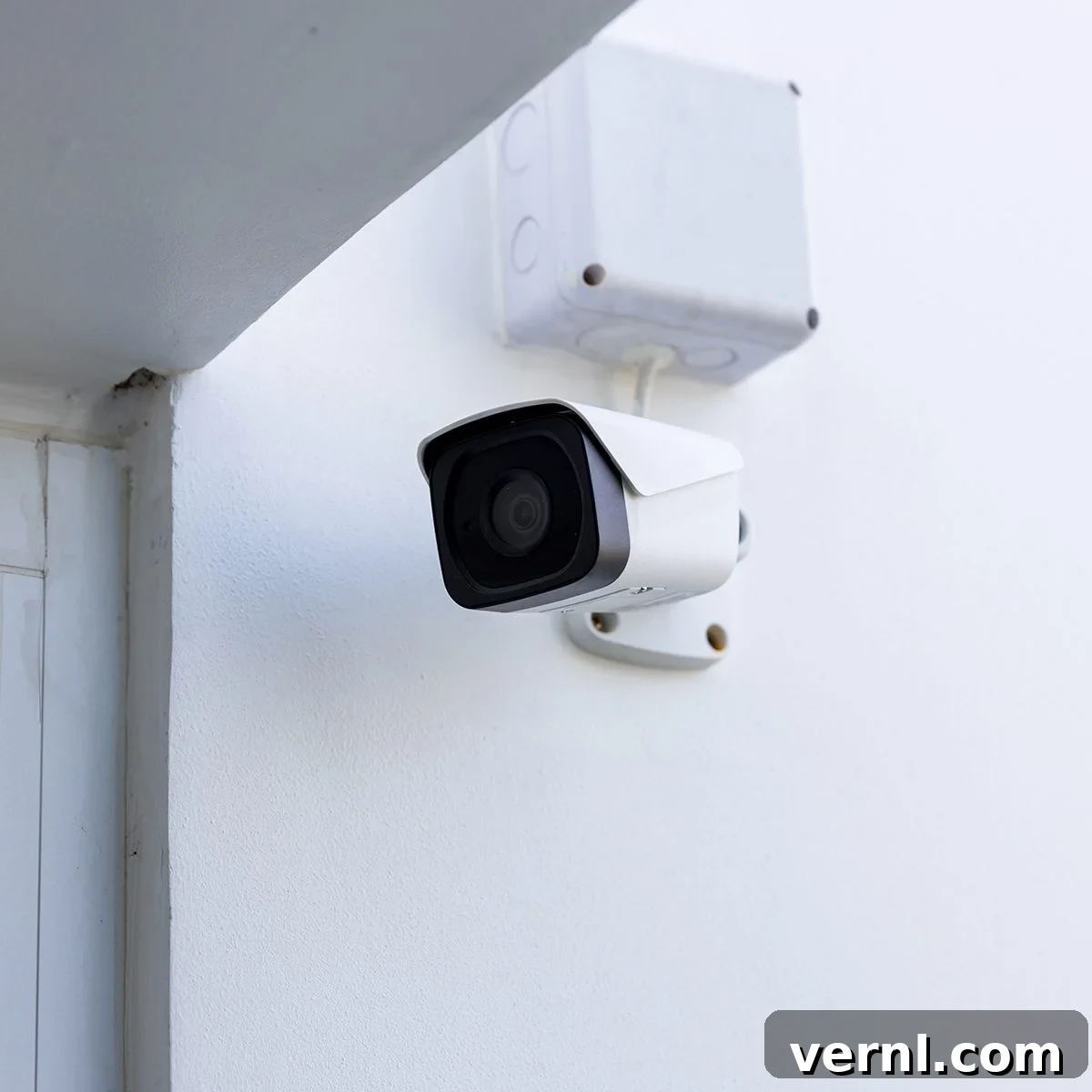
Years ago, I learned a crucial lesson about security camera placement the hard way. My laptop was stolen from my friend’s car while we enjoyed dinner at our favorite Japanese restaurant. Burglars shattered a window to gain entry, and frustratingly, the car’s alarm system was non-existent. Despite my immediate efforts to track the device using the “Find My iPhone” app, the laptop was never recovered. This unfortunate incident highlighted the critical importance of a robust and well-planned security strategy, especially when it comes to surveillance.
Following the discovery of the damage, my friend and I felt a glimmer of hope upon noticing a security camera seemingly pointed in the direction of the car. However, our relief quickly turned to disappointment when the restaurant owner reviewed the footage. It became clear that the car was positioned just outside the camera’s crucial field of view. This experience perfectly illustrates the paramount rule of security camera installation, a point echoed by Brinks Home spokesperson Laura Finson: “When assessing the right camera angles and placement, it is crucial to ensure the camera captures the desired field of view without obstructions such as trees or other architectural elements.”
This incident underscored a vital truth: merely having a security camera isn’t enough; its strategic placement is what truly matters. Homeowners, business owners, and anyone considering a new security system often ponder, “Where should I position my security cameras for optimal protection?” This comprehensive guide draws on expert advice to provide you with the insights needed to make informed decisions about your surveillance setup, transforming your security from a hopeful guess into a strategic defense.
Key Factors to Consider for Optimal Security Camera Placement
While budget constraints might limit the number of cameras you can deploy, maximizing the effectiveness of each unit is paramount. Strategic planning ensures every camera contributes meaningfully to your overall security. When deciding where to install your security cameras, these essential factors should guide your choices:
Prioritize Monitoring the Most Vulnerable and High-Activity Areas
“First and foremost, you must ensure your cameras provide comprehensive coverage of key entry points and high-activity zones like doors and windows for the highest level of protection,” advises Carolin Pfanne of Canary Home Security. She emphasizes that the vast majority of break-ins occur through ground-level windows or the main entry door, making these areas absolute priorities for surveillance. Additionally, extending your view to encompass the street or garden outside these points offers an invaluable layer of early detection and broader situational awareness.
Indoors, Rob Gabriele of SafeHome offers clear guidance: “Your top priorities should always be entryways. This positioning allows you to monitor everyone who enters and exits your property. Following that, focus on areas within your house where you store valuables, ensuring these sensitive locations are under constant watch.” This dual approach—securing access points and safeguarding high-value possessions—forms the foundation of an effective indoor surveillance strategy.
Eliminate Blind Spots for Uninterrupted Coverage
“Poor camera placement inevitably results in blind spots, creating vulnerable areas in your home and inadvertently making it easier for intruders to evade detection,” cautions Finson. A camera that doesn’t cover its intended area completely is a security risk. To counteract this, meticulously plan your camera’s field of view, ensuring no vegetation, furniture, or architectural features obstruct its line of sight. Overlapping fields of view from multiple cameras can also help eliminate these critical gaps.
Furthermore, avoid aiming cameras directly at high-traffic areas if possible, as this can lead to excessive false alarms. Critically, cameras should not directly face strong light sources, such as streetlights or direct sunlight, which can cause severe glare, wash out images, and render footage useless, especially during crucial moments. Strategically positioning cameras to avoid direct glare or utilizing models with Wide Dynamic Range (WDR) technology can mitigate these issues, ensuring clear, usable footage day and night.
Install Cameras at the Optimal Height for Identification and Deterrence
The height at which a security camera is installed is a delicate balance. It must be high enough to offer an expansive view of the monitored area while remaining low enough to capture identifiable details, particularly facial features. “For optimal height,” Finson recommends, “we advise installing cameras between eight and ten feet high for the best facial recognition capabilities.”
This height serves multiple practical purposes. It’s generally accessible with a standard ladder for routine maintenance or adjustments, yet it positions the camera out of the easy reach of potential intruders who might attempt to disable or tamper with it. Brian Townsend, a former law enforcement officer, highlights this precise point as a crucial consideration. A well-placed camera not only records but also acts as a visible deterrent, making its strategic height vital for both purposes.
Account for Lighting Conditions and Reliable Wi-Fi Accessibility
“Thorough consideration of lighting conditions is also paramount,” Townsend emphasizes. “Areas consistently lacking sufficient natural or artificial light will likely necessitate advanced cameras equipped with superior low-light performance or dedicated night vision capabilities. Simultaneously, maintaining robust Wi-Fi signal strength is non-negotiable for wireless cameras. You might find a Wi-Fi extender or a mesh network system indispensable in certain areas.”
In scenarios where consistent low-light conditions are unavoidable, Finson suggests pairing your camera with a motion-sensor light. This combination provides a sudden burst of illumination that not only enhances the camera’s ability to capture clear images but also startles potential intruders, potentially deterring their actions. For areas with particularly poor signal, considering wired Power over Ethernet (PoE) cameras can offer a more reliable and secure alternative, eliminating dependence on Wi-Fi stability.
Strategic Placement: Where to Mount Your Security Camera for Maximum Protection
Every home possesses a unique architectural layout, making a one-size-fits-all approach to camera placement impractical. A personalized strategy is essential for comprehensive coverage. Gabriele strongly advocates for ensuring robust coverage of common indoor areas, such as main hallways and primary living spaces, in conjunction with outdoor cameras overseeing your driveway and garage door—both prime targets for criminal activity.
“For effective indoor protection, consider placing cameras on a side table or a stable shelf a few paces from the door, angled slightly downwards,” suggests Pfanne. “This provides an excellent vantage point of your home’s interior and a clear view of frequently used entryways.” This angling helps capture both the general area and specific movements through the doorway, increasing the likelihood of identifying individuals.
If your property features a swimming pool, especially with children present, Hooman Shahidi of SimpliSafe strongly recommends investing in an outdoor security camera specifically directed towards the pool area. “An outdoor camera will promptly alert you to any unexpected activity around the pool, enabling you to view live-stream video directly on your smartphone to monitor your family’s safety and well-being,” he explains. This not only enhances safety but can also be a crucial liability mitigation tool.
Common and Critical Mounting Locations:
- Front Door/Main Entryway: This is the most common point of entry for intruders and packages. A camera here should capture faces, the entire porch, and potentially the street.
- Back and Side Doors: Often less visible from the street, these are frequently targeted. Ensure these secondary access points have dedicated camera coverage.
- Driveway and Garage: Monitor vehicles, deter car theft, and capture activity around the garage, which can house valuable tools and act as an easy entry point to the home.
- Ground-Floor Windows: Critical for detecting forced entry. Cameras should cover the exterior approach to these windows.
- Common Living Areas (Indoors): While not entry points, these areas often contain valuables and are high-traffic zones within the home.
- Basement Entries/Windows: Often overlooked, basements can be vulnerable access points.
- Detached Structures (Sheds, Workshops): If these contain valuables, they also warrant surveillance.
How Many Security Cameras Do I Really Need?
Determining the ideal number of security cameras for your property depends on its size, layout, number of entry points, and your specific security concerns. However, experts offer general guidelines to help you start planning a robust system.
For the average residential home, Gabriele recommends a foundational setup of four to six cameras. “This configuration typically allows for one outdoor camera overlooking your driveway, another outdoor camera specifically watching your main house entrance, a dedicated camera for your back door, and two strategically placed indoor cameras to cover key internal areas,” he elaborates. This provides a balanced mix of perimeter and interior surveillance.
Townsend offers a more assertive minimum: “My absolute minimum recommendation is four cameras; one positioned to cover each side of the home, ensuring comprehensive perimeter security. However, I personally prefer more extensive coverage, specifically adding cameras to comprehensively monitor the front entrance and garage area, if applicable. These specific zones are frequently targeted and warrant dedicated attention.” Ultimately, the goal is to create a layered defense, eliminating as many blind spots as possible without unnecessary redundancy.
Advanced Tips for Strategic Security Camera Positioning
Beyond the basics, these expert tips can fine-tune your security camera setup for maximum effectiveness and deterrence:
- Optimal Outdoor Angles and Height: “When it comes to outdoor cameras,” Shahidi advises, “we recommend mounting an outdoor security camera six feet from the ground and angled approximately 30 degrees downwards. This specific angle ensures optimal visibility around the perimeter of your home, capturing a broad view while still offering sufficient detail for identification.” This sweet spot balances wide coverage with facial recognition capabilities.
- Covering Entry Points and Beyond: Pfanne reiterates the importance of entry points: “Place a camera in front of a window, at an angle. The majority of break-ins occur via a window or through the front door. This precise positioning allows you to achieve a clear vision of your main entry points while simultaneously providing a view of the street or garden outside for crucial added protection and early detection of suspicious activity.”
- The Advantage of Camouflage: Townsend highlights an often-overlooked tactic: “I have successfully utilized camouflage cameras that are expertly designed to blend seamlessly into outdoor landscape features. This makes them incredibly difficult for potential intruders to spot, yet they are perfect for discreetly monitoring vehicles and foot traffic entering and exiting the property, providing covert intelligence.”
- Garage Interior Surveillance: “I also highly recommend installing a camera within the garage, specifically pointing outwards,” Townsend adds. “Garages are frequently underestimated as easy access points for criminals. A well-placed internal garage camera can capture any activity occurring inside the garage, even in low-light situations, providing invaluable evidence and acting as an additional layer of security.” This is crucial for protecting vehicles and tools, and for identifying anyone attempting to access the main home from the garage.
- Weather Protection for Outdoor Cameras: Ensure outdoor cameras are protected from harsh weather elements. Choose weather-resistant models, or install them under eaves, overhangs, or protective housings to extend their lifespan and reliability.
- Mind Your Neighbors’ Privacy: While securing your property, be mindful of your neighbors’ privacy. Avoid pointing cameras directly into their windows, backyards, or other private areas. Local laws regarding surveillance may also apply, so it’s always wise to research these to ensure compliance.
- Regular Maintenance: Security cameras, like any electronic device, require occasional maintenance. Regularly clean lenses to prevent dust or cobwebs from obstructing the view and periodically check wireless connections or battery levels to ensure continuous operation.
Frequently Asked Questions About Security Cameras
Do Security Cameras Actually Prevent Theft and Deter Crime?
Yes, compelling evidence suggests that security cameras are highly effective in preventing theft and deterring criminal activity. According to a comprehensive 2020 study, which analyzed 40 years of data, properties equipped with security cameras experienced a notable 13 percent reduction in break-ins and associated property damage. This extensive study, conducted across various countries, observed the strongest deterrent effects in nations like South Korea and the UK, underscoring the global impact of visible surveillance.
Furthermore, leading security providers report even more significant reductions. ADT, for instance, highlights a dramatic reduction in crime by as much as 50 percent in one New Jersey county after camera installation, boldly claiming that a home protected by a camera system is up to 300 percent safer than one without. Beyond their direct surveillance capabilities, the mere presence of cameras signals the potential for an advanced alarm system, acting as a powerful psychological deterrent. A revealing study published by UNC Charlotte, which interviewed 422 incarcerated burglars, reported that a staggering 83 percent of them would actively choose to target a different property if they suspected an alarm system was present, reinforcing the preventative power of visible security measures.
What are the legal implications of installing security cameras?
The legality of security cameras primarily revolves around privacy. Generally, it is legal to install cameras on your own property to monitor your home and surrounding private areas. However, there are limitations. You cannot legally place cameras in areas where there is a reasonable expectation of privacy, such as inside a neighbor’s home, bathrooms, or changing rooms, even if they are on your property (e.g., guest bathrooms). When positioning outdoor cameras, ensure they primarily capture your property and do not excessively or intentionally intrude upon neighboring properties or public spaces. While inadvertently capturing a portion of public sidewalk or street is usually acceptable, pointing a camera directly at a neighbor’s window could lead to disputes or legal challenges regarding privacy infringement. Always familiarize yourself with local, state, and national laws concerning surveillance and privacy to ensure full compliance and avoid potential legal issues.
About Our Security Experts
- Carolin Pfanne is a highly respected security expert at Canary, a company renowned for its cutting-edge security cameras and sophisticated monitoring software solutions.
- Hooman Shahidi serves as the Chief Product Officer at SimpliSafe, a leading provider of innovative home security systems and services.
- Rob Gabriele is the dedicated in-house home security and safety expert for SafeHome.org, offering invaluable insights and advice to homeowners.
- Laura Finson holds the position of Director of Product and Strategy at Brinks Home Security, a trusted name in residential security solutions.
- Brian Townsend is a highly respected retired Supervisory Special Agent and former Resident Agent in Charge with the US Drug Enforcement Administration (DEA). He is also the visionary founder and Executive Director of Only 2mg Inc.
Reliable Sources and Further Reading
- Eric L. Piza, PhD: CCTV Surveillance for Crime Prevention: A 40-Year Systematic Review with Meta-Analysis; (2020).
- ADT: Do Surveillance Cameras Deter Crime?; (2025).
- Charlotte: Through the Eyes of a Burglar – Study Provides Insights on Habits and Motivation; (2013).