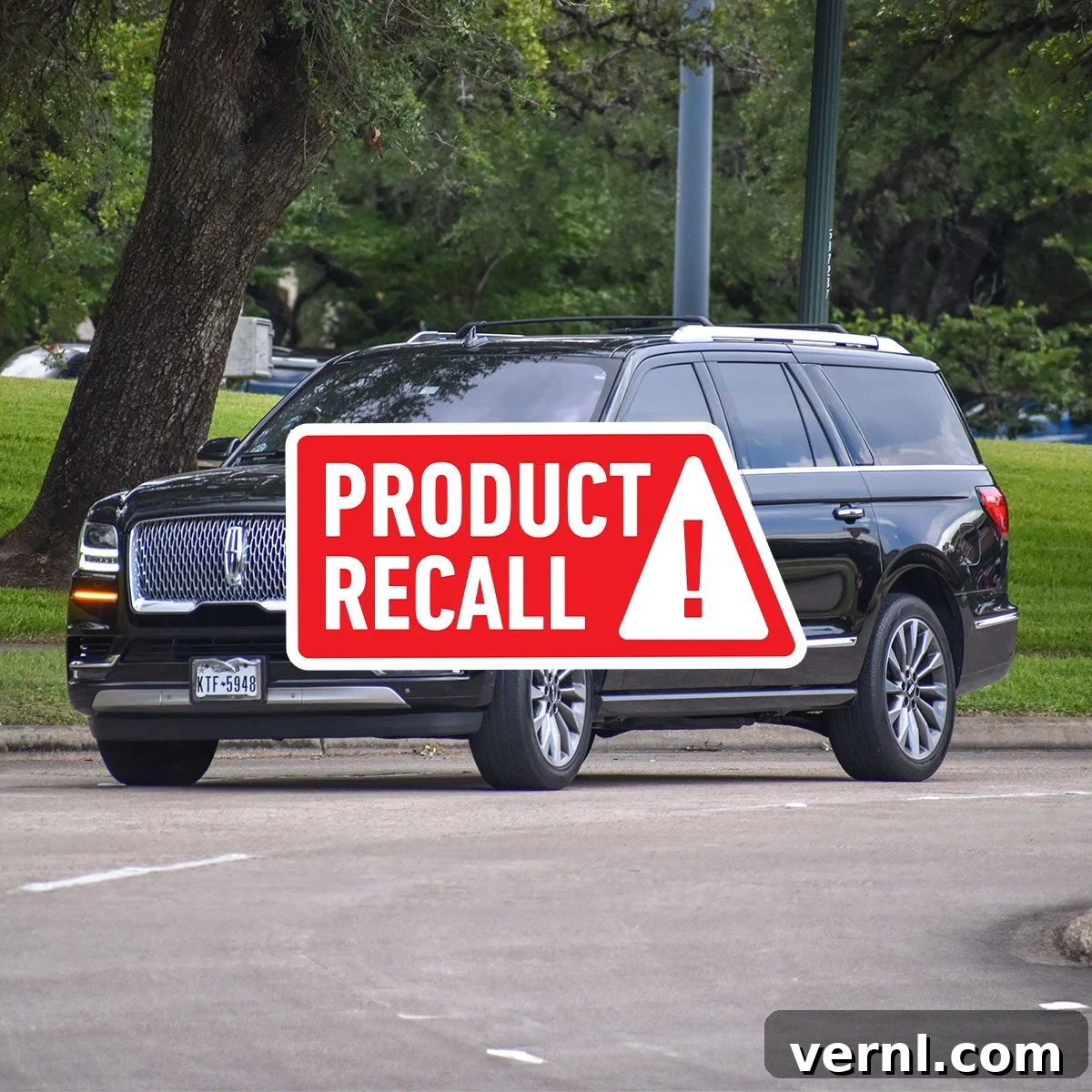
Urgent Recall Alert: Fire Risk Prompts Action for Ford Expedition and Lincoln Navigator Owners
In the vast landscape of automotive manufacturing, recalls are an unfortunate but necessary part of ensuring vehicle safety. For major players like Ford, one of the largest automotive manufacturers in the United States, such occurrences are not uncommon. However, a recent surge in recall notices concerning Ford vehicles has brought safety concerns to the forefront, demanding immediate attention from owners and the public alike.
This week, a new and particularly serious recall has been announced, highlighting a significant fire risk in certain Ford models. According to a detailed report released by the National Highway Traffic Safety Administration (NHTSA), nearly five thousand Ford vehicles are susceptible to an engine fire, posing an immediate threat to drivers, passengers, and surrounding property. This urgent warning underscores the critical importance of staying informed about vehicle recalls and taking prompt action to mitigate potential dangers.
Understanding the Critical Fire Hazard: Why Ford Issued This Recall
The core of this concerning recall, as detailed in the official NHTSA report, lies within the battery junction boxes of the affected vehicles. This crucial component, integral to the vehicle’s electrical system, has been identified as having a manufacturing defect. Specifically, the report warns that “a short circuit within the battery junction box can cause an engine fire while driving or parked.” This revelation adds a terrifying dimension to the threat, as a vehicle fire could erupt without warning, regardless of whether the car is in motion or stationary.
Vehicle fires are a threat that demands the utmost seriousness. The NHTSA explicitly states that “a vehicle fire increases the risk of injury,” a stark reminder of the potential for severe harm, or even fatalities. The insidious nature of this particular threat—the possibility of a short circuit occurring even while the vehicle is parked—makes it doubly alarming. Owners are urged to exercise extreme caution when operating or even being near their Ford vehicle until they can confirm that it poses no danger to themselves, their loved ones, or other drivers and property on the road.
The Mechanics of the Problem: Delving Deeper into the Battery Junction Box
To fully grasp the gravity of this recall, it’s essential to understand the function of the battery junction box (BJB). The BJB acts as a central hub for various electrical circuits, distributing power from the battery to different components of the vehicle. It typically houses fuses, relays, and other protective devices designed to prevent electrical overloads. In the case of this defect, an internal fault within the BJB can lead to an uncontrolled electrical current path – a short circuit. When this happens, an excessive amount of current bypasses its intended route, generating intense heat. This heat can rapidly melt surrounding plastic components, wiring insulation, and other flammable materials within the engine compartment, quickly igniting a fire. The design flaw essentially creates a vulnerability where a vital protective component becomes a source of extreme danger.
The Grave Consequences of Vehicle Fires
The danger posed by a vehicle fire extends far beyond mere property damage. Engine compartment fires can spread rapidly, engulfing the entire vehicle within minutes. The intense heat, toxic fumes, and smoke produced can quickly incapacitate occupants, making escape difficult or impossible. Even if occupants manage to exit the vehicle, they face risks from secondary explosions (e.g., fuel tank), and the fire itself can spread to nearby structures, other parked vehicles, or even natural surroundings, leading to widespread destruction. The potential for serious injuries, burns, smoke inhalation, and even fatalities makes this type of recall one of the most critical issues an automaker can face, and one that consumers must address with utmost urgency.
Is Your Vehicle Affected? Identifying At-Risk Ford and Lincoln Models
The NHTSA report clearly identifies the vehicles implicated in this significant safety recall. Approximately 5,000 units of the 2020 Ford Expedition and Lincoln Navigator are included in this immediate safety advisory. If you are the owner of one of these specific models and model years, your immediate attention is required. While Ford is taking steps to notify affected owners, proactive measures on your part can help ensure your safety and the safety of those around you.
Checking Your Vehicle’s Recall Status: Essential Steps for Owners
Ford has stated that they are in the process of mailing out owner notification letters, with distribution beginning in the coming weeks. However, waiting for postal delivery is not the only, or indeed the fastest, way to confirm if your vehicle is part of this recall. The most reliable and immediate method is to use your vehicle’s identification number (VIN). The VIN is a unique 17-character code that can be found on the driver’s side dashboard (visible through the windshield) or on the driver’s side door jamb. This number is specific to your car and allows for precise identification in recall databases.
To check your vehicle’s recall status using your VIN, please visit the official NHTSA website. On their portal, there is a dedicated VIN lookup tool where you can enter your vehicle’s unique identifier. This will quickly inform you if your Ford Expedition or Lincoln Navigator is affected by this or any other outstanding recalls. Additionally, you can contact your local authorized Ford or Lincoln dealership directly with your VIN; they can also provide immediate information regarding your vehicle’s recall status and guide you on the next steps.
Immediate Safety Recommendations: Protecting Yourself and Your Property
Until you have confirmed that your vehicle is either exempt from this recall or has undergone the necessary repairs, it is paramount to exercise extreme caution. The NHTSA has issued a very specific and critical safety recommendation for impacted owners: “park their vehicles outside and away from structures and other vehicles, until the remedy is performed.” This directive is not merely a suggestion; it is a vital safety measure designed to prevent catastrophic damage and potential injury.
Why Parking Outside is Non-Negotiable
The recommendation to park outside and away from structures is rooted in the severe risk of fire spreading. If an engine fire were to erupt while your vehicle is parked inside a garage or carport, the flames could quickly extend to your home, causing extensive structural damage, destroying personal property, and endangering residents. Similarly, parking too close to other vehicles could lead to the fire spreading from one car to another, amplifying the scale of the emergency. “Away from structures” implies a significant distance—at least 30 feet, if possible—from your home, garage, carports, and even large trees or brush that could catch fire. Choosing an open, paved area like a distant parking spot in a lot, or a wide-open driveway space, is advisable. This precautionary measure, while an inconvenience, is a small price to pay for the safety of your family and your property.
The Solution: Ford’s Comprehensive Repair Plan
For owners whose vehicles are affected by this recall, Ford has outlined a clear and actionable repair plan. The automotive giant has stated that its authorized dealerships will perform the necessary fixes at no cost to the owner. According to Ford’s official statement, “dealers will inspect and replace the battery junction box, as necessary, and remove a ground wire. On models equipped with standard-duty radiator fan motors, dealers will also install an auxiliary electrical box with a wire jumper.”
This multi-step repair process aims to comprehensively address the defect. The inspection will confirm the presence and extent of the issue within the BJB. Replacement of the faulty unit is a direct resolution to the identified manufacturing defect. The removal of a specific ground wire and, for certain models, the installation of an auxiliary electrical box with a wire jumper, suggests a modification designed to either prevent the short circuit from occurring in the first place or to safely manage any electrical anomalies, thereby eliminating the fire risk. As is standard practice for safety-related recalls, all these repairs, including parts and labor, will be performed by certified technicians free of charge to the vehicle owner, underscoring the manufacturer’s responsibility to rectify safety defects.
What to Expect at the Dealership
Once you’ve confirmed your vehicle is part of the recall, the next step is to contact your local Ford or Lincoln dealership to schedule a service appointment. When you call, be prepared to provide your VIN so they can confirm the recall and prepare for your visit. While the exact time required for the repair may vary, dealerships will strive to make the process as efficient as possible. It’s always a good idea to inquire about the estimated duration of the repair when scheduling your appointment, and to ask about potential loaner vehicle options if the repair is expected to take a significant amount of time. Dealership service departments are well-versed in handling recalls and are equipped to perform these specific repairs according to Ford’s guidelines, ensuring the safety and reliability of your vehicle once completed.
Ford’s Commitment to Safety: Understanding the Recall Process
Automotive recalls, though often a cause for concern, are fundamentally a testament to the industry’s commitment to vehicle safety and continuous improvement. When a manufacturer identifies a defect that poses a safety risk, it is legally and ethically obligated to notify owners and provide a remedy. This process is rigorously overseen by regulatory bodies like the NHTSA in the United States, which plays a crucial role in ensuring that manufacturers adhere to safety standards and address potential hazards promptly.
Responding to a recall is not optional; it is a critical responsibility for every vehicle owner. Ignoring a recall notice, especially one concerning a fire risk, can have devastating consequences. By participating in the recall process, owners not only protect themselves and their families but also contribute to overall road safety and the integrity of the automotive industry’s safety standards. Ford, like all major automakers, operates under the stringent framework of consumer protection laws that mandate these actions, ensuring that safety remains paramount.
The Role of the National Highway Traffic Safety Administration (NHTSA)
The NHTSA is the federal government agency responsible for vehicle safety in the United States. Its mission is to save lives, prevent injuries, and reduce economic costs due to road traffic crashes through education, research, safety standards, and enforcement. When a potential defect is reported or discovered, the NHTSA conducts investigations. If a safety-related defect is confirmed, the NHTSA works with the manufacturer to initiate a recall, ensuring that all affected vehicles are repaired. They also maintain a public database of recalls, making it easy for consumers to check for open recalls on their vehicles using the VIN, as demonstrated with this current Ford and Lincoln advisory. Their involvement underscores the seriousness and broad implications of such safety issues.
Need Further Assistance? Contacting Ford Customer Service
If you own a 2020 Ford Expedition or Lincoln Navigator and have additional questions or require further clarification regarding this recall, do not hesitate to reach out to Ford customer service directly. Their dedicated team is available to provide support and answer your queries.
You can contact Ford customer service at 1-866-436-7332. When you call, it will be helpful to reference the specific recall numbers associated with this issue. Ford’s internal numbers for this recall are 22S36 and 22S48. Additionally, the official NHTSA number for this recall, which can be used for verification and further information, is 25V628000. By providing these numbers, you can ensure a more efficient and accurate response to your inquiries, helping you to quickly address any concerns about your vehicle’s safety.
Source
Official NHTSA Recall Report: Engine Compartment Fire (ID: 25V628000), National Highway Traffic Safety Administration.