
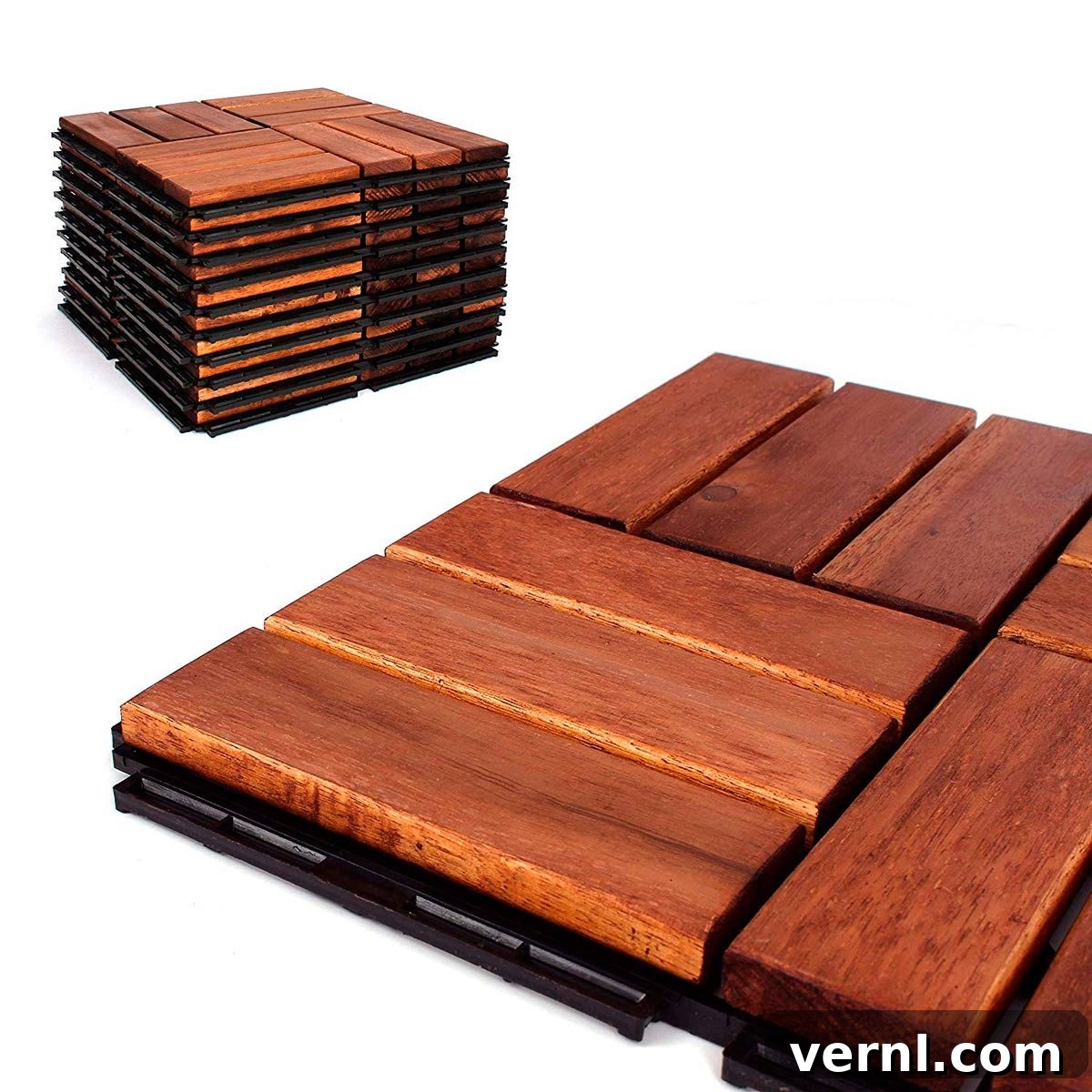
Outdoor living spaces are essential extensions of our homes, providing areas for relaxation, entertainment, and connection with nature. However, over time, even the most robust decks can show signs of wear and tear. Decking materials, particularly wood, often deteriorate long before the foundational structure, leading to an unsightly appearance that demands attention. When your deck becomes too shabby to ignore, you’re typically faced with a few traditional, often daunting, options. These can range from intensive restoration efforts like professional pressure washing and re-coating – a viable solution for wood but unsuitable for composites – to more radical measures.
One common approach is to cover the existing decking with a solid flooring material. While seemingly straightforward, this often introduces significant drainage problems, leading to water pooling, stagnation, and accelerated deterioration of the underlying structure. The most comprehensive, yet also the most expensive and labor-intensive solution, is a complete deck replacement. This involves the arduous task of tearing up old boards and installing new ones, a project that can strain both your budget and your patience.
However, there’s an innovative, increasingly popular alternative that bypasses many of these challenges: covering your existing surface with wood deck tiles. This modern solution offers a fresh perspective on deck restoration, providing an attractive, durable, and remarkably user-friendly way to revitalize your outdoor areas. While it does involve an initial investment in new materials, the outlay is significantly less than the cost associated with a full deck overhaul. Crucially, their intelligent design ensures proper drainage, preventing the issues commonly associated with solid flooring options. This article will delve into everything you need to know about wood deck tiles, from their composition and benefits to installation tips and maintenance advice, helping you decide if they are the perfect DIY deck solution for your home.
The Ultimate Guide to Wood Deck Tiles: Transform Your Outdoor Space with Ease
Are you dreaming of a beautiful, inviting outdoor space but dreading the cost and effort of a full deck renovation? Wood deck tiles offer a revolutionary approach to enhancing your patio, balcony, or existing deck, providing a stylish, durable, and remarkably easy-to-install solution. Whether you’re a renter looking for a temporary upgrade or a homeowner seeking a cost-effective deck makeover, these interlocking outdoor flooring options are quickly becoming the go-to choice. This comprehensive guide will explore the world of wood deck tiles, detailing their advantages, potential drawbacks, installation methods, and essential maintenance tips to help you create your ideal outdoor living space.
What Are Wood Deck Tiles?
Wood deck tiles are an ingenious and highly effective product designed to provide an instant upgrade to any outdoor surface. They represent a modular outdoor flooring system, typically comprising individual square or rectangular units crafted from various types of wood, mounted onto a durable, often plastic, interlocking base. This innovative design allows the tiles to simply snap together, eliminating the need for complex tools, messy adhesives, or specialized construction skills. This makes them an exceptionally popular and cost-effective way to cover an ugly patio or deck, or to effortlessly create a charming small outdoor living space on a budget.
These versatile patio tiles come in a wide array of sizes, wood species, and aesthetic styles, ranging from traditional slatted patterns to intricate parquet or mosaic designs. This diversity ensures there’s a tile style to complement virtually any architectural theme or personal preference. The trend gained significant traction in densely populated urban areas, particularly in Japan, where limited land for outdoor living spaces spurred the demand for adaptable and easy-to-install solutions. Companies like Archatrak, specializing in high-quality interlocking wood decking tiles, have championed their utility. Similarly, IKEA’s popular Runnen wood deck tiles exemplify how these products offer a quick, inexpensive, and stylish balcony flooring or backyard solution for small spaces and apartment dwellers worldwide.
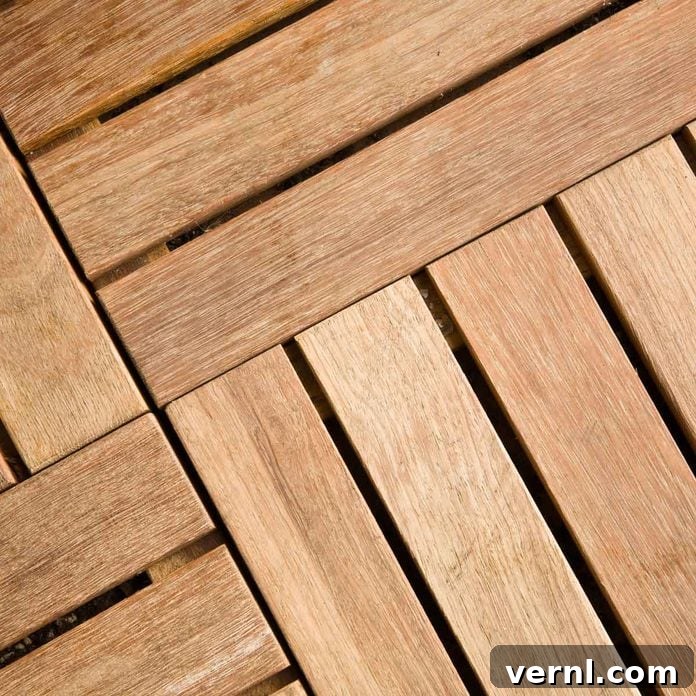
Benefits of Choosing Wood Deck Tiles (Pros)
Opting for wood deck tiles offers a compelling list of advantages that make them an ideal choice for many homeowners seeking a swift and impactful deck makeover. Their blend of convenience, versatility, and aesthetic appeal stands out:
- Effortless and Rapid Installation: Perhaps the most significant advantage is the unparalleled ease of installation. Since the tiles are designed with an intuitive interlocking mechanism, often a simple snap-together system, you can lay them down remarkably quickly without needing any specialized tools, advanced carpentry skills, or professional help. This makes DIY deck installation genuinely achievable for almost anyone. A typical patio or deck can be transformed in just a few hours, rather than days or weeks, making them a perfect solution for immediate improvements. Furthermore, if an individual tile sustains damage, replacement is equally straightforward – simply unclip the old one and snap in a new one. Learn how to build a deck over a concrete patio using similar principles.
- Incredible Versatility and Surface Adaptability: Wood deck tiles boast exceptional adaptability, capable of being placed directly over a multitude of existing surfaces. This includes concrete slabs, stone patios, brickwork, old pavers, and even worn-out wooden decking. Their raised base design ensures proper airflow and drainage beneath, preventing moisture buildup regardless of the underlying surface. This feature makes them an excellent choice for deck resurfacing projects where tearing out the old surface is not feasible or desired.
- Ideal for Temporary Solutions and Renters: For individuals who are renting their homes, or those seeking a non-permanent outdoor flooring option for events or seasonal use, wood deck tiles are an excellent choice. Their modular nature means they can be easily picked up, disassembled, and relocated. This portability allows you to take your investment with you when you move, or to reconfigure your outdoor space as needed without commitment. Here’s how to refinish a deck and restore it back to new, offering another perspective on deck care.
- Durability and Longevity: Despite their easy installation, many wood deck tiles are built to last. When crafted from robust hardwoods like Ipe, Teak, or Acacia, they offer impressive durability against weathering, foot traffic, and UV exposure. They are often treated for outdoor use, providing resistance against rot, mildew, and insect infestation. Additionally, the surfaces are generally non-slip, enhancing safety.
- Easy Maintenance and Refinishing: Like traditional wood decks, wood deck tiles are relatively simple to maintain. They can be swept regularly to remove debris, cleaned with mild soap and water, and as needed, they can be re-stained, painted, or coated with a weatherproof sealer to restore their appearance and extend their lifespan. The ability to refinish them ensures your outdoor space remains fresh and vibrant for years.
- Cost-Effective Outdoor Makeover: Compared to the substantial costs associated with a full deck replacement, wood deck tiles offer a significantly more budget-friendly alternative. They allow you to achieve a high-end look and feel for your outdoor living space without breaking the bank. For example, you can often find a 10-pack of 12 by 12 tiles (available in various colors like gray or brown) for a very accessible price point, making a substantial impact for a minimal investment.
- Enhanced Drainage and Airflow: The raised plastic base beneath each tile is designed to facilitate excellent airflow and drainage. This crucial feature prevents water from pooling on the surface or getting trapped underneath, which is a common issue with solid flooring over existing concrete. This superior drainage helps protect the underlying surface and the tiles themselves from moisture-related damage, contributing to a healthier and more sustainable outdoor environment.
Potential Drawbacks of Wood Deck Tiles (Cons)
While wood deck tiles present a compelling solution for many outdoor renovation projects, it’s important to consider their limitations and potential downsides to ensure they align with your long-term expectations and specific needs:
- Visible Seams and Aesthetic Considerations: One of the most frequently noted drawbacks is the presence of visible seams where the tiles interlock. While some designs and installation patterns can minimize their prominence, they are typically more noticeable than a continuous, traditionally laid deck surface. For those who prefer a seamless, monolithic look, this might be an aesthetic compromise. The visibility of seams can also depend on the specific style, color, and how meticulously they are laid out, as some consumers simply don’t favor this visual characteristic.
- Not a Permanent Home Feature: The very attribute that makes wood deck tiles convenient – their non-permanent, modular nature – can also be a con for some homeowners. If your goal is to create a long-term, integrated architectural feature that becomes a fixed part of your property, these tiles may not be the optimal choice. They don’t offer the structural permanence or customizability in shape and size that a traditional, built-in deck provides.
- Limited Home Value Addition: If increasing your home’s resale value is a primary objective, especially for a significant renovation, wood deck tiles may not deliver the same return on investment as a newly constructed permanent deck or concrete patio. Since they are considered a removable or temporary enhancement rather than a permanent structural upgrade, real estate appraisals typically do not attribute substantial added value to them. If you’re looking to add much value, a more traditional and permanent outdoor structure would likely be a better investment.
- Requirement for a Level Substrate: Although the tiles are easy to install, they perform best and look most appealing when laid over a relatively flat and level surface. Unevenness in the underlying ground or existing patio can result in an uneven, wobbly, or aesthetically unpleasing tiled surface. While minor imperfections can sometimes be compensated for, significant dips or bumps will require prior ground preparation, adding an extra step to the installation process.
- Potential for Debris Accumulation: The gaps inherent in the interlocking system, though crucial for drainage, can also allow small debris, leaves, and dirt to accumulate underneath or within the seams. This may require more frequent cleaning, not just on the surface but also periodically beneath the tiles, to prevent moisture retention and potential organic growth.
- Material Durability Varies: While high-quality hardwood deck tiles are very durable, cheaper options made from softer woods like acacia or treated pine may have a shorter lifespan and require more frequent maintenance or replacement. The initial cost savings might be offset by increased upkeep or a shorter service life compared to premium hardwood options or a traditional deck.
More Installation Options for Wood Deck Tiles
Wood deck tiles are incredibly versatile, offering transformation possibilities across a variety of surfaces. Understanding the best installation practices for each type of substrate will ensure a stable, attractive, and long-lasting result for your new outdoor flooring.
- Over Grass: Creating a functional patio or walkway directly over a lawn is entirely possible with wood deck tiles. The key is proper ground preparation to ensure stability and drainage. Begin by marking out the area and digging down approximately 2 to 2.5 inches. This depth allows for a stable base. Next, apply a 1 to 1.5-inch thick layer of gravel, spreading it evenly and compacting it thoroughly. You might also consider laying down a weed barrier fabric directly on the soil before adding gravel to prevent unwanted growth. Once the gravel base is level and compacted, you can confidently place the deck tiles, gently tapping them flat with a rubber mallet to ensure they are securely seated and interlocked.
- Over Concrete: Wood deck tiles are an excellent deck resurfacing solution for tired or cracked concrete patios and balconies. The process here is often simpler as concrete provides a firm, usually level, base. First, ensure the concrete surface is clean, free of debris, and relatively level. For optimal stability and to bridge minor irregularities, many installers use specialized deck tile connectors. These connectors easily snap onto the base of the tiles, creating a secure and cohesive surface. They are relatively inexpensive and greatly simplify the assembly process, helping to maintain uniform spacing and alignment across your new patio tiles.
- Over Gravel: If you already have a gravel base for a patio or pathway, installing wood deck tiles can be very straightforward. The critical step is to ensure that your gravel base is completely level and compacted. Use a rake and a tamper to achieve a flat, firm surface. Once the gravel is prepared, the wood deck tiles will easily install just like on any other level surface, simply by interlocking them. The gravel underneath will continue to provide excellent drainage, complementing the tile’s built-in drainage system.
- Over Existing Wooden Decks: This is a popular option for refreshing an old, worn-out wooden deck without the full expense of replacement. The existing deck provides a structural base, but it’s crucial that the old deck is structurally sound, level, and free of significant rot or damage. Any loose boards should be secured, and major irregularities addressed. Laying wood deck tiles over the old decking acts as an instant deck makeover, hiding imperfections and creating a fresh, uniform appearance while still allowing for proper drainage through the tile’s base.
Choosing the Right Wood Deck Tiles for Your Space
Selecting the perfect wood deck tiles involves considering several factors to ensure they meet your aesthetic, functional, and budgetary requirements. Making an informed decision will lead to a more satisfying and long-lasting outdoor space.
- Wood Type and Durability: The type of wood significantly impacts the tile’s longevity and appearance.
- Exotic Hardwoods (e.g., Ipe, Teak, Cumaru, Tigerwood): These are top-tier choices for durability, natural resistance to rot, insects, and decay, and stunning aesthetic appeal. They are dense, require less maintenance (though still benefit from sealing), and boast impressive lifespans, often 25-50 years. However, they come at a higher price point.
- Acacia: A popular choice for its balance of durability, attractive grain, and moderate cost. It’s a good mid-range option that offers good resistance to weather.
- Treated Softwoods (e.g., Douglas Fir, Pine): These are the most budget-friendly options. They are usually pressure-treated to enhance their resistance to moisture and insects. While less dense than hardwoods, with proper sealing and maintenance, they can still provide 10-15 years of service. They might require more frequent resealing.
- Tile Size and Pattern: Wood deck tiles typically come in square dimensions (e.g., 12×12 inches, 24×24 inches). Consider the size that best suits your area; larger tiles can cover ground faster but might be harder to fit into irregular spaces. The pattern (slatted, parquet, mosaic) also plays a crucial role in the overall look and feel of your outdoor living space.
- Base Material: Most tiles feature a plastic grid base. Ensure this base is robust, UV-resistant, and designed for efficient drainage and airflow. A high-quality base contributes to the overall stability and longevity of the tiles.
- Budget: As with any home improvement project, your budget will guide your choices. Balance the upfront cost with the desired lifespan, maintenance commitment, and aesthetic quality. Remember that investing in higher-quality materials can often reduce long-term maintenance and replacement costs.
- Climate Considerations: If you live in an area with extreme weather conditions (heavy rain, snow, intense sun, humidity fluctuations), selecting wood types known for their resistance to these elements is crucial. Proper sealing and maintenance are even more critical in challenging climates.
FAQ: Your Questions About Wood Deck Tiles Answered
What maintenance do wood deck tiles require?
Wood deck tiles require similar maintenance to a traditional wood deck to preserve their beauty and extend their lifespan. Regular upkeep is key. This includes sweeping them periodically to remove leaves, dirt, and other debris that can accumulate in the seams and on the surface. Pay particular attention to tannin-laden leaves and sticks, as these can leave stains if left wet for too long. If tannin stains do occur, they can usually be removed by scrubbing with a mild soap and water solution and a stiff brush. Beyond regular cleaning, it’s essential to seal the tiles periodically with a high-quality waterproof coating or deck sealer. The frequency depends on the wood type and exposure to elements, but generally, every one to two years is recommended to protect the wood from UV damage, moisture absorption, and rot. The beauty of modular tiles is that if one tile becomes severely damaged, stained, or warped, you can simply remove it and replace it with a new one, avoiding the need for extensive repairs to the entire surface. The same maintenance principles apply to ensure a fresh appearance.
How long do wooden deck tiles last?
The lifespan of wooden deck tiles varies significantly depending on the material they are made from, the quality of construction, environmental factors, and the level of maintenance they receive. High-end exotic hardwoods are known for exceptional longevity: Ipe tiles, for instance, are renowned for their incredible density and natural oils, allowing them to easily last 50 years or even longer with proper care. Tiles made from other premium exotic hardwoods like Teak, Cumaru, and Tigerwood also offer outstanding durability, often lasting almost as long due to their inherent resistance to rot, insects, and weathering. Naturally, these are the most expensive options, reflecting their superior performance and lifespan.
For more budget-friendly options, the lifespan tends to be shorter but still offers excellent value. Tiles made from materials like Acacia generally fall into a mid-range, offering a good balance of durability and cost-effectiveness. Softer, pressure-treated woods such as Douglas fir or certain types of acacia might have a lifespan closer to 10 to 15 years. This assumes regular maintenance, including cleaning and periodic sealing. In harsh climates or with neglect, their lifespan could be reduced. When making your selection, consider your budget, desired longevity, and willingness to perform regular maintenance to ensure your outdoor flooring investment truly meets your expectations.
Sources
- Archatrak: Interlocking Wood Decking Tiles; (Accessed 2024)
- IKEA: Runnen Decking, outdoor, brown stained; (Accessed 2024)