
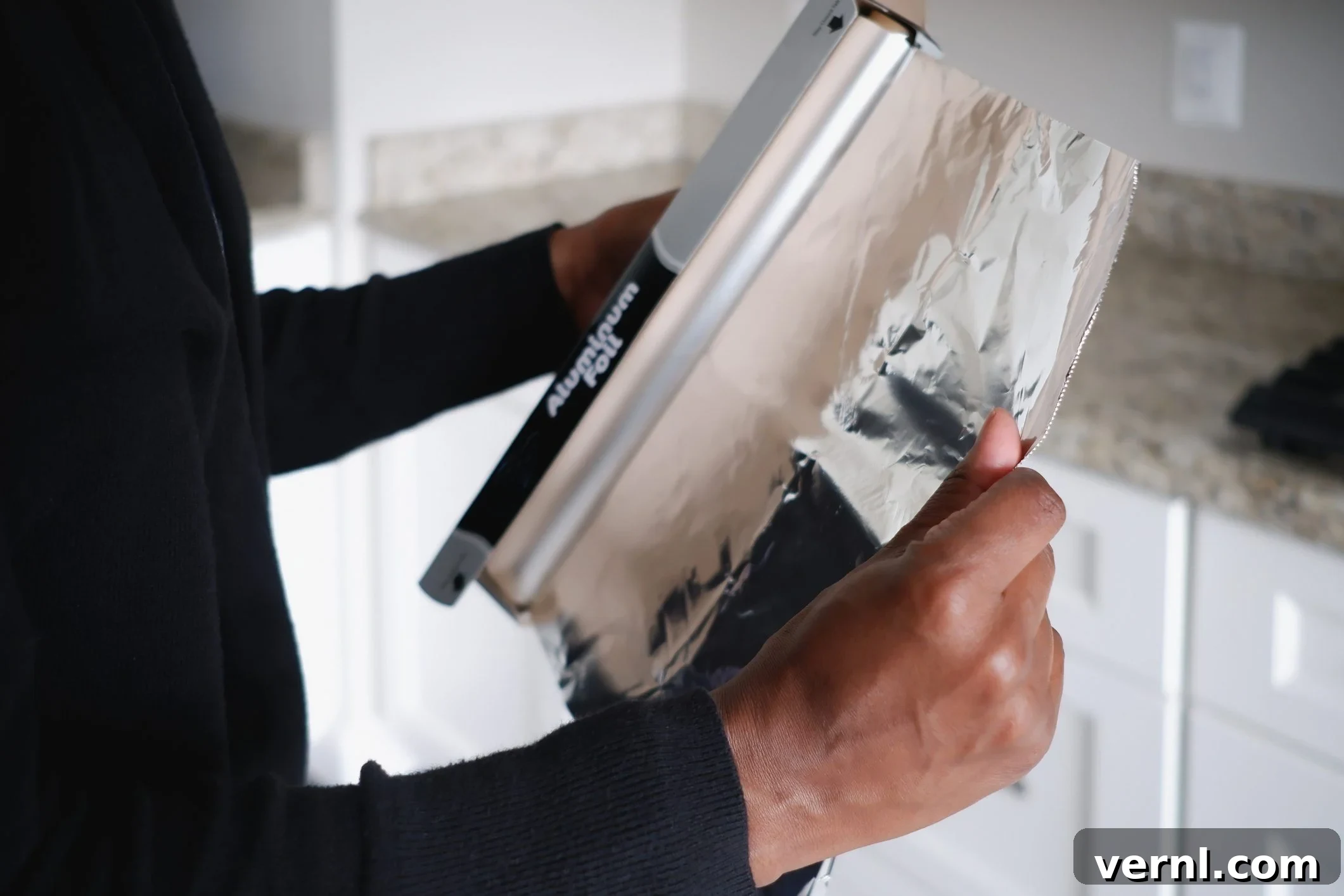
The Great Aluminum Foil Mystery: Shiny vs. Dull Side Demystified
For decades, a simple kitchen staple has sparked countless debates and curious glances: aluminum foil. Every time you unroll a fresh sheet, you’re faced with an intriguing paradox – one side glistens with a mirror-like shine, while the other appears muted and dull. This visual distinction has long fueled a pervasive myth, leading many to wonder: Does one side truly offer a cooking advantage? Is there a right or wrong way to use it? The answers, as it turns out, are far simpler and more grounded in manufacturing science than in culinary magic.
This comprehensive guide aims to put an end to the shiny-versus-dull dilemma once and for all. We’ll delve into the fascinating process of how aluminum foil is made, expose common misconceptions about its performance and safety, explore its myriad practical uses, and provide definitive advice to empower you in your kitchen and beyond. Prepare to uncover the truth and simplify your cooking experience, armed with a newfound understanding of this everyday household hero.
The Origins of a Kitchen Essential: A Brief History of Aluminum Foil
Before we unravel the mystery of its dual-sided appearance, it’s worth appreciating the journey of aluminum foil itself. While aluminum metal has been known for centuries, its transformation into the thin, pliable foil we use today is a relatively modern innovation. Early versions of metal foil, primarily tin foil, were used in the late 19th and early 20th centuries for packaging. However, tin was prone to developing a metallic taste in food and was less flexible, often tearing easily and lacking the barrier properties of modern foil.
The breakthrough came with aluminum. First produced on an industrial scale in the late 19th century, aluminum’s unique properties – lightweight, highly malleable, corrosion-resistant, and an excellent barrier against light, moisture, and odors – made it an ideal candidate for packaging. The first aluminum foil was introduced commercially in Switzerland in 1910, initially used to wrap chocolate bars, confectionery, and other delicate food items. Its popularity quickly grew, finding its way into kitchens worldwide by the mid-20th century, replacing tin foil almost entirely. Its convenience, ability to seal in freshness, and thermal properties quickly cemented its status as an indispensable cooking and storage aid, leading to the widespread use we see today, from wrapping leftovers to lining baking sheets and grilling delicate foods.
Behind the Sheen: How Aluminum Foil Gets Its Distinct Sides
The secret behind the shiny and dull sides of aluminum foil lies not in a special coating or a deliberate design choice for performance, but in a purely mechanical aspect of its manufacturing process. Understanding this process is key to debunking the myths surrounding its use.
From Bauxite to Ultra-Thin Sheets: The Industrial Journey
Aluminum foil begins its life as bauxite ore, which is refined through a complex chemical process into pure aluminum. This purified aluminum is then cast into massive, thick slabs, often several feet wide and many inches thick. These slabs embark on an intensive journey through a series of heavy rolling mills. Each pass through these powerful rollers progressively thins the aluminum, stretching it like dough until it reaches an incredibly delicate thickness – often just a few thousandths of an inch (around 0.0006 to 0.0009 inches for household foil). At this point, the foil becomes so thin and fragile that rolling it individually would cause it to tear easily and frequently, making mass production inefficient and costly.
The Dual-Sheet Rolling Technique: A Manufacturing Necessity
This is where the distinction between the shiny and dull sides emerges. To prevent tearing during the final stages of thinning and to ensure efficient, high-speed production, manufacturers employ a clever technique: they roll two sheets of aluminum simultaneously. These two extremely thin sheets are fed through the rollers together, pressed tightly against each other in a “sandwich” configuration.
- The Shiny Side: The outer surfaces of each aluminum sheet that come into direct contact with the highly polished, hard steel rollers emerge with a smooth, mirror-like finish. The intense pressure and friction against the gleaming rollers effectively polish the aluminum, creating this characteristic shine.
- The Dull Side: Conversely, the two inner surfaces that are pressed against each other, without direct contact with the rollers, experience significantly less friction and do not get polished. Instead, these surfaces develop a slightly rougher, matte, or dull finish due to the microscopic irregularities that are not smoothed out by the rollers.
Essentially, the difference is a byproduct of the metal’s interaction with the manufacturing machinery – a pragmatic solution to a production challenge rather than a feature designed for specific culinary purposes. Both sides are identical in composition, thickness, and material properties, with the only distinction being their surface texture resulting from the rolling process.
Myth vs. Reality: Does the Shiny Side Cook Better?
This is perhaps the most enduring myth surrounding aluminum foil, a belief held by countless home cooks and professional chefs alike. Many people assume that the shiny side, being more reflective, is superior for either reflecting heat away from food (when facing out) or directing heat towards it (when facing in), thereby influencing cooking times or results. While this logic might seem intuitively sound, rooted in basic principles of light and heat reflection, it is fundamentally incorrect in the context of everyday kitchen applications.
The Negligible Difference in Thermal Performance
Scientific tests and metallurgical studies have consistently shown that the difference in thermal reflectivity and emissivity between the shiny and dull sides of standard household aluminum foil is so minuscule as to be practically irrelevant for cooking. In a typical oven environment, heat transfer occurs primarily through convection (hot air circulating around the food) and conduction (direct contact with hot surfaces like the pan or the foil itself), with radiant heat playing a lesser, though still present, role. Even where radiant heat is a factor, the slight difference in surface texture between the shiny and dull sides does not significantly alter how much heat is absorbed or reflected by the food or its surroundings.
Whether you’re baking potatoes, roasting vegetables, covering a casserole dish to prevent over-browning, or creating a foil packet for grilling fish, the performance of the foil remains consistently the same, regardless of which side faces the food or the heat source. The foil’s primary function – to trap heat, moisture, and flavor, or to create a protective barrier – is achieved effectively and identically by both surfaces. Therefore, you can confidently use either side without affecting the outcome of your culinary creations. The choice between shiny or dull is purely an aesthetic one.
Food Safety and Health Concerns: Are Both Sides Equally Safe?
Beyond cooking performance, another common question revolves around food safety. Is one side of the foil treated or processed differently, making it more or less suitable for direct contact with food? The unequivocal answer for standard aluminum foil is clear: both sides are equally safe for food contact. There is absolutely no chemical difference between the shiny and dull sides; they are made of the exact same food-grade aluminum alloy and possess identical properties regarding food interaction.
You can confidently wrap sandwiches, cover leftovers, line baking sheets, or create grilling packets with either side touching your food, without any concern for safety. Manufacturers do not apply any special coatings, chemicals, or treatments to one side that would make it inherently safer or less safe for direct food interaction. The surface texture is the only difference, and it does not impact chemical reactivity with food.
When Caution is Advised: Interaction with Highly Acidic Foods
While standard aluminum foil is generally safe, there is one important caveat to consider: its interaction with highly acidic foods. Prolonged or direct contact between aluminum foil and ingredients like tomato sauce, citrus fruits (such as lemons, limes, or oranges), vinegar-based marinades, rhubarb, sauerkraut, or certain strong cheeses can cause a chemical reaction. The acid in these foods can gradually break down tiny amounts of aluminum from the foil, allowing it to leach into your food.
This leaching typically manifests as a subtle, metallic taste in the food, which, while unpleasant, is generally not considered a significant health risk for most individuals in small quantities. The human body naturally excretes most ingested aluminum. However, for those with specific health concerns or individuals looking to minimize aluminum intake, it’s a good practice to minimize extended contact between aluminum foil and highly acidic foods. For these types of dishes, consider using alternative materials like parchment paper, glass baking dishes, ceramic containers, or stainless steel alternatives for cooking and storage. Always err on the side of caution for very long cooking or storage times with acidic ingredients.
For the general public, occasional use with acidic foods is not a major concern, but awareness helps in making informed and health-conscious choices in the kitchen.
When the Side of Foil Truly Matters: Non-Stick and Specialty Foils
While the shiny vs. dull debate is largely moot for standard aluminum foil, there is indeed one specific product where the side you use is critically important: **non-stick aluminum foil**. This specialized foil is engineered with a delicate, food-safe non-stick coating applied to only one side of the aluminum. This coating is designed to prevent food from sticking, making cleanup easier, especially for delicate items like fish or cheesy casseroles.
Typically, the dull side of non-stick foil is the one treated with the non-stick coating. Manufacturers usually make this distinction very clear through prominent packaging instructions, often indicating which side is non-stick and should face the food. Using the wrong side would defeat the purpose of the non-stick properties, as the food would stick to the uncoated surface. Therefore, always make sure to check and follow the packaging instructions of specialty foils to ensure correct usage and maximize their intended benefits.
Beyond non-stick varieties, other types of foil exist, each designed for specific needs:
- Heavy-Duty Foil: Thicker and more robust than standard household foil, heavy-duty foil is designed for more demanding applications. It’s ideal for wrapping heavier foods, lining grilling grates, supporting roasts, or any situation where extra strength and tear resistance are crucial. The shiny/dull distinction still applies, but its primary benefit is superior durability.
- Extra-Wide Foil: As its name suggests, this foil comes in wider rolls, useful for covering larger roasting pans, turkeys, or grilling applications where standard width isn’t sufficient.
- Foil Containers/Pans: Pre-formed containers made from aluminum, often used for baking, grilling, or transporting food. These also have shiny and dull surfaces on their internal and external sides, but again, the performance difference related to which side faces out or in is negligible for typical use.
Understanding these variations allows you to choose the most appropriate foil product for your specific cooking or storage needs.
Beyond the Kitchen: Unexpected & Clever Uses for Aluminum Foil
Aluminum foil’s versatility extends far beyond its culinary applications. Its unique properties – malleability, conductivity, reflective surface, and abrasive texture when crumpled – make it surprisingly useful for a variety of household tasks, cleaning hacks, and even DIY projects. These creative uses further underscore its value as a true household staple. Here are just a few inventive ways to put that roll of foil to work, making everyday chores a little easier:
- Sharpen Scissors: Fold a sheet of foil several times (about 6-8 layers thick) and repeatedly cut through the layers with your dull scissors. The friction and abrasive action help to sharpen the blades’ edges.
- Clean Tarnished Silverware: Line a baking pan or sink with aluminum foil (dull side up for maximum surface area), add hot water, a few tablespoons of baking soda, and your tarnished silver items. A safe chemical reaction will occur, helping to lift the tarnish and restore shine without harsh scrubbing.
- Scrub Pots & Pans: Crumple a piece of used or new foil into a ball and use it as a makeshift scrubber for stubborn, baked-on food residue on non-delicate pots and pans (avoid non-stick coatings). It’s surprisingly effective.
- Move Heavy Furniture: Place small, flat pieces of foil (shiny side down for less friction) under the legs or corners of heavy furniture. This allows the furniture to slide more easily across carpeted surfaces without scratching or snagging.
- Protect Pie Crusts from Over-Browning: During baking, create a “shield” by wrapping strips of foil around the delicate edges of pie crusts. This prevents them from browning too quickly while the rest of the pie cooks thoroughly.
- Deter Garden Pests: Place strips of shiny foil near garden plants. The reflective surface can disorient and deter birds, rabbits, and other pests by creating flashing lights and movement they dislike.
- Create a Quick Funnel: Mold a piece of aluminum foil into a cone shape to create a temporary funnel for transferring liquids or dry goods from one container to another without spills.
- Remove Rust from Chrome: Scrunch up a piece of foil, dip it in water or a little cola, and gently rub it over rusty chrome fixtures (like on bicycles or bathroom fittings). The aluminum acts as a mild abrasive and creates an electrochemical reaction that helps remove surface rust.
- Make a Disposable Pastry Bag: Fold a square of foil into a cone shape, secure it, fill with frosting, and snip off the tip for quick, disposable piping of decorations.
- Polish Metal Objects: Rub a crumpled ball of foil on dull metal objects (like brass or chrome accents) to give them a quick polish and remove minor stains.
These diverse applications underscore why aluminum foil remains an indispensable household staple, proving its value extends far beyond its primary role in cooking and food storage.
Environmental Considerations: Recycling and Sustainable Alternatives
In an increasingly environmentally conscious world, it’s natural to consider the impact of products like aluminum foil. The good news is that aluminum is one of the most recyclable materials on the planet. Unlike some other materials, aluminum can be recycled repeatedly without significant loss of quality. Recycling aluminum uses significantly less energy (up to 95% less) compared to producing virgin aluminum from ore, making it an eco-friendlier choice than many other single-use packaging materials, provided it’s properly recycled.
To ensure your used aluminum foil is properly recycled and contributes to a circular economy:
- Clean It Thoroughly: Remove as much food residue as possible. A quick rinse or wipe is often sufficient. Heavily soiled foil may not be accepted by some facilities.
- Ball It Up: Crumple smaller pieces of foil into a solid ball at least two inches (about 5 cm) in diameter. This helps prevent them from getting lost during the sorting process at recycling facilities, which often filter out very small items.
- Check Local Guidelines: Always verify with your local recycling program, as rules regarding aluminum foil acceptance can vary by municipality and recycling facility. Some programs accept it, while others may not.
For those looking to reduce their reliance on single-use items, several sustainable and reusable alternatives can serve similar purposes to aluminum foil:
- Reusable Containers: Glass or stainless steel containers with airtight lids are excellent for food storage, meal prep, and even some baking. They are durable, easy to clean, and eliminate waste.
- Parchment Paper: A great alternative for lining baking sheets, wrapping delicate foods (especially acidic ones to avoid leaching), and creating cooking packets. Many parchment papers are compostable or biodegradable.
- Silicone Baking Mats & Lids: Durable, flexible, and reusable, silicone mats are perfect for non-stick baking, while silicone lids offer an excellent airtight cover for bowls and dishes, replacing foil or plastic wrap.
- Beeswax Wraps: A natural, reusable, and biodegradable alternative for wrapping sandwiches, fruits, vegetables, and cheeses. They conform to food shapes and keep items fresh.
- Dish Towels & Cloth Covers: Simple cloth covers can be used for proofing dough, covering bowls on the counter, or keeping food warm before serving.
By making informed choices about both recycling and adopting reusable alternatives, we can enjoy the convenience of aluminum foil while also contributing to a more sustainable future.
The Final Verdict: Debunking the Myths of Aluminum Foil
After exploring its fascinating manufacturing process, debunking prevalent kitchen myths, examining its practical applications, and considering its environmental footprint, the verdict is unequivocally clear. The perceived difference between the shiny and dull sides of standard aluminum foil is purely a superficial consequence of its industrial production, with no practical impact on cooking performance, food safety, or storage capabilities. Both sides are equally effective and safe for nearly all culinary tasks you might undertake in your kitchen.
So, the next time you reach for a roll of aluminum foil, you can confidently use either side, freeing yourself from the long-standing debate and mental gymnastics. Focus instead on its incredible utility: preserving freshness, facilitating even cooking, simplifying cleanup, and even aiding in a myriad of household chores. Embrace the simplicity and versatility of this unassuming kitchen hero, now armed with the knowledge to use it effectively, efficiently, and sustainably. The only real choice you need to make is whether to enjoy the aesthetics of a gleaming or a matte finish!