
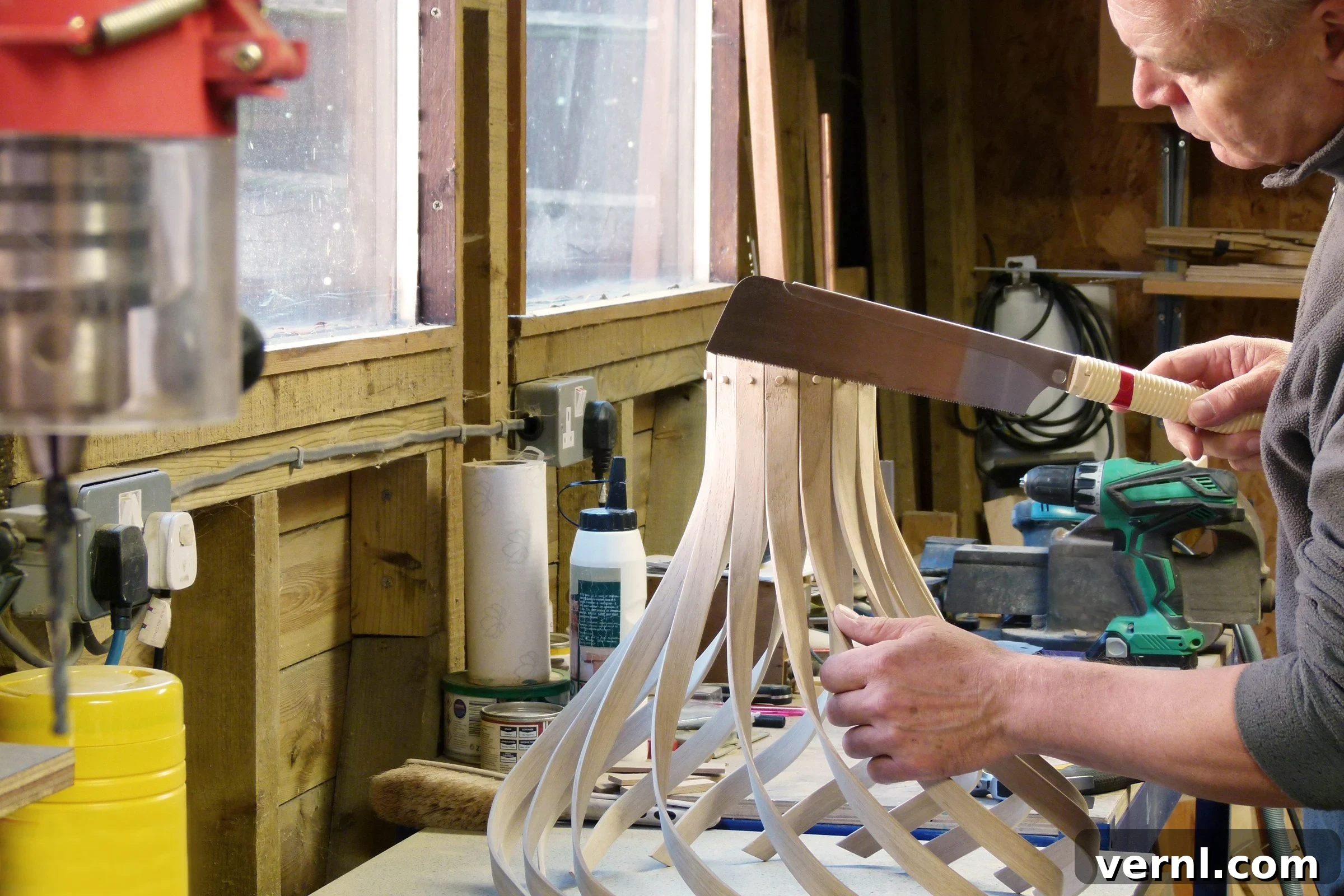
Mastering the Art of Steam Bending Wood: A Comprehensive Guide
Bentwood holds an undeniable allure, captivating with its organic curves and inherent elegance. This ancient yet enduring technique transforms rigid lumber into graceful forms, making it an invaluable skill for artisans and DIY enthusiasts alike. From crafting ornate furniture that radiates sophistication to adding a distinctive touch to more minimalist designs, bentwood offers a unique aesthetic appeal. Imagine a simple chair elevated by a single, beautifully curved brace, giving it the appearance of a master craftsperson’s loving creation rather than a factory assembly line product.
Beyond its visual charm, bentwood is remarkably utilitarian. Its structural integrity and flexibility have made it indispensable across various industries throughout history. Shipbuilders have long incorporated bentwood into the robust hulls of wooden vessels, utilizing its strength and resilience against the forces of the sea. Early aviation pioneers, including the visionary Wright Brothers, relied on bentwood components for the wings and fuselages of their groundbreaking aircraft, highlighting its crucial role in the development of practical flight. This versatility underscores bentwood’s enduring legacy as both an art form and a functional engineering solution.
While there are multiple methods for bending wood, steam bending stands out as one of the most effective and rewarding. It’s a technique that bridges the gap between large-scale industrial production and the passionate hobbyist’s woodshop, offering impressive results when approached with proper preparation and the right equipment. Success in steam bending largely hinges on understanding the process and avoiding common pitfalls, such as selecting an unsuitable wood species or rushing the critical steaming and clamping phases. With careful attention to detail, your chances of achieving beautifully bent wood are exceptionally high.
What Is Steam Bending Wood?
At its core, steam bending wood is an ingenious process of using superheated water vapor to soften wood fibers, rendering them pliable enough to be bent into desired shapes. The scientific principle behind this transformation lies in the wood’s natural composition, specifically the role of lignans. Lignans are complex organic polymers that act as a natural glue, binding the cellulose fibers of the wood together, providing its rigidity and structural integrity. When exposed to steam, these lignans absorb moisture and heat, temporarily softening and becoming more elastic. This allows the wood to be manipulated without fracturing or tearing. As the wood cools and dries in its new, bent position, the lignans re-harden, permanently locking the cellulose fibers into the new shape.
Executing a successful steam bending operation involves two distinct phases: steaming and bending, each requiring specialized equipment. For the steaming phase, a “steam box” is essential. This is a sealed container designed to hold the wood and be injected with a consistent supply of steam. Industrial operations often utilize robust steel boxes capable of withstanding high temperatures and pressures, ensuring efficiency and durability. However, for the dedicated DIY enthusiast, a homemade wooden steam box, often constructed from plywood or scrap lumber, can be equally effective. The key is to ensure it is well-sealed to prevent steam leakage and maintain a high internal temperature.
Once the wood is pliable, the bending phase begins, necessitating a “form” or “jig” to guide and hold the wood in its new configuration. The complexity of the form depends entirely on the desired shape. For simple, sweeping curves, something as straightforward as a large-diameter wheel or a section of a sturdy pipe can serve as an excellent form. For more intricate or specific designs, you can craft custom forms by cutting the desired profile into the edge of a thick sheet of plywood or oriented strand board (OSB). The precision of your form directly influences the accuracy and consistency of your bent wood pieces.
Finally, securing the wood to the form during the cooling and drying period requires an ample supply of strong clamps. The more clamps, the better, as they ensure even pressure and prevent the wood from springing back as it stiffens. For particularly sharp or tight curves, an additional piece of equipment becomes crucial: bendable metal strapping. This strapping is placed on the outside (tension side) of the wood during bending. It prevents the wood fibers from elongating and tearing on the outside of the curve, effectively compressing the inner fibers and allowing for much tighter radii to be achieved without structural damage.
Why Steam Bend Wood? Unlocking Superior Strength and Aesthetics
While steam is a powerful medium for bending wood, it’s not the only approach. Two other widely recognized techniques include kerf-cutting and lamination. Kerf-cutting involves making a series of closely spaced, shallow crosscuts on the inside of the curve, effectively removing material to allow the wood to bend. Lamination, on the other hand, entails bending several thin strips of wood individually and then gluing them together to form a thicker, curved piece. While these methods have their merits, steam bending offers a unique set of advantages that make it a preferred choice for many woodworking applications, especially when strength, aesthetics, and eco-friendliness are paramount.
Despite the initial investment in specialized equipment, the benefits of steam bending significantly outweigh these considerations:
- Uninterrupted Wood Grain: One of the most significant advantages of steam bending is that the wood grain runs continuously from one end of the piece to the other. This contrasts sharply with kerf-cutting, which compromises grain integrity, and lamination, which relies on glue joints between multiple pieces. A continuous grain ensures maximum structural strength, as the natural fibers remain intact and aligned, distributing stress evenly throughout the curve. Aesthetically, this also results in a more natural and visually appealing flow, free from visible glue lines or breaks in the grain pattern.
- Environmentally Friendly and Clean: Steam bending is a remarkably clean and eco-friendly process. It relies solely on water and heat, making it completely free of toxic chemicals, glues, or resins. This not only makes the workshop a safer environment but also ensures that the final product is free from potentially harmful substances, aligning perfectly with sustainable woodworking practices. The minimal waste generated—primarily sawdust from initial shaping—further contributes to its environmental appeal.
- Ideal for Green Wood: Unlike many woodworking applications that require seasoned or kiln-dried lumber, steam bending thrives on freshly cut, “green” wood. Green wood, with its higher moisture content, is inherently more pliable and responsive to steam, making the bending process easier and more successful. This can often translate to cost savings, as green wood is typically less expensive than thoroughly dried lumber, and it simplifies material sourcing for specific projects.
- Permanent Shape Retention: Once properly steam-bent, cooled, and dried, the wood retains its new shape indefinitely. This permanence is due to the re-hardening of the lignans, which essentially “sets” the wood’s memory. Crucially, there are no glue joints involved, eliminating the risk of separation or failure over time due to adhesive degradation or environmental changes. This results in incredibly durable and long-lasting curved components.
- Achieving Complex Curves with Ease: Steam bending offers unparalleled freedom in design, allowing woodworkers to achieve intricate and complex curves that would be difficult, if not impossible, with other methods. From gentle arcs to dramatic spirals, the pliability imparted by steam enables remarkable sculptural possibilities. This opens up a world of creative potential for furniture makers, sculptors, and designers seeking to push the boundaries of wood forms.
How Long Does It Take To Steam Bend Wood? Planning for Success
While the actual “bending” phase of steam bending can be quite swift, the overall process requires careful timing and patience to achieve optimal results. Theoretically, a small project could be completed within a single day, but for professional-grade outcomes and maximum durability, it is far better to allocate at least two days for the entire operation. This allows for adequate steaming, precise bending, and most importantly, sufficient cooling and drying time.
The critical factor for the steaming duration is the wood’s thickness. A widely accepted rule of thumb suggests that the wood needs to be exposed to steam for at least one hour for every inch of its thickness. For example, a 1-inch thick piece of wood should steam for a minimum of one hour, while a 2-inch thick piece would require at least two hours. However, many seasoned pros recommend erring on the side of caution and steaming for slightly longer, as prolonged steaming can often lead to greater pliability and a reduced risk of fracturing during bending. Monitoring the steam box’s temperature and ensuring consistent steam penetration throughout the wood are also key to this phase.
Equally important is the post-bending clamping period. After the wood has been successfully bent and secured to the form, it must remain clamped for a substantial amount of time to cool completely and allow the lignans to re-harden, permanently setting the new shape. The minimum recommended clamping time is typically equal to the steaming time, but leaving the wood clamped overnight, or even for 24 hours, is highly advisable. This extended period ensures that the wood fully retains its new form and minimizes the degree of “springback”—the tendency for the wood to partially revert to its original shape once the clamps are removed. Patience during this phase is truly a virtue, as it directly impacts the longevity and stability of your bent piece.
If you don’t yet possess a steam box, acquiring or constructing one is your first step. For convenience, complete kits are available that typically include a steamer unit and pre-cut pieces for assembling the box itself. These kits offer a streamlined approach for those who prefer to jump straight into the bending process. Alternatively, building a steam box from scratch is a relatively straightforward woodworking project, perfect for a novice. Utilizing scrap lumber, plywood, or even PVC pipes, a simple and effective box can often be constructed in just a few hours. For generating steam, several household items or specialized tools can be employed: a heavy-duty wallpaper steamer, a clothes steamer, a repurposed old metal gas can modified for safety, or even a large metal teapot with a secure hose connection can serve as a reliable steam source. Regardless of the method, ensure your steam generation setup is safe and capable of delivering a continuous flow of hot steam.
Best Wood for Steam Bending: Selecting the Right Species
The success of your steam bending project begins with selecting the appropriate wood species. Not all types of wood respond equally well to the steam bending process. In general, temperate zone (domestic) hardwoods are recognized as the best candidates due to their specific cellular structure and lignin content, which allows for optimal softening and reshaping. These species tend to have a more uniform fiber structure and higher elasticity when heated.
Excellent choices among temperate hardwoods include:
- Oak (Red or White): Renowned for its strength and resilience, oak bends beautifully and holds its shape exceptionally well.
- Elm: Highly regarded for its superior flexibility and resistance to splitting, elm is a favorite among bentwood artisans.
- Hickory: Known for its exceptional toughness and elasticity, hickory is a superb choice for demanding bentwood applications.
- Ash: This wood combines strength with good bending properties, making it versatile for various projects.
- Beech: A dense and strong wood, beech steams well and offers good dimensional stability after bending.
- Birch: With its fine grain and consistent texture, birch is another reliable option for steam bending.
- Cherry: While slightly less flexible than some, cherry still bends effectively, especially thinner stock, and offers beautiful aesthetics.
- Maple: Hard maple, in particular, is a strong and relatively stable wood that can be successfully steam bent.
- Walnut: Though often prized for its straight grain, walnut can also be bent with good results, especially when green.
There is some debate among woodworkers regarding the bendability of softwoods. Generally, softwoods like pine, spruce, or cedar are not recommended for steam bending because their cellular structure tends to compress and fracture rather than truly bend. They often lack the lignin content and fibrous strength to retain complex shapes effectively. Therefore, it is typically best to avoid softwoods for critical steam bending projects. Similarly, most tropical hardwoods, with the notable exception of mahogany, are often too dense and brittle to bend successfully. Their tightly packed fibers resist the softening effect of steam, leading to breakage rather than smooth curves.
Beyond species selection, the characteristics of the individual piece of wood are vital. Always choose lumber with as straight and clear a grain as possible. Wood fibers do not bend easily around knots, interlocking grain patterns, or areas of circular grain. These imperfections create weak points where stress concentrates, leading to cracking or snapping during the bending process. Straight-grained wood ensures uniform flexibility and a higher likelihood of success.
Furthermore, when given the choice between green wood and kiln-dried wood, always opt for green wood. Green wood contains a significant amount of natural moisture, which facilitates the softening of lignans during steaming. Kiln-dried wood, having had much of its moisture removed, requires a longer steaming period to re-absorb enough moisture and become pliable. While kiln-dried wood can still be bent, the process is generally more challenging and time-consuming, and the results can be less predictable. Sourcing green wood can often be accomplished by working with local sawmills or arborists.

How To Steam Bend Wood: A Step-by-Step Guide for Flawless Curves
Successful steam bending is a race against time once the wood is removed from the steam box. The wood rapidly cools and stiffens, so meticulous preparation before steaming is paramount. This includes having your bending form ready, all necessary clamps organized and within reach, and your workspace clear and efficient. Think through every movement to ensure you can work quickly and confidently.
Any pre-shaping or detailing of the wood should be completed before the bending process begins. If you plan to round the edges with a router, drill holes, or perform any other joinery preparation, do it now. Attempting these tasks on a curved, possibly still-damp, piece of wood after bending is significantly more challenging and risks damaging your newly formed shape. Once all preparations are complete, you are ready to embark on the straightforward yet critical procedure:
- Prepare and Steam the Wood:
Begin by carefully inserting the wood into your steam box, ensuring there is adequate space around the piece for steam circulation. Seal the steam box door securely to prevent steam from escaping. Fire up your steamer, directing the steam into the box. Throughout the steaming process, diligently monitor the water level in your steamer and replenish it as necessary to guarantee a continuous and robust supply of steam. Adhere to the rule of at least one hour of steaming for every inch of wood thickness, and consider extending this for denser woods or tighter bends. The goal is to ensure the wood is thoroughly saturated and uniformly pliable.
- Remove and Initiate Bending:
Once the steaming time is complete, put on heavy-duty, heat-resistant gloves – the wood will be extremely hot. Working swiftly but carefully, remove the hot, pliable wood from the steam box. Immediately clamp one end of the wood securely to your bending form. This initial anchor point is crucial for stability and controlled bending. Remember, you have a limited window before the wood begins to cool and stiffen.
- Bend and Secure the Wood:
With one end anchored, begin to carefully bend the wood around the form, applying steady, consistent pressure. Depending on the stiffness of the wood, the tightness of the curve, and the length of the piece, you may require mechanical assistance, such as a come-along strap, a pipe clamp, or a second pair of hands, to gradually pull the wood into conformance with the form. As you progress around the curve, add clamps liberally, spacing them closely enough to ensure the wood precisely conforms to the form’s shape without gaps or undue stress. For exceptionally tight radii, it is critical to place bendable metal strapping on the outside (tension side) of the wood before clamping. This strapping prevents the outer fibers from tearing and helps compress the inner fibers, allowing for a much tighter bend without structural failure.
- Cool, Dry, and Release:
Once the wood is fully clamped to the form, allow it to cool and dry thoroughly. For best results, leave the wood clamped overnight, or ideally for 24 hours, in a stable environment. This extended period is essential for the lignans to re-harden and for the wood to set its new “memory” permanently. After the recommended cooling and drying time, carefully release the clamps. Be aware that the wood will likely “spring back” slightly, meaning it will relax a little from the exact shape of the form. To compensate for this anticipated springback, it is often wise to over-bend the wood slightly beyond your desired final shape. This allows the springback to bring the piece to the exact curve you initially intended, resulting in a perfectly shaped and incredibly durable bentwood component.