
Comprehensive Guide to Attic Insulation Types: Choosing the Best for Your Home
Improving your home’s energy efficiency and comfort often starts with the attic. A properly insulated attic can significantly reduce heating and cooling costs, minimize drafts, and create a more stable indoor environment. When considering attic insulation, homeowners are often faced with a variety of choices, each with unique advantages and disadvantages. The “best” attic insulation isn’t a one-size-fits-all solution; it depends on factors like your budget, climate, installation preferences, and desired R-value.
Understanding the common types of insulation available for attics is crucial. This guide will delve into fiberglass batts, cellulose, loose-fill fiberglass, and spray foam, which represent the vast majority of residential installations. We’ll explore their characteristics, performance, and what makes each suitable or unsuitable for different situations. A key concept we’ll frequently refer to is “R-value,” which measures a material’s resistance to heat flow. The higher the R-value per inch, the better its insulating capability.
Investing in quality attic insulation is one of the most impactful home improvements you can make. It not only leads to tangible energy savings but also enhances your family’s comfort year-round, making your living space cooler in summer and warmer in winter. Let’s explore the options to help you make an informed decision for your home.
Fiberglass Batt Attic Insulation: Ease of Installation vs. Performance
Fiberglass batts are perhaps the most recognizable form of insulation, often seen in rolls or pre-cut panels. They are widely available at home improvement stores, making them a popular choice for DIY enthusiasts looking to add attic insulation. Their primary appeal lies in their ease of installation: homeowners can simply unroll or lay them into place between attic joists. However, this convenience often comes at the expense of performance, particularly in attic applications.
Pros of Fiberglass Batts:
- Low Cost: Fiberglass batts are generally among the most affordable insulation materials upfront.
- Easy DIY Installation: No special equipment is needed, making them accessible for homeowners.
- Fire Resistant: Fiberglass is naturally non-combustible.
- Readily Available: Can be purchased at almost any hardware or home improvement store.
Cons of Fiberglass Batts, Especially in Attics:
- Poor Air Sealing: Batts are notoriously bad at preventing air leakage. Gaps, voids, and compression during installation create pathways for air to move, significantly reducing their effective R-value. This makes them far less effective than materials that create a seamless barrier.
- Reduced R-Value with Compression: If batts are compressed—even slightly—their insulating properties diminish drastically. It’s challenging to install them perfectly without any compression, especially around obstructions or in irregularly shaped spaces.
- Moisture Issues: Fiberglass itself doesn’t absorb water, but if it gets wet, it loses its insulating properties until dry. More importantly, air moving through gaps can carry moisture, potentially leading to condensation problems in the attic.
- Installation Challenges: Achieving optimal performance requires meticulous cutting and fitting around every joist, wire, pipe, and duct. Any small gap compromises the entire system. Most DIY installations, and even some professional ones, fail to meet this standard, as evidenced by common findings in home inspections.
The image below sadly illustrates a common sight: an improperly installed fiberglass batt insulation in a relatively new home. Such installations, despite often passing initial inspections, lead to significant energy loss and compromised home comfort. It’s a stark reminder that while easy to install, fiberglass batts require extreme precision to be even moderately effective in an attic environment.
Given these challenges, many insulation experts and building scientists argue that fiberglass batts are generally not the optimal choice for attic applications where significant air sealing and a high R-value are paramount. Their use is better suited for wall cavities or specific applications where they can be properly sealed and supported.
Cellulose Attic Insulation: An Eco-Friendly and Effective Choice
Cellulose insulation stands out as an environmentally friendly and highly effective option for attics. Made from recycled paper products, primarily newsprint, it undergoes a meticulous grinding process and is treated with boric acid and other non-toxic chemicals. These additives provide crucial insect control and enhance its fire-retardant properties, making it a safe and sustainable choice for your home.
Pros of Cellulose Insulation:
- Excellent Air Sealing Properties: When blown in, cellulose forms a dense, continuous blanket that fills every nook and cranny, significantly reducing air leakage and convection. This inherent density is a major advantage over batt insulation, contributing to a more consistent thermal performance.
- Superior R-Value: Cellulose typically offers an R-value of approximately 3.5 to 3.8 per inch, providing robust thermal resistance. Its ability to minimize air movement further boosts its effective insulating power.
- Eco-Friendly: Composed of up to 85% recycled materials, cellulose has a lower embodied energy than many other insulation types, making it a green choice for environmentally conscious homeowners.
- Fire Resistance: The boric acid treatment makes cellulose highly resistant to fire, often outperforming fiberglass in fire tests by charring rather than melting.
- Pest Deterrent: The chemical treatments also act as a deterrent against insects and rodents, adding an extra layer of protection to your attic.
- Sound Dampening: The dense nature of cellulose helps to absorb sound, contributing to a quieter home environment, especially useful for reducing outdoor noise or noise from upper floors.
Cons of Cellulose Insulation:
- Dust During Installation: Dry-blown cellulose can generate a significant amount of dust during the installation process, necessitating proper respiratory protection and careful preparation of the work area.
- Moisture Absorption: While treated for fire and pests, cellulose can absorb and retain moisture if exposed to persistent leaks, potentially leading to mold or mildew issues. However, modern cellulose products are designed to dry out efficiently if the source of moisture is addressed.
- Weight: Its density means it’s heavier than fiberglass. While rarely an issue for properly constructed attics, it’s a factor to consider in very old homes with potentially weaker ceiling structures.
Installation Methods: DIY vs. Professional
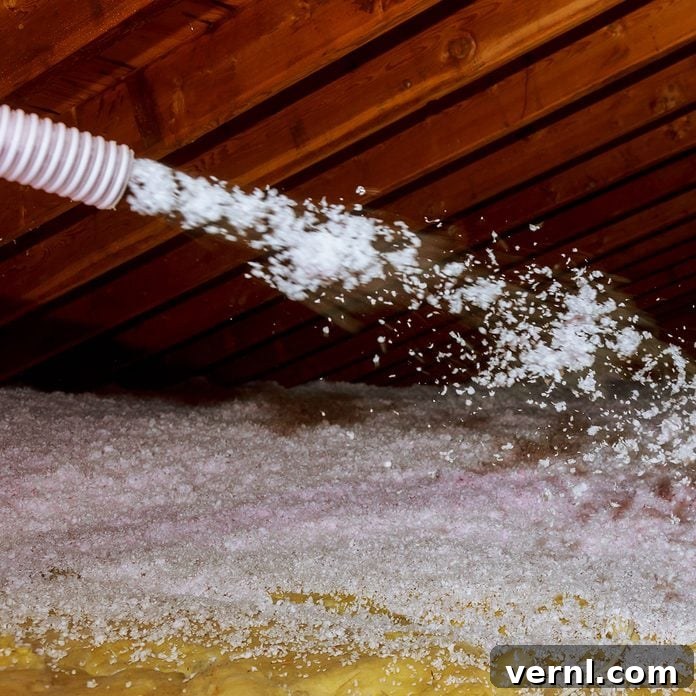
For homeowners interested in DIY, bags of cellulose can be purchased from local home improvement stores. Many retailers even offer free rental of an insulation blower with a sufficient purchase. It’s crucial to use a blower for proper density; attempting to hand-spread cellulose from a bag will not achieve the necessary R-value or air-sealing properties due to its dense packing.
Professional installers often utilize “wet-spray” cellulose. This method involves adding a small amount of water to the insulation as it’s blown, which helps to control dust and allows the cellulose to adhere better to surfaces, potentially slightly increasing its R-value per inch. Wet-spray cellulose is particularly effective in wall cavities or sloped ceilings, creating an even more consistent and airtight barrier.
The Cellulose Insulation Manufacturers Association (CIMA) consistently advocates for cellulose as a top-tier insulation choice, emphasizing its environmental benefits, superior performance in preventing air movement, and impressive R-value.
Loose-Fill Fiberglass Attic Insulation: Modern Performance and Considerations
Loose-fill fiberglass, also known as blown-in fiberglass, is a highly popular choice, especially prevalent in new construction homes. It offers an R-value of approximately 2.5 to 2.9 per inch, making it a cost-effective option for achieving high R-values across large attic spaces. Unlike batts, loose-fill fiberglass requires a specialized machine to blow it into the attic, ensuring it settles evenly and fills cavities effectively.
Pros of Loose-Fill Fiberglass:
- Effective for Irregular Spaces: Its blown-in nature allows it to conform to irregular attic shapes, filling gaps around wiring, plumbing, and other obstructions that are difficult to seal with batts.
- Good R-Value per Dollar: When installed correctly, loose-fill fiberglass offers a good balance of cost and thermal performance, making it a budget-friendly option for achieving significant insulation levels.
- Moisture and Mold Resistant: Fiberglass fibers are inorganic and do not absorb moisture, making them inherently resistant to mold and mildew growth.
- Fire Resistant: Like fiberglass batts, loose-fill fiberglass is non-combustible.
- Improved Modern Formulations: Manufacturers have significantly improved loose-fill fiberglass over the past decades, addressing past concerns about thermal performance in cold climates and reducing itchiness during handling.
Cons of Loose-Fill Fiberglass:
- Professional Installation Typically Required: While DIY rentals exist, achieving optimal density and coverage often requires professional expertise and equipment. You cannot simply spread it by hand.
- Air Permeability: Although better than batts, loose-fill fiberglass still allows some air movement through its matrix, meaning it doesn’t create an absolute air barrier like spray foam.
- Settling Over Time: Loose-fill insulation can settle over many years, potentially reducing its depth and R-value. This is generally factored into installation recommendations, but it’s a consideration.
- Handling Precautions: Despite improvements, fiberglass fibers can still cause skin, eye, and respiratory irritation. A respirator, gloves, and protective clothing are essential during installation.
Pro Tip: Always wear a high-quality respirator, gloves, and protective clothing when handling or working around any type of loose-fill insulation to protect your lungs and skin.
Addressing Past Concerns about Cold Weather Performance
A widely referenced 1991 study by Oak Ridge Laboratories suggested that loose-fill fiberglass insulation lost significant insulating value in temperatures below 20 degrees Fahrenheit due to convection within the material. This led to concerns about its effectiveness in colder climates. However, insulation manufacturers have made substantial advancements since then.
According to experts like Andre Omer Desjarlais at Oak Ridge Laboratories and various insulation manufacturers, modern loose-fill fiberglass products have been redesigned to mitigate this issue. While some convection still occurs, it’s nowhere near the levels observed in older products. Today’s loose-fill fiberglass is a reliable and high-performing option for most climates when installed correctly.
The North American Insulation Manufacturers Association (NAIMA) vigorously champions fiberglass and mineral wool as excellent choices for attic insulation, citing their improved performance, fire resistance, and durability.
Spray Foam Attic Insulation: The Pinnacle of Thermal Performance
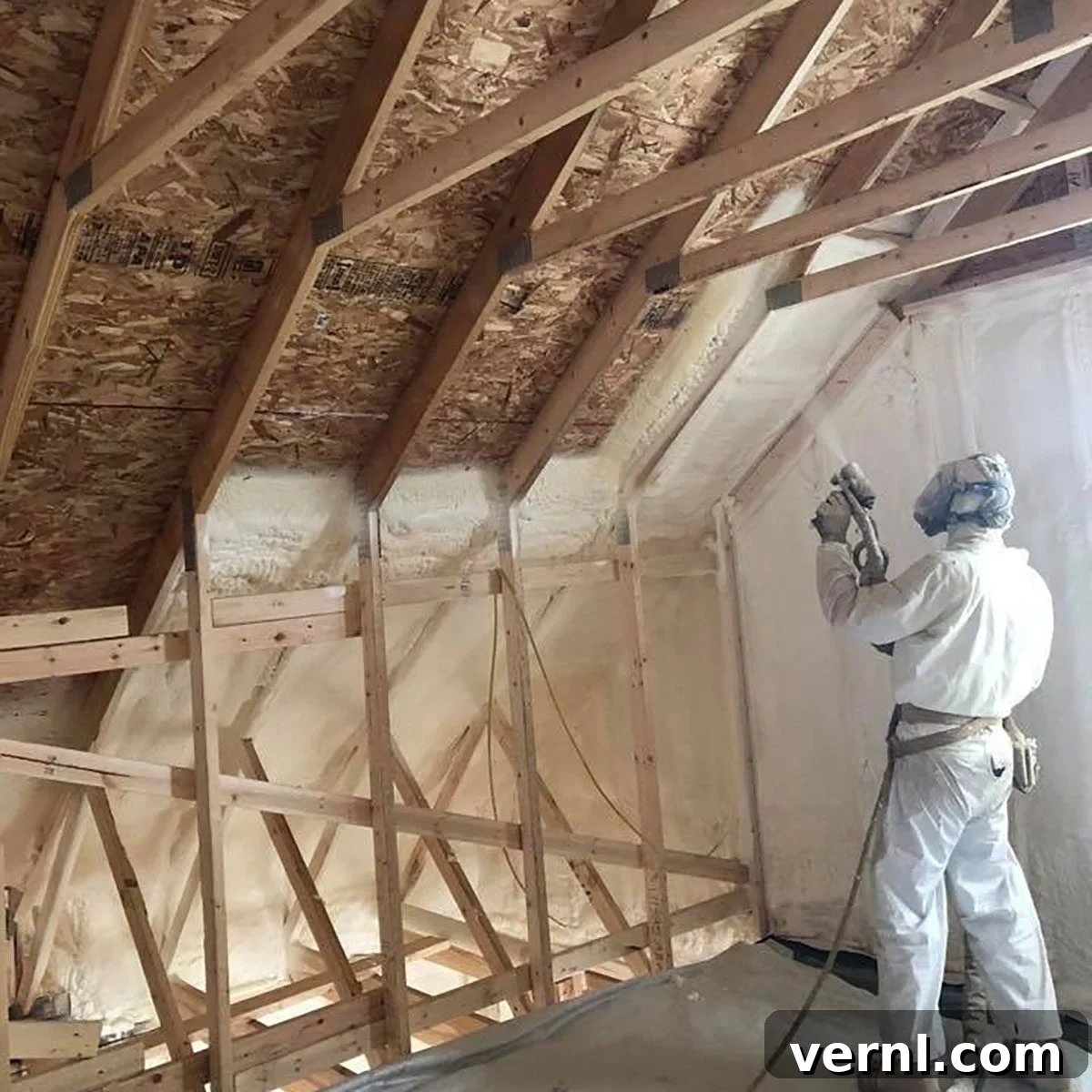
Spray foam insulation represents the cutting edge of attic insulation technology, offering arguably the best thermal performance available. When installed correctly, it creates an impenetrable barrier against air leakage and heat transfer, making it an exceptional choice for maximizing energy efficiency and indoor comfort. There are two primary types of spray foam, each with distinct characteristics: open-cell and closed-cell.
Understanding Open-Cell vs. Closed-Cell Spray Foam:
- Open-Cell Spray Foam (½-pound foam): This type has a lower density and a more flexible, spongy texture. It offers an R-value of approximately 3.6 to 3.9 per inch. Open-cell foam expands significantly upon application, filling cavities thoroughly and providing excellent sound dampening qualities. While it creates an effective air barrier, it is vapor-permeable, meaning it allows moisture vapor to pass through. You can easily poke a hole in it with your finger.
- Closed-Cell Spray Foam (2-pound foam): Denser and much more rigid than open-cell, closed-cell foam provides a higher R-value, typically around 6.5 to 7.0 per inch. Its dense structure not only acts as a superior air barrier but also serves as a potent moisture barrier, making it an excellent choice in humid climates or where moisture control is critical. Additionally, its rigidity can add structural strength to building assemblies. You cannot easily dent or poke a hole in closed-cell foam; it’s very hard once cured.
Both types of spray foam insulation excel at filling all the irregular nooks, crannies, and voids in an attic space, creating a perfect air seal. This complete air barrier is what truly sets spray foam apart, as it eliminates heat transfer through convection – a common culprit for energy loss in attics. This means your home stays warmer in winter and significantly cooler in summer, with less strain on your HVAC system. Learn more about how spray foam can regulate your house temperature.
Pros of Spray Foam Insulation:
- Unmatched Air Sealing: Creates a virtually airtight envelope, dramatically reducing air leakage and drafts.
- Superior R-Value: Offers the highest R-value per inch among common insulation types, allowing for maximum insulation in thinner layers.
- Moisture Control (Closed-Cell): Closed-cell foam acts as a vapor barrier, preventing moisture infiltration and reducing the risk of condensation and mold.
- Structural Enhancement (Closed-Cell): Its rigidity can add to the structural integrity of walls and roofs.
- Pest Resistant: The dense, inert material provides no food source and makes it difficult for pests to nest.
- Sound Dampening: Both types, especially open-cell, offer excellent sound attenuation, creating a quieter indoor environment.
- Long-Term Energy Savings: The initial investment is typically offset by significant and consistent reductions in energy bills over the lifespan of the home.
Cons of Spray Foam Insulation:
- High Cost: The most significant drawback is the higher upfront cost compared to other insulation materials.
- Requires Professional Installation: Spray foam application is highly technical and should almost exclusively be performed by certified professionals. Incorrect mixing or application can lead to poor performance, off-gassing issues, and a significantly reduced lifespan. DIY attempts are strongly discouraged due to the complexity and need for specialized equipment.
- Odor and Off-Gassing: During and immediately after installation, spray foam releases volatile organic compounds (VOCs) and can produce strong odors. Proper ventilation and specific re-entry times are critical. While modern formulations have improved, some individuals remain concerned about long-term indoor air quality. Homeowners should conduct their own research and ensure installers follow all safety protocols.
- Irreversible: Once cured, spray foam is extremely difficult and expensive to remove, making future modifications to the attic structure more challenging.
The image below depicts a less-than-ideal spray foam application at the rim joist of a new construction home. Such errors underscore the importance of hiring experienced, reputable professionals for spray foam insulation, as improper installation can negate its benefits and lead to costly repairs.
While concerns about off-gassing are valid, thorough research and adherence to manufacturer guidelines by professional installers typically ensure a safe and healthy environment once the foam has fully cured. Many homeowners, after reviewing the scientific data and safety protocols, feel comfortable choosing spray foam for its unparalleled performance.
Choosing the Right Attic Insulation for Your Home
Deciding on the best attic insulation involves weighing several factors, including upfront cost, long-term energy savings, climate, desired R-value, and whether you plan to DIY or hire professionals. Each insulation type offers distinct benefits and drawbacks:
- Fiberglass Batts: Best for budget-conscious DIYers in less critical applications, but generally not recommended for attics due to air leakage issues.
- Cellulose: An excellent eco-friendly option with good air-sealing and sound-dampening properties, suitable for both DIY (with a blower) and professional installation.
- Loose-Fill Fiberglass: A popular and cost-effective choice for achieving high R-values in attics, offering good thermal performance when professionally blown in.
- Spray Foam: Provides the highest R-value and unparalleled air sealing, leading to maximum energy efficiency and comfort, but comes with a higher cost and requires professional application.
Before making a final decision, consider consulting with a qualified home energy auditor or insulation professional. They can assess your attic’s specific needs, identify any existing air leaks, and recommend the optimal insulation type and R-value for your climate zone and home structure. Remember, proper air sealing is just as critical as the insulation material itself for maximizing energy efficiency.
Ultimately, investing in quality attic insulation is an investment in your home’s future comfort, energy efficiency, and overall value. By understanding the options, you can make an informed decision that will provide benefits for years to come.
About the Author:
Rueben Saltzman is the president and owner of Structure Tech Home Inspections, a trusted source for expert home evaluations.
For additional ways to enhance your attic’s efficiency, don’t forget to check out these best attic door insulation covers for your attic access points.