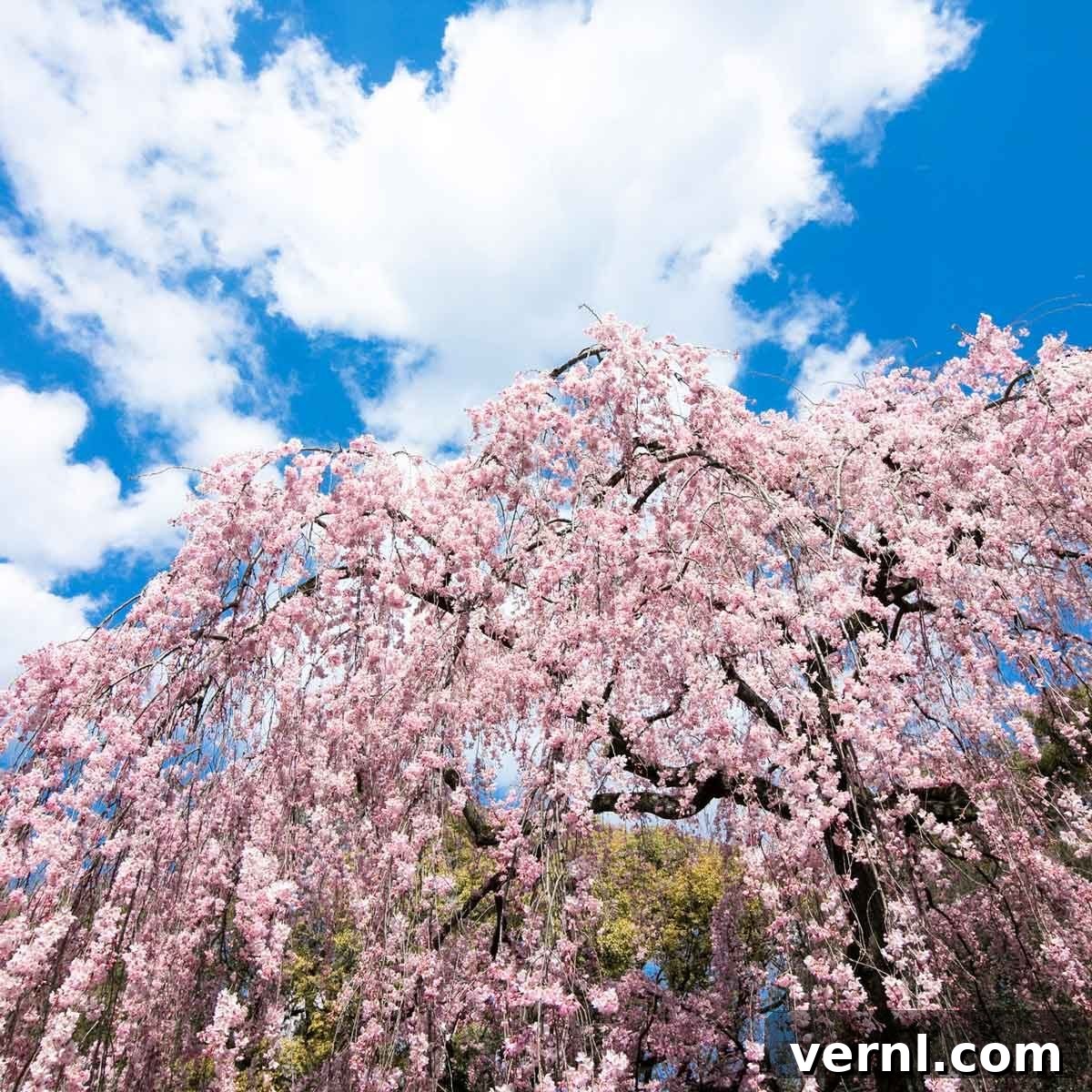
The ethereal cascade of white and pink blossoms from the weeping cherry tree has captivated hearts and minds for centuries, inspiring countless artists, poets, and gardeners worldwide. Revered for its breathtaking beauty and graceful form, this iconic ornamental tree transforms landscapes with its delicate springtime display, creating a serene and picturesque focal point.
Originating in the mountainous regions of China, these magnificent trees embarked on a historical journey, first finding their way to Japan. There, they were meticulously cultivated in the serene gardens of Kyoto royalty, becoming deeply embedded in Japanese culture and celebrated annually for their fleeting, yet spectacular, bloom. This profound cultural connection and natural elegance make the weeping cherry a truly special addition to any setting, symbolizing beauty, renewal, and the transient nature of life itself.
Beyond its aesthetic appeal, the weeping cherry tree also embodies profound symbolism, particularly that of friendship and renewal. This sentiment was beautifully cemented in an act of international diplomacy when, on March 27, 1912, the Japanese government generously gifted 3,000 weeping cherry trees to Washington D.C. This historic donation blossomed into the annual National Cherry Blossom Festival, held each year around March 27. The festival not only commemorates this enduring friendship but also serves as a vibrant appreciation for the stunning beauty these trees bring to the nation’s capital, drawing millions of visitors globally to witness their glorious spectacle and participate in the celebrations of spring.
Understanding the Weeping Cherry Tree: A Graceful Garden Gem
A weeping cherry tree is a distinctive variety of ornamental cherry, scientifically classified under the genus Prunus, characterized by its signature pendulous, or “weeping,” branches. These elegant branches create a dramatic, cascading silhouette, which becomes even more striking when adorned with clusters of delicate white, pink, or even deeper rose-colored flowers each spring. The term “weeping” refers to the tree’s unique growth habit, where its branches naturally droop downwards, often creating a dome-like or umbrella shape that is highly prized in landscape design.
While many trees within the Prunus genus exhibit a weeping habit, some of the most popular and widely cultivated varieties include the classic ‘Higan’ weeping cherry (often Prunus subhirtella ‘Pendula’ or a related cultivar), ‘Shidare Yoshino’, and ‘Snow Fountain’. Each cultivar offers unique nuances in bloom intensity, flower color, mature size, and cold hardiness, allowing gardeners to select the perfect tree for their specific climate and aesthetic preferences. These trees can range in mature height from a compact eight feet to a towering 40 feet, making them versatile for various garden scales.
Weeping cherry trees are universally prized for their magnificent floral display, which, while breathtaking, typically graces the branches for only a couple of weeks in early to mid-spring. However, their appeal extends beyond this fleeting bloom. Throughout the summer, the weeping branches are densely covered in lush green leaves, providing a cool, verdant canopy and welcome shade. As autumn arrives, this foliage undergoes a spectacular transformation, turning vivid shades of yellow, orange, and sometimes red, adding another layer of seasonal interest to the garden. Once the leaves drop in late fall, the elegant, bare structure of the weeping branches remains, offering a sculptural element that continues to enhance the winter landscape, showcasing its unique form even without its leaves or flowers.
Essential Environmental Requirements for Thriving Weeping Cherries
To ensure your weeping cherry tree flourishes and delivers its full potential of blossoms, understanding its environmental preferences is paramount. These resilient trees require specific conditions to thrive, primarily focusing on sunlight, temperature, and soil quality, which form the foundation for a healthy and long-lived specimen.
Sunlight: The Key to Abundant Blooms
Weeping cherry trees are sun-lovers, thriving in full sun exposure. This means they need a minimum of six hours of direct, unfiltered sunlight each day to produce the most vibrant and abundant spring blooming. While they can tolerate partial shade, a lack of sufficient sunlight can significantly inhibit flower production, leading to a sparse, weak, or delayed display. Adequate sunlight also contributes to stronger overall tree health, robust growth, and helps the tree resist common pests and diseases, making it a more resilient and beautiful addition to your landscape.
Temperature and Hardiness Zones for Weeping Cherry Trees
These trees demonstrate impressive heat- and drought-tolerance once established, allowing them to adapt to a wide range of climates. They can successfully grow in most regions of the United States, provided the average minimum winter temperature remains above -20 degrees Fahrenheit. This broadly corresponds to USDA Plant Hardiness Zones 4 and higher. It’s crucial to identify your specific USDA zone before planting to ensure the chosen weeping cherry variety is suitable for your local climate, guaranteeing its survival through winter freezes and successful spring reawakening. Selecting a variety adapted to your zone minimizes stress and promotes healthy development.
Soil Preferences: Foundation for Healthy Growth
Weeping cherry trees are not overly particular about soil type, but they unequivocally prefer loose, consistently moist, and well-draining soil. A slightly acidic to neutral soil pH (between 6.0 and 7.0) is ideal for optimal nutrient absorption and overall tree vigor. Heavy clay soils, which retain too much water and can lead to detrimental root rot, should be amended with generous amounts of organic matter like compost, peat moss, or sand to significantly improve drainage and aeration. Conversely, extremely sandy soils might need enrichment to enhance water and nutrient retention, ensuring the tree receives consistent moisture.
When planting, prepare a generous hole that is roughly twice the width of the root ball but no deeper than the root ball itself. This allows the roots ample space to spread laterally into loosened soil. Backfill the hole with well-draining soil, ideally mixed with some compost to provide initial nutrients and improve soil structure. Although established trees exhibit some drought tolerance, especially in hot conditions, consistent moisture is vital for young trees during their establishment phase and for overall long-term health. Dry soil conditions can significantly stress the tree, making it much more vulnerable to pest infestation and various diseases. Therefore, it is essential to keep the soil adequately watered, especially during prolonged dry spells, without ever allowing it to become waterlogged, which can suffocate roots.
Common Pests and Diseases Affecting Weeping Cherry Trees
Like many ornamental trees, weeping cherries can be susceptible to a range of pests and diseases. Early detection and appropriate intervention are key to maintaining the health and beauty of your tree. Regular, thorough inspection of foliage, bark, and branches can help identify issues before they become severe, allowing for timely and effective management.
- Aphids: These small, soft-bodied insects, typically less than 1/4 inch long, feed on plant sap, often congregating in large colonies on new growth, developing leaves, and the undersides of foliage. Several types can affect weeping cherries, with the shiny black cherry aphid being particularly common. Infestations lead to distorted and wilted leaves, and they excrete a sticky, sugary substance called honeydew, which can attract ants and promote the growth of unsightly sooty mold.
- Cherry Leaf Spot: This widespread fungal infection, caused by Blumeriella jaapii, manifests as small, circular, purple, yellow, or black spots on the leaves of cherry trees. As the infection progresses, these spots enlarge and merge, eventually causing the leaves to turn entirely yellow and prematurely fall off. Severe defoliation over multiple seasons can weaken the tree, reduce its vigor, and make it more susceptible to winter injury.
- Cytospora Cankers: A serious fungal disease (caused by Cytospora species) that results in sunken, discolored lesions, or cankers, on the tree’s bark, particularly on stressed or damaged branches. These cankers often ooze a yellowish, gummy sap, which is a key identifying symptom. The fungus girdles and kills the wood beneath the canker, leading to leaf dieback on affected branches and potentially the loss of entire limbs or even the main trunk if the canker spreads.
- Japanese Beetles: These distinctive beetles are about 3/8 inch long, with iridescent metallic green bodies and coppery-brown wing covers. They are highly destructive and voracious feeders, often appearing in large groups, skeletonizing leaves by consuming the tissue between the veins and leaving behind a lace-like pattern. They also feed on flowers, causing significant cosmetic damage and weakening the tree.
- Powdery Mildew: A very common fungal infection that presents as a white, flour-like powdery coating on the tree’s leaves, young stems, and flowers. While rarely fatal to healthy, mature trees, it can cause stunted growth on affected branches, distorted foliage, premature leaf drop, and can significantly impact the tree’s vigor and aesthetic appeal, especially in humid conditions.
- Spider Mites: Though not true insects, these tiny arachnids are common garden pests. Small and tick-like, they feed by piercing plant cells and sucking out the contents, causing stippling (tiny yellow or white dots) on leaves, general yellowing, and eventual leaf drop. Various types exist, ranging in color from red to green, yellow, or brown, and they often produce fine, delicate webbing on the undersides of affected foliage. Spider mites thrive in hot, dry conditions.
- Tent Caterpillars: These social caterpillars construct distinctive webbed, tent-like nests in the crotches of tree branches, particularly in spring. Their larvae feed voraciously on the leaves, causing noticeable defoliation. While large infestations can weaken a tree over time, they rarely cause permanent damage to healthy, mature specimens, though their conspicuous nests and chew marks can be unsightly and reduce aesthetic value.
- Twig Cankers: A bacterial disease that leads to rough-textured, often discolored or sunken depressions and deformities on tree branches. These cankers can girdle and kill affected twigs or branches, and may also cause dark spots to develop on leaves. Twig cankers are most common on young trees and often become apparent in the spring when new growth is tender and susceptible.
- Verticillium Wilt: This serious fungal infection, caused by Verticillium dahliae, affects the tree’s vascular system, hindering the transport of water and nutrients to the canopy. Symptoms include sudden yellowing leaves, wilting, branch dieback (often on one side of the tree initially), and stunted growth. Verticillium can manifest at any time of year but is often most noticeable during the hot summer months when the tree is under greater physiological stress, making diagnosis difficult as symptoms mimic drought stress.
Comprehensive Weeping Cherry Tree Care and Maintenance
Proper care is essential to ensure your weeping cherry tree remains healthy, vigorous, and continues to produce its spectacular blooms year after year. This involves a consistent approach to watering, fertilizing, mulching, and vigilant monitoring for pests and diseases, all tailored to the specific needs of this elegant ornamental tree.
- Watering Guidelines for Establishment and Maturity:
During the first year after planting, consistent and adequate watering is crucial for successful root establishment. Water your weeping cherry two to three times a week, ensuring the soil remains consistently moist but never waterlogged. As the tree matures (after the first year), it develops better drought tolerance, and your watering regimen can be adjusted. From this point onward, water thoroughly when the top two to three inches of soil feel dry to the touch. It’s important to allow the soil to dry out slightly between waterings to prevent root rot and encourage deeper root penetration. Deep, infrequent watering is generally more beneficial than shallow, frequent watering, as it encourages the development of a robust, drought-resistant root system.
- Fertilizing for Optimal Growth and Bloom:
Weeping cherry trees benefit from thoughtful fertilization to support their vibrant growth and prolific flowering. Apply a balanced, slow-release granular fertilizer, such as a 10-10-10 or a slightly higher phosphorus (P) ratio like 5-10-5 (Nitrogen-Phosphorus-Potassium, N-P-K), or a specialized ornamental tree and shrub fertilizer, once new leaves begin to bud vigorously in the spring. Carefully follow the manufacturer’s instructions for application rates based on the tree’s size and age. Granular fertilizers should be spread evenly around the drip line of the tree (the area beneath the outermost branches), avoiding direct contact with the trunk, and then watered in thoroughly to help nutrients penetrate the soil. Avoid over-fertilizing, as this can lead to excessive leafy growth at the expense of flowers, and may even cause nutrient burn to the roots.
- The Multifaceted Benefits of Mulching:
Applying a three to four-inch layer of organic mulch around the base of your tree offers numerous advantages, particularly during dry spells and hot weather. Mulch helps significantly retain soil moisture, moderates soil temperature fluctuations, effectively suppresses weed growth (which competes aggressively for water and nutrients), and gradually adds beneficial organic matter to the soil as it decomposes over time. Good mulching materials include wood chips, shredded bark, or well-rotted compost. Critically, maintain a “donut” shape with the mulch, keeping it at least six inches away from the base of the tree trunk. Piling mulch directly against the trunk can trap excessive moisture, encourage undesirable pest activity, and lead to damaging bark rot and fungal diseases.
- Vigilant Monitoring and Pest Elimination:
Regularly examine the leaves, branches, and flowers of your weeping cherry tree for any signs of pest activity, such as chewed leaves, sticky residue (honeydew), discolored spots, or visible insects. Early detection allows for more effective and less invasive treatment, preventing minor issues from escalating. Minor infestations can often be managed by hand-picking pests (if feasible) or by spraying affected areas with a strong stream of water from a garden hose to dislodge them. For more significant problems, consider using appropriate organic or chemical insecticides (following label directions carefully), introducing beneficial predator bugs (like lady beetles or pirate bugs), or strategically pruning affected branches where tent caterpillar nests or severe aphid colonies are present. Always choose the least toxic effective solution for the environment and your tree.
- Proactive Disease Management and Treatment:
Similar to pest monitoring, periodically inspect your tree for any evidence of disease development, such as unusual spots, cankers, wilting, branch dieback, or discolored foliage. If a localized infection is discovered, promptly remove the affected branches by pruning. It is absolutely critical to sterilize the blade of your cutting tool (e.g., with rubbing alcohol or a 10% bleach solution) between each cut to prevent the inadvertent spread of the infection to healthy parts of the tree or to other susceptible plants in your garden. For more severe or widespread fungal or bacterial infections that cannot be managed by pruning alone, it is highly recommended to consult with a local certified arborist or horticultural expert. They can accurately diagnose the issue and recommend specific treatments, including the judicious application of appropriate fungicides or bactericides.
Expert Pruning Techniques for a Beautiful and Healthy Weeping Cherry Tree
Weeping cherry trees can vary significantly in mature size, with some cultivars reaching a modest eight feet, while others can tower up to 40 feet tall. Proper and timely pruning is not just for maintaining their iconic aesthetic appeal; it’s a vital practice for promoting the tree’s health, vigor, structural integrity, and preventing the development and spread of diseases. Pruning should ideally be performed while the tree is dormant – meaning no flowers or leaves are present on the branches – typically in early spring before bud break or late fall after leaf drop. This timing minimizes stress on the tree, reduces the risk of disease transmission through open wounds, and allows for a clear view of the branch structure. Annually, follow these key steps, always using sharp, clean bypass pruning shears for smaller branches and a pole pruner or saw for larger limbs. Remember to sterilize your tools between each cut, especially when removing diseased wood.
- Elevate Low-Hanging Branches: Carefully cut back any branches that are touching or nearly touching the ground. Aim to elevate the lowest branches so they are at least six inches off the ground. This practice improves essential air circulation beneath the canopy, prevents branches from rooting into the soil, reduces the risk of fungal infections, and eliminates potential habitats for pests.
- Eliminate Rubbing or Crossing Branches: Identify and remove branches that are rubbing against each other. Such friction creates open wounds in the bark, which not only look unsightly but also serve as easy entry points for various pests and diseases, compromising the tree’s structural integrity and long-term health.
- Ensure Adequate Branch Spacing: Trim back branches that are growing closer than two inches apart or appear overly crowded. This practice significantly enhances air circulation within the canopy, which is crucial for reducing humidity and thereby minimizing the incidence of fungal diseases like powdery mildew and leaf spot. Proper spacing also allows better light penetration to inner branches.
- Remove Dead, Damaged, or Diseased Wood: Promptly remove any branches that are dead, broken, cracked, or show clear signs of disease. Dead wood is an entry point for pathogens and can harbor pests, while diseased branches can quickly spread infection to healthy parts of the tree. When removing diseased wood, always sterilize your tools after each individual cut to prevent cross-contamination.
- Suppress Suckers and Water Sprouts: Remove any vigorous stems or branches growing directly out of the trunk or from the base of the tree. These are known as suckers (from the roots or base) and water sprouts (from older branches), respectively. They are often vertically growing shoots that compete aggressively with the main tree for resources, detract from its aesthetic weeping form, and can weaken the tree over time.
- Shape for Balance and Uniformity: Lightly trim the tips of branches around the perimeter of the canopy to encourage a denser, more refined weeping effect. The goal is to achieve a balanced, uniform shape that highlights the tree’s natural cascading characteristic. Avoid aggressive topping cuts, which can severely damage the tree’s health, lead to unsightly epicormic growth, and shorten its lifespan.
- Address Upright Growth on Grafted Trees: For grafted cherry trees, it’s common for shoots to emerge from below the graft union or even from within the weeping canopy that grow straight upward, defying the desired weeping habit. These are typically rootstock growth or vigorous water sprouts and should be removed immediately and completely, as they will continue to grow vertically, altering the tree’s intended form and competing with the grafted cultivar for vital resources.
- Thin Crowded Canopy Bases: Many grafted weeping cherry trees, particularly those grafted high, develop a dense, often mangled cluster of branches near the base of the canopy where the graft was made. Thin out these crowded areas to improve air circulation and allow better light penetration, fostering healthier growth and a more graceful, open form.
- Emergency Disease Pruning: Should you discover diseased branches at any time of the year, remove them as soon as possible, regardless of whether the tree is dormant. This immediate action can be critical in preventing the disease from spreading throughout the rest of the tree. As always, remember to sterilize your cutting tools diligently between each cut to avoid contaminating healthy wood.
Propagating the Weeping Cherry Tree: Expanding Your Garden’s Beauty
Propagating weeping cherry trees from softwood cuttings is a rewarding and accessible process that allows you to expand your collection or share these beautiful specimens with others. While commercial nurseries often use grafting for specific weeping cultivars to ensure true-to-type reproduction, softwood cuttings offer a viable and satisfying method for the home gardener, with cuttings typically ready for transplant into the garden within a year. The ideal time to begin the propagation process is in late spring to early summer, after the last threat of frost has passed, the tree’s blossoms have completely faded, and young, flexible (but not overly soft or succulent) leaves have fully formed and hardened slightly on the branches.
- Prepare Your Potting Medium: Select a small, clean nursery pot (or several if propagating multiple cuttings) and fill it with a sterile, soilless media specifically designed for propagation. This media should be loose, highly porous, and provide excellent drainage and aeration, which is absolutely critical for encouraging root development and preventing rot. Suitable options include pure perlite, coarse horticultural sand, vermiculite, or sphagnum peat moss, or a well-draining combination of these components.
- Moisten the Propagation Media: Thoroughly soak the prepared propagation media in water until it is evenly saturated. Allow any excess water to drain out completely, ensuring the media is uniformly moist but never waterlogged or soggy, as this can lead to fungal issues and root failure.
- Select and Cut Softwood Cuttings: Using clean, sharp pruning shears or a sterile knife, carefully take three- to six-inch sections from the tip of a healthy, actively growing, yet semi-hardened branch of the weeping cherry tree. Make the cut approximately 1/8 inch below a leaf node (the point where a leaf attaches to the stem). Ensure the selected cutting material is free from any signs of disease, pests, or stress.
- Prepare the Cutting for Rooting: Gently remove the lower leaves from the bottom two to three inches of the cutting. This exposes the leaf nodes, which are the primary areas from which new roots will emerge. Leave at least two to three healthy leaves at the top of the cutting to allow for essential photosynthesis, which fuels root development.
- Apply Rooting Hormone: Dip the cut end and the exposed leaf nodes of the cutting into a powdered or liquid rooting hormone. Rooting hormone significantly enhances the chances of successful root formation and can speed up the overall rooting process by stimulating cell division. Tap off any excess hormone to prevent over-application.
- Plant the Prepared Cutting: Carefully insert the treated end of the cutting into the prepared nursery pot, ensuring all exposed leaf nodes are just below the surface of the media. Make a small pilot hole with a pencil or stick first to avoid scraping off the rooting hormone during insertion. Gently firm the media around the cutting to ensure good contact between the stem and the moist substrate.
- Create a Humid Environment: Place the pot in an indoor area that receives bright, indirect light, avoiding direct, intense sun which can scorch the delicate cutting. To create the high humidity essential for successful rooting, you can loosely cover the pot and cutting with a clear plastic bag or a clear plastic dome, supported by stakes so it doesn’t touch the leaves, creating a mini-greenhouse effect. Keep the media consistently moist by adding water when the top inch feels dry, but vigilantly avoid overwatering, which can lead to rot.
- Check for Root Development: After approximately four to six weeks (or about one month), begin checking for root development. Gently tug on the cutting; if you feel resistance, it indicates that roots have started to form and anchor the cutting. Avoid disturbing the cutting too frequently during this delicate stage.
- Potting Up and Hardening Off: Once a robust root system has developed, typically within two to three months, carefully transfer the rooted cutting into a slightly larger nursery pot filled with a rich, well-draining potting soil mix. Allow the young tree to grow and strengthen its root system in this pot for several more months. In the fall, before the first hard frost, it’s time to acclimate your cuttings to outdoor conditions. This crucial process, known as “hardening off,” involves gradually exposing them to the outdoors over a period of about one to two weeks. Start by placing the pot in a sheltered, shady spot for a few hours daily, progressively increasing the time outdoors and exposure to direct sunlight and wind. Once thoroughly hardened off, the rooted cuttings can be safely transplanted directly into your garden.