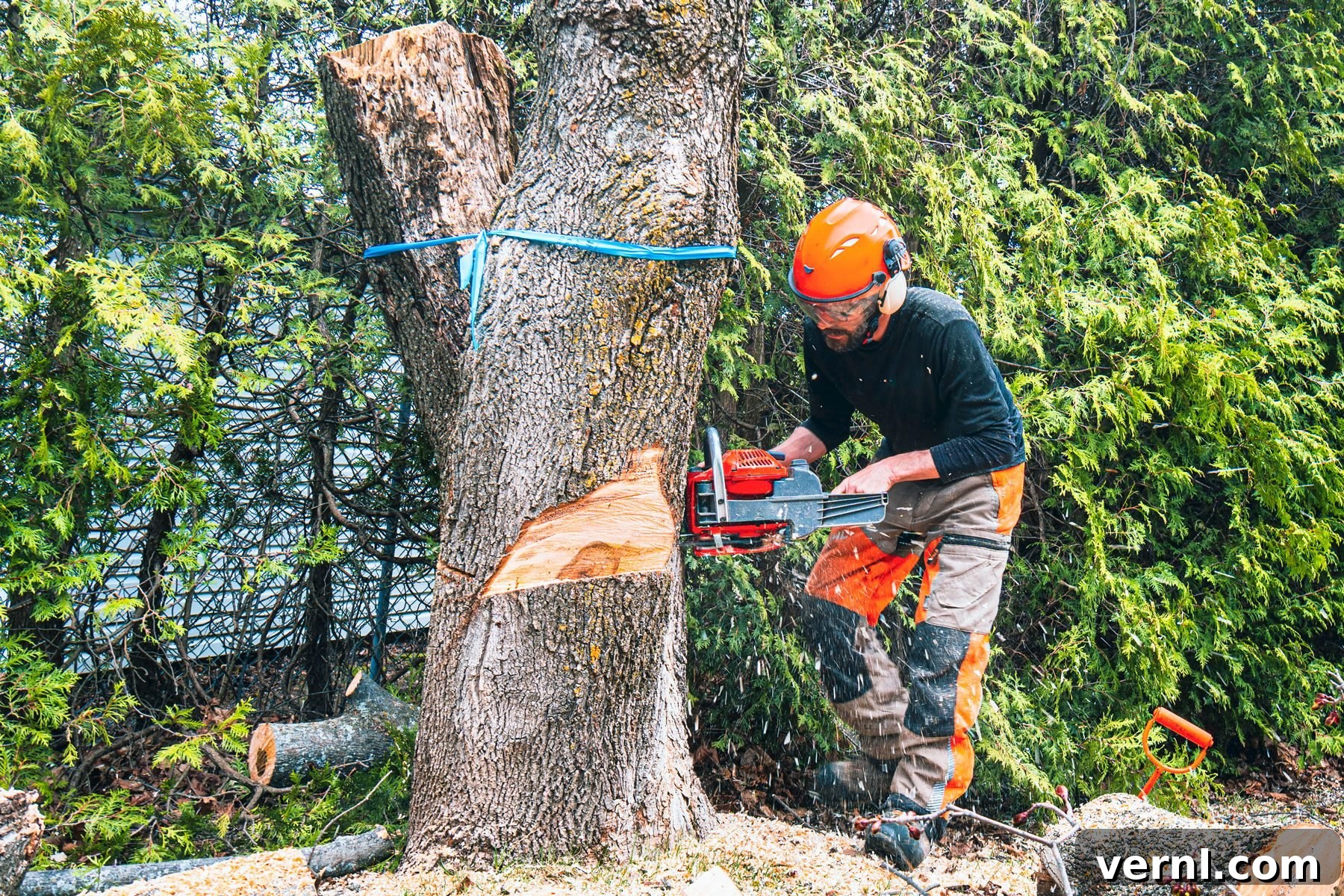
Understanding Tree Removal Costs: A Comprehensive Guide for Homeowners
Trees are invaluable assets to any property, offering a multitude of benefits that extend beyond mere aesthetics. They enhance curb appeal, purify the air, provide shade to lower energy bills, and even contribute to our overall well-being. A 2021 study by the University of Nebraska-Lincoln’s Bureau of Business Research underscored their economic value, revealing that healthy yard trees can boost a home’s resale value by up to 20 percent. This significant impact highlights why maintaining the health and vitality of your trees should always be a priority.
However, despite our best efforts to nurture them, there are times when tree removal becomes a necessary, albeit often difficult, decision. A tree may succumb to severe damage from an ice storm, fall victim to destructive pests, or simply grow too large and too close to your home or essential utility lines, posing a significant safety hazard. In such situations, the removal of the tree is not just recommended but often critical. While some may consider tackling smaller tree removal tasks themselves, it’s crucial to understand the complexities and inherent dangers involved. For anything beyond the most minor tasks, professional assistance is highly advisable, as detailed in resources like how to cut down a tree safely.
The decision to remove a tree inevitably brings the question of cost to the forefront. This comprehensive guide will delve into the various factors that influence tree removal expenses, equipping you with the knowledge to make informed decisions about your tree care needs and ensure the safety and beauty of your property.
Key Factors That Determine the Cost of Professional Tree Removal Services
Estimating the exact cost of tree removal without an on-site assessment can be challenging, as every tree presents a unique set of circumstances. As Jason Hayes of Davey Tree Care Service wisely notes, “Just like every fingerprint, every single tree is different and unique. That goes for every tree removal, too. To give an accurate tree removal cost, an arborist needs to see it in person.” Generally, homeowners can expect tree removal costs to range from a few hundred dollars to several thousand, depending on a variety of critical factors. Understanding these elements will help you anticipate potential expenses and budget accordingly.
Tree Size and Type
The size of a tree is arguably the most significant determinant of removal cost. Size is typically assessed by its height, trunk diameter, and canopy spread. Taller, more mature trees with wider trunks and extensive branch systems require more specialized equipment, more labor, and significantly more time to remove safely. They often necessitate intricate rigging, climbing techniques, and larger machinery like cranes to manage the heavy limbs and trunk sections. Conversely, smaller trees, especially those under 25 feet, are generally less complex and thus less expensive to remove.
The species of the tree also plays a role. Trees with dense wood, such as oak or maple, are heavier and harder to cut than softer wood varieties like pine or poplar. Furthermore, trees with complex branching patterns or thorny exteriors can add to the difficulty and, consequently, the cost of removal.
Tree Location and Accessibility
Where the tree is situated on your property and how easily it can be accessed by equipment and crew members are crucial factors. A tree in an open, easily accessible area of the yard, far from structures and power lines, will be less costly to remove than one located in a cramped backyard, near fences, pools, sheds, or utility lines. Obstacles such as steep slopes, retaining walls, or narrow gates can restrict access for heavy equipment, forcing the crew to use more manual labor, specialized rigging, or smaller, more time-consuming equipment, all of which increase the overall cost. Trees overhanging houses, garages, or power lines require extreme precision and often necessitate additional safety precautions and equipment, such as bucket trucks or cranes, further driving up the expense.
Tree Condition and Health
The health and condition of the tree significantly impact the safety and complexity of its removal. A healthy, robust tree can be predictable to cut and handle. However, a diseased, decaying, or storm-damaged tree often poses increased risks. Dead or severely compromised trees can be unstable, making them prone to unexpected falling limbs or trunk sections, which complicates the removal process and requires extra caution and specialized techniques to ensure the safety of the crew and surrounding property. Trees infested with pests like termites or carpenter ants may also be structurally weak, adding another layer of risk and cost.
Scope of Work and Client Specifications
The overall scope of the job extends beyond just felling the tree. Basic tree removal usually includes cutting down the tree and cutting it into manageable pieces. However, homeowners often require additional services, each contributing to the final cost:
- Limb Chipping and Debris Removal: Many services include chipping branches and hauling away the wood, but some may charge extra, especially for large volumes.
- Stump Grinding or Removal: After the tree is down, the stump remains. Grinding the stump down to below ground level (usually 6-12 inches) is a common request, allowing for new planting or sod. Full stump removal, which involves excavating the entire root ball, is a more labor-intensive and costly option.
- Wood Hauling/Splitting: If you wish to keep the wood for firewood, some companies may offer to cut and split it for an additional fee, or simply leave the logs for you to handle.
- Cleanup: Thorough site cleanup after the removal is usually expected, but ensure it’s specified in the quote.
- Property Protection: Sometimes, homeowners have specific requests, such as avoiding heavy equipment on a newly landscaped lawn or protecting delicate garden features. These requests may necessitate more manual labor and time, increasing the cost.
Equipment, Time, and Crew Required
The resources allocated to a job directly correlate with its cost. More complex removals demand a larger crew, specialized heavy equipment (cranes, bucket trucks, chippers, stump grinders), and more time to complete safely and efficiently. The cost of operating and maintaining this equipment, along with the labor wages for a skilled crew, are all factored into the final price. Emergency removals, often required outside regular business hours due to immediate hazards, can also incur higher costs due to overtime rates and rapid deployment.
When to Entrust Your Tree Removal to a Professional Arborist
While the idea of saving money by attempting DIY tree removal might be tempting, it’s crucial to understand that tree removal is not merely a strenuous task; it is often exceedingly dangerous work. The risks involved are substantial, ranging from severe personal injury due to falls or chainsaw accidents to significant property damage and even potential fatalities, especially when dealing with large trees, power lines, or working at height.
Jason Hayes offers a clear and practical rule of thumb: “A great rule of thumb for DIY tree care is that if you would have to use a ladder to reach and remove tree limbs, that tree is too big for you to work on safely without the help of a pro. The same rule should be applied to tree removal. If you are wondering if you should call in a professional or not, then you probably should.” This advice is paramount. Professional arborists possess not only the specialized equipment but also the extensive training, experience, and knowledge of tree biology, rigging techniques, and safety protocols necessary to execute complex removals safely and efficiently. They are adept at assessing risks, planning precise cuts, and controlling the fall of heavy sections to prevent damage to your property and ensure the well-being of everyone involved. Prioritizing safety and relying on expert judgment is always the wisest course of action.
Essential Questions to Ask Tree Removal Contractors
Selecting the right tree removal contractor is a critical step in ensuring a safe and successful job. To protect yourself and your property, it’s imperative to ask the right questions and verify their credentials. Jason Hayes emphasizes two non-negotiable questions:
“Before hiring someone to remove a tree, the two most important questions to ask are if they are International Society of Arboriculture (ISA)-certified and if they have their own company insurance – you should also see proof of both of these things before signing on the dotted line,” says Hayes. “ISA Certification will ensure that you are hiring someone who is safe, reliable, educated, and efficient. For insurance, if you hire someone who does not have insurance, any property damage or injuries that may occur could be your fiscal responsibility.”
Beyond these critical points, consider asking the following questions to ensure you’re hiring a reputable and competent service:
- Can you provide proof of ISA certification and insurance? Always ask for copies of their arborist certification and insurance certificates (liability and worker’s compensation). Contact their insurance provider to confirm coverage.
- Do you provide a written estimate? A detailed, written estimate should clearly outline all services included (e.g., felling, chipping, stump grinding, cleanup) and their respective costs. Avoid contractors who offer only verbal quotes.
- How do you plan to remove the tree? Hayes suggests asking them to “specify how they plan on removing the tree, what equipment they will be using, the path they will be taking to get to the tree, and if they are going to be removing the limbs and tree from the property when the job is finished.” This demonstrates their planning and helps you understand the process.
- Can you provide references? Request contact information for previous clients so you can inquire about their experience with the contractor. Also, check online reviews on platforms like Google, Yelp, or industry-specific sites.
- Are you familiar with local permitting requirements? In many municipalities, permits are required for tree removal. A professional contractor should be knowledgeable about these regulations and be able to guide you through the process, or even handle it on your behalf.
- What is your cleanup policy? Ensure they will leave your property clean and tidy, removing all debris, sawdust, and small branches.
- What are your payment terms? Understand when payments are due and what forms of payment are accepted. Be wary of contractors who demand full payment upfront. A reasonable deposit is common, with the balance due upon satisfactory completion of the work.
Frequently Asked Questions About Tree Removal
What Time of Year is the Best for Tree Removal?
While hazardous trees require immediate removal regardless of the season, for routine tree removal or pruning, the dormant season (late fall to early spring) is often considered ideal. “The dormant season is the best time of year for tree pruning because bare branches make it easier for arborists to inspect trees,” notes Hayes. “Dormant tree pruning also decreases the likelihood of attack from insect pests and pathogens.” The absence of leaves also means less debris to clean up, and the frozen ground in some regions can minimize damage from heavy equipment. However, arborists are busy year-round, so scheduling in advance is always a good idea, especially for non-emergency situations.
Do You Need Permission to Remove Trees from Your Property?
This is a crucial question with varying answers depending on your location. Many municipalities are increasingly implementing tree protection laws and ordinances to safeguard urban tree canopies due to their significant environmental benefits, including air purification, stormwater management, and habitat provision. These regulations can vary widely, with specific rules governing the removal of certain species, trees above a certain size, or trees located in sensitive areas. Penalties for non-compliance can be substantial, including hefty fines and requirements for replacement trees. Always check with your local municipality’s planning or public works department before undertaking any tree removal project. You can usually find this information on their official website; try searching for terms like “tree removal permits,” “tree ordinances,” or simply “trees.”
Does Removing Trees Negatively Affect House Value?
The impact of tree removal on property value is nuanced and depends heavily on the circumstances. Generally, removing healthy, well-maintained trees can indeed lower your property’s value. Hayes explains, “Trees add a lot of value to properties because of their many benefits, such as cutting heating and cooling costs, stormwater reduction and more. Just having a nice, healthy tree in the front lawn can increase property values by 10% or higher.” Christina Pfeiffer, a horticultural educator, emphasizes the long-term benefits: “Trees are the ones that contribute the most to our home environments with the potential to do so for the longest time. Also, if we lose trees it takes a long time to replace the benefits they provide.” Therefore, it’s wise to carefully consider the long-term implications before removing a healthy tree, even if it’s blocking a desired view.
However, the situation changes dramatically if the tree is unhealthy, damaged, or poses a significant hazard. “But if a tree is in extreme decline and is a potential hazard, it can decrease property value and curb appeal,” Hayes adds. In such cases, removing the tree can actually enhance safety, prevent potential property damage, and improve the overall appeal of your home, thus positively impacting its value. If you have concerns about a tree’s safety or health, Pfeiffer recommends, “It makes good sense if your tree has issues that need attention or you are concerned that your tree might not be safe, you want to hire someone with the expertise to sort that out who can give you a good plan. Sometimes there are things they can do to address all those concerns and keep the tree on the site.” Consulting with a certified arborist is essential to assess the tree’s condition and determine the best course of action.
The Professional Tree Removal Process: What to Expect
Understanding the typical steps involved in professional tree removal can help homeowners feel more prepared and confident. While each job is unique, a standard process often includes:
- Initial Consultation and Assessment: A certified arborist will visit your property to evaluate the tree’s size, condition, location, and potential hazards, discussing your specific needs and providing a detailed, written estimate.
- Permit Acquisition (if necessary): The arborist or homeowner will secure any required permits from the local municipality.
- Site Preparation: On the day of removal, the crew will prepare the area by clearing debris, marking utility lines, and setting up safety zones. They may lay down protective mats to safeguard lawns or sensitive landscaping.
- Strategic Cutting and Rigging: The arborist, often with climbers or using bucket trucks, will strategically remove branches and sections of the trunk, lowering them safely using ropes and rigging systems, especially in confined spaces or near structures. Large sections may be cut with chainsaws or specialized equipment.
- Felling the Trunk: Once the crown and upper portions are removed, the main trunk is either felled in sections or, if space allows, brought down in one controlled direction.
- Debris Management: Branches are typically fed into a wood chipper, while larger trunk sections are cut into manageable logs. The debris is then either hauled away, chipped on-site, or left for the homeowner as agreed upon.
- Stump Services (Optional): If requested, stump grinding or removal will be performed to eliminate the remaining stump.
- Final Cleanup: The crew will thoroughly clean the work area, removing all sawdust, small branches, and other debris, leaving your property tidy.
Cost-Saving Tips for Tree Removal (and When Not to Cut Corners)
While professional tree removal is an investment, there are ways to manage costs without compromising safety or quality:
- Get Multiple Quotes: Always obtain at least three detailed, written estimates from different ISA-certified and insured arborists. This allows you to compare prices and services.
- Schedule During Off-Peak Seasons: If the removal is not an emergency, consider scheduling it during the dormant season (late fall/winter) or during an arborist’s less busy times, as some may offer slightly lower rates.
- Bundle Services: If you have multiple trees needing attention (pruning, removal, etc.), inquire about a discount for bundling these services into a single job.
- Handle Cleanup Yourself (if safe): If you’re physically capable and have the means, you might save money by asking the contractor to leave the wood chips or cut logs for you to dispose of or use. However, never compromise on professional debris removal if it involves hazardous materials or heavy lifting.
- Clear the Area: Before the crew arrives, clear away any movable items like patio furniture, garden decorations, or vehicles from the work zone. This can save the crew time and reduce the risk of damage.
It is crucial to emphasize that while saving money is desirable, safety should always be the top priority. Never choose a contractor solely based on the lowest bid if they cannot provide proof of certification and insurance. Attempting complex or hazardous tree removal yourself to save money is a false economy that can lead to devastating consequences, including serious injury, property damage, and significant financial liability.
About the Experts
Jason Hayes is an ISA-Certified Arborist® and Tree Risk Assessment Qualified (TRAQ) who holds an associate degree in agriculture from Purdue University, where he also studied forestry. He is a Davey Tree Care Service district manager in the Southeast Seattle, Washington office.
Christina Pfeiffer is a horticultural educator with over 30 years of experience in landscape management and arboriculture. She holds horticulture degrees from the University of Washington and Michigan State University. She is the co-author of “Pacific Northwest Gardening: Month-by-Month.”
Sources
- Arbor Day Foundation: “Trees Have a $31.5 Billion Impact on Home Values”
- Arbor Day Foundation: “Benefits of trees”