Mastering Your Finish: The Ultimate Guide to HVLP Spray Guns
For DIY enthusiasts, professional painters, and woodworking artisans alike, achieving a pristine, factory-like finish on projects is a hallmark of quality craftsmanship. Gone are the days of struggling with brushes or rollers that leave streaks and uneven coats. The evolution of spray painting technology has brought forth tools that empower users to attain flawless results with remarkable efficiency. Among these innovations, the High Volume Low Pressure (HVLP) spray gun stands out as a game-changer, revolutionizing how we apply coatings from paints and stains to lacquers and varnishes.
HVLP spray guns have earned their reputation as favorites among cabinetmakers and furniture builders for good reason. Unlike traditional spray applications that often lead to significant material waste due to excessive overspray and aggressive propulsion, HVLP systems are engineered for precision and economy. They ensure a higher transfer efficiency, meaning more of your valuable finishing material lands on your project and less dissipates into the air. This not only saves material but also contributes to a cleaner, healthier work environment.
This comprehensive guide will delve deep into the world of HVLP spray guns, exploring their fundamental principles, the various types of systems available, and how they stack up against their Low Volume Low Pressure (LVLP) counterparts. By the end, you’ll be equipped with the knowledge to confidently choose the best spray gun system to meet your specific project requirements, ensuring you achieve that coveted, professional-grade finish every time.
What is an HVLP Spray Gun and How Does it Work?
An HVLP (High Volume Low Pressure) spray gun is a specialized painting tool designed to atomize and apply coatings with exceptional control and minimal waste. Traditionally, a standard spray gun—often connected to a powerful air compressor—propels paint onto a surface at high speeds and pressures. This aggressive force, while effective in some scenarios, can result in as little as 25 percent of the finish actually adhering to the project, with the rest lost to overspray and bounce-back. This inefficiency not only wastes costly materials but also creates a significant mess and requires more extensive masking.
The Science Behind HVLP Technology
The core principle of HVLP technology lies in its name: delivering a high volume of air at a low pressure to the spray nozzle. Instead of relying on brute force, HVLP guns utilize a large volume of air, typically ranging from 10 to 20 CFM (Cubic Feet per Minute), but at a significantly reduced pressure, usually between 0.1 and 10 PSI (Pounds per Square Inch) at the air cap. This gentle, yet powerful, air stream creates a softer spray pattern that envelops the paint particles, guiding them more effectively to the target surface.
This unique atomization process provides several key advantages:
- Reduced Overspray: Lower air pressure minimizes the amount of paint particles that bounce off the surface or become airborne, ensuring a higher percentage of material adheres to the workpiece. This is crucial for environmental safety and material cost savings.
- Enhanced Transfer Efficiency: HVLP systems boast impressive transfer efficiencies, often exceeding 65% and sometimes reaching over 90%. This means a substantial majority of the applied coating ends up on your project, resulting in less waste and fewer coats needed.
- Finer Finish: The controlled atomization and soft spray pattern allow for an incredibly smooth, even, and professional-looking finish with fewer imperfections, drips, or runs, especially when dealing with intricate details or large, flat surfaces.
- Compliance with Regulations: Many environmental regulations, particularly in commercial and industrial settings, mandate the use of HVLP equipment due to its reduced VOC (Volatile Organic Compound) emissions and lower pollution footprint.
Understanding these foundational principles makes it clear why HVLP spray guns have become the gold standard for high-quality finishing across various applications.
Exploring the Diverse World of HVLP Spray Gun Systems
HVLP spray systems come in various configurations, primarily distinguished by how they generate the necessary high volume of air. Each type offers unique advantages and considerations for different users and projects.
-
Turbine HVLP Systems: Power and Portability
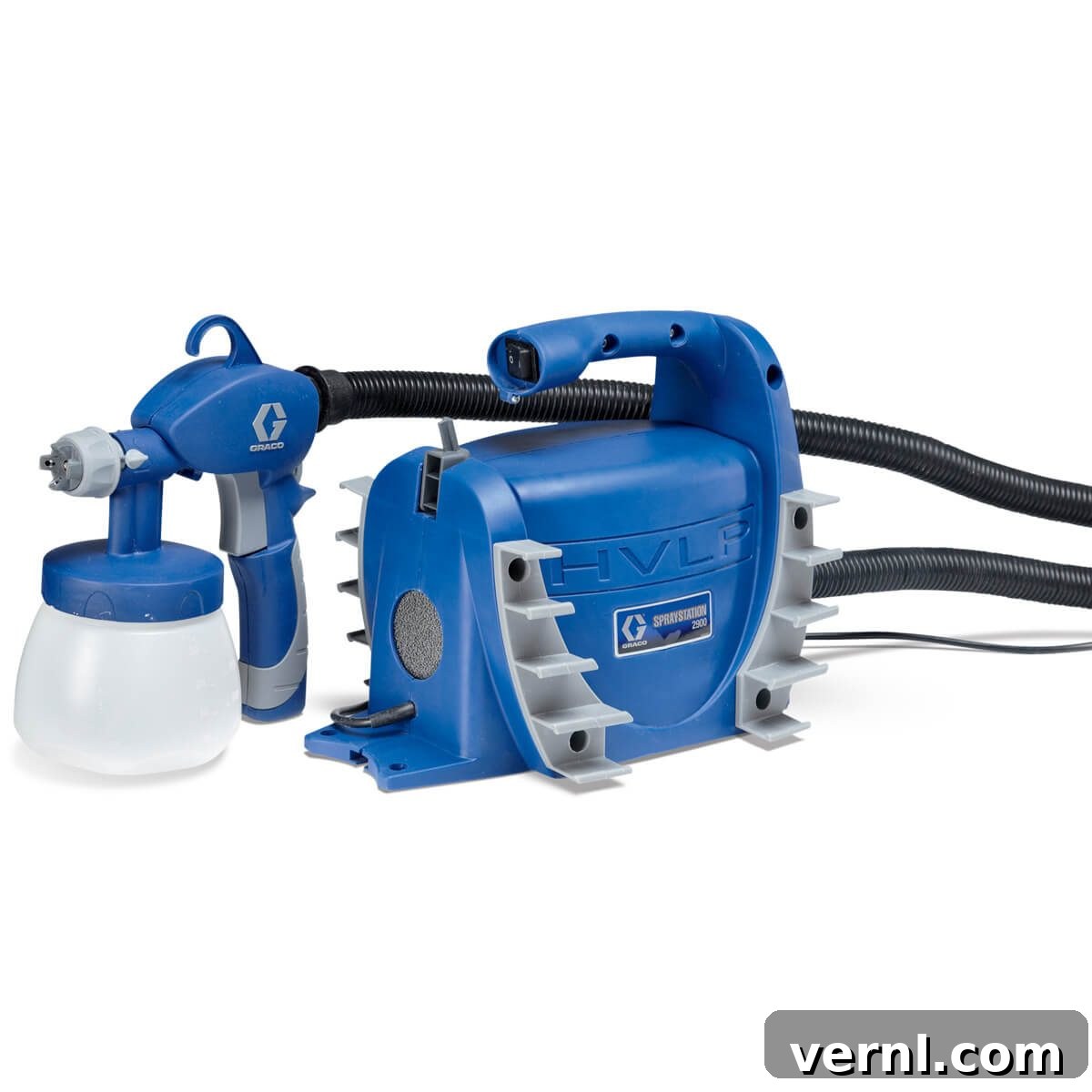
Turbine HVLP systems are standalone units that utilize a self-contained turbine, typically electrically powered, to produce the high volume of air essential for HVLP spraying without needing an external air compressor. These turbines are multi-stage units, with stages ranging from two to five or even more. The greater the number of stages, the higher the air pressure and air volume capabilities, allowing for the spraying of thicker materials such as latex paints or heavy primers. These systems are highly portable, making them an excellent choice for DIYers and professional painters who require mobility on various job sites, from painting kitchen cabinets in a client’s home to finishing furniture in a workshop. Their integrated design means less equipment to haul around, and they tend to operate quieter than compressor-based systems. Maintenance primarily involves keeping the turbine filters clean to ensure optimal airflow and prevent overheating.
Pros: Excellent portability, no external compressor needed, relatively quiet operation, consistent airflow.
Cons: Can be less powerful for very thick coatings compared to high-CFM compressors, initial cost can be higher than a gun alone. -
Compressor-based HVLP Systems: Versatility Meets Power
These systems leverage a traditional air compressor to supply the necessary air volume. A critical component here is a specific regulator or an HVLP-specific gun that reduces the compressor’s high output pressure to the low pressure required by the HVLP spray gun. Compressor-based HVLP setups offer unparalleled versatility, as the same compressor can power a multitude of other pneumatic tools, from impact wrenches to nail guns, beyond just spray painting. This makes them a cost-effective choice for workshops already equipped with a robust air compressor. However, it’s crucial that the compressor can sustain the required CFM for the spray gun to operate effectively without “starving” it of air. They can also be more cumbersome and significantly louder than turbine counterparts, requiring ear protection and careful placement in a workspace. Selecting the right compressor involves matching its CFM rating at a given PSI to the gun’s requirements.
Pros: High power for thick materials, multi-tool versatility if a compressor is owned, wide range of gun options.
Cons: Requires a powerful compressor (high CFM), can be noisy, less portable as a complete system. -
Conversion HVLP Guns: Bridging the Gap
Conversion HVLP guns represent a hybrid solution. They are designed to be connected to a standard, high-pressure air compressor but incorporate internal air cap designs that efficiently convert the high inlet pressure to the low atomization pressure characteristic of HVLP spraying. While offering the advantages of reduced overspray and improved transfer efficiency over conventional guns, they might not always deliver the same level of performance, particularly in terms of atomization quality and consistency, as dedicated turbine or purpose-built compressor-based HVLP systems. They are an economical entry point for users who already own a compressor and want to upgrade to HVLP technology without investing in an entirely new system. However, ensuring your compressor can still meet the gun’s CFM requirements at the appropriate pressure is vital.
Pros: Utilizes existing high-pressure compressors, improved efficiency over conventional guns, cost-effective upgrade.
Cons: May not achieve optimal HVLP performance compared to dedicated systems, still requires a capable compressor. -
Gravity Feed HVLP Guns: Precision for Detailed Work
In gravity feed HVLP guns, the paint cup (reservoir) is strategically positioned above the spray gun. Gravity naturally aids in feeding the paint into the gun’s fluid nozzle. This design allows for more efficient material usage, especially with smaller quantities, as almost all the paint in the cup can be sprayed. Gravity feed guns are generally lighter, offer better balance, and provide enhanced precision and control, making them a popular choice for tasks that demand fine detail work, such as automotive refinishing, motorcycle painting, or intricate woodworking projects. Their smaller cup sizes are ideal for quick color changes and minimal waste when mixing custom colors.
Pros: Excellent for precision and detail, good for small batches/color changes, minimal material waste, easy to clean.
Cons: Smaller cup capacity, can obscure line of sight on larger projects. -
Siphon Feed HVLP Guns: Tackling Larger Projects
Conversely, siphon feed HVLP guns draw paint from a reservoir positioned beneath the gun. A vacuum created by the airflow pulls the paint up from the cup. These guns often boast a more considerable paint capacity compared to gravity feed guns, making them an ideal choice for more extensive projects like painting large pieces of furniture, entire car panels, or even exterior surfaces. While they might feel heavier and slightly less balanced due to the cup’s position, their large capacity reduces the frequency of refills, allowing for uninterrupted spraying on bigger jobs. Cleaning can sometimes be slightly more involved due to the longer fluid path.
Pros: Large paint capacity, ideal for large projects, less frequent refills.
Cons: Heavier and potentially less balanced, can be harder to clean, may struggle with very thick materials.
When selecting an HVLP system, it’s crucial to factor in the specific requirements of your task. Your choice will be significantly influenced by the type of material you intend to spray, the project’s size, your budget, and the portability you desire.
HVLP vs. LVLP Spray Guns: Which Technology Reigns Supreme for Your Project?
While HVLP guns are widely celebrated, another related technology, LVLP (Low Volume Low Pressure), also offers compelling advantages. Understanding the distinctions between these two spray gun types is essential for making an informed decision that aligns with your project goals, equipment availability, and personal preferences.
Deep Dive into HVLP (High Volume Low Pressure)
HVLP systems are characterized by their ability to achieve a superior finish with high transfer efficiency, thanks to their generous airflow at moderate pressure. This balance makes them incredibly versatile and effective across a broad spectrum of applications.
-
Unmatched Finish Quality and Precision
HVLP spray guns excel in applications where a high-quality, glass-smooth finish is paramount. Their controlled spray pattern minimizes texture, orange peel, and other imperfections, making them the preferred choice for automotive refinishing, fine woodworking (cabinets, furniture), and other detailed work. The ability to precisely control the fan pattern and fluid flow allows for intricate detailing and consistent coverage even on complex geometries. This precision reduces the need for extensive sanding and buffing after application, saving time and effort.
-
Superior Transfer Efficiency: Less Waste, More Savings
One of the most significant benefits of HVLP is its high transfer efficiency. By operating at low pressure, less material atomizes into overspray, and more lands on the intended surface. This not only leads to substantial savings on expensive paints and coatings but also contributes to a cleaner work environment and reduced exposure to airborne paint particles. For professionals, this translates into lower operating costs and compliance with stricter environmental regulations concerning VOC emissions.
-
Air Consumption and Compressor Requirements
While HVLP guns operate at low pressure at the cap, they demand a high volume of air (high CFM) from the compressor or turbine. Typically, an HVLP gun might require anywhere from 10 to 20 CFM at around 30-60 PSI at the gun’s inlet (which then drops to 10 PSI or less at the air cap). This means that if you’re using a compressor-based HVLP system, you’ll need a robust air compressor capable of sustaining this high CFM output without constantly cycling or dropping pressure. Small, hobbyist compressors often won’t suffice, necessitating a larger, more powerful unit with a sizable air tank to maintain consistent performance. For those without such a compressor, a turbine HVLP system becomes an attractive alternative.
-
Versatility Across a Spectrum of Coatings
HVLP guns are remarkably versatile, capable of handling a wide array of paint types and finishes, including enamels, lacquers, urethanes, acrylics, stains, and even some latex paints. For thicker materials or those with higher viscosity, slight thinning might be required to achieve optimal atomization and flow. However, with proper nozzle and needle setups and appropriate thinning, HVLP systems can effectively spray nearly any coating, making them an indispensable tool in any serious painter’s arsenal.
Deep Dive into LVLP (Low Volume Low Pressure)
LVLP spray guns are a newer evolution, designed to offer many benefits of HVLP but with less demand on air supply, making them suitable for a broader range of users.
-
Ideal for Smaller Projects and Hobbyists
LVLP guns shine in settings where a large, powerful air compressor isn’t available or practical. They are often favored by hobbyists, small workshops, or for smaller-scale projects that don’t require the absolute highest level of finish quality but still benefit from spray application. Think of touch-up jobs, smaller furniture pieces, or craft projects. Their lower air demands make them more accessible and user-friendly for those with limited equipment.
-
Good Efficiency with Specific Applications
Similar to HVLP systems, LVLP spray guns offer good transfer efficiency, resulting in minimal material waste compared to conventional spray guns. They strike a balance between material savings and air consumption. While their finish might not always be as exquisitely refined as that achieved with top-tier HVLP systems, especially for highly intricate projects, it is still a significant improvement over traditional methods and perfectly adequate for many applications. They provide a softer spray pattern than conventional guns, reducing bounce-back and improving control.
-
Optimized for Smaller Air Compressors
The main advantage of LVLP guns is their significantly lower air consumption. They typically operate at lower CFM requirements (e.g., 5-10 CFM) and lower pressures (around 10-20 PSI at the gun’s inlet, dropping to 0.1-10 PSI at the cap). This makes them compatible with smaller, less powerful air compressors that might struggle to keep up with an HVLP gun’s demands. For users with garage compressors or portable units, an LVLP gun provides an excellent entry point into efficient spray painting without requiring a major equipment upgrade.
-
Material Compatibility and Limitations
LVLP guns generally work best with thinner materials, such as stains, lacquers, clear coats, and some thinner enamels. Thicker paints, such as unthinned latex or heavy primers, might pose challenges for LVLP systems, often requiring significant thinning or multiple passes to achieve adequate coverage. This limitation can reduce their versatility in certain applications where a wide range of material viscosities needs to be sprayed, making HVLP a more robust choice for varied tasks.
Making the Right Choice: Your Comprehensive Spray Gun Buyer’s Guide
Deciding between an HVLP and an LVLP spray gun, or indeed any specific HVLP system, hinges on a careful evaluation of several factors. Your perfect spray gun is the one that best matches your projects, resources, and skill level.
Key Factors to Consider When Choosing Your Spray Gun
-
Type of Project and Desired Finish:
For professional-grade finishes, intricate detailing, or automotive painting where a mirror-smooth surface is non-negotiable, an HVLP system (especially turbine or high-end compressor-based) is the superior choice. If your projects are smaller, less demanding of absolute perfection, or for hobbyist use, an LVLP gun can provide excellent results without the higher equipment demands.
-
Type of Material/Coating:
Consider the viscosity of the coatings you’ll be using most frequently. HVLP guns handle a wider range of viscosities, including thicker paints (often with some thinning). LVLP guns are generally better suited for thinner materials. Always check the manufacturer’s recommendations for both the paint and the spray gun.
-
Available Air Compressor Capacity:
This is often the most critical factor. If you already own a powerful air compressor (e.g., 5-6 HP, 60-gallon tank, 15+ CFM at 40 PSI), a compressor-based HVLP system might be ideal. If you have a smaller compressor (e.g., 2-3 HP, 10-gallon tank, 5-8 CFM), an LVLP gun is a more practical option. If you lack a compressor or prefer an all-in-one portable solution, a turbine HVLP system is your best bet.
-
Portability Requirements:
If you frequently move your equipment between job sites or have a small workspace, a turbine HVLP system or a compact LVLP setup offers maximum portability. Compressor-based systems, especially with large tanks, are best suited for stationary workshop use.
-
Budget and Long-Term Value:
Initial costs vary widely. Turbine HVLP systems can have a higher upfront cost than just a spray gun head, but they eliminate the need for a separate compressor. LVLP guns are often more affordable. Consider not just the purchase price but also the cost of materials (transfer efficiency), energy consumption, and potential maintenance over the lifespan of the tool.
-
Ease of Use and Maintenance:
All spray guns require meticulous cleaning after each use to ensure longevity and consistent performance. Gravity feed guns are generally easiest to clean. Look for models with fewer parts and easy-to-disassemble components. Consider the learning curve for achieving optimal results; HVLP systems often require a bit more finesse to master.
Essential Tips for Optimal Spray Gun Performance and Longevity
Owning a high-quality spray gun is just the first step. Proper preparation, technique, and maintenance are crucial for achieving outstanding results and extending the life of your equipment.
Preparation is Key
- Surface Preparation: Always ensure your project surface is clean, dry, and properly sanded or primed according to the coating manufacturer’s instructions.
- Material Preparation: Thoroughly mix your paint or coating. Strain it through a fine-mesh filter to remove any impurities or dried bits that could clog the gun or mar the finish. Thinning may be required; always follow the coating manufacturer’s recommendations and perform test sprays.
- Workspace Setup: Work in a well-ventilated area, ideally with good lighting. Protect surrounding areas with drop cloths and masking tape to prevent overspray.
- Safety First: Always wear appropriate personal protective equipment (PPE), including a respirator (not just a dust mask!), safety glasses, and gloves.
Mastering Spraying Techniques
- Test Pattern: Before spraying your project, always test your spray pattern on a piece of scrap material to adjust air pressure, fluid control, and fan pattern.
- Consistent Distance: Maintain a consistent distance (typically 6-10 inches) between the gun and the surface to ensure even coverage.
- Overlap: Overlap each pass by about 50% to avoid streaking and achieve uniform coverage.
- Wrist Movement: Move your arm, not just your wrist, to keep the gun perpendicular to the surface at all times. Flicking your wrist can cause uneven application.
- Thin Coats: It’s always better to apply multiple thin coats than one thick coat, which can lead to runs, drips, and an uneven finish.
Post-Use Cleaning and Maintenance
- Immediate Cleaning: Clean your spray gun immediately after each use. Dried paint can permanently clog internal passages and ruin the gun.
- Disassembly: Disassemble the air cap, fluid nozzle, and needle. Clean all components thoroughly with the appropriate cleaning solvent for your material (water for latex, lacquer thinner for lacquers, etc.).
- Brush and Solvent: Use small cleaning brushes to scrub inside the fluid passages and air cap holes. Never use metal wires or hard objects that can damage precision components.
- Lubrication: Lightly lubricate moving parts, like the needle packing, with a specialized spray gun lubricant or silicone-free grease.
- Storage: Store your clean, dry spray gun in a protective case or hung to prevent damage to delicate parts.
Conclusion: Elevate Your Craft with the Perfect Spray Gun
The journey to achieving professional-quality finishes on your projects starts with the right tools and the knowledge to use them effectively. HVLP and LVLP spray guns offer significant advantages over traditional application methods, from superior finish quality and increased efficiency to reduced material waste and improved environmental safety. Whether you’re a dedicated DIYer passionate about perfecting your craft, a furniture builder aiming for showroom-quality results, or an automotive enthusiast restoring a classic, there’s an HVLP or LVLP system designed to meet your needs.
By carefully considering your project types, material preferences, existing equipment, and budget, you can confidently select the spray gun that will transform your finishing process. Invest in proper technique and meticulous maintenance, and you’ll unlock the full potential of these incredible tools, ensuring every project you undertake showcases a finish you can truly be proud of.