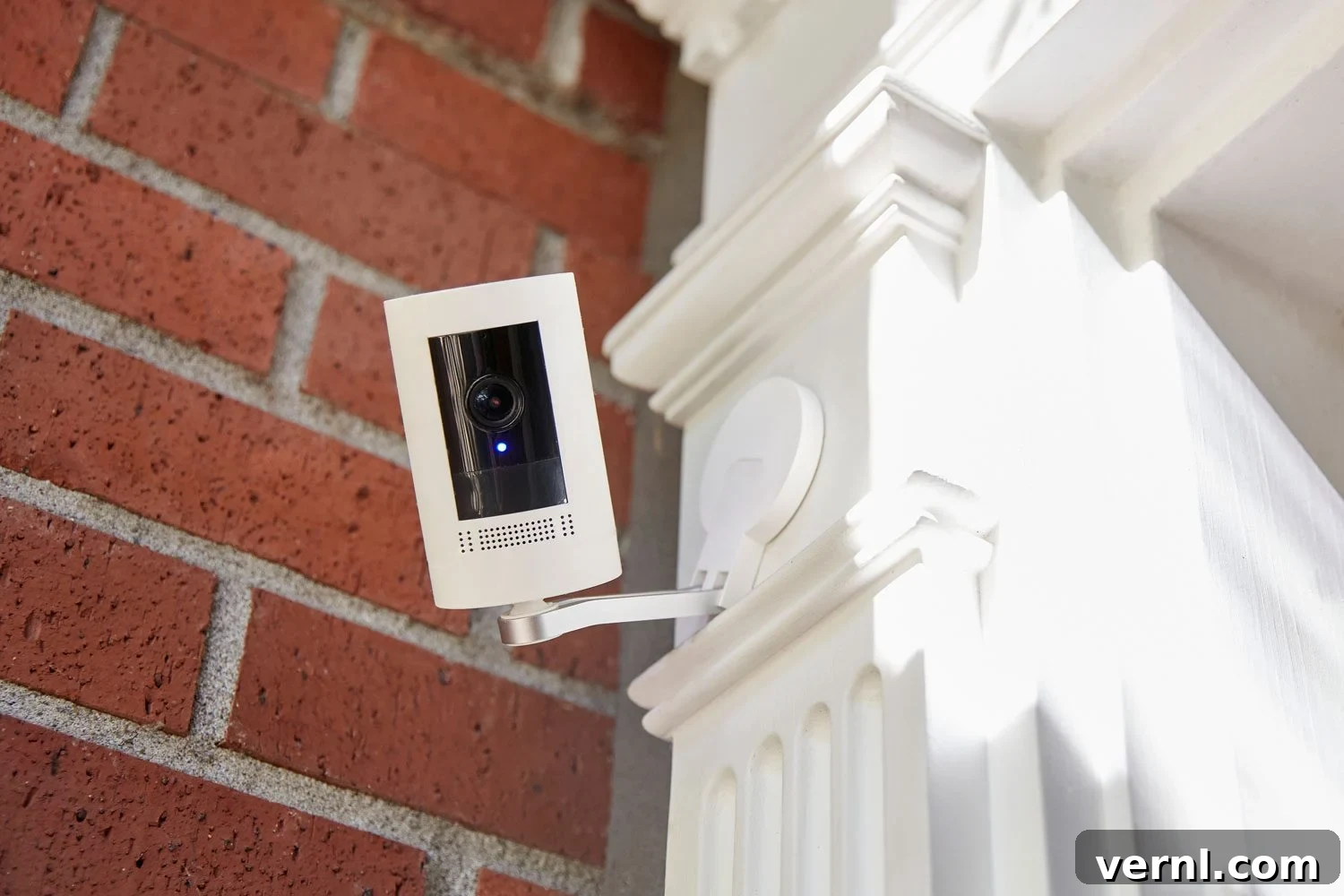
Returning home after a demanding day should evoke a profound sense of peace and comfort. It’s your personal sanctuary, a place where you can unwind, relax, and truly be yourself. However, this cherished feeling of security can be instantly shattered by the devastating discovery of a break-in. The aftermath of an intrusion—a ransacked home, missing valuables, and the unsettling feeling of violated privacy—is deeply traumatic and leaves a lasting psychological impact. Investing in a robust home security system is one of the most effective ways to deter potential intruders and protect what matters most.
Yet, the journey to enhanced home security can feel overwhelming given the vast array of options available. Where do you begin? What factors should guide your decision-making process?
“Before you even start looking at specific home security considerations, it’s crucial to pinpoint your primary security objective,” advises Kirk MacDowell, a seasoned home security expert at Batten, a company renowned for guiding consumers through complex security needs. “Are you primarily focused on protecting your property and loved ones when you’re present at home, or is your main concern safeguarding it while you’re away? This initial distinction will significantly influence the type of system and features you prioritize.” Your unique circumstances also play a vital role. Do you have young children or pets that need to be considered? Are there multiple entry points, such as numerous windows or doors, that require comprehensive coverage? Do you possess valuable collections, art, or specialized tools that necessitate heightened protection?
And then, of course, there’s the inevitable question of cost. Can the budget truly dictate your security choices? Absolutely—and it should. The financial aspect is a significant consideration for most homeowners. To help you navigate this intricate landscape of choices, we’ve engaged with industry luminaries Kirk MacDowell and Andrea Barge, an expert from ADT, to provide invaluable insights and guide you toward making an informed decision for your home’s safety.
Understanding the Cost of a Home Security System
The total cost of a home security system is rarely a fixed figure; it’s a dynamic variable influenced by several key factors. These include the overall size and layout of your home, the total number of windows and doors you intend to protect, and your decision to integrate advanced components like security cameras and specialized environmental sensors. MacDowell offers a practical guideline: “A reasonable estimate for a comprehensive security system is approximately $1 per square foot of your home.” This means for an average 2,000 square foot residence, you should anticipate budgeting “around $2,000 for a robust, all-encompassing system, though prices can certainly fluctuate based on specific features and regional variations.”
Andrea Barge echoes this sentiment regarding cost variability. She highlights ADT’s accessible starter kit as an example, which provides essential components—a central hub, two contact sensors, full app access for remote control, and a Google Nest doorbell—all for less than $400. “The final pricing for security system installations can indeed vary considerably,” Barge explains, “primarily depending on the complexity of the installation process itself and the specific features or customized packages you ultimately select.” Understanding these nuances is critical for effective budget planning.
Detailed Home Security System Cost Breakdown
When it comes to home security, the true value and expense often lie in the finer details. Breaking down the average costs helps prospective buyers understand what they’re paying for. According to insights from our experts and comprehensive research by SafeWise into national security providers, here’s a typical breakdown (with average rounded costs):
- Equipment: The cornerstone of any system is the central hub, which is usually included in most packages. Beyond this, you can customize your setup with various sensors and cameras:
- Contact Sensors: (~$28 each) These are vital for doors and windows, detecting when an entry point is opened.
- Motion Detectors: (~$40 each) Designed to sense movement within a room, triggering an alarm if an intruder enters.
- Glass-Break Sensors: (~$62 each) Audio sensors that detect the distinct sound of breaking glass, adding another layer of perimeter protection.
- Indoor/Outdoor Cameras: (~$164 for indoor, ~$174 for outdoor) Provide visual surveillance, offering invaluable evidence and real-time monitoring capabilities.
- Video Doorbells: (~$168 each) Allow you to see and speak to visitors remotely, enhancing front-door security and package delivery monitoring.
Many providers offer pre-bundled packages that integrate some or all of this essential equipment into a single, often discounted, fee.
- Installation: While many leading national security companies frequently offer free installation as an incentive, it’s not universally guaranteed. “Some providers do charge for installation services, with costs typically ranging from $100 to $400,” Barge clarifies. The complexity of the system and whether it’s wired or wireless can also impact these fees.
- Monitoring Services: This is a recurring monthly cost that provides ongoing security. SafeWise research indicates that self-monitoring services, where you receive alerts and are responsible for contacting authorities, generally cost less (~$24 per month). In contrast, professional (live) monitoring, where a dedicated team responds to alerts and dispatches emergency services, typically costs more (~$43 per month) but offers enhanced peace of mind.
- Permits: It’s important to be aware that certain municipalities, such as Dallas where our expert resides, mandate obtaining a permit for security alarms that could potentially trigger a police response or be audible to neighbors. This permit fee serves to offset the administrative costs associated with nuisance or false alarm calls, ensuring emergency services are utilized efficiently.
For homeowners operating with a more constrained budget, establishing effective home security is still entirely achievable. MacDowell emphasizes focusing on fundamental protection: “The absolute must-haves for any budget-conscious security plan would involve robust safeguarding of all primary doors and windows against intrusion, complemented by the strategic incorporation of at least one camera for critical surveillance and visual verification.” Prioritizing these key areas offers substantial protection without overspending.
Exploring the Diverse Types of Home Security Systems
Cost is undeniably a significant factor, but it’s not the only consideration when selecting a home security system. Another pivotal decision lies between wired and wireless systems, each presenting unique advantages and disadvantages tailored to different homeowner preferences and property types. “Homeowners can still opt for either a hard-wired or a wireless system, depending on their specific needs and priorities,” explains Andrea Barge. “Both configurations come with their own set of benefits and potential drawbacks that are worth exploring.”
Wired Home Security Systems: Reliability and Permanence
Wired security systems, often considered the traditional backbone of home protection, are renowned for their robust reliability and steadfast performance. Barge notes that “wired systems typically feature fewer individual components, which inherently contributes to reduced system complexity and simplifies troubleshooting.” Their primary advantages include:
- Consistent Power: Less prone to power depletion since components are hard-wired into the home’s electrical system, eliminating the need for battery replacements.
- Reduced Interference: Generally less susceptible to electrical or radio frequency interference, ensuring a stable and uninterrupted connection.
- Continuous Video Recording: Many wired camera systems can continue recording even during internet disruptions, storing footage locally for critical security incidents.
- Enhanced Durability: Often seen as more permanent and tamper-resistant, making them ideal for long-term, high-security installations.
However, the installation of wired systems presents its own set of challenges. “Wired systems are considerably more challenging to install,” MacDowell points out, “demanding precise planning and meticulous execution.” This typically involves “drilling holes through walls, extensive running of cables, and intricate wiring procedures.” Unless you possess advanced DIY skills and a significant amount of time, this complex installation often necessitates professional assistance, which can be a hurdle for many homeowners.
Wireless Home Security Systems: Flexibility and Modernity
Wireless home security systems have rapidly gained popularity due to their unparalleled flexibility and ease of integration with modern smart home technologies. Andrea Barge highlights numerous benefits:
- Portability and Flexibility: Components can be easily moved, reconfigured, or expanded as your needs change, without the constraints of wiring.
- Battery Operation: Most wireless sensors and devices are battery-powered, simplifying installation and allowing placement in locations where running wires would be impractical.
- Seamless Smart Home Integration: Wireless systems readily integrate with other smart home devices, allowing for advanced automation and remote control through a single app.
- Easier Installation: Often designed for DIY installation, reducing professional installation costs and time.
- Firmware Upgrades: Many systems receive over-the-air firmware updates, continuously improving functionality and security features.
While offering immense convenience, wireless systems do come with considerations such as battery maintenance, potential for signal interference, and reliance on a stable Wi-Fi connection.
Hybrid Home Security Systems: The Best of Both Worlds
A third, increasingly popular option is the hybrid security system, which strategically combines elements of both wired and wireless technologies. “Homeowners may already have a pre-existing wired security infrastructure they wish to modernize and enhance with wireless capabilities,” Barge explains. “This could involve integrating interactive services, smart home automation, or additional wireless sensors without fully replacing the robust wired foundation.” Hybrid systems are particularly advantageous for:
- Leveraging Existing Infrastructure: Maximizing the investment in older wired systems while adding new, flexible wireless features.
- Optimizing Placement: Using wired components for critical, stationary points (like door contacts on main entryways) and wireless for more flexible placements (like motion sensors in open areas or remote cameras).
- Enhanced Functionality: Gaining the reliability of wired connections for core components while benefiting from the scalability and smart features of wireless devices.
The feasibility and effectiveness of a hybrid setup are highly dependent on your current system’s compatibility and the specific components you aim to add, often requiring expert consultation to ensure seamless integration.
DIY Home Security Systems: Taking Control of Your Safety
The rise of smart home technology has democratized home security, making it more accessible to the average homeowner. So, is installing a home security system a task best entrusted to professionals, or is it a manageable project for the enthusiastic DIYer? “Homeowners can certainly undertake the installation of a home security system themselves,” confirms Andrea Barge. “This option is particularly appealing for individuals who enjoy hands-on projects, prefer immediate control over the precise placement of their security devices, and want to thoroughly understand every aspect of their system’s setup.” DIY systems empower homeowners to customize their security solutions to their exact specifications and often result in significant cost savings on installation fees.
But what about monitoring once the system is installed? If you DIY your security system, will there be a safety net—someone to respond when an emergency arises? Absolutely. “DIY systems are fully capable of incorporating professional live monitoring services, which we highly recommend for comprehensive and robust security coverage,” Kirk MacDowell asserts. While the installation might be self-managed, the critical function of emergency response can still be outsourced to experts. Barge further elaborates on the two main monitoring avenues: professional (live) monitoring provides an unparalleled sense of peace of mind, knowing that a dedicated team is always vigilant and ready to dispatch emergency services, while self-monitoring offers homeowners more direct control over immediate alerts and responses, requiring them to personally act on notifications.
DIY vs. Traditional Home Security Systems: Making the Right Choice
Ultimately, the decision between a DIY and a traditional professionally installed home security system boils down to personal preference, lifestyle, and comfort level with technology. Both approaches offer valid and effective means of securing your home.
“DIY security systems are generally the easiest to install for the majority of homeowners,” Andrea Barge states. “They are typically accompanied by clear, step-by-step instructions and can usually be set up without the need for specialized tools or extensive technical expertise.” The appeal of DIY lies in its simplicity and minimal disruption to your home; there’s no need for installers to drill holes in your walls, run extensive wiring through your attic, or schedule inconvenient appointments. This empowers homeowners to manage the entire installation process on their own schedule and at their own pace.
Both DIY and traditional systems offer flexible monitoring options: self-monitoring or professional live monitoring. Self-monitoring is often the less expensive route, as it removes the monthly fee for professional services. However, this cost saving comes with a significant responsibility: the onus is entirely on you to receive alerts, verify them, and promptly contact emergency services if necessary. This can be challenging if you’re asleep, in a meeting, out of cell service, or simply unable to respond immediately. Professional monitoring, conversely, means a dedicated team is constantly watching your system. Upon an alert, they will attempt to verify the situation and, if necessary, dispatch police, fire, or medical services on your behalf. Barge specifically recommends professional monitoring for individuals who are not always tethered to their phone or those who frequently travel out of town, ensuring continuous protection even when you’re unreachable.
One critical piece of advice from Barge for those embarking on the DIY security journey: “When you are selecting smart home devices that you intend to integrate into your household security ecosystem, always ensure they are fully compatible with your existing smart home security system.” The last thing you want is to invest your time and effort in installing various devices, only to discover that they cannot communicate with each other, creating security gaps rather than a cohesive shield.
Frequently Asked Questions About Home Security
What’s the Best Type of Home Security System?
The “best” type of home security system is highly subjective and depends largely on individual preferences, budget, and specific property needs. However, in terms of current popularity and technological advancement, wireless systems undoubtedly take the lead. Kirk MacDowell highlights their widespread adoption: “User-friendly interfaces, inherent portability, and extensive customization options have made wireless systems the predominant choice in residential settings, reflecting their ease of installation and consistently enhanced security features.” Modern wireless systems are continuously evolving, with advancements enhancing sensor range and “incorporating state-of-the-art encrypted sensor technology to effectively thwart unauthorized access attempts and improve overall resilience against hacking,” MacDowell adds, making them a future-proof choice for many.
Are Home Security Systems Worth the Investment?
Without a doubt, our experts unanimously agree that home security systems are a worthwhile investment. Burglary is predominantly a crime of opportunity, and simply having a visible security system or alarm sign is a powerful deterrent. Burglars are significantly less likely to target a home that presents an obvious security challenge, preferring easier, less risky targets. According to the FBI, the average financial loss from a burglary in 2019 was a substantial $2,661. This economic reality underscores the value proposition: if your home security system costs less than this average loss, it effectively pays for itself every time a potential burglar assesses your property and decides that the increased risk and trouble aren’t worth it. Beyond financial prevention, the peace of mind knowing your family and valuables are protected is invaluable.
Does Having a Home Security System Reduce Home Insurance Rates?
Generally, yes, installing a home security system can lead to discounts on your homeowners insurance premiums. Most insurance providers recognize that a secure home represents a lower risk for claims related to theft or vandalism. It’s always recommended to check directly with your specific insurance company to understand their discount policies and potential savings. Many large and small insurers, including Progressive, State Farm, and Hippo, offer incentives for homeowners who install smart devices, security cameras, and professional monitoring systems. Your exact savings, which can be up to 20% according to SafeWise, will depend on your insurance provider’s policies, the specific security components you choose, and the level of monitoring service you subscribe to. These savings can contribute significantly to offsetting the monthly cost of your security system over time.
About Our Esteemed Experts
- Kirk MacDowell serves as a leading home security expert at Batten, a collective of highly experienced security industry professionals dedicated to helping consumers navigate the complexities of at-home, online, and emergency security requirements. MacDowell’s extensive background includes a distinguished career as a former law enforcement officer and he is the founder and CEO of MacGuard Security Advisors, bringing a unique blend of practical and strategic expertise to the field.
- Andrea Barge holds the position of director of product management at ADT, a globally recognized leader in comprehensive home security solutions with a legacy spanning nearly 150 years. Her deep understanding of security technology and product development ensures that ADT remains at the forefront of innovation.
Key Sources and References
- ADT: “How Do Burglars Break into Houses?”
- FBI: “2019 Crime in the United States: Property Crime”
- Kirk MacDowell, home security expert at Batten; email interview, Mar. 29, 2024
- Andrea Barge, director of product management at ADT; email interview, Mar. 29, 2024
- SafeWise: “Can Purchasing a Home Security System Decrease My Homeowners Insurance?”
- SafeWise: “How Much Does a Security System Cost?”
- City of Dallas: “Online Security Alarm Permit Registrations”
- Brian E. Martinez, senior corporal with the Dallas Police Department; email interview, Sept. 21, 2023